





Automotive and mobility software covers several different buying decisions: connected-vehicle data, OTA updates, ADAS perception, fleet operations and road infrastructure. A good shortlist starts with the system you need to operate, not a generic ranking of vendors that solve unrelated problems.
This review keeps the original 20 names and order, checks their current official positioning and removes unsupported headcounts, hourly-rate fields, client lists and numerical ratings. The numbering is a reading order, not a performance score. Company statements describe their offerings; they are not independent safety certification or a guarantee of results. Airbiquity and Cavnue have important transitions described below.
20 automotive and mobility software companies, grouped by fit
| Need | Names to examine | First buying question |
|---|---|---|
| Connected vehicles and data | Sibros, Motorq, CerebrumX, Arity, Spireon, CalAmp; Airbiquity transition | Do you have coverage and rights for the actual vehicles? |
| Perception, autonomy and positioning | NODAR, Zendar, Helm.ai, Phantom AI, Swift Navigation, Perrone Robotics | What is validated for your operating domain? |
| Operations and infrastructure | Ridecell, Cyngn, Hayden AI, Cavnue, GridMatrix, TransLoc | What physical deployment and process changes are needed? |
| Powertrain efficiency | Tula Technology | Does it work with your motor and duty cycle? |
1. Airbiquity: Connected-vehicle technology transition
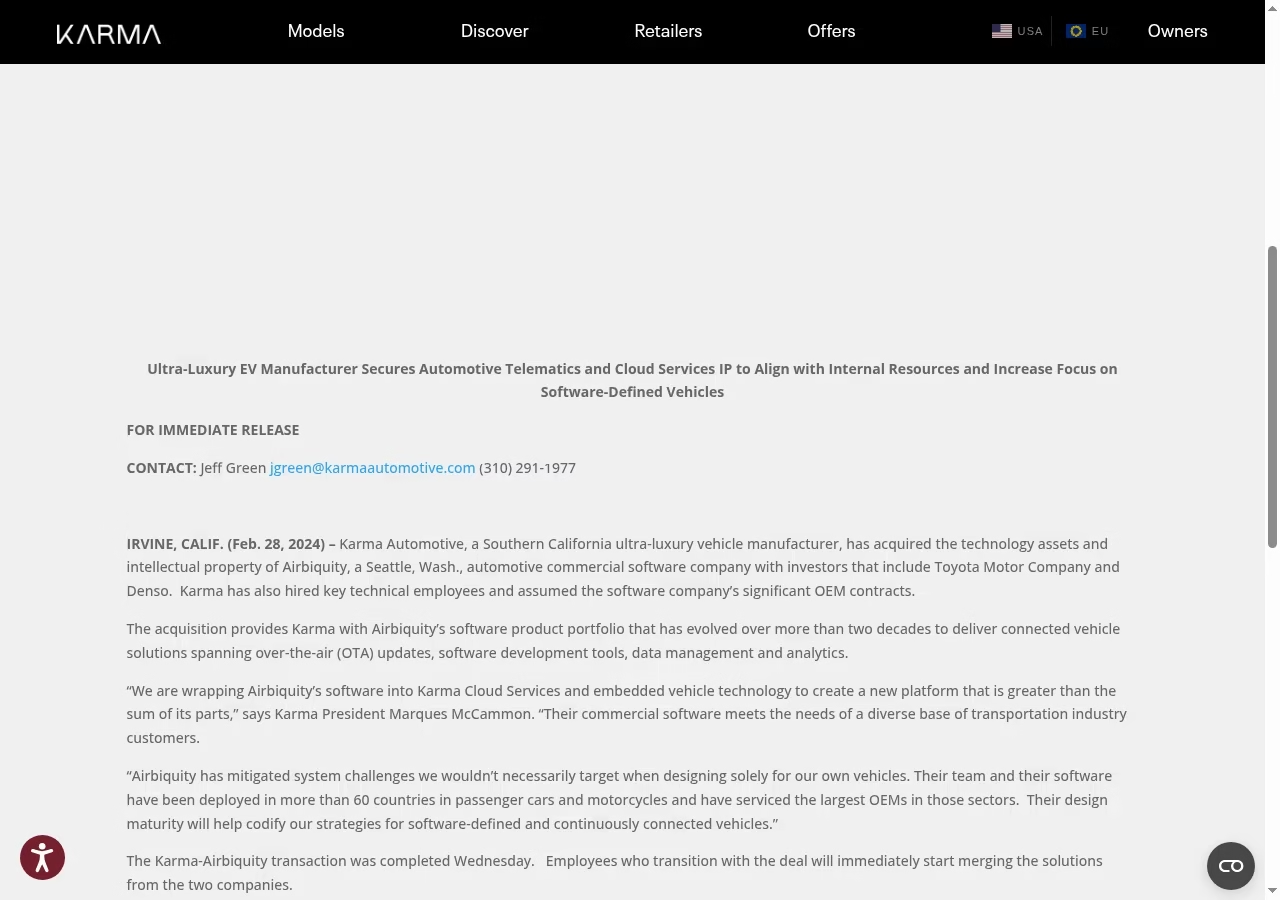
Airbiquity belongs in this list as a legacy connected-vehicle name, not as an independently verified current supplier. Karma Automotive announced in February 2024 that it acquired Airbiquity technology assets and intellectual property, hired key technical employees and assumed significant OEM contracts. Its July 2024 Karma Connect announcement explicitly connected that acquisition with vehicle data management and OTA services, including Karma Flash and Karma Recon.
Evaluation focus: Ask Karma about the current contracting entity, migration of existing Airbiquity deployments and support for the specific software portfolio you use. The former Airbiquity website now redirects to unrelated gambling content; its link has been removed. This is an asset and personnel transition, not evidence that every old Airbiquity product remains available unchanged.
Karma’s Airbiquity acquisition announcement
2. Sibros: Vehicle-to-cloud and OTA programs
Sibros presents its Deep Connected Platform for automakers and fleets building software-defined vehicle programs. Its current site describes vehicle-to-cloud connectivity and promotes an SDV app marketplace. The platform groups OTA software updates, vehicle data logging and remote commands, making this a closer fit for vehicle lifecycle management than a standalone passenger-booking app.
Evaluation focus: Start with ECU coverage, update signing, staged rollouts and recovery after an interrupted update. Ask which data can be collected on your vehicle architecture and who controls remote commands. Request evidence for your intended production program rather than treating customer logos as proof that every feature is deployed on every model.
3. Ridecell: Asset intelligence for leasing and finance
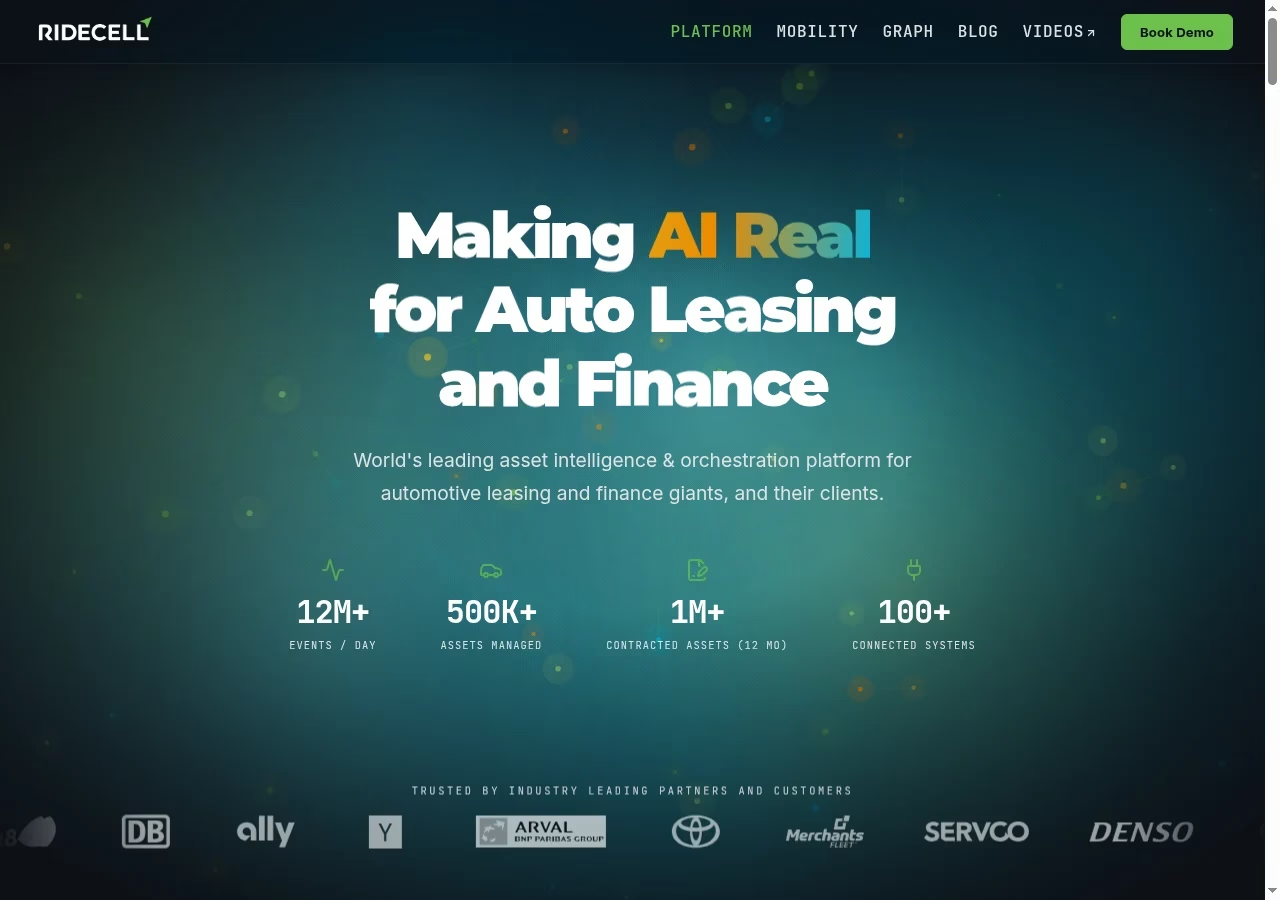
Ridecell now emphasizes AI-based asset intelligence and orchestration for automotive leasing and finance. Its current site describes connecting systems and turning operational events into workflows, with examples around delayed deliveries, invoice review and supplier performance. This is a different buying problem from the generic car-sharing description in the older profile.
Evaluation focus: Bring a concrete process, such as delivery exceptions or invoice reconciliation, to the demo. Map the systems of record, approval steps and audit trail before discussing automation. Have Ridecell show how it handles incomplete data and human overrides. Published savings scenarios should be tested against your own workload, not adopted as guaranteed results.
4. Motorq: OEM-connected vehicle data

Motorq describes an OEM-direct vehicle intelligence platform for fleets, dealerships and lenders. Its current positioning focuses on turning vehicle health, usage and location signals into operational decisions without relying on a universal aftermarket dongle. That makes connectivity coverage and data rights central to the evaluation.
Evaluation focus: Check eligibility by VIN, model year, region and OEM agreement, not just manufacturer name. Ask for signal frequency, latency, missing-data behavior and the cost of enabling each vehicle. If you plan to trigger maintenance or asset-recovery workflows, confirm the permissions, consent requirements and integration boundaries for those actions.
5. NODAR: Stereo-vision 3D perception
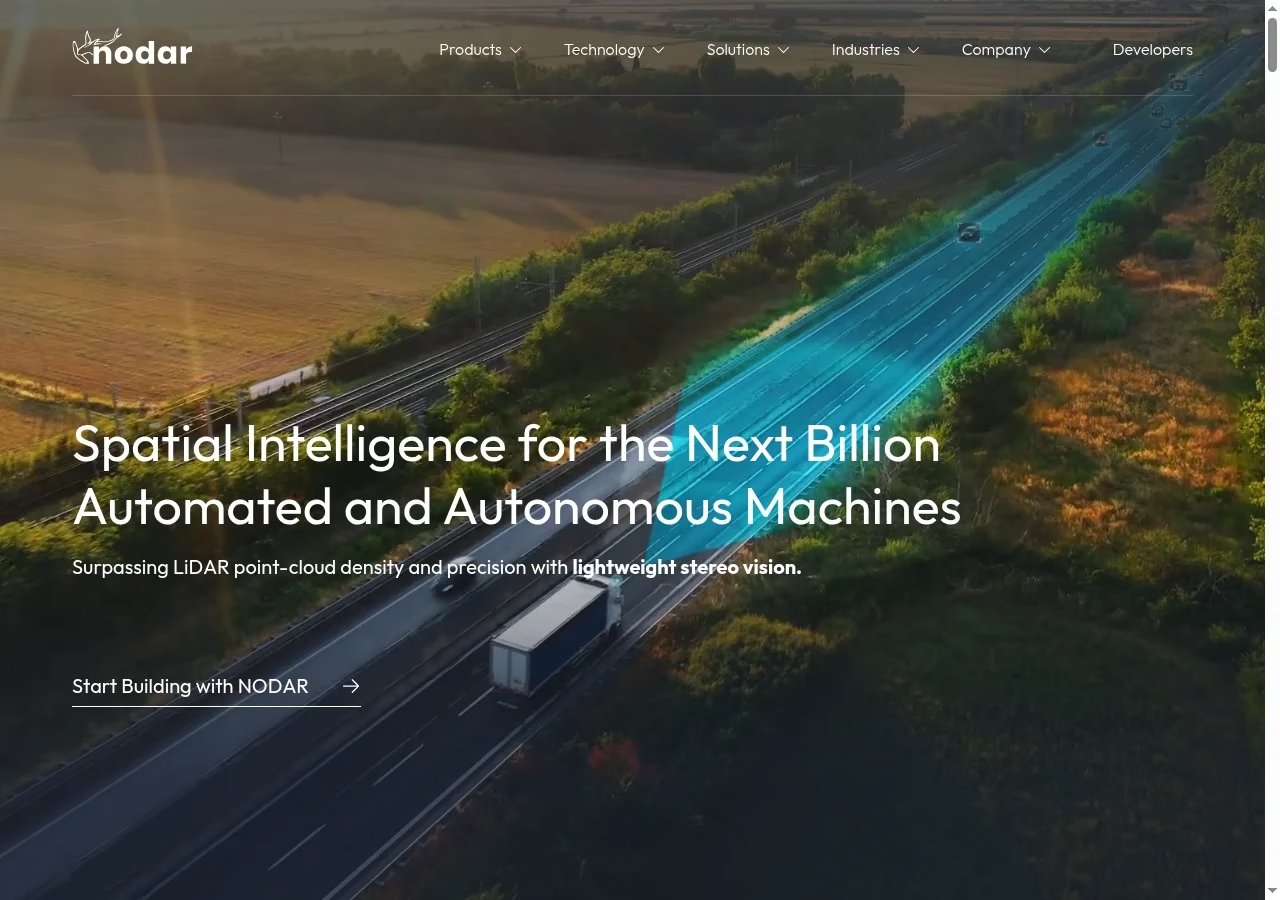
NODAR develops spatial intelligence using stereo vision and algorithms that turn standard camera inputs into 3D data. Its current site discusses automotive and industrial applications, including autonomous trains and monitoring. Hammerhead is part of its product navigation. It should be assessed as perception technology, not described as a general custom automotive app agency.
Evaluation focus: Evaluate camera placement, calibration behavior, vibration tolerance and compute requirements on your own hardware. Test low light, glare, dust and difficult depth scenes with repeatable datasets. Request measured results for your operating conditions and a description of failure handling; broad comparisons with LiDAR do not replace application-specific validation.
6. Zendar: RF and vision sensor fusion

Zendar positions its perception platform around early fusion of radio-frequency sensing and vision. Its current site lists automotive, logistics, agriculture and industrial applications. The focus is perception for real-world robotics rather than a turnkey consumer mobility app or a guarantee of autonomous driving capability.
Evaluation focus: Ask which radar and camera configurations are supported and where fusion happens in the processing chain. Compare object tracking, weather performance, latency and compute use on a shared test set. Clarify the interface to the rest of your autonomy stack and ownership of training data, model updates and production validation.
7. CerebrumX: Connected-vehicle analytics
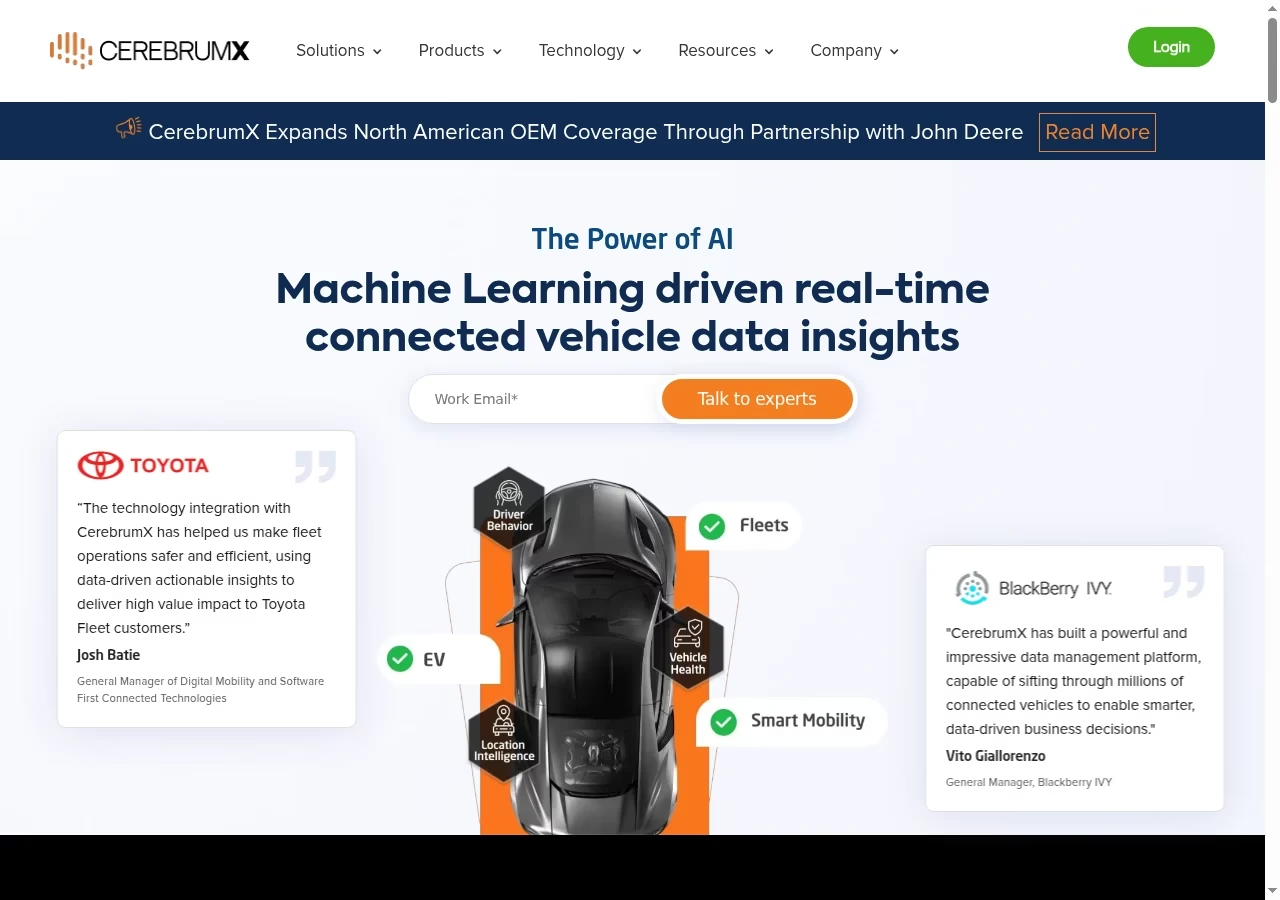
CerebrumX presents machine-learning-driven connected vehicle data insights. Its current product lineup includes FleetConnect for fleet operations and EV-related analytics, and it provides a VIN eligibility route for OEM data access. This is a data and analytics platform choice, with vehicle coverage a prerequisite to the promised operational value.
Evaluation focus: Test a sample of your actual fleet before estimating rollout costs. Confirm the available signals for charging, odometer, ignition, location and driving events, then check retention and export rights. Ask how missing signals affect reports and whether an insurer or fleet customer needs additional consent or contractual permissions to use the data.
8. Helm.ai: AI software and simulation for ADAS
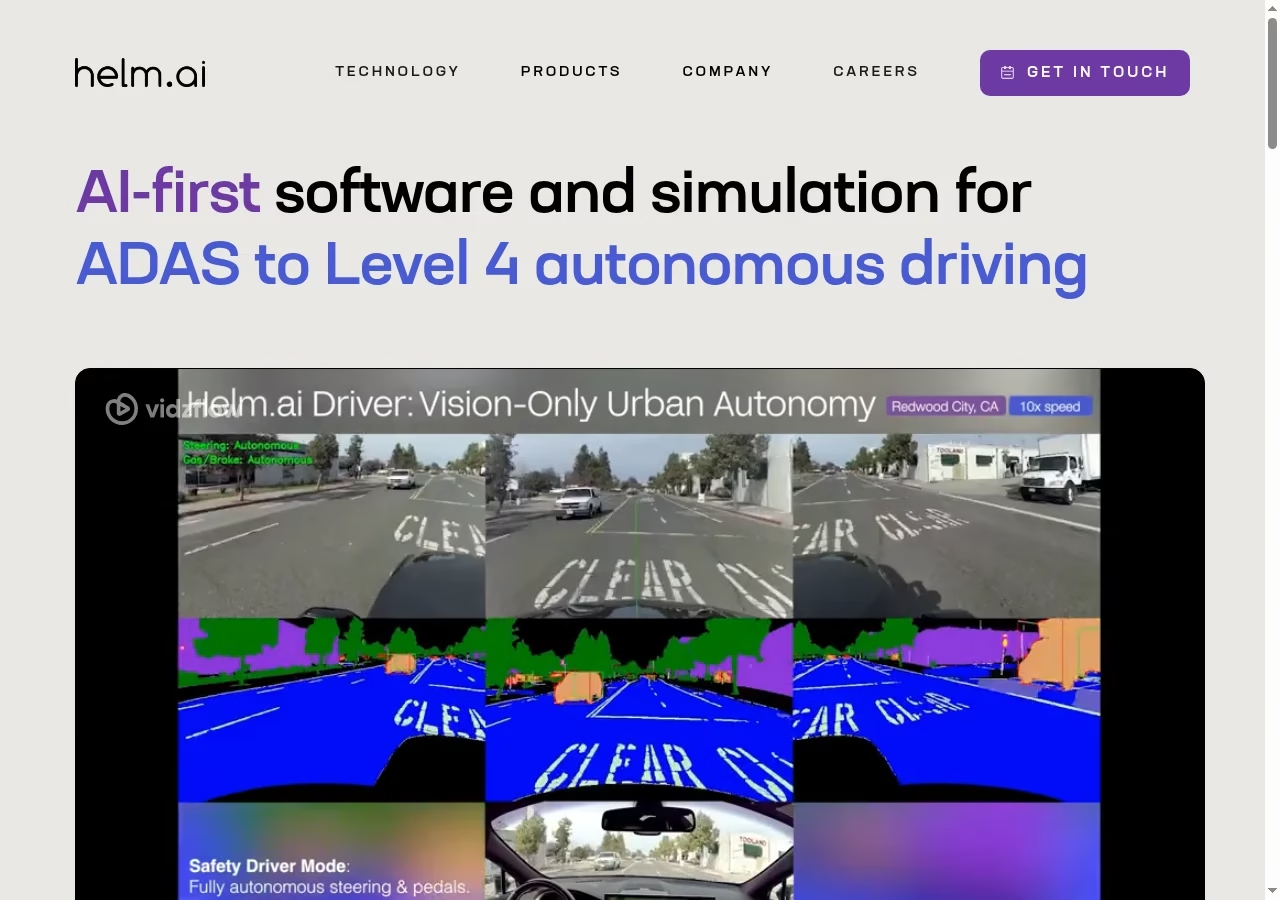
Helm.ai develops on-vehicle AI software and simulation for ADAS through Level 4 programs. Its current site separates real-time deployment from offline training and validation, and presents Helm.ai Vision and Helm.ai Driver alongside generative simulation tools. These are different components and should not be bought as if a single product automatically covers a complete safety case.
Evaluation focus: Identify the exact component and operational design domain first. Request sensor and compute requirements, model interfaces and evidence for the intended roads and conditions. Keep vendor performance claims separate from your own safety validation, integration testing and release obligations. Simulation coverage alone cannot establish production readiness for a particular vehicle.
9. Phantom AI: ADAS vision, fusion and control
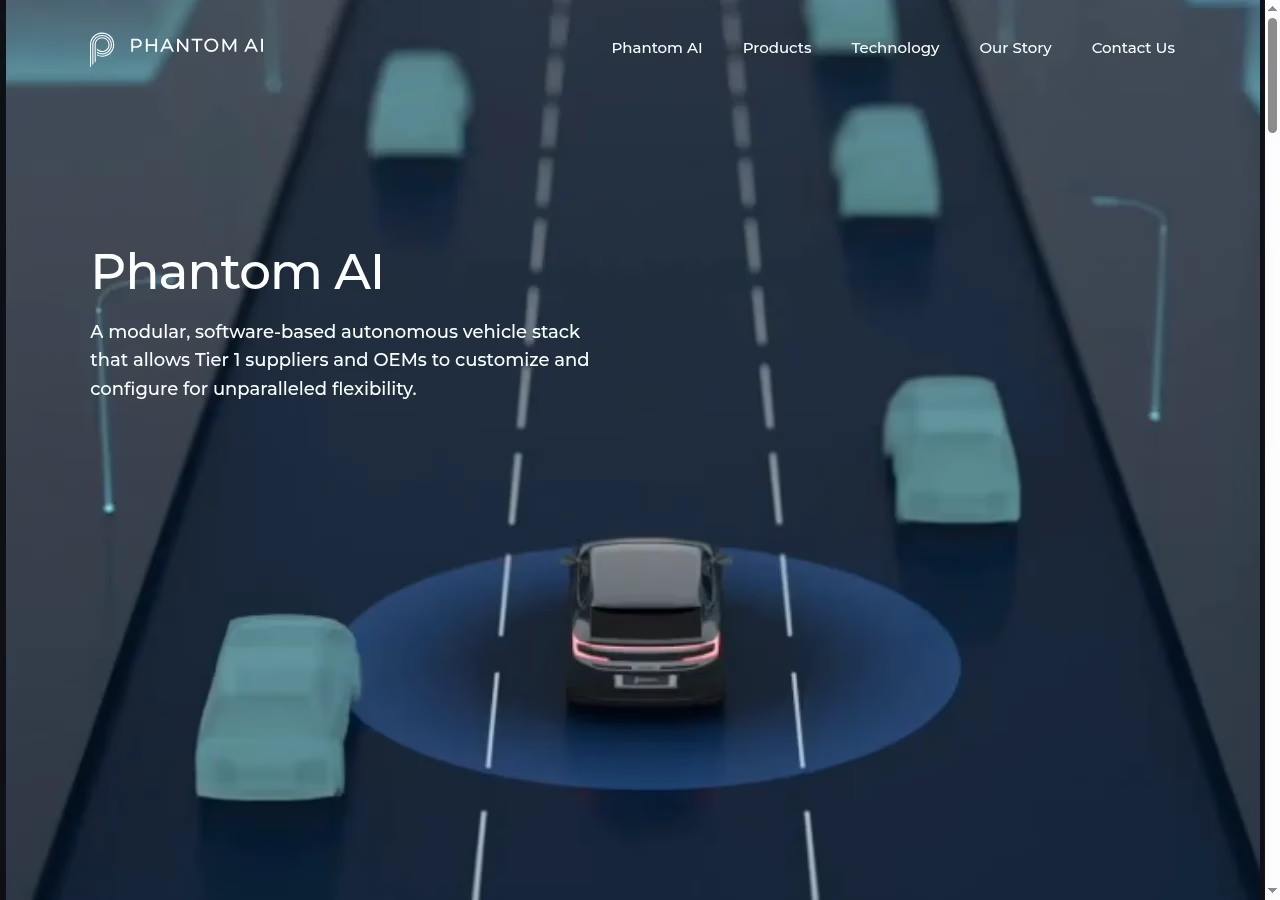
Phantom AI describes an autonomous driving platform with computer vision, sensor fusion and control capabilities. Its PhantomVision offering covers detection of vehicles, pedestrians, bicyclists, free space, traffic signs and traffic lights. This puts the company in the driver-assistance software category, not general fleet administration.
Evaluation focus: Ask which features are licensed together and which hardware targets are supported. Compare latency, memory use and behavior on difficult scenes using your own evaluation harness. The site discusses Euro NCAP-related ADAS features, but obtain current test evidence for your configuration rather than assuming a vendor description proves regulatory or vehicle-level compliance.
10. Swift Navigation: Precision GNSS positioning
Swift Navigation focuses on precision satellite positioning for mapping, tracking, navigation and control. Its current site presents Skylark positioning services and applications across vehicle autonomy, robotics, logistics and digital cities. Positioning is one input to a mobility system; it is not a substitute for perception or a complete autonomous driving stack.
Evaluation focus: Confirm geographic service coverage, compatible receivers and correction delivery requirements. Test startup time, loss of connectivity and behavior in tunnels or urban canyons. Ask about integrity, fallback positioning and support commitments for your use case. Trial availability on the site is a starting point, not proof that a trial configuration is qualified for production.
Swift Navigation official website
11. Tula Technology: Software-driven energy efficiency
Tula Technology develops software-driven energy reduction solutions. Its current site emphasizes Dynamic Motor Drive for electric motors and also discusses wind generation and industrial applications. The relevant automotive question is powertrain efficiency and control integration, not booking, telematics dashboards or mobile application design.
Evaluation focus: Ask which motor architectures and control units can use the technology and what engineering changes are required. Compare efficiency over your actual duty cycle, including thermal and drivability constraints. Request test methods and licensing terms before adopting savings projections. Vendor percentage claims should not be transferred to a different motor or vehicle without validation.
Tula Technology official website
12. Perrone Robotics: Vehicle-independent autonomy kits
Perrone Robotics presents its TONY autonomy kit for different vehicle choices and missions. Its current homepage also promotes generative AI additions and a verification and validation rule library. This is an autonomy retrofit and deployment evaluation, with the vehicle, route and operating environment shaping the real scope.
Evaluation focus: Define the route, speed, passenger or cargo use and required human supervision. Ask for the supported vehicle interface, installation process and remote intervention plan. Request documented limits and safety evidence for that configuration. Marketing language about rare scenarios is not a replacement for testing the edge cases your operation will actually encounter.
Perrone Robotics official website
13. Cyngn: Industrial autonomous material handling
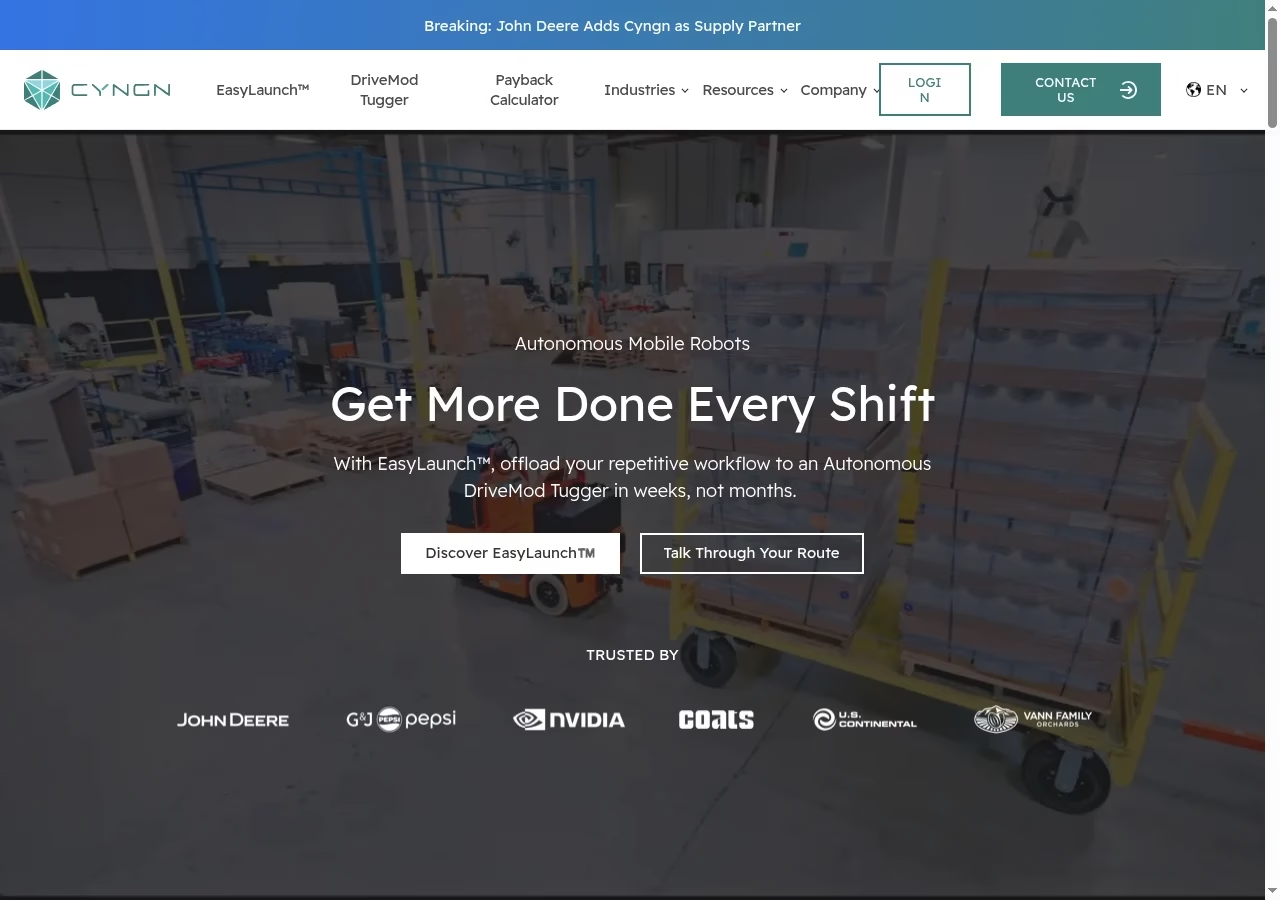
Cyngn currently centers its homepage on the DriveMod autonomous tugger for repetitive material-handling routes. The site describes pre-mapped routes, remote dispatch, an on-vehicle touchscreen and a switch to manual operation. This is an industrial logistics system rather than a public-road passenger autonomy offer.
Evaluation focus: Walk the proposed route with operations and safety staff. Confirm load limits, towing arrangements, pedestrian interaction, charging and changes to the facility layout. A pilot should measure completed moves, exceptions and uptime across real shifts. Ask who maintains the vehicle and updates maps, and what support is available when the route becomes blocked.
14. Hayden AI: Transit and city vision systems
Hayden AI combines vehicle-mounted hardware with vision AI to analyze urban environments. Its current site focuses on cities and public transit, including parking and traffic violations that interfere with bus routes and stops. The fit is transit performance and enforcement workflows, not consumer navigation or autonomous vehicle control.
Evaluation focus: Confirm local legal authority, privacy requirements and evidence review procedures before deployment. Ask how the system handles false detections, retention and appeals, and which hardware must be installed on buses. Measure the intended outcomes with the transit agency, separating vendor claims from a local evaluation of reliability, accessibility and operations.
15. Cavnue: Smart-road infrastructure; now part of Consor
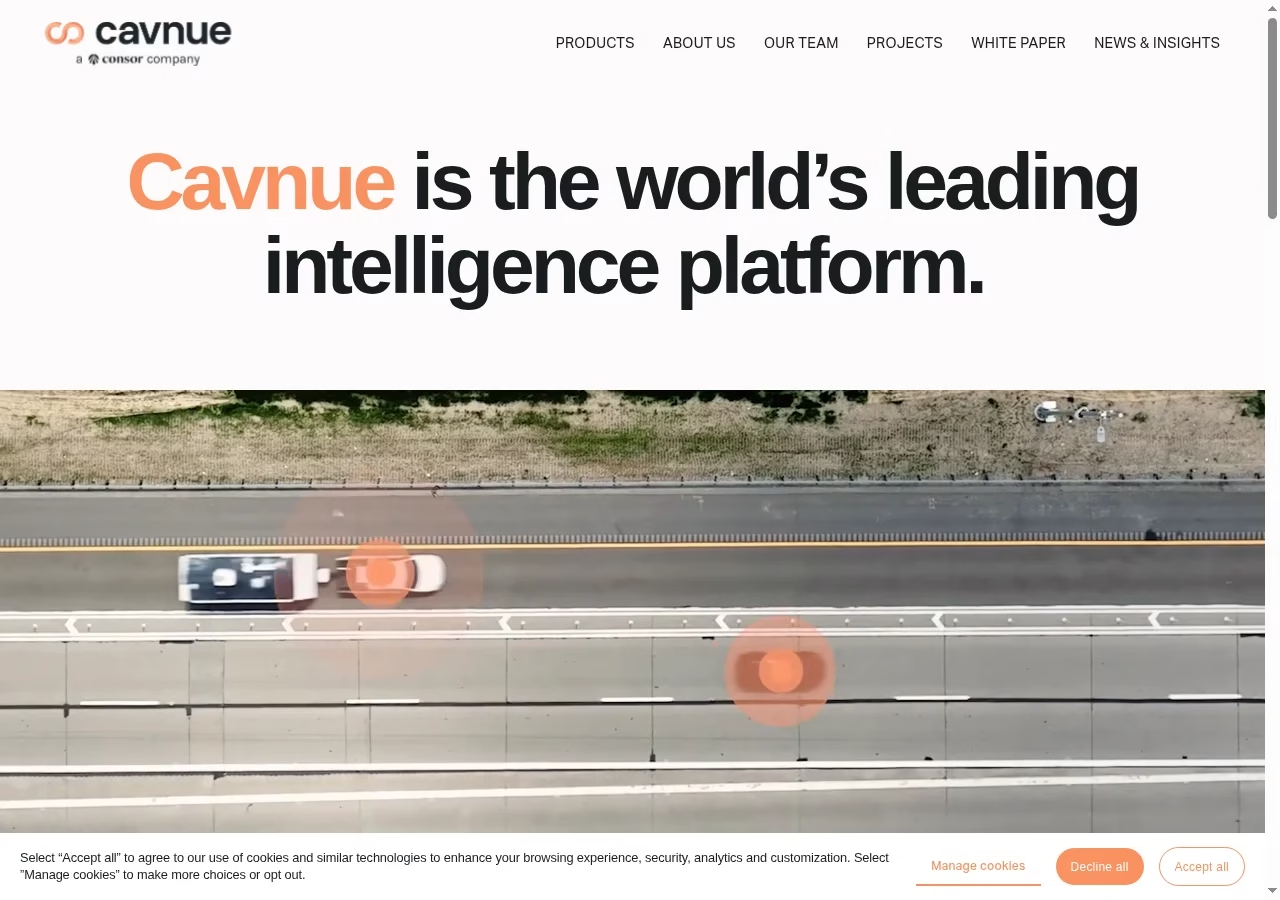
Cavnue develops digital and physical roadway infrastructure. Its current homepage explicitly states that Consor Engineers acquired the company, pairing its smart-road platform with engineering expertise. The site describes AI-based road awareness, proactive guidance and road operations, so this is an infrastructure partner evaluation rather than a pure application-development shortlist.
Evaluation focus: Confirm the current contracting entity and scope of engineering versus software work. Ask about sensor deployment, maintenance, data access and how road guidance integrates with traffic operations. A corridor pilot should define measurable outcomes and ongoing operating costs. The Consor transition is retained explicitly rather than silently replacing the original company name.
16. GridMatrix: Roadway sensor analytics
GridMatrix describes cloud software that turns existing roadway sensor feeds into data on congestion, signal performance, emissions and safety. The platform is positioned for traffic engineers. Its infrastructure analytics role differs from an in-vehicle ADAS product and from a fleet telematics service.
Evaluation focus: Inventory the sensors already installed and obtain a written compatibility assessment. Check whether analytics require new equipment, calibration or network upgrades. Ask for validation methods for emissions and safety indicators and distinguish directly observed events from estimates. Confirm export formats and how the outputs will be used by the traffic team rather than simply adding another dashboard.
17. TransLoc: Fixed-route and on-demand transit operations
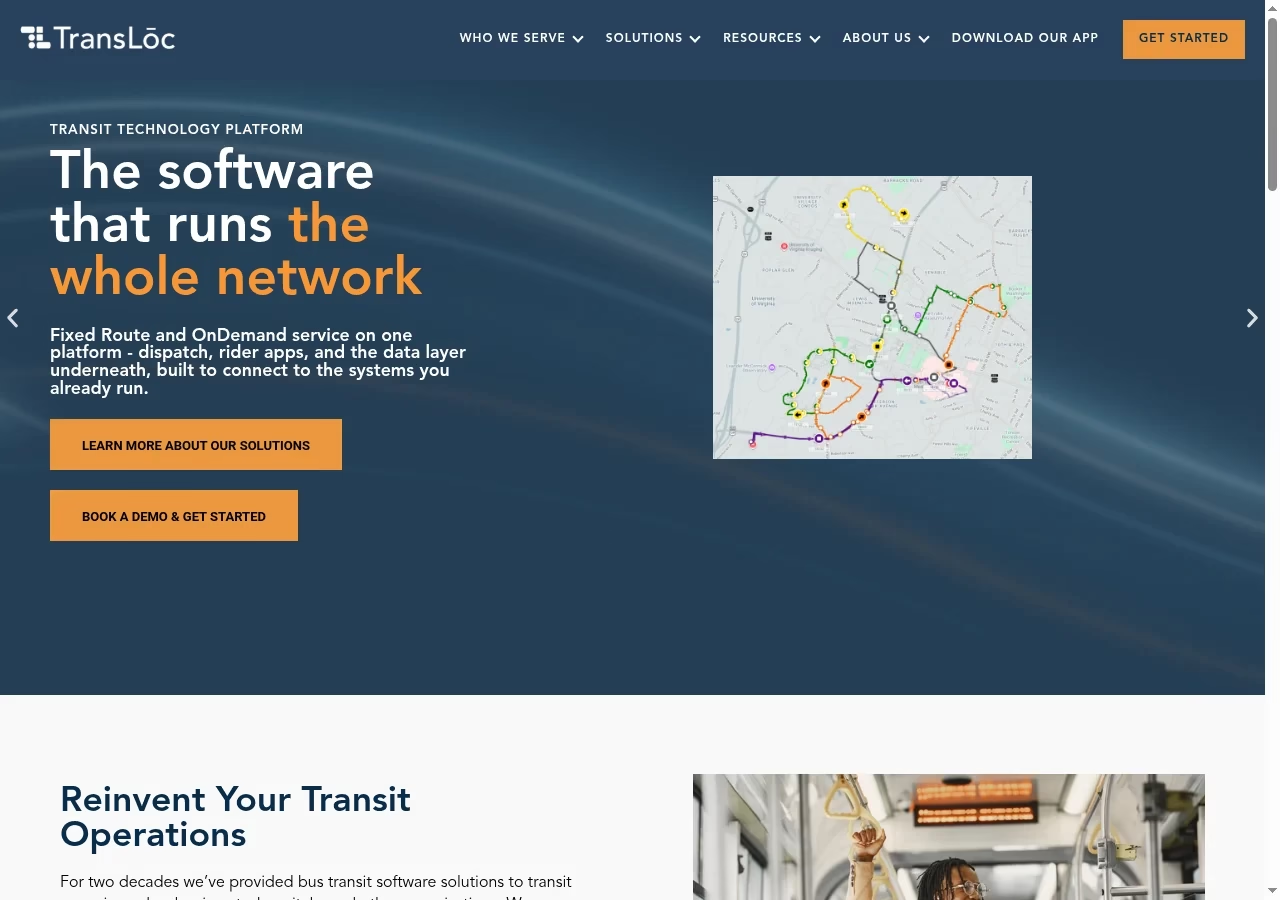
TransLoc offers fixed-route and on-demand transit software for agencies, universities, airports, corporate campuses and healthcare systems. Its current site describes dispatch, reporting, GTFS management and rider- and driver-facing apps. This is one of the more directly relevant entries for operating bus or shuttle services.
Evaluation focus: Compare the passenger and dispatcher experience using actual routes and service rules. Ask about GTFS updates, accessibility, rider notifications and integration with existing hardware. For on-demand service, test capacity constraints, booking exceptions and missed pickups. Confirm implementation, training and support responsibilities for each operator team instead of judging only the mobile interface.
18. Arity: Driving behavior and mobility data
Arity focuses on mobility data and driving behavior insights. Its current site discusses insurance-linked data, telematics apps and mobility analysis. It belongs in a data-oriented shortlist, but the existence of driving data does not make it a vehicle control system or a turnkey autonomous driving supplier.
Evaluation focus: Establish the lawful purpose and permissions for the intended data use. Ask about geographic coverage, sampling, freshness and how behavior scores are defined. For insurance or marketing use, review the relevant consent, fairness and contractual constraints. Validate the dataset against the population you need rather than relying on headline driver or mileage totals.
19. Spireon: Dealer, fleet and asset telematics
Spireon’s current site carries Solera Fleet Solutions branding and presents connected-vehicle visibility for dealerships, fleets, trailers and assets. It also describes LoJack by Spireon and a cloud-based telematics platform. These use cases differ enough that a dealer inventory system should not be compared directly with a trailer tracking deployment.
Evaluation focus: Choose the specific product line before requesting a quote. Confirm device installation, cellular coverage, power needs and integration options for each asset type. Ask about data retention, stolen-vehicle workflows where applicable and ownership of exported records. Check contract duration and hardware replacement responsibilities as well as the recurring software charge.
20. CalAmp: Industrial vehicle and asset telematics
CalAmp presents industrial-grade telematics for vehicles, equipment and assets, combining edge devices, platform services and user interfaces. Its current site describes the CalAmp Telematics Cloud and connected asset visibility. The fit is an end-to-end telematics deployment, which may include hardware and network requirements beyond the software interface.
Evaluation focus: Check device compatibility, installation, connectivity and the expected asset lifecycle. Ask which analytics and APIs are included in the chosen service tier and what happens if the network is unavailable. Confirm regional support, replacement policies and export access. Compare the whole deployment cost rather than treating the cloud platform alone as the complete project.
How to choose a mobility software partner
Set a pilot scope with the intended vehicles, geography, users and operating conditions. Separate hardware, connectivity, implementation and recurring licenses in the commercial proposal. Document the data you can collect, who can access it and how you leave the platform. For vehicle control or enforcement, include safety, privacy and local legal review before deployment.
If your project is the rider-facing application rather than the underlying vehicle platform, compare the mobile app development tools needed for maps, notifications and release management. For passenger booking and dispatch development, the taxi booking app company review separates current evidence from unresolved former suppliers.
Frequently asked questions
Are these all custom automotive app developers?
No. The list includes products, data platforms, perception components, industrial autonomy and infrastructure providers. Match the category to the project before comparing quotes.
Which company is best?
There is no supported universal winner across these categories. A shortlist for bus dispatch will look different from one for OTA updates or stereo vision. Use a pilot and a written scope to test suitability.
Are prices and safety certifications verified here?
No comparable current quotes or project-specific certifications were established in this review. Request written pricing and applicable validation evidence directly. Unsupported legacy rates and ratings have been removed.








Leave a Reply