




If you bank with NAB, PayID is one of the few payment features that genuinely saves time every week. Instead of typing a BSB, an account number and a name that you hope is spelled right, you pay a mobile number, an email address or an ABN. The money normally lands within seconds, around the clock, even when the other person banks somewhere else. This guide walks through how PayID works in the NAB app in 2026, how to create one, what the app can and cannot do, how Confirmation of Payee fits in, and where people still get caught out. It is written as practical advice from a team that builds payment and fintech software, so it also explains why the design works the way it does.
The short version for 2026
Set up a PayID in the NAB app once, share it instead of your account details, and treat every name check as a real safety step. PayID makes payments faster and easier to get right, but it does not remove the need to verify who you are paying.
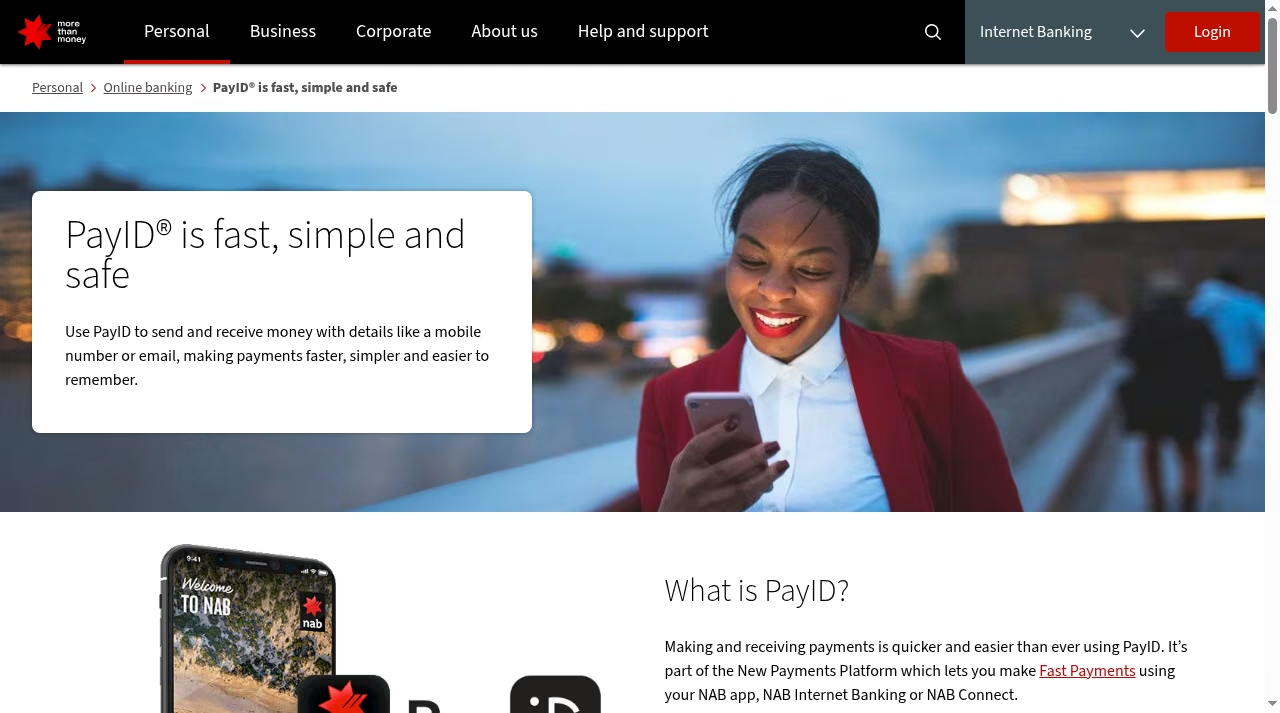
What PayID is and where it sits in Australian payments
A PayID is a nickname for a bank account. According to NAB’s own description, it is a unique identifier linked to your transaction account that can be your mobile number, your email address or your ABN. When someone enters it in their banking app, the payment is routed to the linked account without them ever seeing a BSB or account number. It is not compulsory. NAB states plainly that you can keep using a BSB and account number to send and receive Fast Payments, so PayID is a convenience layer on top of the normal account details, not a replacement for them.
PayID sits on the New Payments Platform, the real-time payment infrastructure Australian banks now share. According to the central bank, PayID itself was introduced in 2018 as part of that platform. Three terms get mixed up constantly, so it helps to separate them. The New Payments Platform is the rail that moves the money. Osko is a fast-payment service that runs over that rail and is backed by BPAY. PayID is the addressing system that lets you point a payment at a phone number or email instead of account details. A payment can use the rail without PayID (BSB and account number), and PayID is simply the friendlier way to say where the money goes.
On NAB’s current Fast Payments guide, funds sent with Pay anyone, whether you use a BSB and account number or a PayID, settle in under 60 seconds in most instances, around the clock. If the payment goes through Osko, NAB says it settles in 15 to 30 seconds. NAB tries Osko first and falls back to a standard Fast Payment if it has to, and the receipt screen tells you which one was used. Payment descriptions can run to 280 characters, which is far more useful for invoices and shared household bills than the old 18-character reference.
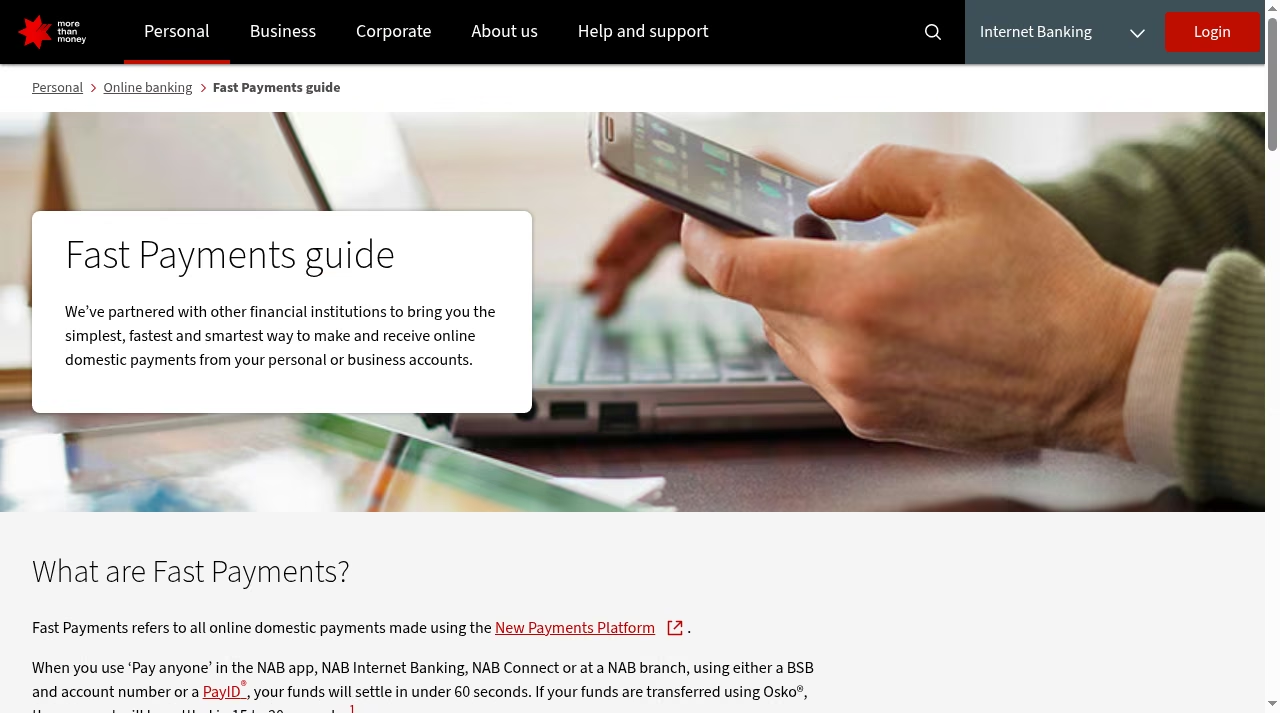
Two small caveats from the same NAB page are worth remembering. First, both the payer and the payee account need to be enabled for Osko for the fastest path, and other banks may only allow a Fast Payment if their customers use your PayID. Second, NAB says that if a payment is time critical you should always check its status rather than assume it has landed. Speed is the norm, not a contractual guarantee on every transfer.
PayID by the numbers: what recent data shows
Adoption has moved from early-adopter feature to mainstream habit, and the best way to see it is through dated, external figures. Each number below comes with its observation period so you can judge how current it is, and none of it is our own research.
A national central bank survey of consumer payments, fielded from October to early December 2025 and published in May 2026, found that around 80 per cent of respondents were aware of PayID, up from 57 per cent in the previous survey in 2022. Around 50 per cent said they had used it in the prior 12 months, compared with 32 per cent in 2022, an increase of 18 percentage points. Among 18 to 29 year olds, 72 per cent reported using PayID in the past year, and the share of people aged 65 and over who used it more than tripled over the same three-year window.
The same survey is useful for a reality check on how people use it. Most use PayID for transfers to family and friends, but around 45 per cent of people who had used it in the prior 12 months used it to pay for goods and services. Simplicity and speed were the most common reasons, and payee verification was also frequently cited. PayID accounted for roughly 15 per cent of account-to-account payments in the survey, while BSB and account number remained the most widely used way to address a payment. In other words, PayID is popular, but plenty of Australians still type account numbers.
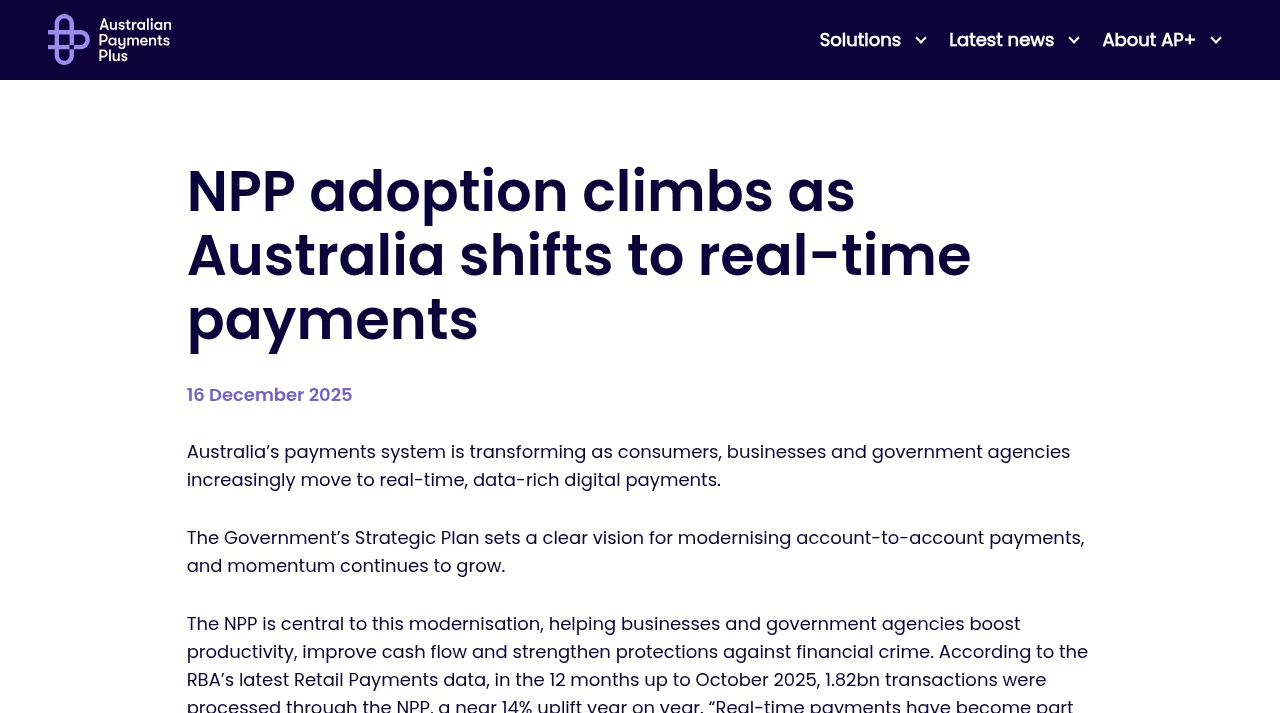
On the infrastructure side, the operator of the New Payments Platform reported in December 2025, citing national retail payments statistics, that 1.82 billion transactions were processed through the platform in the 12 months to October 2025, a rise of nearly 14 per cent on the year before. Its chief executive described the shift as one in three payments now being processed over the platform. That is a statement from the operator, so read it as the operator’s framing of the data, but the direction is clear.
If you work in finance, retail or software, these numbers matter beyond personal convenience. A payment method that around half of consumers used in a year is one your customers expect you to accept. Our guides to fintech trends and the challenges the fintech industry faces cover the wider shift toward real-time, account-to-account payments in more depth.
Before you start: what NAB requires
Setting up a PayID takes a few minutes, but a handful of rules from NAB’s current help page decide whether you can do it at all. Checking them first avoids the most common dead ends.
- You must be the account owner. A sole or joint owner can create and update a PayID. If you only have third-party access to an account, you cannot create or update a PayID for it.
- You need a PayID you control. NAB checks that the PayID is available and sends a verification code to the mobile number or email to confirm you have the right to use it.
- One account per PayID. You can have several PayIDs on one account, but the same PayID cannot be used across different accounts at the same time.
- Personal and business customers can both use it. The type you can register is a mobile number, an email address or an ABN, according to NAB’s pages.
- Use the current app. NAB’s own guidance on newer features is to keep the NAB app updated, because menus and features are rolled out in stages.
One more practical point before you register: decide which identifier you want people to use. A mobile number is the most common choice for personal use. Email suits people who change phones often. An ABN is the natural fit for sole traders and businesses that want customers to pay a business identity rather than a personal number. We compare these options in a table further down.
How to create a PayID in the NAB app, step by step
NAB’s current help page lists eleven steps for the mobile app. They are straightforward, and the whole flow is usually quick. The wording below follows that page as it stood in October 2026, so if your screen looks slightly different, you are probably on a newer or older app version.
- Log into the NAB app and tap More. On an Android phone, tap the menu icon instead.
- Tap Settings, then tap Payments.
- In the list, tap View and create PayIDs and tap Continue.
- Tap Account and select the account you want to link the PayID to.
- Tap PayID and choose the type from the list.
- Enter the details for that type, such as your mobile number or email address.
- Under PayID Name, choose a name from the list. This is the name people see when they pay you, so pick the one that makes sense for the account.
- Review everything and tap Create PayID.
- If asked, enter the verification code sent to your mobile device or email.
- When you see the confirmation, your PayID is live.
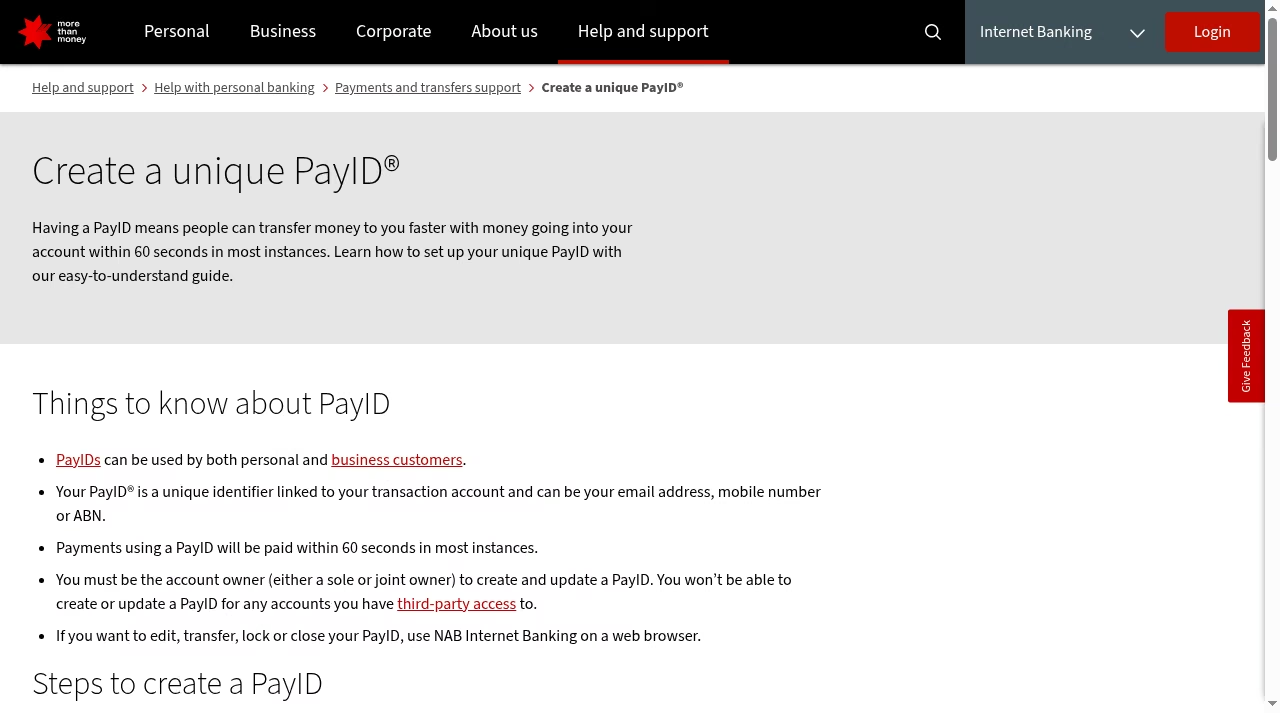
NAB also publishes a browser route through Internet Banking. You sign in with your NAB ID, open Profile and Settings, choose PayID Settings, accept the PayID terms, pick an eligible account and a PayID type, use the Check availability button, choose a PayID name and enter the security code. The web route has a few more screens, but it is the only place some management tasks live, which brings us to the next section.
A good habit after you create a PayID is to test it. Ask a friend to send you a small amount using it, or send a small amount to yourself from an account at another bank if you have one. Confirm the name that appears on the payer’s screen is the one you want people to see. If the name is wrong, you can change it, but only through Internet Banking, as explained below.
What the app cannot do: managing a PayID in Internet Banking
This is the point where many readers get stuck, so it is worth spelling out. NAB’s help page says that once a PayID exists you can update it through Internet Banking, and that updating a PayID is not currently available in the NAB app. In practice, that means the app is for creating, and a web browser is for managing. The list of changes NAB describes for Internet Banking is:
- Move your PayID to another financial institution by setting its status to Transfer.
- Change the PayID name from the list of approved options.
- Link the PayID to a different account.
- Lock a PayID so it cannot receive payments, and unlock it later.
- Close a PayID. A closed PayID can be linked to another account, at NAB or at another bank, and while it is closed it does not receive funds.
The lock option is underrated. If you lose a phone or change a number and are waiting on a replacement, locking the PayID stops payments from arriving at an account you cannot yet monitor. Moving a PayID between banks follows the same logic: you do not delete and recreate it, you change its status so the new bank can claim it. It is worth understanding this before you change banks, because a number or email stays linked to the old account until you move or close it.
Which PayID should you register: mobile, email or ABN?
All three types work the same way for the person paying, but they behave differently over time. The comparison below is general advice based on how each identifier is normally used, not a NAB rule, so use it as a starting point and check what suits your situation.
Swipe sideways to see the full table →
| PayID type | Best for | Watch out for |
|---|---|---|
| Mobile number | Everyday personal use, paying and being paid by friends, family and small local businesses | Numbers change when you switch providers or lose a SIM. Update or move the PayID before that happens |
| Email address | People who change phones often, freelancers who already give clients an email address | You need ongoing control of that mailbox. If an email account is compromised, so is the PayID’s verification route |
| ABN | Sole traders and businesses who want customers to pay a business identity | Best suited to business use. Make sure the right account and PayID name are linked before you invoice with it |
Whichever you choose, do not over-share. A PayID is designed to be given out, but it is still personal information. Give it to people you expect to pay you, not on public posts. If you sell items on marketplaces, a dedicated email PayID kept separate from your main inbox is a sensible way to limit exposure. You can hold more than one PayID against an account, which makes that approach easy.
Sending a payment with a PayID in the NAB app
Paying someone is simpler than setting up your own PayID. NAB’s guidance is that the person you are paying gives you their PayID, which may be a mobile number, email address, ABN or an organisation ID depending on their bank. Then you log into the NAB app or Internet Banking and select Pay anyone from the Transfer and Pay menu.
When you enter a PayID, the app shows the name registered against it before you confirm. That name is the single most useful safety feature in the whole flow, so use it. Compare it to the person or business you intended to pay. A friend’s PayID name might be their first name and last initial; a business might show a trading name. If it looks unrelated, stop and check with the person using a channel you already trust. Do not use contact details from the same message that gave you the PayID.
Add a clear description while you are there. With room for up to 280 characters, you can put an invoice number, a date and a short note so the recipient’s records match without a follow-up message. If you make a payment to the wrong payee, NAB says you can lodge a transaction dispute, but as NAB’s own scam guidance warns, it is very hard for banks to recover money once it has gone. Prevention at the confirmation screen is worth far more than any dispute afterwards.
If a Fast Payment cannot be completed
NAB explains that if it cannot make your payment as a Fast Payment, it will usually tell you at the time. In the NAB app it automatically resubmits a Fast Payment that cannot be processed because the payee’s account is not eligible. When that happens, the payment is processed overnight or on the following business day, depending on processing cut-off times. If you are paying something urgent, such as a deposit with a deadline, watch for that message and do not assume instant settlement.
Confirmation of Payee: a different check that works alongside PayID
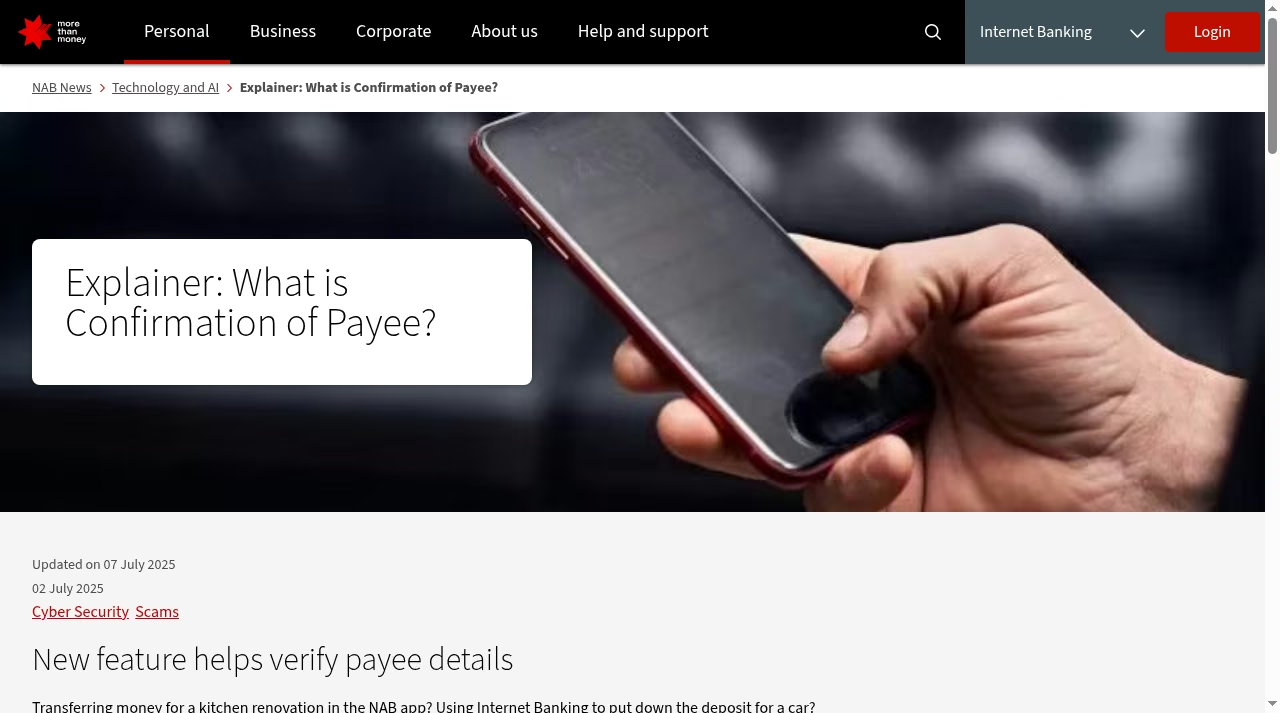
In July 2025, Australian banks began rolling out Confirmation of Payee, and NAB started adding it to the NAB app and Internet Banking from 2 July 2025. It is easy to confuse with PayID because both involve names, but they solve slightly different problems. NAB’s own explainer puts it this way: a PayID is an easy-to-remember nickname for an account, while Confirmation of Payee compares the account name, BSB and account number you enter with the details held by the receiving bank.
The result is one of three outcomes. A match means the name fits the account. A close match means the details are similar to what the receiving bank holds, for example J Citizen where you typed John Citizen. No match is the red flag. NAB says it applies specifically to payments to new payees using a BSB and account number, and that customers do not need to sign up. If the details do not match, NAB’s advice is to stop and confirm the payment details with the recipient using information you sourced yourself, such as a phone call or the company’s official website.
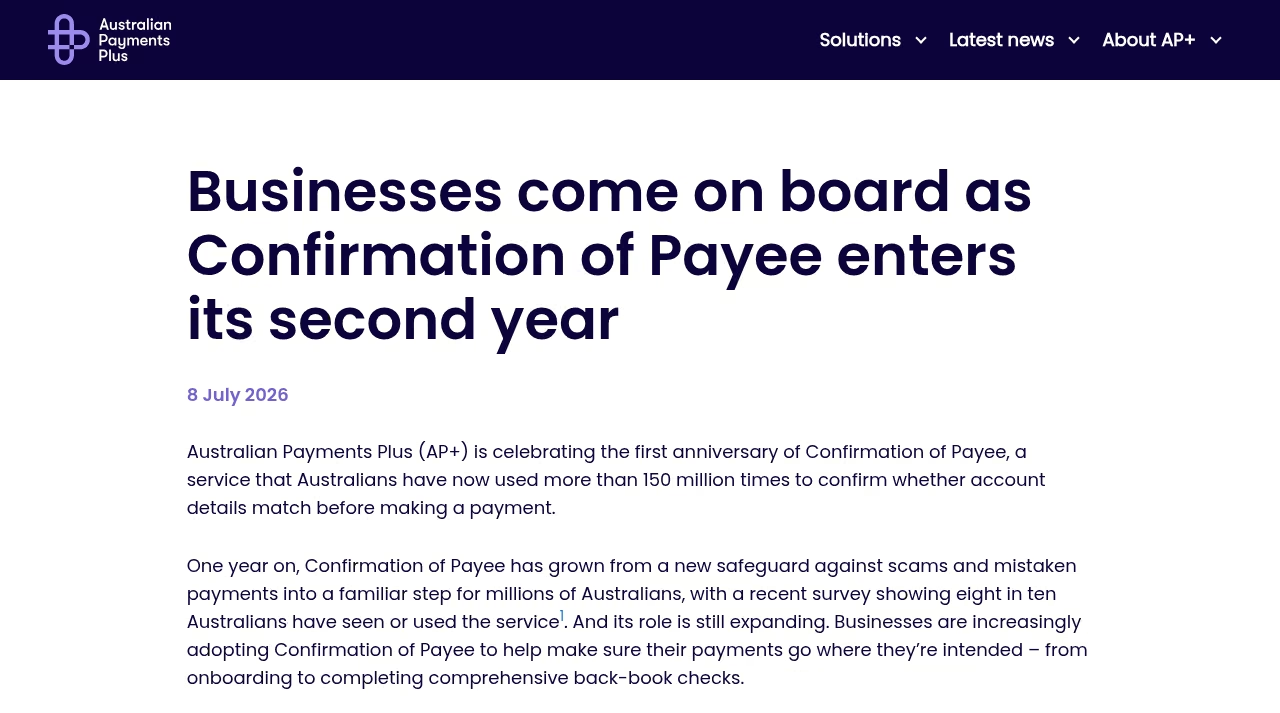
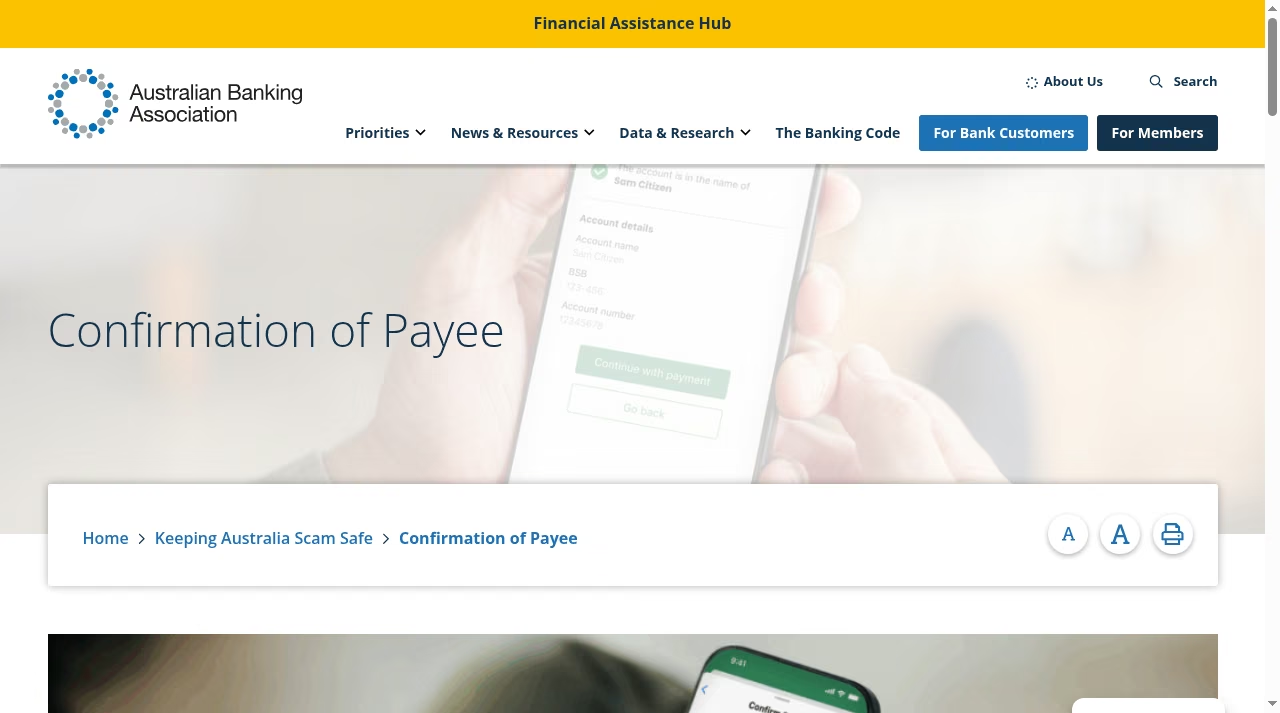
For a fuller picture, the figures from the first year are worth knowing, with their dates. The industry body reported that the service had been used more than 150 million times in its first year and was live at more than 100 financial institutions. The platform operator’s first-anniversary update, dated 8 July 2026, added that one participating institution reported more than 570,000 payments abandoned after customers received a no match result, and that industry data showed customers spend around three times longer reviewing a no match result than a match. Those are reported figures from the operator and one institution, so treat them as indicative rather than a measure of total losses prevented.
The practical rule is easy to remember. If you pay with a PayID, read the name the app shows. If you pay with a BSB and account number to someone new, read the Confirmation of Payee result. NAB is also clear that this check helps with business email compromise and mistaken payments but is not a silver bullet. A scammer can still hold an account under a name that matches an invoice, so the check confirms that the name and number belong together, not that the person is honest.
Staying safe: where PayID scams still happen
PayID shows a name, and that creates a common misunderstanding: people assume a verified name means a safe payment. It does not. The name only tells you who holds the account. The scams that cause real losses in this area usually target the person, not the technology, so the defence is a set of habits. Here are the patterns worth knowing, described in general terms rather than from any one case.
- Changed payment details. A supplier or tradesperson emails new bank details or a new PayID just before an invoice is due. Always confirm by phone using a number you already had.
- Overpayment and refund requests. Someone buying an item online claims they paid too much and asks you to send the difference back. Check your own account balance in the NAB app, not an email or screenshot.
- Fake payment confirmations. A buyer sends a screenshot showing a payment that never arrived. Funds that have landed will show in your account; nothing else counts.
- Requests to verify or upgrade a PayID. Anyone who contacts you saying your PayID needs to be upgraded, unlocked or verified by sending money is running a scam. A genuine bank does not ask you to pay to fix a PayID.
- Urgent pressure. Every one of these patterns relies on speed. The fact that a payment is instant is exactly why a few seconds of checking matters.
A related point from the industry body’s Confirmation of Payee page is that the service will never contact you, ask you to send money or ask for your account details, and that emails or texts claiming to be from it are a scam. The same logic applies to PayID: the name check is shown inside your banking app, not delivered by message.
If you do suspect a payment went to the wrong place or a scammer, contact NAB immediately through the app or the number on your card, and report it through the national scam reporting service. Speed matters in recovery, and the sooner the receiving bank is alerted, the better the odds of freezing funds. If you build or run a business that takes payments, our overview of mobile payment security challenges for businesses goes deeper on controls like dual approval and supplier-change verification.
PayID for business: getting paid without chasing account details
NAB runs a separate page for business customers, and the pitch is simple: give customers your PayID instead of your BSB and account number, and payments arrive in most cases almost instantly. For a café, tradesperson or consultant, that removes a common source of delay and mistyped numbers. NAB also notes that you can use your own PayID to set up a PayTo agreement to pay bills, which we cover next.
A few advisory points for small businesses. Use an ABN or a dedicated business email PayID rather than a personal mobile number, so the business identity survives a change of staff or phone. Print the PayID name that customers will see on invoices, so they can match it on screen before paying. Reconcile payments using the long description field and a consistent reference format. And decide who in the business holds the account-owner rights, because as noted earlier only a sole or joint owner can create or update a PayID.
Many small businesses outgrow manual reconciliation quickly. Matching incoming real-time payments to invoices is an obvious candidate for automation, and our guide to business processes to automate lists where the savings tend to be largest. If your bookkeeping is the bottleneck, it is also worth reading about accounting software development companies before committing to a custom build, and our overview of ERP software development companies if your operations have outgrown spreadsheets altogether.
PayTo: the next step after PayID
NAB describes PayTo as an alternative to a direct debit arrangement. Once you have a PayID set up, you can create a PayTo agreement with a biller instead of handing over account details for a direct debit. The central bank describes it as a service that lets consumers pre-authorise merchants to draw payments from their accounts, with more visibility over payment details and the ability to pause or cancel authorisations compared with traditional direct debits.
Adoption is still early, and that is worth stating honestly. In the central bank’s consumer survey fielded from October to early December 2025, PayTo accounted for about 4 percentage points of account-to-account payments, well below PayID at around 15 per cent. Awareness of PayTo was below 20 per cent and fewer than 5 per cent of respondents had used it in the past year. Among those who did not use it, 66 per cent said existing methods were enough and 36 per cent cited unfamiliarity or lack of access to the tools. For a consumer, the sensible advice is to try it only with billers you trust and review any agreement carefully before approving. For a business, it is a signal that billing flows built around card-on-file or direct debit may need a PayTo option over the next few years.
Who runs PayID, and where to check the official rules
PayID is not owned by NAB. It is a shared service, and the operator of the New Payments Platform maintains the official PayID site, which explains how PayIDs work across banks. NAB’s page links to it. That matters because the rules about what a PayID is and how names appear are industry-wide, while the screens, limits and menus you see are NAB’s. When something does not work, the answer is usually in one of two places: NAB’s help pages for the app, or the shared PayID rules for how the identifier behaves between banks.
Limits and fees are the two things we deliberately do not quote here. NAB can change daily payment limits, and limits vary by customer, channel and account, so check the figure inside your own app rather than trusting a number in an article. The same goes for fees: confirm current charges on NAB’s published fee pages for your specific account type.
Troubleshooting: common PayID problems and what to try
Most problems fall into a few buckets. The list below is general guidance drawn from NAB’s help pages, plus ordinary common sense about how identifiers work.
- The app will not let you create a PayID. Check that you are a sole or joint owner of the account. Third-party access is not enough.
- The PayID is already in use. NAB checks availability during setup. A mobile number or email may still be linked to an old account at another bank. Moving it means changing its status through that bank’s own process.
- You cannot edit the PayID in the app. That is expected. Use Internet Banking in a web browser for transfers, name changes, locks and closures.
- A payment did not arrive instantly. Check the receipt to see whether it went through Osko or as a standard Fast Payment, and watch for a resubmission notice. If a payment was resubmitted, it may settle overnight or on the next business day.
- The name shown looks wrong. Do not send the payment. Confirm the recipient’s PayID using a source you trust.
- You think you paid the wrong person. Contact NAB straight away and lodge a transaction dispute.
What PayID teaches anyone building a payments product
Our team builds software for a living, and PayID is a good case study in product design. It takes a hard problem, accurate addressing of money, and replaces a long string of BSB and account digits with something humans can remember. It adds a trust signal at the moment of decision, the displayed name. Then the industry added a second layer, Confirmation of Payee, because name display alone did not cover payments made by BSB and account number. Good payment design assumes people are rushed and makes the safe path the obvious one.
If you are planning a payments or banking product, the lessons are practical. Show the name before the confirm button. Keep the safe action one tap away. Separate create flows from management flows, but explain clearly where each lives so users are not left guessing, which is the one place the NAB app flow can frustrate people. If you are researching partners, our lists of fintech app development companies and the best mobile banking apps are a reasonable starting point, and our explainer on neobanks and their features shows how newer banks approach the same problems.
The strategic questions are bigger than any one feature. How do you scope a first release? Our primer on the minimum viable product helps. Which technology fits real-time payments? See how to choose the right tech stack. Where does artificial intelligence help with fraud and service? Read about the role of artificial intelligence in banking and the benefits of digital transformation in banking. And if you are comparing delivery options, the trade-offs in offshore software development and proven best practices for software development apply just as much to payment software as to anything else. For firms receiving international payments rather than domestic ones, apps like Payoneer cover a different set of trade-offs.
A quick PayID checklist for NAB customers
- Confirm you are a sole or joint account owner of the account you want to link.
- Choose the identifier you will keep for years: usually a mobile number, a dedicated email or an ABN.
- Create the PayID in the NAB app under More, Settings, Payments, then View and create PayIDs.
- Pick a PayID name that people will recognise.
- Test it with a small payment and check the name shown to the payer.
- Use Internet Banking in a browser when you need to lock, move, rename or close it.
- Before every payment, read the name shown and compare it with who you meant to pay.
- Treat a no match result or an unexpected change in payment details as a stop sign.
Frequently asked questions about PayID in the NAB app
Do I need a PayID to use fast payments with NAB?
No. NAB states that having a PayID is not compulsory. You can keep sending and receiving Fast Payments using a BSB and account number. A PayID is simply an easier identifier to share and a useful name check for the payer.
Can I create a PayID in the NAB app, and can I edit it there?
You can create a PayID in the NAB app under More, Settings, Payments, then View and create PayIDs. According to NAB’s help page as of October 2026, updating a PayID is not currently available in the app. To transfer, rename, lock, unlock or close a PayID, use NAB Internet Banking in a web browser.
How fast is a PayID payment from NAB?
NAB says payments using a PayID or a BSB and account number settle in under 60 seconds in most instances, around the clock, and that Osko payments settle in 15 to 30 seconds. NAB also advises checking the status of any time-critical payment instead of assuming it has landed.
What is the difference between PayID and Confirmation of Payee?
A PayID is a nickname for an account, such as a mobile number, email or ABN. Confirmation of Payee compares the name, BSB and account number you enter with the receiving bank’s records and returns a match, close match or no match. NAB applies it to payments to new payees made with a BSB and account number, and began rolling it out in the app from 2 July 2025.
Who can create a PayID on a NAB account?
Only a sole or joint account owner. NAB says that if you have third-party access to an account, you cannot create or update a PayID for it. You can register a mobile number, email address or ABN, and one account can have several PayIDs, though the same PayID cannot be used across different accounts.
Is a PayID payment safe from scams?
It reduces mistaken payments because the payer sees a name before confirming, but it does not make a payment scam-proof. A scammer can hold an account under a believable name. Verify new or changed payment details by phone using a number you already trust, and treat unexpected requests to send money to fix, verify or upgrade a PayID as a scam.
What is PayTo, and do I need it?
PayTo is a New Payments Platform service that lets you pre-authorise a biller to collect payments from your account, as an alternative to a traditional direct debit. You do not need it to use PayID. In the central bank’s consumer survey fielded from October to early December 2025, fewer than 5 per cent of respondents had used PayTo in the past year, so adoption is still early.





Leave a Reply