

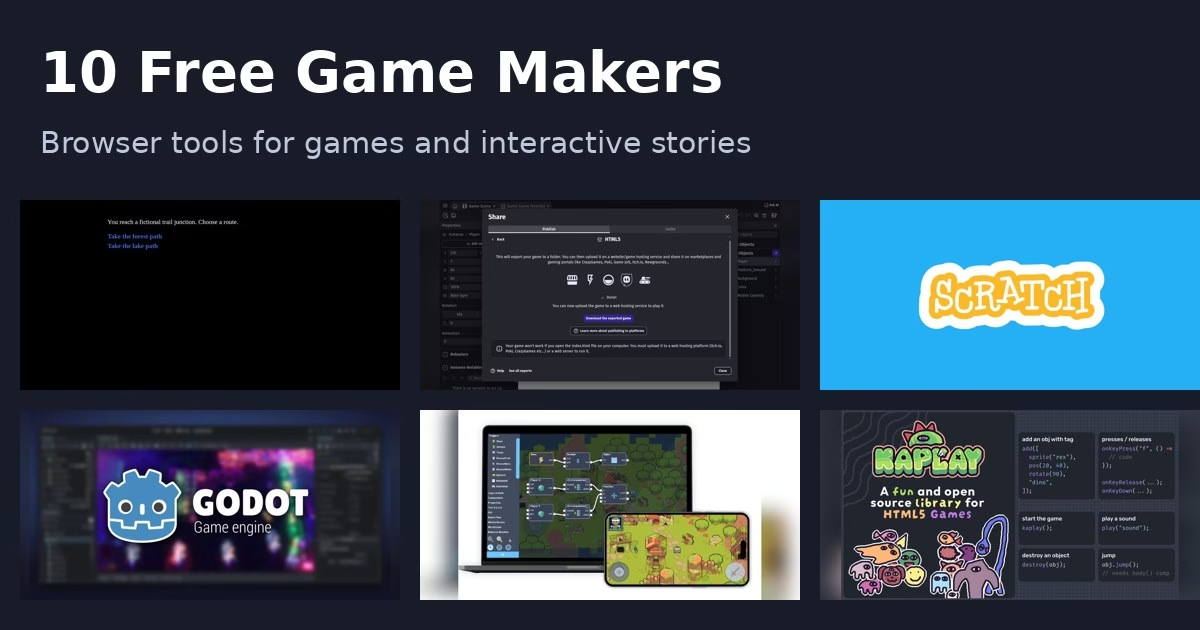
Short answer: yes, you can try a game or interactive story builder in your browser without paying. The Just Create App team tested all ten tools below. In our Twine and GDevelop checks, each let us open an example project and run it without an account, though cloud saving in GDevelop did ask for one.
How we checked
The Just Create App team tested all the tools in this list. For Twine and GDevelop, on 5 October 2026, our team tried a small fictional demo in the desktop browser with AI-assisted browser checks. For Twine we imported a three-passage story, played it and followed both choices. For GDevelop we opened the free Platformer starter, changed the player’s start position, previewed it and exported an HTML5 build. We did not use paid plans, create accounts or publish anything. We did not verify jumping, coin collection or custom game logic in GDevelop, and we did not reopen Twine’s exported file. The descriptions of each tool also draw on its official site. Features and plans change, so check each official page.
If you want to build an app instead of a game, see our guide to the no-code app builders. To plan screens first, try the app design and prototyping tools.
Quick picks
- Interactive stories without code: Twine
- No-code 2D games: GDevelop or Flowlab
- First steps with blocks: Scratch or MakeCode Arcade
- Visual novels: Ren’Py
- Branching story scripts: ink and Inky
- Full engine to grow into: Godot Engine
- Code-first web games: KAPLAY
- Tiny retro games: PICO-8
Comparison at a glance
The 10 tools
1. Twine
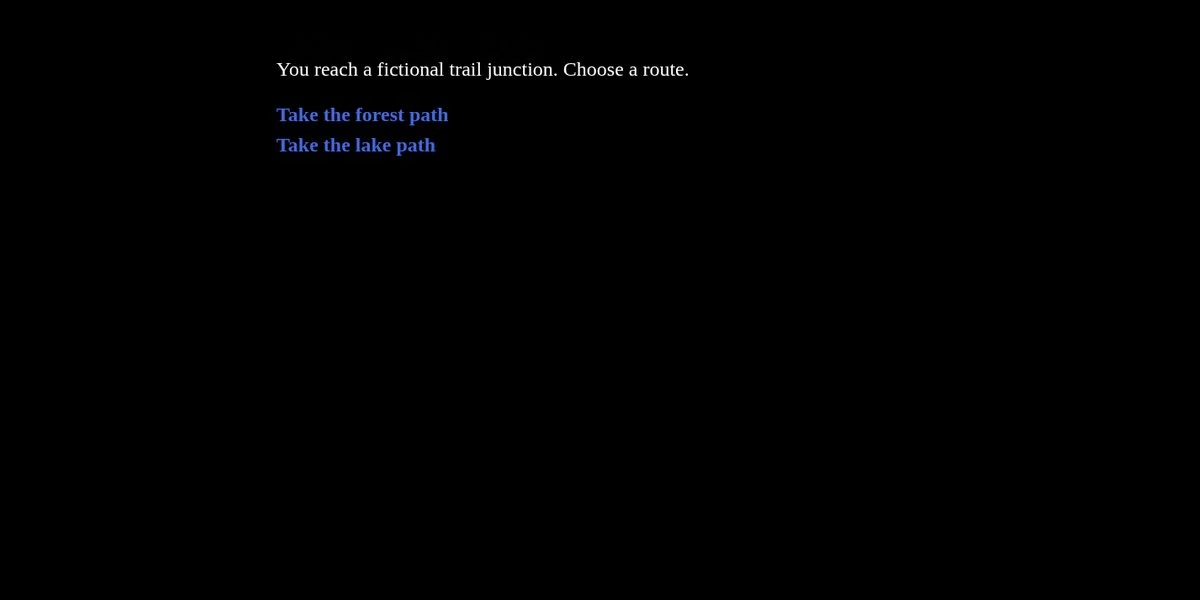
Twine is an open-source tool for telling interactive, nonlinear stories, according to its site. You do not need to code to make a simple story, and you can add variables, conditional logic, images, CSS and JavaScript later. Twine publishes directly to HTML, so you can post the result nearly anywhere. The current version listed on the homepage is 2.12.0, released 10 April 2026. Our team tried it in the browser with a small fictional story: we imported a three-passage file, played it, and both choices led to the right text. Typing passages directly through our automated browser did not work well, so we used an import instead.
Best for: interactive stories and text adventures
2. GDevelop
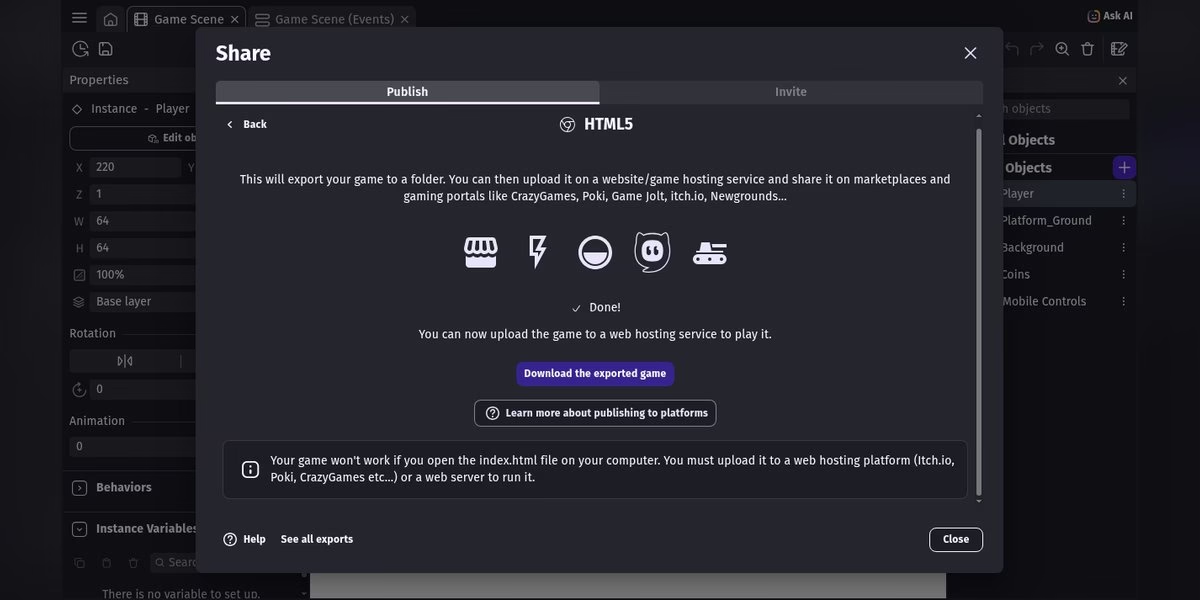
GDevelop calls itself an open-source, no-code game engine, and its site focuses on making games you can publish to Steam and app stores. Our team tried its web editor in a browser with a small fictional project built from the free Platformer starter. Saving to the cloud asked for an account, but choosing not to save let us open the starter, change the player’s start position, preview the result and export an HTML5 build without paying. We did not check jumping, coin collection or custom game logic. The export screen also warns that the game must be uploaded to a web host to run, not opened as a local file.
Best for: no-code 2D games, including platformers
3. Scratch
Scratch describes itself as a free programming language and online community where you can create your own interactive stories, games and animations. It is aimed at young learners, and the Scratch Foundation says it is free for everyone and used by millions of kids. You snap blocks together instead of typing code, which makes it a gentle first step into how games work. Projects can be shared with the community. Read the official site for current account and sharing details before you start a project you care about.
Best for: beginners and young learners making stories, games and animations
4. Godot Engine
Godot is a free and open-source 2D and 3D game engine, and its site describes it for games, cross-platform projects and even XR ideas. It also offers a web editor in the browser. The web editor page lists version 4.7.2 and options to preload a project ZIP. Godot is a full engine with its own scripting, so it asks more of a beginner than block tools do. It suits people who want to grow into larger projects. Check the official docs for what the web editor supports.
Best for: 2D and 3D games for people ready to learn a full engine
5. Flowlab
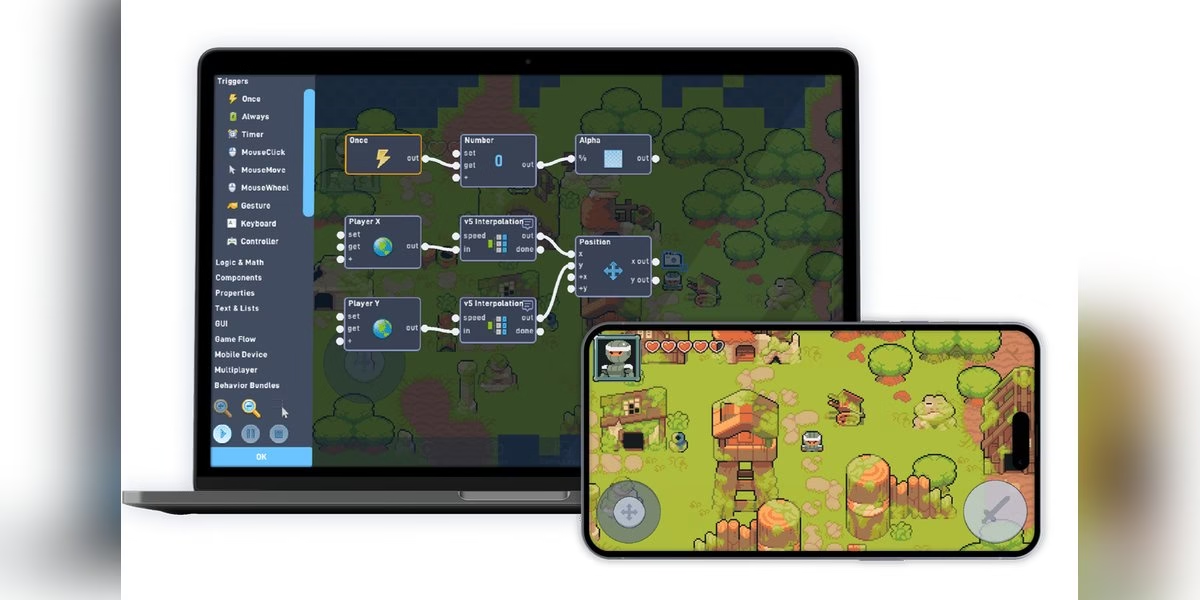
Flowlab says it is the easiest, fastest way to start making your own games right now, with no coding needed. Its homepage describes a game creator that runs online with nothing to download, install or maintain, a flow-based visual logic builder, and sprite and logic editing directly inside the game. It also mentions publishing for iOS, Android, Windows and Mac and says nearly 3 million games have been made with it. Check the official page for current limits and plans.
Best for: making games online with flow-based visual logic
6. MakeCode Arcade

Microsoft MakeCode Arcade is a browser editor for creating and modding retro arcade games. Its own description says you can develop programming skills by quickly creating games with Blocks and JavaScript in the MakeCode editor. That mix lets a beginner start with blocks and switch to code when ready. The pixel-art style keeps projects small, which makes it a good practice ground for ideas such as sprites, scores and simple levels. Check the official site for account and sharing details before you rely on it for a larger project.
Best for: retro arcade games with blocks or JavaScript
7. Ren’Py

Ren’Py is a visual novel engine that helps you use words, images and sounds to tell interactive stories on computers and mobile devices. Its site says it is used by thousands of creators and can make visual novels and life simulation games. Ren’Py is open source and free for commercial use. The site lists the latest official release of Ren’Py 8 as 8.5.3, released on May 15, 2026, and recommends Ren’Py 8 for all projects. A quickstart guide walks you through making a simple game. It is a download, not a browser editor.
Best for: visual novels and life simulation games
8. ink and Inky

ink is inkle’s narrative scripting language for games. The inkle site says its own games have relied on ink to write millions of words of highly branching narrative. If you are new to it, the site suggests downloading Inky, an ink editor that lets you write, test and export your stories in one app. A basics tutorial is written for a non-technical audience who want to put stories on the web, and there is a writer’s manual and an official guide. It is for writers who like working in text, not for drawing game levels.
Best for: writers who want branching narrative scripting
9. KAPLAY
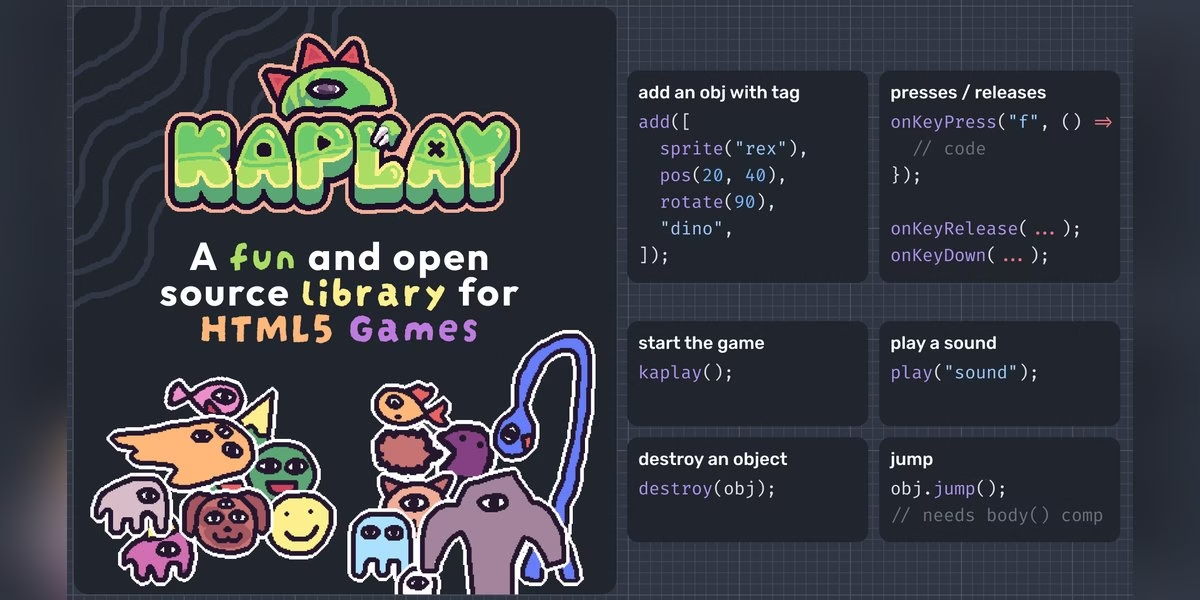
KAPLAY is a free, open-source JavaScript and TypeScript game library for making games on the web. Its homepage promises a friendly API that is easy to learn and teach, a set of examples and assets to get started, and strong TypeScript support. It also links to KAPLAYGround, a place to play with code in the browser, and a community Discord. This is a coding tool, not a drag-and-drop builder, so it fits people who already know some JavaScript and want to make small web games. Use the official examples to judge whether it suits you.
Best for: JavaScript developers making small web games
10. PICO-8
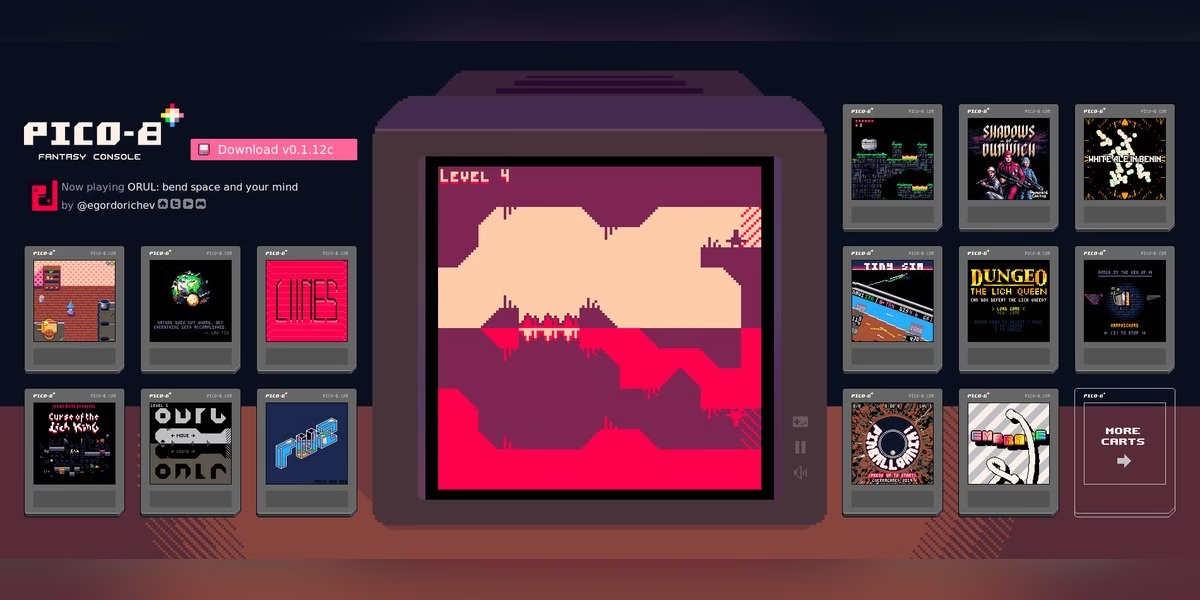
PICO-8 is a fantasy console for making, sharing and playing tiny games. Its site says it feels like a regular console, with harsh limits chosen on purpose to encourage small, expressive designs. Tools for editing code, music, sound, sprites and maps are built in, so you can make a whole game without leaving the environment. Cartridges can be shared as PNG files, played through a web cart player, or exported to HTML5, Windows, Mac and Linux apps. It runs as a desktop app on Windows, Mac or Linux, not in a browser editor. The official page has the current price.
Best for: tiny retro games with built-in code, sprite and sound tools
How to choose
- Start with what you want to make. Stories point to Twine, ink or Ren’Py, while platformers and arcade games point to GDevelop, Flowlab or MakeCode Arcade.
- Decide how much code you want. Scratch and GDevelop avoid typing code, while Godot and KAPLAY expect you to learn it.
- Check whether it runs in a browser. Ren’Py, Inky and PICO-8 are downloads.
- Ask about accounts before you build. In our test, GDevelop asked for an account only to save to the cloud. Check each tool before you invest time.
- Plan where the game will live. An exported HTML5 game needs web hosting to run, as GDevelop’s export screen warns.
Making art or promo content for your game? See our creator apps list.
What to check before you commit to a game maker
All ten tools above let you start for free, but the details that cause trouble come later: where the game runs, how you share it and what the terms say. Check these before you spend a weekend on a project.
Where the tool runs: browser or download
Some tools open in a browser tab, such as Twine, GDevelop’s web editor, Scratch, Flowlab, MakeCode Arcade and Godot’s web editor. Others are downloads: Ren’Py and PICO-8 run as desktop apps, and Inky is an editor you download. If you work on a school or work computer where you cannot install software, a browser tool is the safer choice.
Accounts, saving and your files
In our check, GDevelop’s cloud saving asked for an account, but we could open the starter and preview without one. Before you invest hours in a project, find out where it is saved, whether you can export a copy to your own computer and how you would move it to another tool. A project that lives only in a browser is easy to lose.
Exporting and sharing your game
GDevelop’s export screen warns that an HTML5 game must be uploaded to a web host to run, not opened as a local file. That is common for web games. Decide early where the game will live: a community site, your own web hosting or a page on a games platform. PICO-8 lists cartridges shared as PNG files, a web cart player and HTML5 export, and Twine publishes directly to HTML.
Licenses and selling your game
Read the license before you plan to sell. Ren’Py says on its site that it is open source and free for commercial use, and Godot, GDevelop, Twine and KAPLAY describe themselves as open source. Open source does not cover the art, music or fonts you add, so check the license of every asset you use. For Scratch and other community platforms, read the terms for what you can do with projects you share.
A weekend plan for your first small game
Most first projects fail because they are too big. This plan is a suggested path for a beginner, not a record of what we built. It works with any of the beginner-friendly tools above.
Pick a tiny scope
Choose one idea that fits on a single screen. A short story with three choices, a one-button jumping game, or a catch-the-falling-object game is plenty. Write the idea in one sentence, and write down three things the finished game must do. Cut anything else.
Saturday: make it playable
- Pick the tool that matches your idea: Twine for a branching story, GDevelop or Flowlab for a no-code platformer, Scratch or MakeCode Arcade for blocks.
- Follow the official tutorial or starter project first. In our GDevelop check, the Platformer starter was a quick way to see how a project fits together.
- Get one thing working end to end: a character that moves, or a story with a start and an ending.
Sunday: polish, test and share
- Add sound, a title screen and a way to restart.
- Ask someone who has never seen the game to play it while you stay quiet, and write down where they get stuck.
- Export or publish the game, then open the shared link on a different device to check that it loads.
Common beginner mistakes
- Starting with a big idea instead of a small one.
- Spending the weekend on art before the game is playable.
- Forgetting to check where the game will be hosted until the end.
- Using music or images without checking their licenses.
When the first game is done, pick a bigger tool or a new idea. Godot and KAPLAY suit people who want to learn code, and Ren’Py and ink suit people who want to write.
FAQ
Can I make a game in my browser without signing up?
For a small example, yes in our Twine and GDevelop checks. Twine ran in the browser without an account, and GDevelop let us open the Platformer starter, change a start position, preview it and export an HTML5 build without saving to the cloud. GDevelop asked for an account only when we wanted cloud saving. Other tools, such as Scratch, have their own account options, so check each official page. If you do not create an account, save or export your project to your own computer, because a browser tab can close.
What is the easiest tool for a first game?
Block-based tools such as Scratch and MakeCode Arcade are designed for beginners, and GDevelop describes itself as no-code. Scratch is aimed at young learners and lets you snap blocks together instead of typing code. MakeCode Arcade lets you start with blocks and switch to JavaScript later. If you prefer to write a story, Twine is the simplest start. Choose by the type of game you want, then follow the official tutorial before you try anything of your own.
Can I make an interactive story without coding?
Yes. Twine says you do not need code for a simple story, and you can add variables, conditional logic, images, CSS and JavaScript later if you want. Ren’Py and ink involve scripting: Ren’Py has a quickstart guide for a simple game, and ink offers Inky, an editor that lets you write, test and export in one app. If you are a writer who has never coded, start with Twine, then move to ink or Ren’Py if your story needs more structure.
Does an exported game run by opening the file?
Not always. GDevelop’s export screen says its HTML5 game will not work if you open index.html on your computer. Upload it to a web host or run a web server. This catches many beginners, so plan where the exported game will be hosted. Twine publishes straight to HTML, and PICO-8 lists a web cart player and HTML5 export, so check how each tool tells you to share a finished game.
Which of these tools run entirely in a browser?
Twine, GDevelop’s web editor, Scratch, Flowlab, MakeCode Arcade and Godot’s web editor all offer a browser editor according to their sites. Ren’Py, Inky and PICO-8 are downloads, and KAPLAY is a JavaScript library that you use with a code editor, with KAPLAYGround as a place to try code in the browser. Features in a browser version can differ from the download, so check the official docs.
Can I sell a game made with a free tool?
It depends on the tool and on the assets you use. Ren’Py says it is open source and free for commercial use. For other tools, read the license and terms on the official site, and check the license of every image, sound and font you add. Platforms with community sharing, such as Scratch, have their own rules for shared projects. If you plan to sell, keep a note of where each asset came from.
Which tool should I pick if I want to learn to code later?
Scratch and MakeCode Arcade begin with blocks, and MakeCode lets you switch to JavaScript. Godot is a full engine with its own scripting, and KAPLAY is a JavaScript and TypeScript library, so both ask for more. A common path is to start with blocks to learn how games work, then move to a code-first tool when you want more control.
Did you test all ten tools?
Yes. The Just Create App team tested all ten tools in this list, and the “How we checked” section near the top explains what we did. The descriptions also draw on each tool’s official site. Plans and features change, so check each official page before you start a project.





Leave a Reply