

ZoomInfo is the largest commercial B2B contact database on the market: an AI-driven go-to-market platform that tells sales and marketing teams who to contact, when to contact them, and what to say. It claims 500 million contacts, 100 million companies and more than 35,000 customers, it publishes almost no pricing, and it sits behind some of the biggest outbound sales machines in B2B at a time when tech sales is harder than ever. This guide explains what ZoomInfo actually is in 2026, what each part of the platform does, how pricing works when the official answer is quote-only, who uses it, and when a cheaper alternative is the smarter buy.
Plenty of people land here after a rep demo, a cold email that knew a little too much, or a pricing conversation that ended with “it depends.” The honest answer is that ZoomInfo is not one product but a stack: a data foundation, a set of AI agents that act on that data, and applications for sales, marketing, talent and operations teams built on top. Understanding which layer you are actually buying is the key to understanding both the value and the price tag.
What Is ZoomInfo? The Short Answer
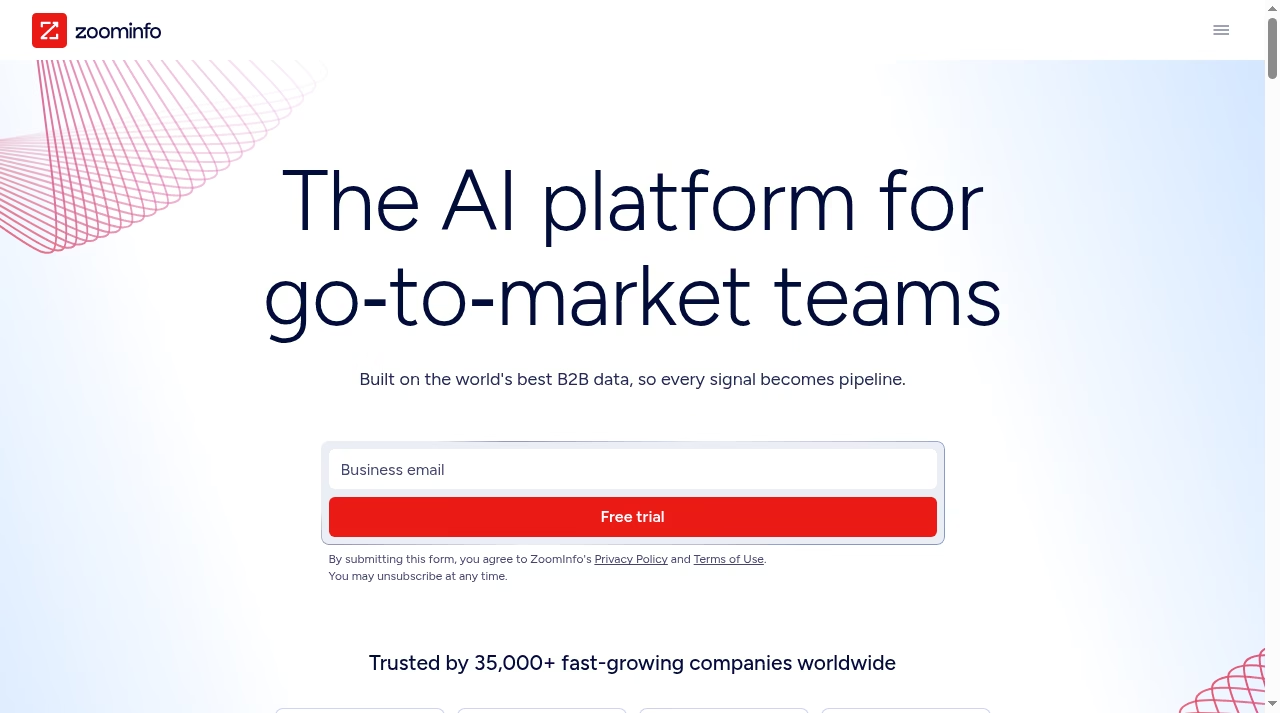
ZoomInfo is a US-based software company whose platform helps B2B organizations find, win and grow customers. In the company’s own current description, it is an all-in-one AI go-to-market (GTM) platform for sales, marketing, revenue operations and customer success teams, built on a verified B2B data foundation it calls the GTM Context Graph, which processes more than 1.5 billion data points a day (ZoomInfo’s website, accessed October 26, 2026).
In plain English: ZoomInfo collects and verifies business contact and company information – email addresses, direct-dial and mobile phone numbers, org charts, technologies used, funding events, hiring signals – and wraps it in tools that let revenue teams search that database, build prospect lists, score which accounts are showing buying intent, and push those contacts into sequencers, CRMs and ad platforms. If you have ever received a cold call from a sales rep who knew your job title, your direct line and the software your company runs, there is a reasonable chance a tool in this category was involved, and ZoomInfo is the category’s biggest name.
The scale ZoomInfo claims (its own figures, accessed October 26, 2026):
- 500 million-plus contacts and 100 million-plus companies in the database, including 200 million-plus verified business emails, 135 million-plus verified phone numbers and 120 million-plus direct dials
- 35,000-plus customers, including, the company says, more than half of the Fortune 500 and 8 of the 10 largest companies in the world
- 1,891 customers paying $100,000 or more per year, as of the company’s second-quarter 2026 results published on August 5, 2026
- Quarterly revenue of $310.4 million in Q2 2026, up 1.2% year over year, with full-year 2026 revenue guidance of roughly $1.21 billion
How ZoomInfo Got Here: From DiscoverOrg to GTM
The company behind ZoomInfo is older than the brand. Henry Schuck founded DiscoverOrg in 2007 in Vancouver, Washington, funding it, by his own account, with $25,000 on credit cards while he was in law school. DiscoverOrg built its name on human-verified org charts and contact data for enterprise IT sales teams. In 2019, DiscoverOrg acquired ZoomInfo – itself a long-running contact-database business – and adopted the acquired company’s name. The combined company went public in 2020 on Nasdaq, and in 2025 it changed its ticker symbol from ZI to GTM to match its repositioning as a go-to-market platform rather than a data vendor (company history as published on ZoomInfo’s about page, accessed October 26, 2026).
That repositioning matters for understanding the product in 2026. ZoomInfo no longer describes itself as a database with a search bar. It now sells three layers: the data foundation (the GTM Context Graph), an agent orchestration layer that executes work on top of the data, and the applications – GTM Workspace, GTM Studio and GTM.AI – through which people and machines access it. The rebrand is marketing, but it reflects a real shift: the company now wants to be judged on the workflows its data powers, not just the size of its contact list.
The financial picture behind the rebrand is more sober, and useful context if you are negotiating a contract. In its Q2 2026 results (published August 5, 2026), ZoomInfo reported GAAP revenue growth of just 1.2% year over year, a net revenue retention rate of 89% – meaning the existing customer base is spending 11% less than a year ago – and a goodwill impairment charge of $650.5 million. A vendor whose existing customers are shrinking their spend is a vendor with room to negotiate, a point we return to in the pricing section.
What ZoomInfo Actually Does
ZoomInfo’s product surface is wide, and the names change often. Here is what the platform consists of in October 2026, organized by the job each part does.
ZoomInfo Sales (the core prospecting platform)
This is the product most people mean when they say “ZoomInfo.” It lets reps search the contact and company database with filters for role, seniority, department, location, company size, industry, technologies used and dozens of other attributes, then export verified emails and phone numbers into their CRM or sales engagement tool. Most teams pair it with LinkedIn for prospecting research – our guide to advanced Boolean search on LinkedIn Sales Navigator covers that side of the workflow. The sales plans shown on ZoomInfo’s pricing page (accessed October 26, 2026) are three: ZoomInfo Professional (contact and company profiles, search and export, CRM integrations – it sits naturally among the best Salesforce integration tools – a Chrome extension, a mobile app and AI-assisted email generation), Copilot Advanced (adds buying-intent signals, website visitor identification, target account prioritization, job-change alerts and automated outreach workflows) and Copilot Enterprise (adds real-time intent, earnings-call and competitor signals, AI-generated account summaries and a dedicated customer success manager).
ZoomInfo Marketing
The marketing plans turn the same data into audiences. The tiers – Demand, ABM Lite and ABM Enterprise – bundle contact and company profiles with intent topics, dynamic audience building, display advertising through ZoomInfo’s own network, Facebook, LinkedIn and Google retargeting, website visitor identification, form enrichment and account-based campaign reporting. This is the part of the platform that competes with account-based marketing suites and B2B marketing automation tools such as Salesforce Pardot (Marketing Cloud Account Engagement), and it is priced and sold separately from the sales product.
Chorus and Chat
ZoomInfo acquired Chorus.ai in 2021, and Chorus remains the platform’s conversation-intelligence module: it records, transcribes and analyzes sales calls and meetings so managers can coach on real conversations and so the platform can mine calls for buying signals. ZoomInfo Chat is a data-powered website chatbot that identifies visitors and routes conversations. Both plug the data they capture back into the wider signal graph. Teams that call at volume often extend this with telephony – see our guide to integrating auto-dialers with CRM systems.
ZoomInfo Talent and Operations
The same database powers a recruiting product – candidate search with contact data, sourcing alerts and company scoops – sold to talent teams, and an operations layer for RevOps: CRM data cleansing, enrichment, deduplication, lead scoring and routing – unglamorous work, but dirty data is a core reason CRM projects fail. If your interest is the recruiting side, note that handling candidate data raises its own compliance questions; our guide to data privacy in talent sourcing and recruitment covers that angle in detail.
GTM.AI, GTM Studio and the API
The newest layer is the developer and AI-agent surface. GTM.AI exposes ZoomInfo data through an API, a command-line interface and an MCP server, so engineering teams can build enrichment into their own apps, internal tools and AI agents. In a notable 2026 shift, ZoomInfo made this surface self-serve: its developer platform has introduced consumption-based pricing with free starter credits for new signups, per an October 2026 update to one of the third-party pricing guides we reviewed, even though the enterprise API remains quote-only. GTM Studio handles waterfall enrichment, checking more than 25 data sources and returning the highest-confidence match.
ZoomInfo’s Database: Size, Sources and Accuracy
The database is the product. Everything else in the stack is a way to query, act on or feed it. ZoomInfo assembles its records from a contributory network of users who share business contacts, plus public web sources, licensed third-party data and, increasingly, the engagement data flowing back from its own tools – calls, meetings, emails and website visits. The company says it processes more than 1.5 billion data points a day to keep records current (its own figure, accessed October 26, 2026).
How big is it relative to the market? On its about page, ZoomInfo publishes its own comparison: its 500 million-plus contacts and 100 million-plus companies against, it says, 270 million contacts and 70 million companies for Apollo.io, 280 million contacts and 30 million companies for Lusha, and 440 million contacts for Cognism. Treat those as the vendor’s own marketing claims, because competitors tell different stories on their own sites – Lusha’s homepage, for example, advertises 515 million-plus verified contacts (accessed October 26, 2026). Database-size claims across this industry are not audited, and every vendor counts differently. What is not in dispute is that ZoomInfo sits in the top tier of database depth, especially for US direct dials, which is historically where it built its reputation.
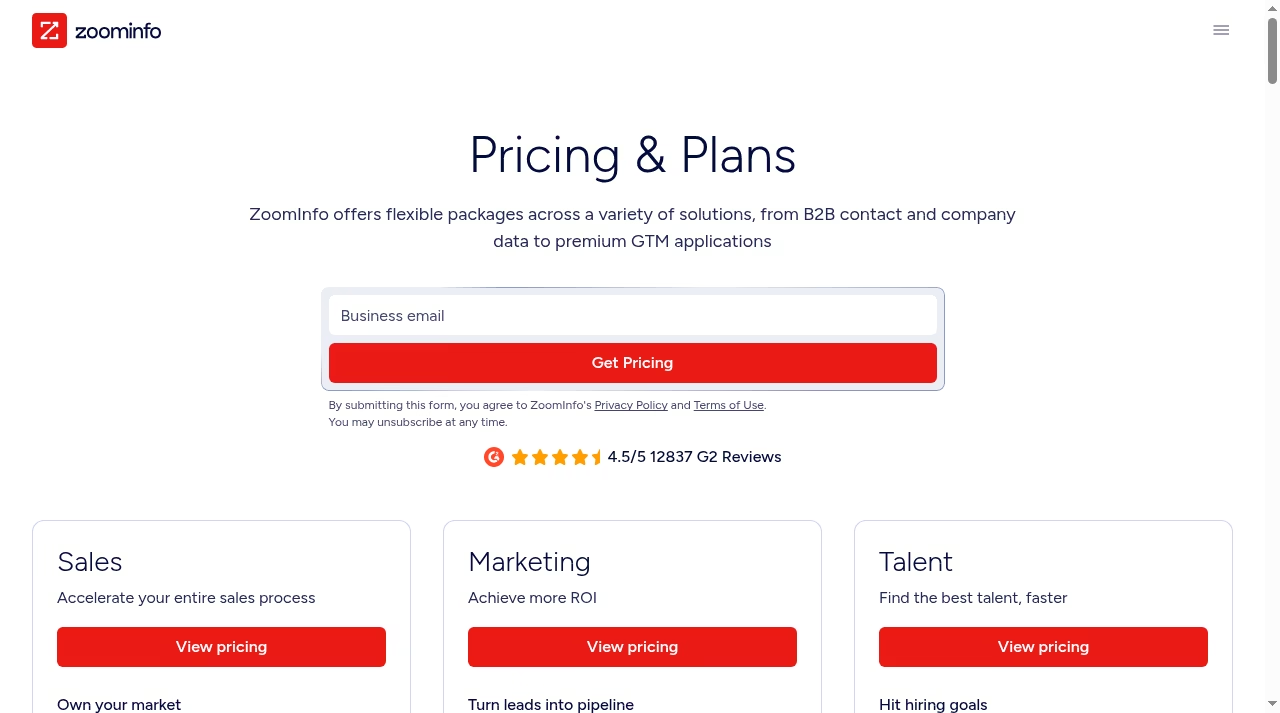
Accuracy is the more practical question. ZoomInfo describes its records as verified, and its pricing page displays a 4.5 out of 5 rating across more than 12,800 reviews on a major software review platform (accessed October 26, 2026). In practice, accuracy in this category always varies by segment, seniority and geography – US enterprise contacts are generally the strongest coverage across all vendors, while smaller companies and non-US records decay faster. The only reliable test is your own target list, which is what the free trial is for. Whichever vendor you choose, good data governance on your side matters as much as the source: enrichment amplifies whatever hygiene your CRM already has.
What Does ZoomInfo Cost in 2026?
This is the question everyone asks and ZoomInfo deliberately does not answer in public. Its pricing page names the plans and prints no dollar figure on any of them, stating only that pricing is based on features and functionality, number of licenses and credit usage (accessed October 26, 2026). Third-party pricing analyses consistently describe annual contracts negotiated with a sales rep, a three-seat minimum and no monthly billing; ZoomInfo itself publishes none of these terms.
That said, 2026 has produced unusually consistent third-party reconstructions. Several independent pricing analyses published and updated between March and October 2026 – including one based on an actual ZoomInfo sales quote collected in March 2026 and another drawing on buyer-reported contract data from a SaaS spend-management marketplace covering roughly 1,577 purchases – converge on the same structure:
- Platform fee, per year: about $14,995 for Professional, $24,995 for Advanced and $39,995 or more for Elite
- Per-seat licence, per year: about $1,500 on Professional and $2,500 on Advanced, with a reported three-seat minimum
- Credits: Professional includes roughly 5,000 bulk export credits a year for the whole account; Advanced includes about 10,000 bulk credits plus 1,000 per user per month. One credit is spent each time a contact or company record is exported or revealed; viewing records is free
- The median real contract: $33,500 a year across roughly 1,577 buyer-reported purchases, with recorded deals running from about $7,240 to $156,042 (marketplace buyer data updated February 2026, cited by an October 2026 pricing analysis)
As a worked example with the arithmetic done openly: a three-seat Professional contract at the reconstructed figures is $14,995 plus three seats at $1,500, which works out to $19,495 a year, or about $1,625 a month – paid annually, up front. A five-seat Advanced contract reconstructs to $24,995 plus five times $2,500, or $37,495 a year. These are reconstructions from dated third-party analyses, not ZoomInfo list prices, and your quote will vary with seats, credits and add-ons.
The add-ons are where invoices grow: the same analyses describe intent data, international data passes, the Engage sequencer, email verification and enterprise API access each priced on top of the platform fee, with credit overage rates set per contract. None of these prices are published, so treat any figure you are quoted as a starting point for negotiation rather than a rate card.
Two contract mechanics deserve attention before you sign. First, renewal: third-party buyer guides describe auto-renewing annual contracts that require written notice before the renewal date, so diarize that date the day you sign. Second, escalation: buyers report annual price escalators and renewal increases, so a written renewal cap in the order form is one of the cheapest concessions to win – particularly against the backdrop of the 89% net revenue retention the company reported for Q2 2026. Because none of these terms are published, the written quote and order form are the only reliable record of your term length, seat count, credit allotment, overage rates, renewal deadline and cancellation rights. Check them before signing, not after.
Is there a free option? Two, actually. ZoomInfo Lite is a permanent free tier for individual sellers, founders and small teams: no credit card, no expiry, with 10 contact-export credits a month (25 on the Community Edition), the Chrome extension and a HubSpot integration – enough to evaluate data quality, not enough to run outbound on. ZoomInfo also offers a time-limited free trial of the main platform, and the GTM.AI developer surface includes the free starter credits noted above.
Who Uses ZoomInfo – and Who Should Skip It
ZoomInfo’s own description of its customer profile is unusually candid: sales, account management (the teams focused on retention and customer relationships), marketing and RevOps teams at B2B companies with 100 or more employees (its about page, accessed October 26, 2026). That matches the pricing reality. The customers who get full value are outbound-heavy organizations that will actually consume thousands of contact exports a month, run structured sequences against them, and plug intent signals into an existing sales process – the kind of teams that live inside their CRM and a disciplined sales pipeline stack. Enterprise ABM programs are the other natural fit, combining the marketing plans with the sales platform.
Who should think twice:
- Solo founders and very small teams. The three-seat minimum means a one-person startup pays for three seats on an annual contract – roughly $19,495 in year one at the reconstructed figures – before exporting a single lead. The Lite tier or a self-serve competitor is the honest starting point at this size.
- Teams without an outbound motion. If your pipeline is mostly inbound, partnerships or product-led, a five-figure contact database will sit idle. Start with social selling and organic lead generation and revisit when outbound becomes a real channel.
- Companies selling mostly outside North America. Coverage is deepest for US contacts; international records typically require the paid Global Data Passport add-on and still vary in quality. European-focused buyers often shortlist Cognism precisely because its database and compliance positioning are built for EMEA.
- Anyone unwilling to manage the contract. Between credit pools, add-on modules, notice windows and escalators, a ZoomInfo contract rewards an attentive buyer. If nobody on your team will own that, the total cost of ownership will drift upward every renewal.
ZoomInfo vs the Alternatives in 2026
The sales-intelligence market has split into two pricing philosophies: quote-only enterprise platforms (ZoomInfo, Cognism, 6sense) and self-serve tools with published per-user prices (Apollo, Lusha, UpLead, Hunter). Here is how the main alternatives position themselves, with entry prices verified against their live pricing pages on October 26, 2026 where published.
Apollo.io
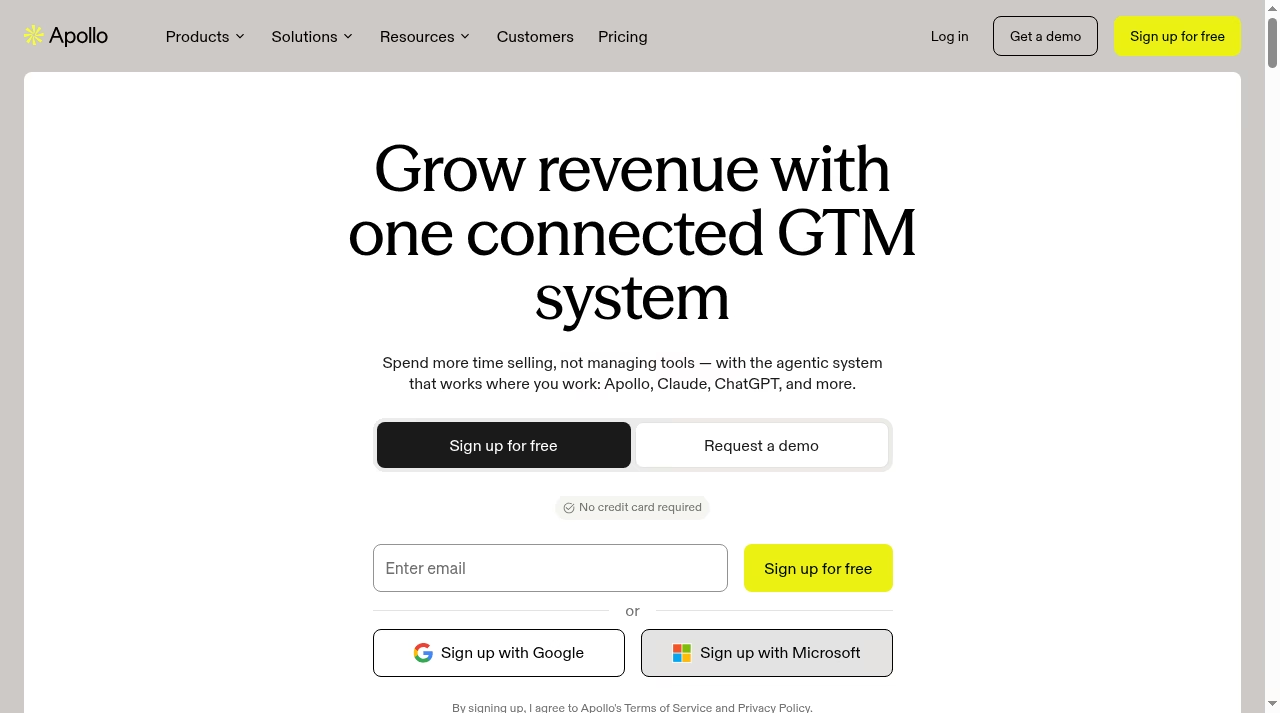
Apollo.io is the self-serve challenger that put real pressure on ZoomInfo’s pricing. It publishes its rates: a permanent free plan, then published per-seat paid plans – Basic and Professional tiers plus a quoted Custom tier – offered with both monthly and discounted annual billing, so the effective per-user price depends on the billing term (its official pricing page, October 26, 2026). The database is smaller on paper and international coverage is thinner, but for a five-person team the annual bill is a fraction of a ZoomInfo contract, which is why cost-focused 2026 comparisons consistently describe ZoomInfo as several times Apollo’s price for the same seat count.
Cognism
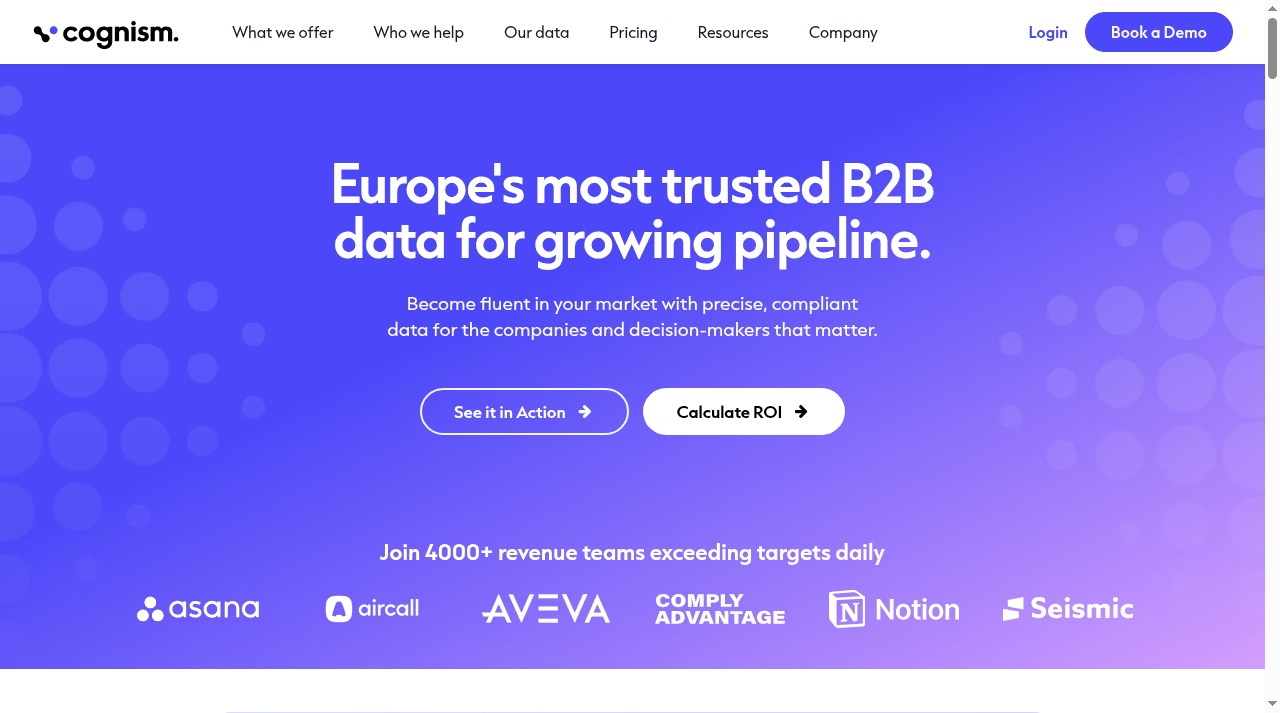
Cognism is the EMEA-focused answer to ZoomInfo, marketing itself as Europe’s most trusted B2B data provider with an emphasis on GDPR-compliant, phone-verified mobile numbers. Like ZoomInfo it sells only through custom quotes with no free plan, so expect a similar sales process; the practical difference is data strength in European markets and a compliance-first posture rather than US database depth.
Lusha
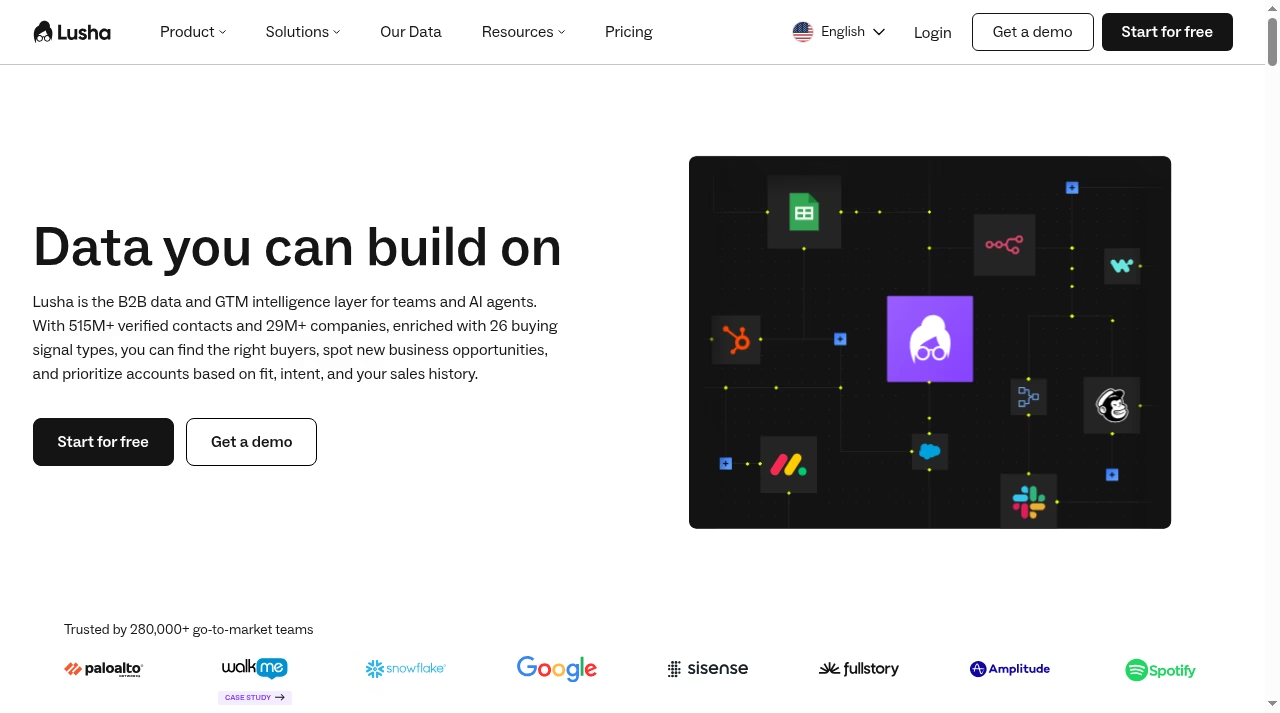
Lusha targets smaller teams with a genuinely usable free plan (up to 40 credits a month, where revealing an email costs one credit and a phone number five) and paid plans published from $37.45 a month on annual billing, $49.90 month-to-month (its pricing page, October 26, 2026). It will not match ZoomInfo on intent data or enterprise workflow depth, but for a small team that mainly needs verified emails and direct dials a few hundred times a month, it covers the core job at a self-serve price.
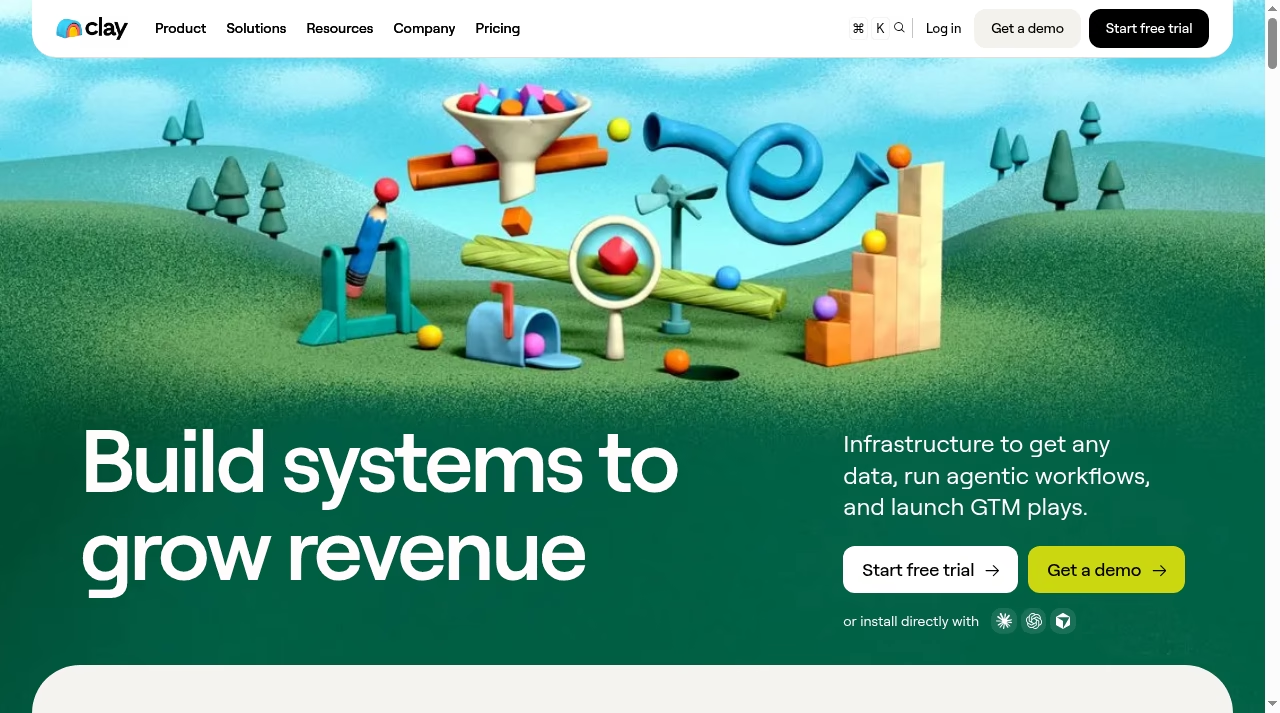
Clay
Clay is a different animal: not a database but a workflow engine that queries more than 75 data providers – including ZoomInfo itself – and returns the best match, a technique called waterfall enrichment. RevOps and growth engineers use it to build enrichment pipelines that would cost far more in per-seat licences. The trade-off is that it rewards technical users; a sales team wanting a ready-made prospecting UI will find ZoomInfo or Apollo easier to live in. We covered the broader category in our guide to data governance and enrichment practices.
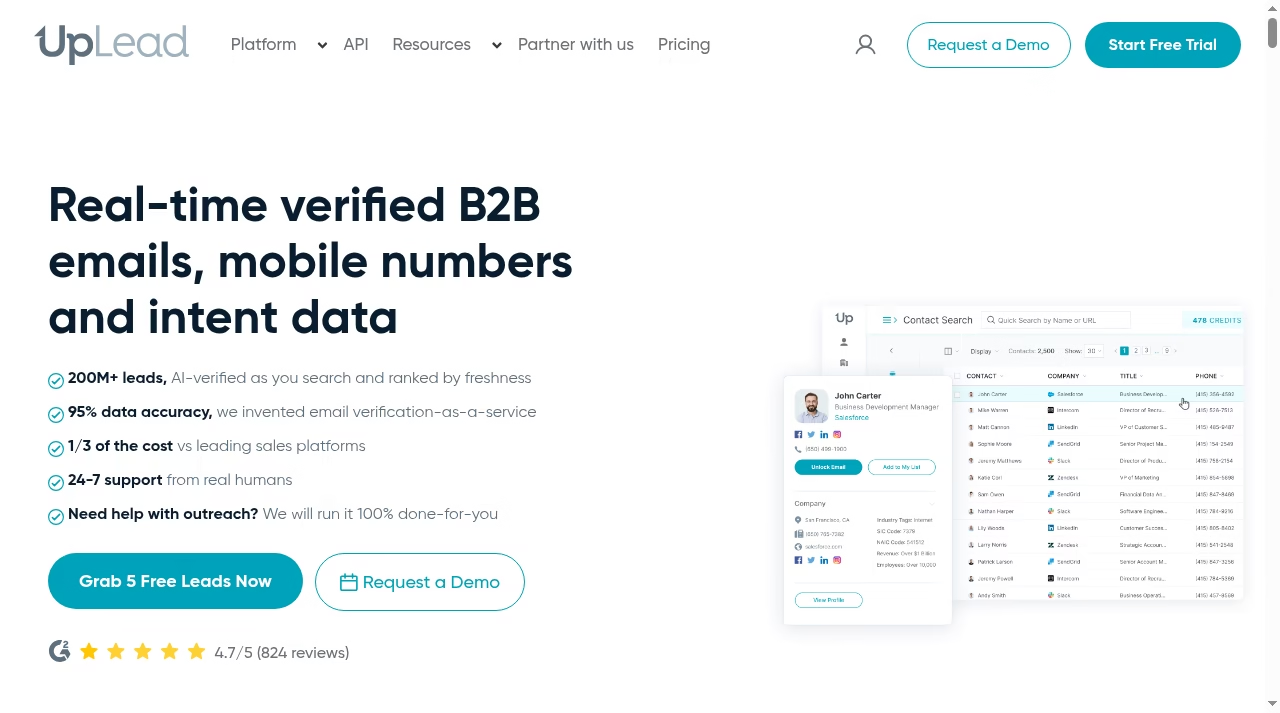
UpLead
UpLead competes on verified accuracy and transparent pricing: a 7-day free trial, then published plans from $99 a month for 170 credits, where one credit unlocks one contact with email and mobile direct dial (its pricing page, October 26, 2026). Its pitch – real-time email verification at the moment of download – is aimed squarely at buyers burned by bounce rates from bigger databases.
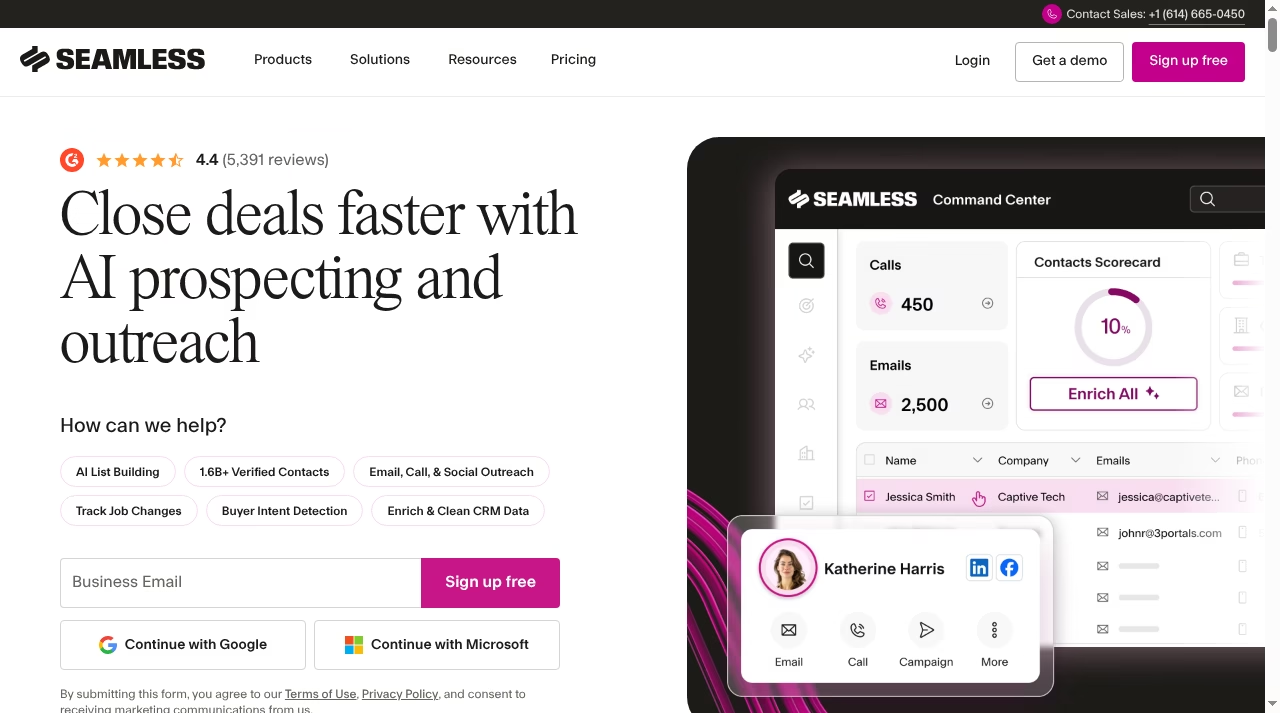
Seamless.AI
Seamless.AI pitches AI-driven real-time contact search with a free sign-up tier and quote-based team plans. Its positioning emphasizes finding direct dials and emails live rather than serving them from a static database, and it has long been one of the most aggressive marketers in this category – worth trialling head-to-head against ZoomInfo’s free tier on the same target list before committing to either.
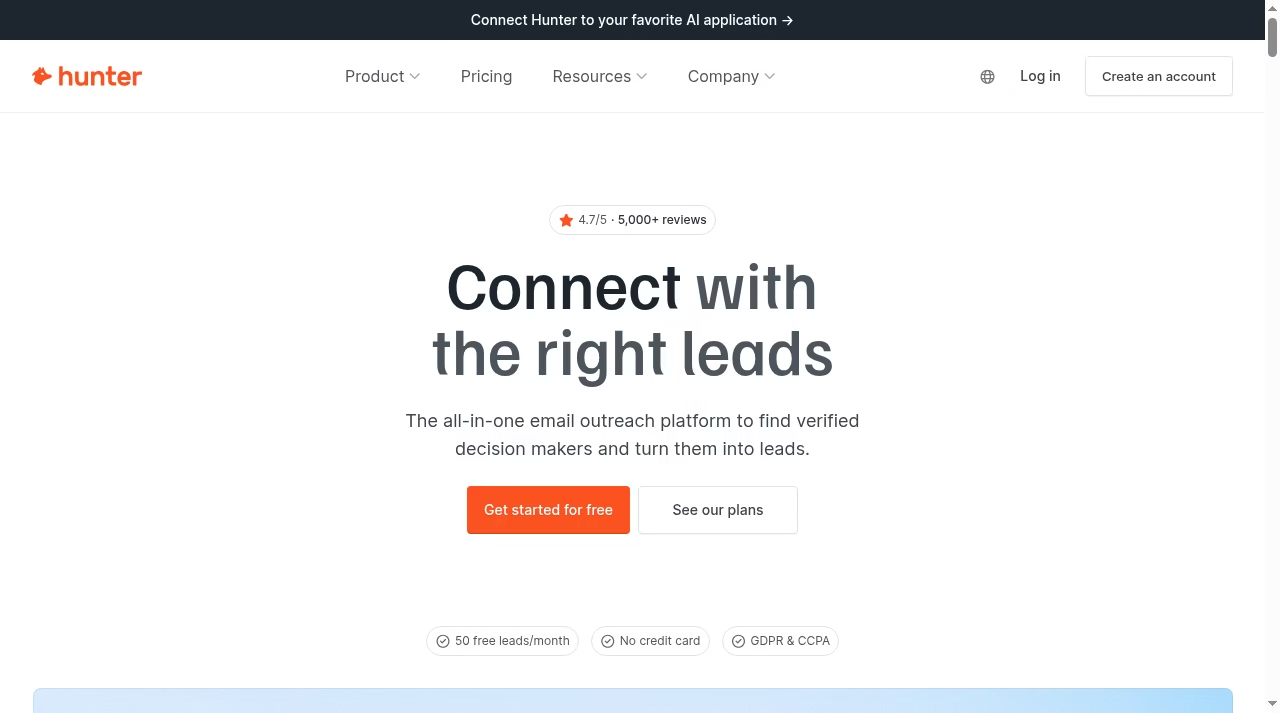
Hunter.io
Hunter.io is the email specialist: domain search, email finding and verification, plus lightweight outreach sequences, with 50 free leads a month and no credit card required (its homepage, October 26, 2026). It does not try to be a full GTM platform – no phone data depth, no intent signals – but for pure email discovery it is one of the most cost-efficient tools on the market, and our guide to email finders in sales explains where this category fits in a stack.
6sense
6sense sits at the enterprise ABM end: its strength is intent intelligence – identifying which accounts are in-market before they fill a form – with orchestration across ads, email and sales plays. It overlaps ZoomInfo’s marketing plans more than its sales database, and larger organizations sometimes run both. Like ZoomInfo, it is quote-only and sold to teams with the operations maturity to act on the signals.
| Platform | Pricing model | Entry pricing (October 2026) | Best fit |
|---|---|---|---|
| ZoomInfo | Quote-only; annual terms and a 3-seat minimum reported by third parties | Quote-only; request a current quote | Outbound-heavy B2B teams at 100+ employees; enterprise ABM |
| Apollo.io | Self-serve, published per-seat | Free plan; paid per-user plans, price depends on billing term (official page, Oct 2026) | SMB and mid-market outbound on a budget |
| Cognism | Quote-only, no free plan | Not published | EMEA-focused teams needing compliant European data |
| Lusha | Self-serve, published monthly | Free (40 credits/mo); paid from $37.45/mo on annual billing (official page, Oct 2026) | Small teams needing verified emails and dials |
| Clay | Self-serve credits plus enterprise | Free trial; usage-based | RevOps teams building custom enrichment pipelines |
| UpLead | Self-serve, published monthly | 7-day free trial; paid from $99/mo (official page, Oct 2026) | Buyers prioritizing verification and low bounce rates |
| Seamless.AI | Free sign-up plus team quotes | Free tier; team plans quoted | High-volume outbound prospecting teams |
| Hunter.io | Self-serve, published plans | Free (50 leads/mo, official page Oct 2026) | Email-only discovery and verification |
| 6sense | Quote-only | Not published | Enterprise ABM and intent-led orchestration |
Is ZoomInfo Worth It?
ZoomInfo is worth its price when three conditions hold: your team runs genuine outbound volume, you will use the signal and intent layers rather than just the contact search, and someone owns the contract. For those organizations – typically B2B companies past 100 employees with dedicated sales development teams – the database depth, the direct-dial coverage and the workflow integrations justify a five-figure annual spend, and the company’s 89% net revenue retention gives new buyers real negotiating room on seats, credits, add-ons and renewal caps.
For everyone else, the 2026 market offers an honest gradient. Start free: ZoomInfo Lite, Apollo’s free plan, Lusha’s 40 monthly credits and Hunter’s 50 free leads let you test data quality on your actual target list at zero cost. If you outgrow them, the self-serve paid tiers cover most small-team needs for under $200 a month. Move to an enterprise quote only when the usage math – exports per rep per month, intent-led pipeline, ABM spend – clearly clears the platform fee. The worst outcome in this category is a five-figure annual contract used as a $3,000 contact list.
Whatever you choose, remember that the database is only one input. Converting it into pipeline still depends on the rest of your stack – your CRM discipline, your outreach tooling and your team’s craft. Our roundups of the best digital tools for sales, the best AI tools for small business, the top AI tools to try, easy CRM platforms for small sales teams and marketing automation platforms can help you build around whichever data provider you pick.
Frequently Asked Questions
Is ZoomInfo free?
ZoomInfo Lite is a permanent free tier with 10 contact export credits a month (25 on the Community Edition), no credit card and no expiry, aimed at individual sellers and founders. The full platform is not free: paid plans are typically sold as annual contracts, and third-party 2026 analyses put even entry configurations in the mid five figures once seats are included. ZoomInfo also offers a time-limited free trial of the main product, and its GTM.AI developer surface gives new signups free starter credits to test with.
How much does ZoomInfo cost per month?
ZoomInfo publishes no official prices: its pricing page (October 26, 2026) lists plans but no dollar figures. Third-party pricing analyses published between March and October 2026 describe annual contracts with a three-seat minimum and reconstruct the tiers at about $14,995 a year for Professional, $24,995 for Advanced and $39,995 or more for Elite, plus a reported $1,500 to $2,500 per seat per year. At those reconstructed figures, a three-seat Professional contract works out to about $19,495 a year – roughly $1,625 a month, paid annually up front. Treat that as an estimate, not a quote.
Who owns ZoomInfo?
ZoomInfo is a public company traded on Nasdaq under the ticker GTM – it changed from ZI in 2025. The company was founded as DiscoverOrg in 2007 by Henry Schuck, who still serves as CEO and chairman, took the ZoomInfo name after acquiring the original ZoomInfo business in 2019, and went public in 2020. Its headquarters are in Vancouver, Washington.
What is ZoomInfo used for?
Five jobs, mostly: outbound prospecting with verified emails and direct-dial phone numbers; building and prioritizing target account lists from fit and buying-intent signals; enriching and cleaning CRM records; running account-based advertising and website chat programs; and – through its API, CLI and MCP interfaces – feeding verified B2B data into custom applications and AI agents.
Is ZoomInfo better than Apollo.io?
It depends on budget and depth requirements. ZoomInfo publishes larger database figures (500 million-plus contacts), bundles intent data and conversation intelligence at its top tier, and sells annual contracts that typically land in the tens of thousands of dollars. Apollo publishes self-serve per-user plans with monthly and discounted annual billing, so the effective price depends on the billing term (its official pricing page, October 2026) alongside a permanent free plan, which is why smaller teams usually start there and why 2026 cost comparisons put ZoomInfo at several times Apollo’s price for the same seat count.
Can I cancel a ZoomInfo subscription?
In practice, only at renewal. Third-party buyer guides describe ZoomInfo contracts as annual and auto-renewing unless you give written notice before the renewal date, with mid-term cancellation generally unavailable. The exact notice window and renewal terms are not published, so confirm them on your written quote and order form – and negotiate a renewal cap – before signing rather than after.
Is ZoomInfo data accurate?
ZoomInfo describes its database as verified and says it processes more than 1.5 billion data points a day across 500 million-plus contacts (its own figures, October 2026). Independent sentiment is broadly positive – its pricing page displays a 4.5 out of 5 rating across more than 12,800 reviews on a major software review platform – but accuracy in this category always varies by segment and region. Test data quality on your own target list during the free trial before signing an annual contract.





Leave a Reply