



There is no Spotify for Business on Spotify’s own price list, and there never has been under that exact name. Spotify’s terms grant personal, non-commercial use only, so the Premium account on the barista’s phone is not a legal way to soundtrack a shop floor. The product that actually carried the name is now called Soundtrack – its site introduces it as “formerly Spotify Business” – and it exists precisely because consumer streaming subscriptions do not cover playing music for customers. This guide explains what the myth gets wrong, what the licensing rules actually say in 2026, and what a compliant setup costs and looks like for a real business.
If you run a cafe, salon, gym, retail store or office, music is part of the product you sell, whether or not it appears on the menu. It is also one of the easiest compliance details to get wrong, because the app everyone already uses at home feels like it should work at work. It does not, and the gap between those two situations is exactly where the “Spotify for Business” myth lives. We cover small-business operations regularly – from employee scheduling tools to what Gusto actually costs – and this one trips up even careful owners.
What “Spotify for Business” Actually Is in 2026
Search for Spotify for Business and you will find three different things wearing the same name. First, a historical product: a business streaming service once called Spotify Business (and later Soundtrack Your Brand), which today operates as Soundtrack – its website bills it plainly as “Soundtrack, formerly Spotify Business” and states that “Spotify doesn’t offer business accounts – its terms only allow personal use” (accessed October 26, 2026). Second, a misunderstanding: the belief that a consumer Spotify account, perhaps upgraded to Premium, becomes business-legal when a company pays for it. It does not. Third, a collection of unofficial blog posts and marketplace listings selling “Spotify business accounts” that have no connection to Spotify at all.
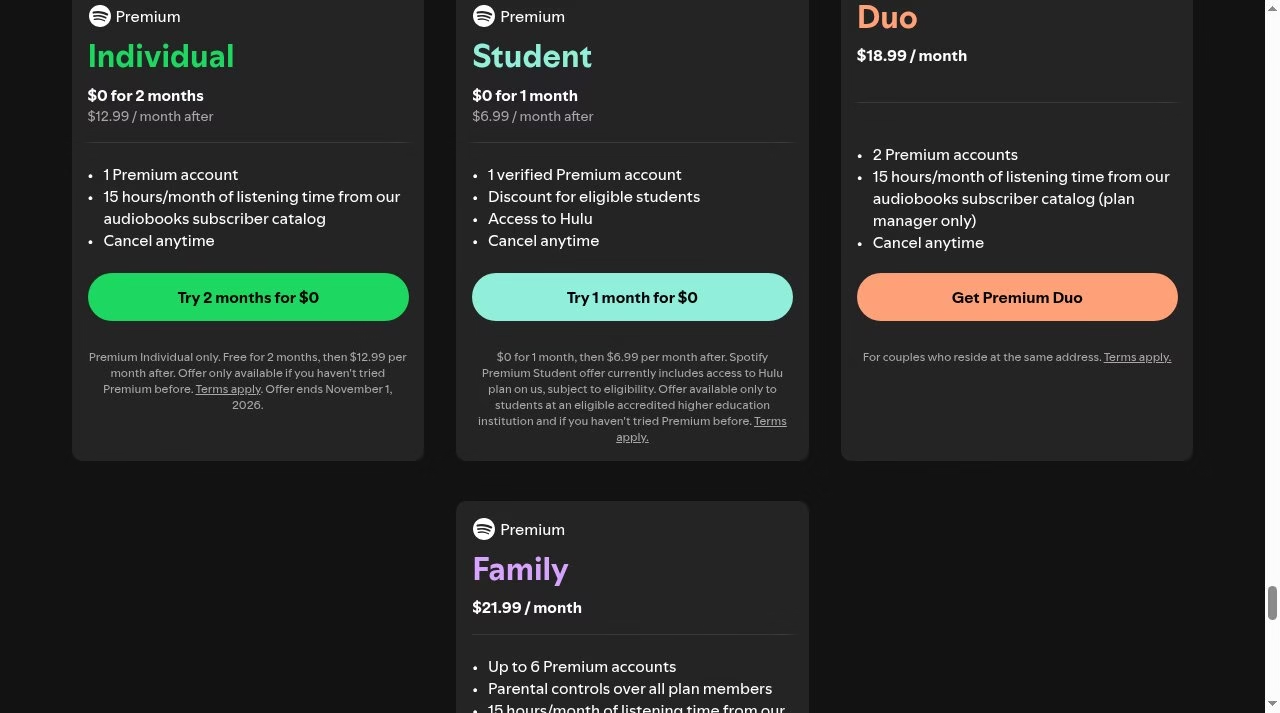
Spotify’s own consumer lineup makes the point clearly. Its Premium page (accessed October 26, 2026) lists exactly four plans, all aimed at individuals and households: Individual at $12.99 per month, Duo at $18.99, Family at $21.99, and a discounted Student plan at $6.99 per month. There is no business tier, no multi-location option, no public-performance license attached to any of them. Spotify is enormous – its company information page reports 788 million users including 306 million subscribers across 184 markets, with a catalog of more than 100 million tracks – but that scale is built on personal listening, and its licensing deals with labels are written for personal listening.
The confusion is understandable because Spotify’s freemium model is the textbook example of a consumer product that businesses love. But “our company pays for it” and “our company is allowed to use it this way” are different questions, and only the second one matters here.
What Spotify’s Own Terms Actually Allow
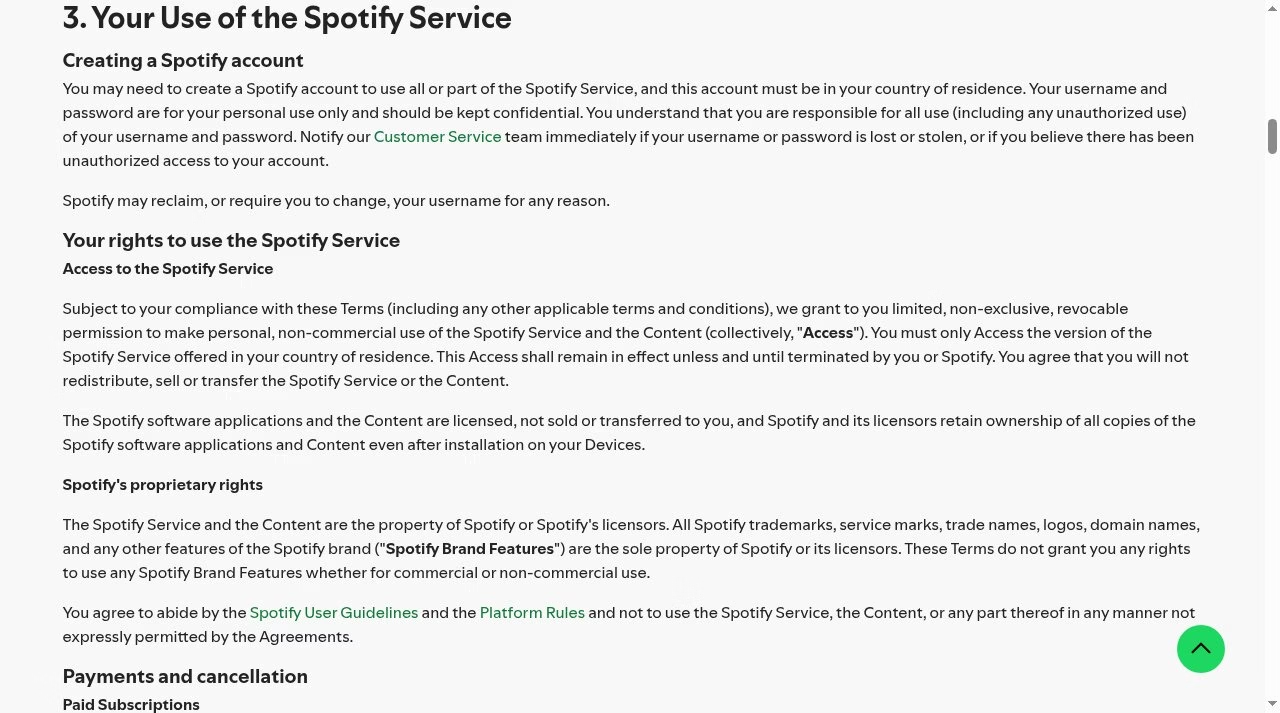
You do not need to interpret anything; Spotify’s End User Agreement says it directly. The agreement grants each user a “limited, non-exclusive, revocable permission to make personal, non-commercial use of the Spotify Service and the Content” (accessed October 26, 2026). Personal and non-commercial. Playing the service over speakers in a revenue-generating space – a dining room, a shop floor, a gym, a waiting room, a salon chair – is neither.
Two common workarounds fail the same test. Upgrading to Premium changes the experience – no ads, offline downloads, higher quality – but not the license; every consumer plan sits under the same personal-use terms. And buying a second “work account” changes nothing either, because the restriction attaches to how the service is used, not to who pays the invoice. If the music is playing for customers or staff in a commercial space, the consumer subscription is the wrong tool regardless of which card is charged.
Why a Cafe Playlist Is a Licensing Question, Not a Tech Question
Music has two separate copyrights – the recording and the underlying composition – and playing music for an audience in a commercial setting is a “public performance” under copyright law in the United States and most other countries. Private listening needs no such license; public performance does. In the US, public performance rights for compositions are administered by performing rights organizations – ASCAP, BMI, SESAC and GMR – and venues historically had to buy blanket licenses from each one separately, on top of having a legal source for the recordings themselves.
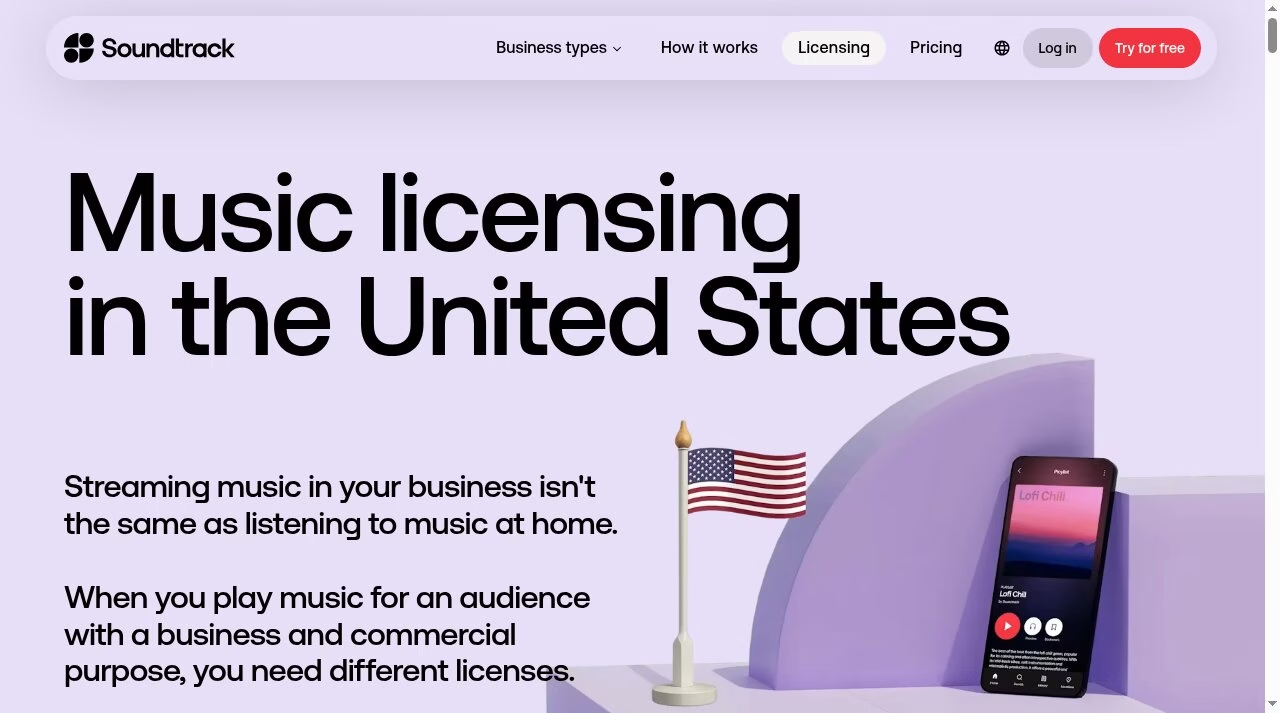
This is why “just use Spotify” breaks down even before anyone’s lawyers get involved: a consumer subscription was never designed to settle any of those rights. Soundtrack’s licensing explainer (accessed October 26, 2026) frames the business requirement as three layers – the right to stream specific recordings, the right to the underlying compositions, and public performance rights for playing them in a commercial environment – and notes that it holds over 15,000 licensing deals with labels, publishers and performing rights organizations to cover them. It also warns, correctly, that rules vary by country and that the business remains responsible for holding the right licenses; treat any guide, including this one, as orientation rather than legal advice.
The practical takeaway: the question is never “which app has the best playlists” but “which service settles the rights for the way my venue actually plays music.” Get that layer right and the playlist question becomes fun again, because every legitimate business service in this guide also gives you scheduling, staff controls and filtering tools that a personal account never had. Business owners juggling permits, payroll and the assumptions every new entrepreneur has to make should file music licensing in the same bucket: boring, cheap to fix early, expensive to ignore.
Soundtrack: the Service That Used to Be Called Spotify Business
The closest thing to an official answer to “Spotify for Business” is Soundtrack. Its own page on the subject is unambiguous: “Soundtrack, formerly Spotify Business. Spotify doesn’t offer business accounts – its terms only allow personal use. Get Soundtrack: the ultimate alternative to Spotify that’s licensed for business” (accessed October 26, 2026). The service is built to feel familiar to anyone who has used consumer streaming, while swapping the licensing layer underneath for one written for commercial playback.
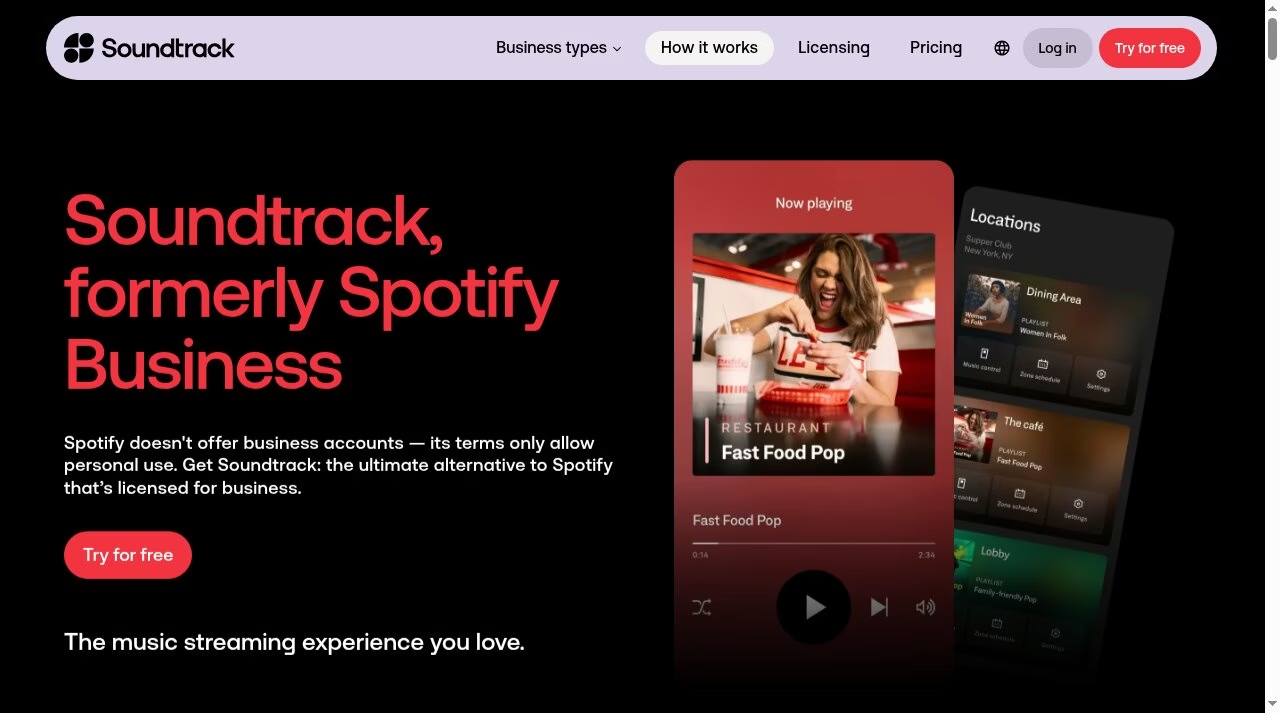
What a subscription includes, per its site (all accessed October 26, 2026): a catalog of more than 125 million tracks licensed for commercial use; over 2,500 curated business playlists updated weekly; a Spotify import tool that matches your existing Spotify playlists against its licensed catalog in a few clicks; an explicit-lyric filter for family-friendly floors; music scheduling so the energy can follow the daypart; centralized control of multiple locations from one dashboard; staff access levels and approved playlists; apps for Windows, Mac, iOS, Android and Sonos; and an offline mode so a dropped internet connection does not drop the music.
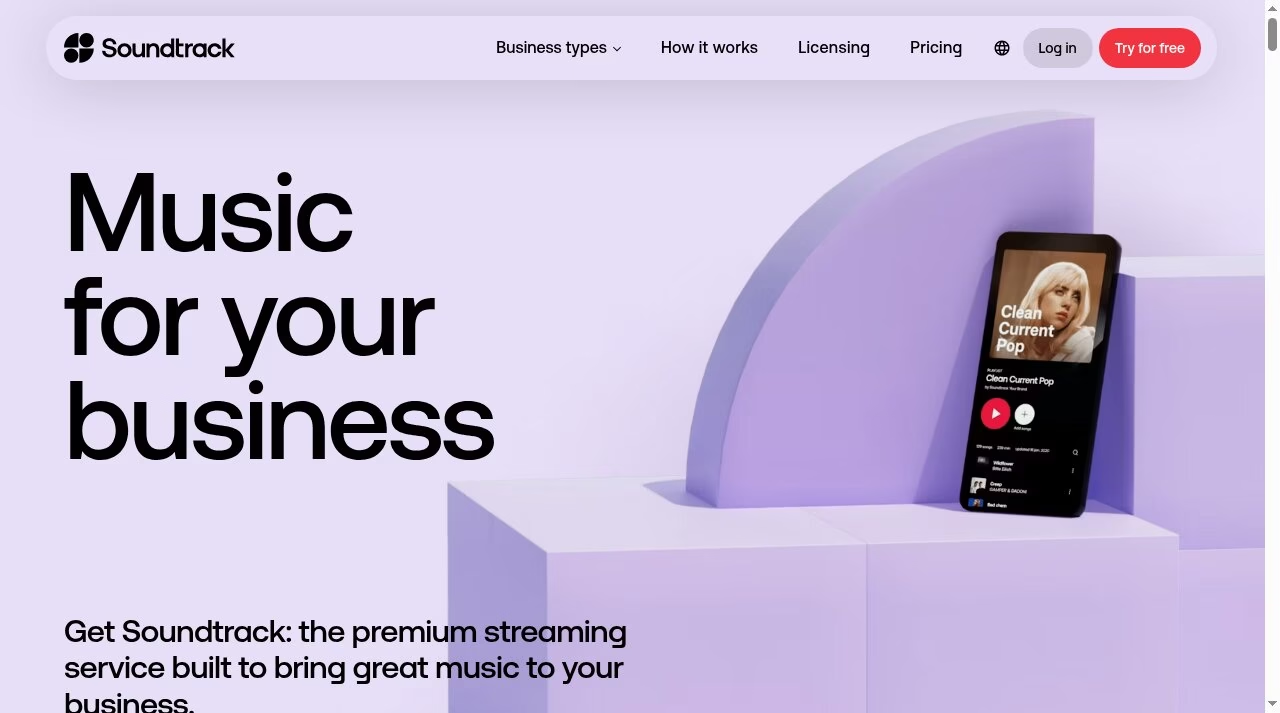
Why the name keeps changing
The naming history is half the confusion. The business service launched under the Spotify Business name, later traded as Soundtrack Your Brand, and today operates simply as Soundtrack – the old soundtrackyourbrand.com address now redirects to soundtrack.io (verified October 26, 2026). Meanwhile Spotify itself has never sold a business plan, so anything online offering a “Spotify Business account” or a “commercial Spotify license” is either describing Soundtrack informally or selling something Spotify does not offer. Treat marketplace listings and too-cheap “lifetime business accounts” as what they are: not a licensing strategy.
What the license side covers
For US businesses, Soundtrack’s licensing page (accessed October 26, 2026) says its plan typically bundles the three required layers – recording rights, publishing rights and public performance rights – and specifically includes ASCAP, BMI and GMR coverage. One honest caveat it publishes itself: music from SESAC’s catalog is not available on the service, and venues that charge admission, host live music or run timed exercise classes may need additional permissions beyond the subscription. Gyms reading this alongside our look at gym management software should note that “timed music for exercise classes” exception in particular.
What it costs
Soundtrack prices per zone – one zone being one location or distinct playback area – with monthly or annual billing, and offers a free trial (its pricing page, October 26, 2026). As of October 26, 2026, the official pricing page lists the Essential plan at USD 41 per zone per month or USD 37 per zone per month on annual billing (USD 444 per zone per year). That per-zone model scales from a single coffee shop to multi-location retail, and annual billing costs less per month than paying month to month. For comparison, remember what it replaces: separate blanket licenses from each performing rights organization, which for even a small venue typically cost more in aggregate than a subscription, plus a legal music source on top.
The Business-Music Alternatives Worth Comparing in 2026
Soundtrack is the direct answer to the Spotify-shaped question, but it is not the only licensed business streaming service. Three others with live, active offerings (homepages verified October 26, 2026) are worth a trial before you commit – and because pricing in this category changes and is often quoted per location, confirm current rates on each provider’s own site rather than trusting any summary, including this one.
Soundsuit
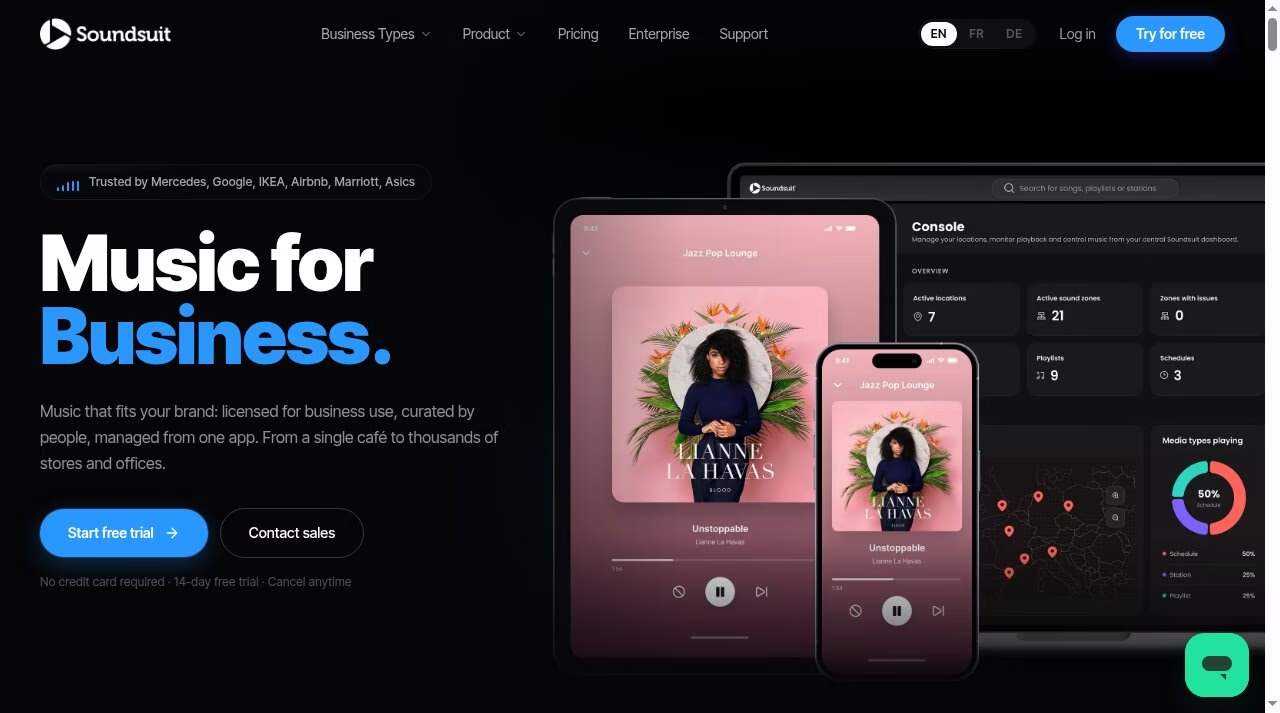
Soundsuit positions itself as the intelligent end of business streaming: instead of picking playlists by genre, you describe your brand, target customers and desired energy, and it builds a continuously updated soundtrack that staff can nudge but not derail. It markets itself to the same independent cafes, retailers, salons and fitness studios that would otherwise default to a personal Spotify account, with licensed-for-business playback and multi-location control.
Run the trial week properly. Put each service on the actual hardware your staff will use, at the actual volume of a busy Friday, and have two or three employees try to break it: skip tracks, change playlists, kill the Wi-Fi. The winner is the service your team stops noticing, because it just keeps the room right – not the one with the flashiest demo. Also check the dull details before the trial ends: how billing scales when you add a second zone, whether the offline mode survives a full day, and how the provider documents its licensing for your records.
Cloud Cover Music
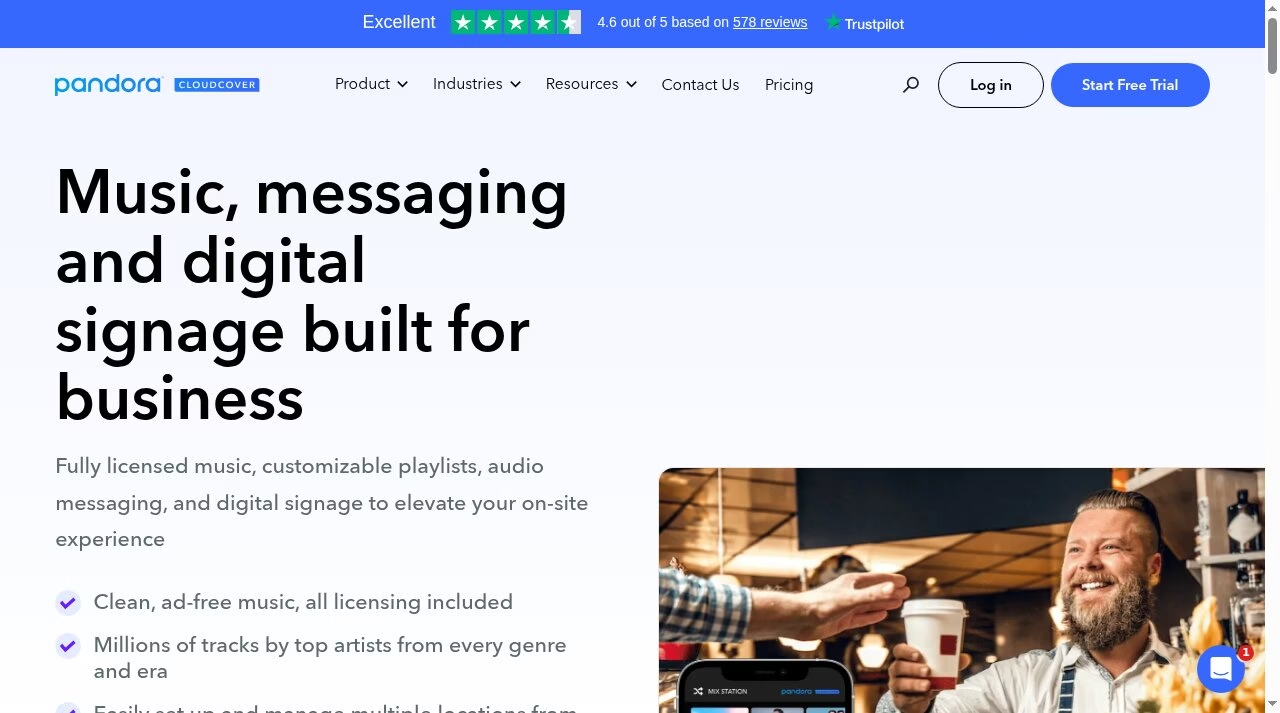
Cloud Cover Music is one of the longest-running US business music services, selling licensed streaming by location with business-oriented features like scheduling, centralized dashboards and clean-content controls. It is a common shortlist entry for franchises and multi-site retail that want per-location billing and US licensing handled in one invoice.
Rockbot
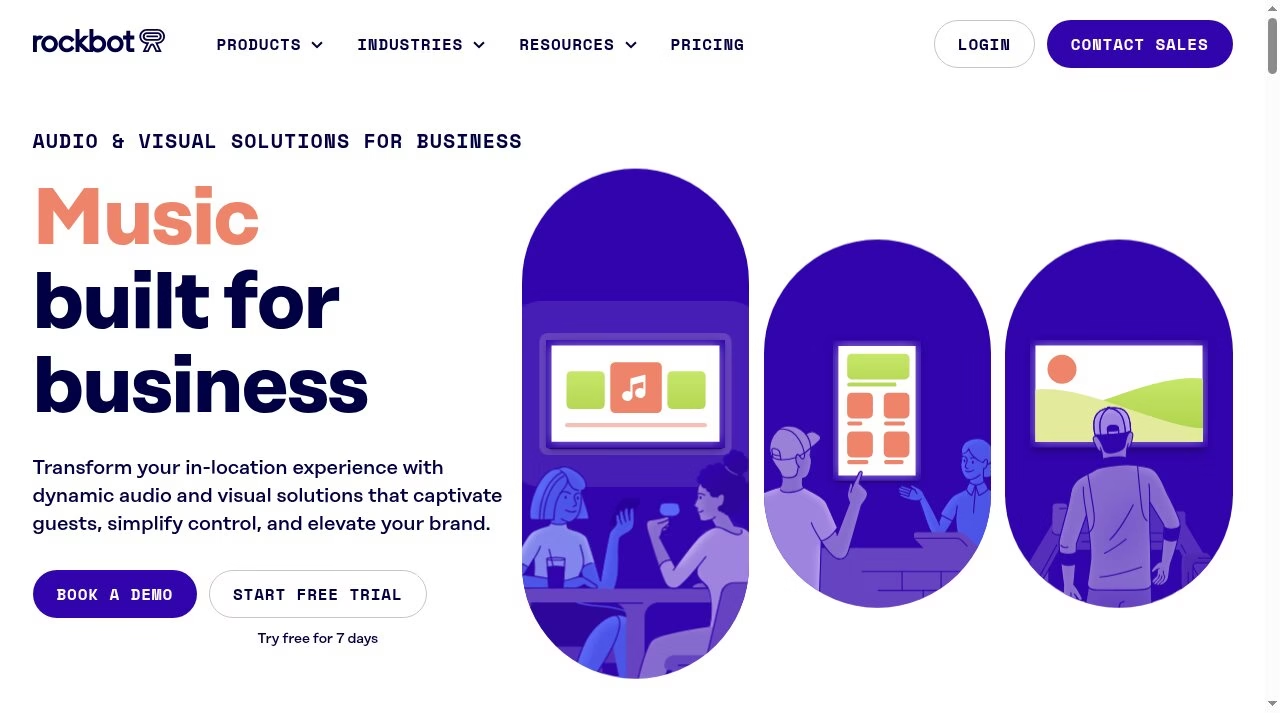
Rockbot combines licensed business music with optional digital signage and TV, aiming at venues – bars, gyms, quick-service restaurants – that want audio and visual content managed together. If your “music problem” is really an “in-venue media problem,” it belongs on the same trial list.
How to Choose (and Switch) Without Breaking the Law or the Mood
The switch is less dramatic than owners fear, and 2026 tooling removes the last excuse – the fear of rebuilding playlists. A sensible sequence looks like this:
- Audit what is actually playing. If any device on your premises is logged into a consumer streaming account, that is your exposure. One phone behind the bar counts.
- List your zones. A zone is one independently controlled playback area. A single-site cafe has one; a gym with a floor, a studio and a lobby may have three; a retail chain has one or more per store. Per-zone pricing means this list sets your budget.
- Trial two or three licensed services on the same day. Run Soundtrack, Soundsuit and Cloud Cover Music side by side for a week. Judge them on catalog fit for your clientele, the scheduling tools, staff controls and how the app behaves on your hardware – not on brand familiarity. (For the consumer side of streaming, see our guides to legal streaming apps and to finding only authorized playlists – the same “use licensed sources” rule applies at home.)
- Import, do not rebuild. Soundtrack’s Spotify import tool matches your existing playlists against its licensed catalog, so the playlist your team spent years perfecting mostly survives the move. Expect some tracks to miss; every licensed catalog differs.
- Set the guardrails before opening day. Turn on the explicit-lyric filter, schedule dayparts (brunch is not dinner), lock staff to approved playlists, and enable offline mode so a bad router never silences the room.
- Keep the paperwork. Save your subscription confirmation and, where relevant, the license documentation the provider supplies. If a performing rights organization ever writes to you, that paper trail is the answer. Large venues, ticketed events and spaces with live performers should confirm their extra needs with the provider or a licensing professional, since subscriptions typically exclude those cases.
Owners planning broader upgrades tend to handle music alongside the rest of the stack – the same quarter you look at the web trends worth watching, retail and ecommerce development partners or salon management fundamentals is the right quarter to fix the soundtrack too. It is one of the few compliance fixes that customers actually notice, because the room sounds better when someone is curating it on purpose. Customer experience compounds: look at how deliberately Starbucks engineered its loyalty loop – the in-store soundtrack is part of that same design, not an afterthought.
What a Legal Setup Costs in 2026
Frame the budget honestly. A consumer Premium plan is $12.99 a month (Spotify’s Premium page, October 26, 2026) – and irrelevant here, because it buys personal use only. The real comparison set is licensed business streaming, billed per zone with monthly or discounted annual billing, plus whatever your venue’s special cases add. Concretely, Soundtrack lists USD 41 per zone per month (USD 37 on annual billing) as of October 26, 2026. For most single-location businesses the entire music line item – service and licenses bundled – lands below what many spend on a single streaming-ad campaign or a month of outsourced marketing, and multi-location brands should negotiate per-zone rates directly with providers’ sales teams.
| Option | Licensed for business playback? | Pricing shape (October 2026) | Best fit |
|---|---|---|---|
| Spotify Free / Premium | No – terms grant personal, non-commercial use only | Free, or $12.99-$21.99/mo consumer plans (official page, Oct 2026) | Personal listening – headphones, home, commute |
| Soundtrack | US plan: recording, publishing and public-performance rights bundled (ASCAP, BMI, GMR; not SESAC); admission fees, live music and exercise classes not covered | USD 41/zone/mo (USD 37 on annual billing); free trial (official page, Oct 2026) | Businesses wanting the familiar Spotify-like experience plus Spotify playlist import |
| Soundsuit | Yes, under its own business licenses; coverage varies by country and plan | Subscription, per site; confirm current rates on its site (Oct 2026) | Brand-first venues wanting a continuously matched soundtrack |
| Cloud Cover Music | Yes, under its own business licenses; coverage varies by country and plan | Subscription, per location; confirm current rates on its site (Oct 2026) | Franchises and multi-site retail wanting consolidated billing |
| Rockbot | Yes, under its own business licenses; coverage varies by country and plan | Subscription; confirm current rates on its site (Oct 2026) | Venues combining music with digital signage and TV |
Coverage varies by country, venue, use case and plan. The inclusions above reflect each provider’s own site as of October 26, 2026 – US terms for Soundtrack – and no plan covers every possible use; confirm the written scope for your locations and uses before signing.
Whichever route you take, treat music like every other piece of the digital infrastructure your business model now depends on: a small, deliberate line item with a compliance wrapper, not an afterthought running off a personal phone.
If this cleanup is part of a bigger operational pass, keep going: our guides to running a SWOT analysis on your own brand, scaling a service business, hospitality staffing apps like Staffie and what a salon app costs to build cover the adjacent ground. And if you also create music rather than just play it, our roundup of the best creator apps is the better starting point.
Frequently Asked Questions
Is there an official Spotify for Business?
No. Spotify offers no business accounts – its terms allow personal, non-commercial use only, and its Premium page (October 26, 2026) lists only consumer plans. The service that historically carried the name is now called Soundtrack, which its own site introduces as “formerly Spotify Business”; it is a separate, commercially licensed streaming service with Spotify playlist import.
Can I legally play Spotify in my cafe, shop or gym?
Not with a consumer account. Spotify’s End User Agreement grants personal, non-commercial use only, so the business needs a separate commercial music subscription with its own licenses – and even that coverage is not blanket: Soundtrack’s US plan, for example, excludes admission fees, live music and music for timed exercise classes, which can need additional permissions (its US licensing page, October 26, 2026). A gym playlist is therefore not automatically cleared by any single subscription.
Does Spotify Premium make commercial use legal?
No. Premium changes the listening experience – no ads, downloads, better quality – but not the license. Every consumer plan, paid or free, sits under the same personal-use terms, so upgrading or buying a separate work account does not authorize playing Spotify in a business.
What licenses does a US business need to play music?
Typically three layers: rights in the recordings, rights in the underlying compositions, and public performance rights for playing them commercially. Performance rights are administered by ASCAP, BMI, SESAC and GMR. Licensed business services bundle these – Soundtrack’s US page (October 26, 2026) says its plans include ASCAP, BMI and GMR coverage, though not the SESAC catalog. Admission fees, live music and exercise classes can need extra permissions, and none of this is legal advice.
How much does business music streaming cost?
Soundtrack bills per zone with monthly or discounted annual billing and a free trial (its pricing page, October 2026). As of October 26, 2026, the Essential plan is listed at USD 41 per zone per month, or USD 37 per zone per month with annual billing. Alternatives such as Soundsuit, Cloud Cover Music and Rockbot sell comparable per-location subscriptions – confirm current rates on each provider’s own site before budgeting.
Can I import my existing Spotify playlists into a business service?
Yes, with Soundtrack. Its Spotify import tool matches the tracks in your Spotify playlists against its catalog of more than 125 million commercially licensed songs in a few clicks (its site, October 26, 2026). Expect a few tracks not to match – licensed catalogs differ – but most of a well-built playlist usually survives the move.
What happens if my business plays music without the right licenses?
Playing music publicly without the required licenses can constitute copyright infringement, and performing rights organizations actively license venues, including small ones. The realistic outcome is not a dramatic raid but letters, demands for back-license fees and potential legal claims – all more expensive than a compliant subscription. Fix the source first, then keep your paperwork.



Leave a Reply