

Companies struggle to get value from CRM software when the system records activity without improving a real customer decision. Typical causes are unclear ownership, inconsistent sales stages, poor data, fragmented tools, weak training and management that still works from private spreadsheets. Buying a new platform can help a genuine feature gap, but it cannot define a process nobody agreed to follow.
The fix is to choose one useful customer journey, assign responsibility, clean a small data set and use the CRM in the actual review routine. Measure whether people can see the next promise, the owner and the outcome. This guide is an implementation diagnosis based on primary guidance and illustrative scenarios, not a live deployment study or a fabricated industry failure percentage.
Why a technical launch is not the same as business value
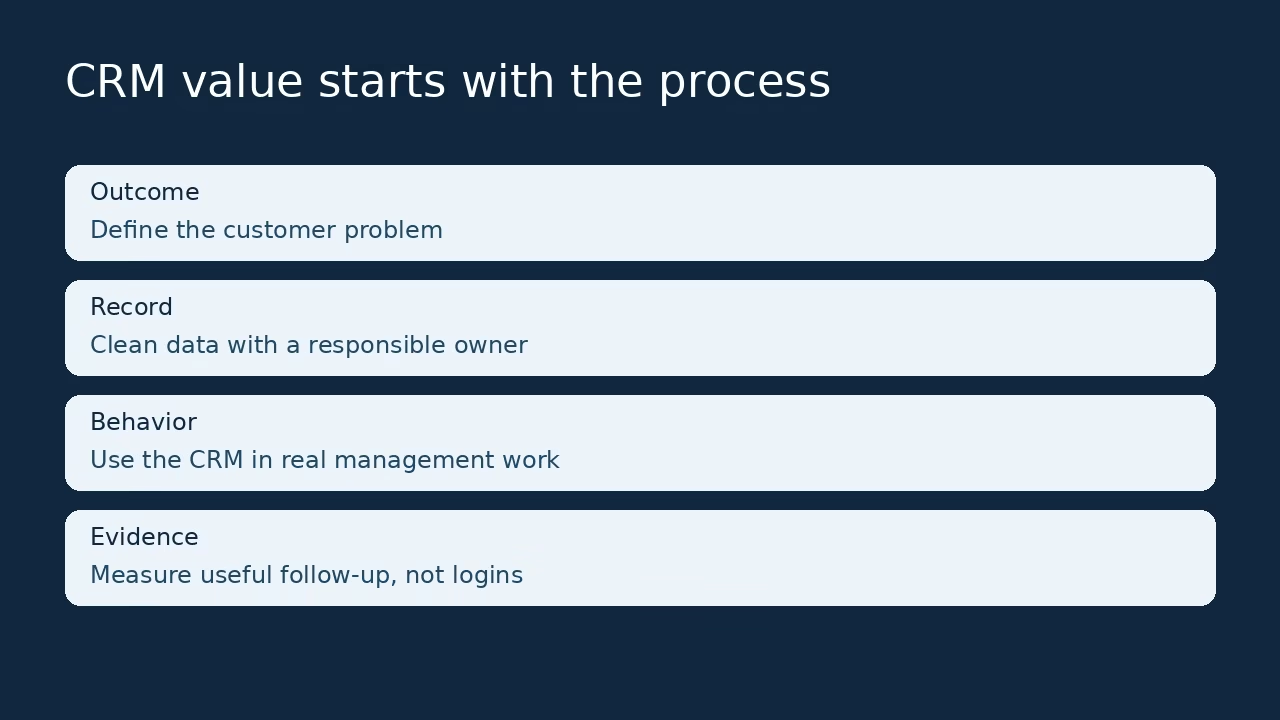
A system can be live, available and full of imported contacts while reps continue to make decisions elsewhere. The deployment has succeeded technically, but the organization has not made the record useful. A lead with no responsible person, a deal with an unexplained stage and an automated email sent after a customer opts out are examples of failures that uptime cannot describe.
Salesforce’s CRM implementation guidance identifies strategy, process, people, adoption, executive commitment, data quality and architectural alignment as recurring issues. Its page also discusses historical failure statistics. Those old figures are not reproduced here as a current universal failure rate; different studies and definitions cannot support a single contemporary number.
Microsoft’s implementation strategy guidance treats design, testing, deployment and operation as parts of a planned business change. The practical lesson is to judge the CRM against a decision it should improve, not merely an installed feature list.
A diagnostic matrix: symptom, cause and first repair
| Observed symptom | Possible cause | First repair |
|---|---|---|
| Private spreadsheets still drive meetings | CRM not part of management decisions | Run the review from one shared record |
| Duplicate customers across teams | No stable identifier or data owner | Define ownership and deduplication rules |
| Every deal looks almost won | Stages describe optimism, not evidence | Write entry and exit criteria |
| Activities recorded, follow-up missed | No next-action responsibility | Require owner and next-action date |
| Automation creates awkward messages | No exception or preference handling | Pause and review one complete journey |
| Reports disagree | Definitions and source systems differ | Agree metric meaning and authority |
| New hires need a private cheat sheet | Training misses real workflow | Train using the same sample handoff |
1. The outcome was never defined
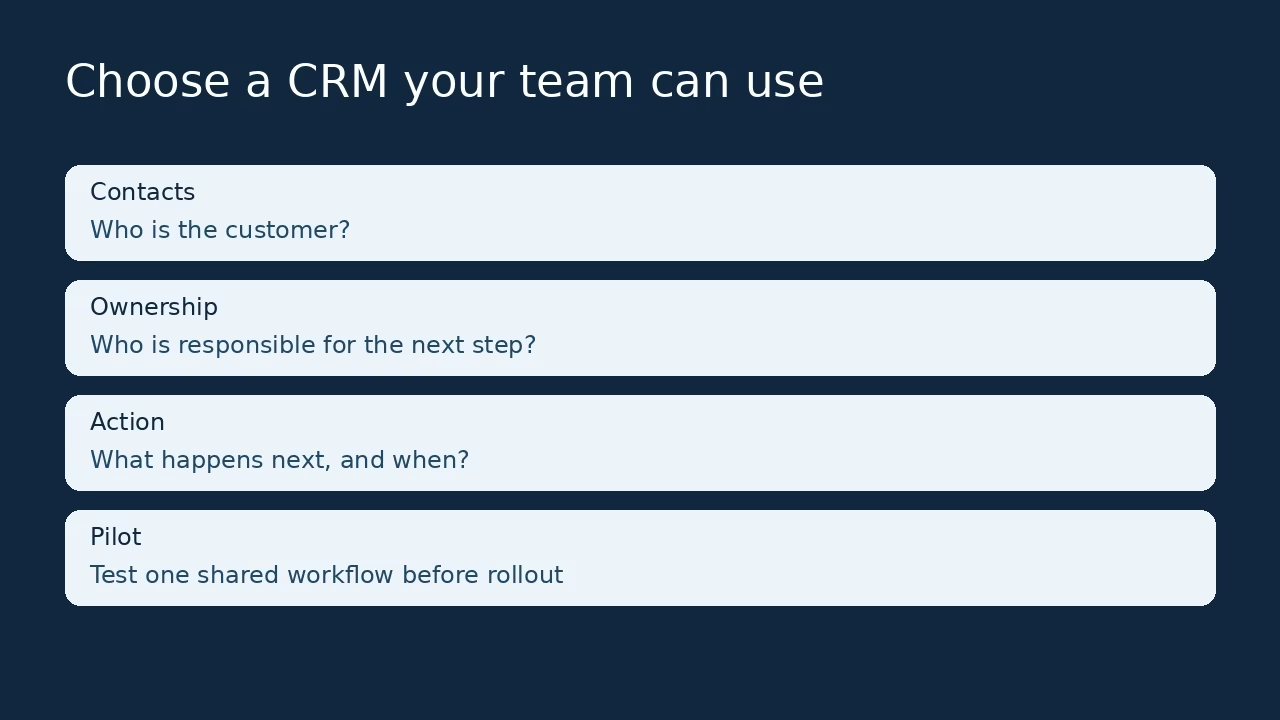
“Improve customer relationships” is too broad to configure or measure. Start with one concrete failure: inquiry ownership is unclear, proposals go stale, referrals disappear, or account managers cannot find the last customer commitment. State what information the responsible person needs and what action should happen next. Only then decide which CRM fields and features support the result.
What to change first
A useful acceptance condition is that a second seller can take over a sample lead and identify the last promise without asking the original owner. This does not prove revenue uplift; it proves that a specific information gap has been closed.
2. Sales stages mean different things to different people
One rep marks a proposal stage when a price is discussed; another waits until a document is sent. The forecast becomes inconsistent even if every field is filled. Define the evidence needed to enter and leave each stage. Keep those definitions close to the workflow and explain exceptions such as a deal returning to discovery.
What to change first
Do not solve this by adding more stages immediately. First test whether the existing stages describe different customer decisions. If two stages mean essentially the same thing, the extra choice creates reporting noise rather than insight.
3. Data moved faster than its quality checks
A large import can copy old duplicates, abandoned contacts, inconsistent companies and obsolete ownership. The new interface then receives the blame for data problems inherited from the old system. Microsoft’s data-management guidance distinguishes configuration data from migration data and calls for preparation before going live.
What to change first
Use a sample with related people, companies and opportunities. Inspect identifiers, date formats, ownership, preferences and attachments. A row-count match is one check, not the full result. The relationship between records matters as much as the rows.
4. The CRM competes with the actual management routine
If managers ask for a private slide deck and ignore the shared pipeline, reps learn which record counts. Updating the CRM becomes extra administration after the real review. Use its record in meetings and coaching, then fix the missing fields or views that genuinely prevent a useful discussion.
What to change first
The point is not to force clicks. It is to remove duplicate reporting and make the shared system a trustworthy place to understand the customer. Leadership must use the same definitions it asks the team to maintain.
5. Ownership is split across tools
The inbox, quoting system, CRM and support platform may each hold a different version of the account. Without an authoritative source and stable identifier, synchronization can reproduce contradictions. Decide where contacts, opportunity values, accepted scope and billing details belong.
What to change first
Integrations should have defined direction and exception handling. A connector existing is not proof that every note or attachment travels correctly. Use one customer through the whole handoff, including a changed quote and a paused opportunity.
6. Automation arrived before exception handling
A perfectly configured sequence can still send the wrong message after a customer replies, opts out or changes circumstances. Automation should support an agreed process with pauses, ownership and preferences. Test the exceptions before measuring the number of messages produced.
What to change first
Review one trigger end to end. Identify the source record, who can approve changes, how duplicates are stopped and how an operator sees an error. The system should make the next responsible action clearer, not create output someone must silently clean up.
7. Training explains menus rather than customer work
Feature tours rarely show how a rep should handle a real handoff, an overdue proposal or a changed preference. Build training around the actual records the team uses. One person creates an opportunity, another takes it over and a manager reviews the next action.
What to change first
Keep the exercise short and repeatable. Record the steps that users struggle with and decide whether the problem is configuration, terminology or an unresolved process. New staff should learn the shared routine rather than a collection of individual shortcuts.
8. Nobody owns the system after launch
A CRM keeps changing as people, products and sales processes change. Without an owner for field definitions, permissions and workflow updates, abandoned configuration accumulates. Assign a business owner and a technical owner with a simple change-review routine.
What to change first
Every required field and automation should have a purpose. Review old rules when the process changes. Keep a small configuration record outside the platform so a successor can understand why a stage, permission or integration exists.
A documented example: mandatory stages need a shared definition
Bigin’s published pipeline FAQ describes Stage Transition Rules that can require fields, notes, files or checklists. Its pricing comparison places these rules in Premier. That is a feature-boundary example, not evidence that we configured a live account.
Imagine a proposal stage that requires the intended service, decision maker and next meeting. That checkpoint only helps if the team agrees what those values mean. Adding the rule first can produce placeholder text just to advance a deal. Define the evidence, pilot it with sample records and review exceptions before making the field mandatory for everybody.
For migration planning, Microsoft’s configuration and data-migration guidance provides a primary implementation reference. For a small-team import example, Capsule’s contact-import documentation separates contacts from its opportunity-import workflow. Neither source turns this article into a deployed benchmark.
Recover value with a bounded pilot
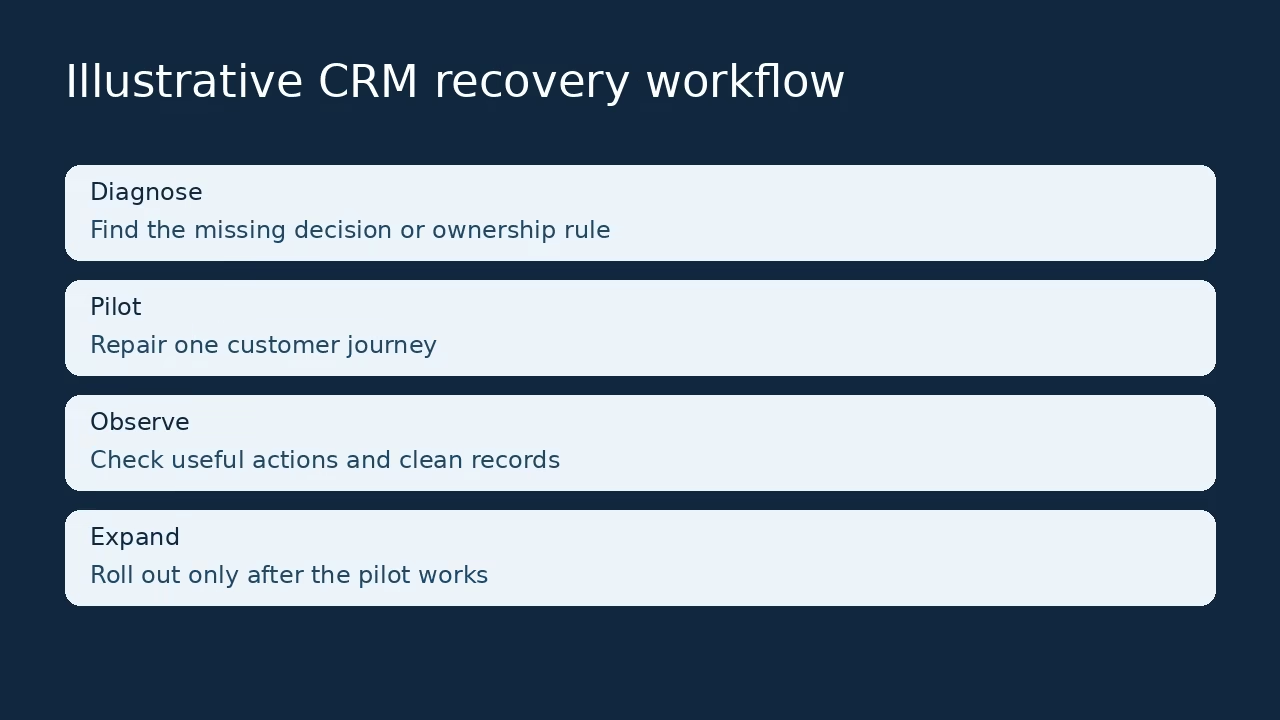
Choose one journey and one accountable owner
Pick an inquiry-to-proposal journey or a renewal-to-account-manager journey, not the whole organization. Name the responsible owner, the required record and the next action. Use synthetic or appropriately permitted sample data while reviewing the flow. The objective is to make a customer decision more reliable before widening the implementation.
Write the acceptance checks before configuration
Check owner completeness, duplicate handling, stage meaning, communication preferences and transfer history. Ask a second employee to interpret the record without help. Do not define success as “everyone logged in.” A useful check should expose the failure you are trying to remove. Record what remains manual and why, rather than hiding it behind an automation claim.
Observe and then expand
Run the pilot through normal reviews and capture where people still need a spreadsheet, private message or repeated explanation. Repair the largest gap first. Expand only after the shared record supports the journey and exceptions are understood. This is a proposed operating method, not a promise that a fixed number of days will deliver a particular financial result.
Measure value without confusing activity with progress
Use a small set of decision-linked measures
Useful early measures include opportunities missing owners, overdue agreed actions, duplicate customer records and incomplete accepted-deal handoffs. Later commercial measures can include conversion, retention or sales-cycle length, but they need stable definitions and comparable periods. Changes in lead quality or staffing can affect the result, so do not assign every movement to the CRM.
Account for the cost of correction
Include subscriptions, setup, training, integration maintenance and time spent repairing data. An automation that generates many messages but needs human correction may increase work rather than reduce it. Compare the effort required to maintain a reliable record before and after the pilot. If the same process gap persists, investigate it before buying a replacement.
Frequently asked questions
Why do companies struggle to get value from CRM software?
Common causes include unclear business outcomes, inconsistent process definitions, poor data, fragmented tools, weak training and management that still works outside the CRM. A technical launch does not prove customer value. Start with one journey and show whether another employee can understand its owner, last promise and next action. Repair the missing process before assuming a new brand will fix it.
What percentage of CRM projects fail?
There is no current universal failure percentage established by this article. Historical studies use different populations, dates and definitions, including technical failure or not meeting expectations. Salesforce discusses older research, but those figures should not be presented as a live market-wide rate. Diagnose your own implementation using explicit acceptance checks rather than a dramatic unsourced number.
Should we replace the CRM or repair it?
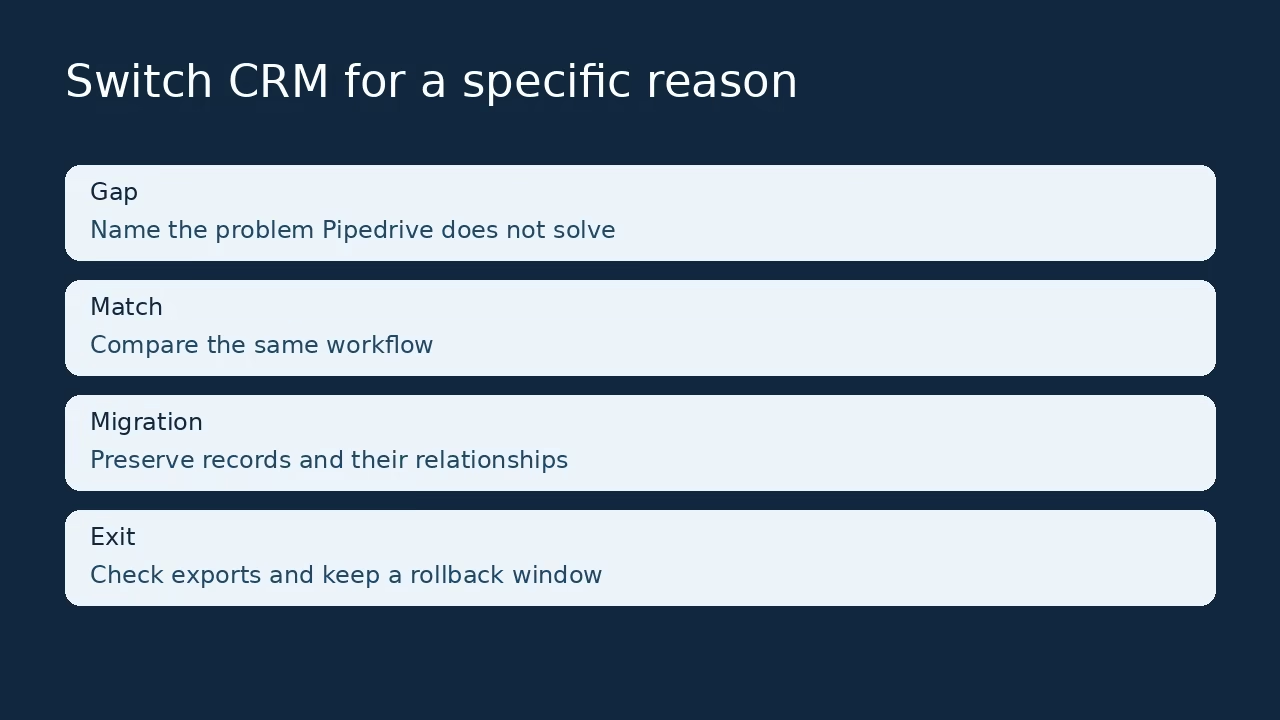
Separate process problems from product gaps. Undefined ownership, poor data and management outside the CRM can follow the team into a replacement. Missing permissions, inadequate communication features or a data model forcing duplicates may justify a change. Write the gap and an acceptance check first, then compare repair effort with the full migration cost.
What is the first recovery step?
Choose one customer journey that is failing and name its responsible owner. Describe the information needed and the next action. Inspect a few related records for ownership, stages, preferences and duplicates. Configure only what supports that journey, then use the CRM in the actual review routine. Expanding a small verified repair is safer than changing every workflow at once.
How do we improve adoption?
Train users through real work rather than menus. Have one seller create a lead, another take over and a manager review it. Remove duplicate reporting where possible and use the shared record in management meetings. Track whether useful actions and data remain complete. Login counts can show access but do not establish reliable customer follow-up.
Why does bad data reduce CRM value?
Duplicate people, inconsistent companies, obsolete owners and missing preferences make the record hard to trust. Users then return to private notes. Inspect both row counts and relationships during migration. Define authoritative sources and stable identifiers before synchronization. A clean interface cannot repair inaccurate customer history by itself.
Can AI solve the adoption problem?
AI can help a defined task, but it cannot decide the business process or create accurate source data. Summaries and suggested actions need checking against the original record, especially before customer communication. Pilot one use case and count correction work. Generating more output is not progress if users must inspect and rewrite it each time.
How should CRM ROI be measured?
Use consistent definitions, a baseline and an appropriate observation period. Include implementation, licenses, training, integration maintenance and correction work. Early checks can show better ownership and follow-up; revenue, retention or conversion take longer and can change for other reasons. Avoid attributing every commercial improvement to the CRM without supporting evidence.





Leave a Reply