
Short answer: on 6 October 2026, Calendly’s pricing page listed a Free plan, Standard at $10 per seat per month billed yearly ($12 billed monthly), Teams at $16 billed yearly ($20 billed monthly), and Enterprise starting at $15k per year for 50 seats. This guide explains what each plan includes, how seats work and how to estimate a bill. Prices change, so confirm them on the official Calendly pricing page before you buy.
Where these numbers come from
We read Calendly’s public pricing page in a browser on 6 October 2026 and saved screenshots of the monthly and yearly views, shown below. We did not sign up, start a trial or buy a plan, so everything here is what the page says, not our experience with billing. Prices were shown in US dollars, before any tax. We copy only figures we saw. The cost examples further down are our own arithmetic from those figures, labeled as estimates.
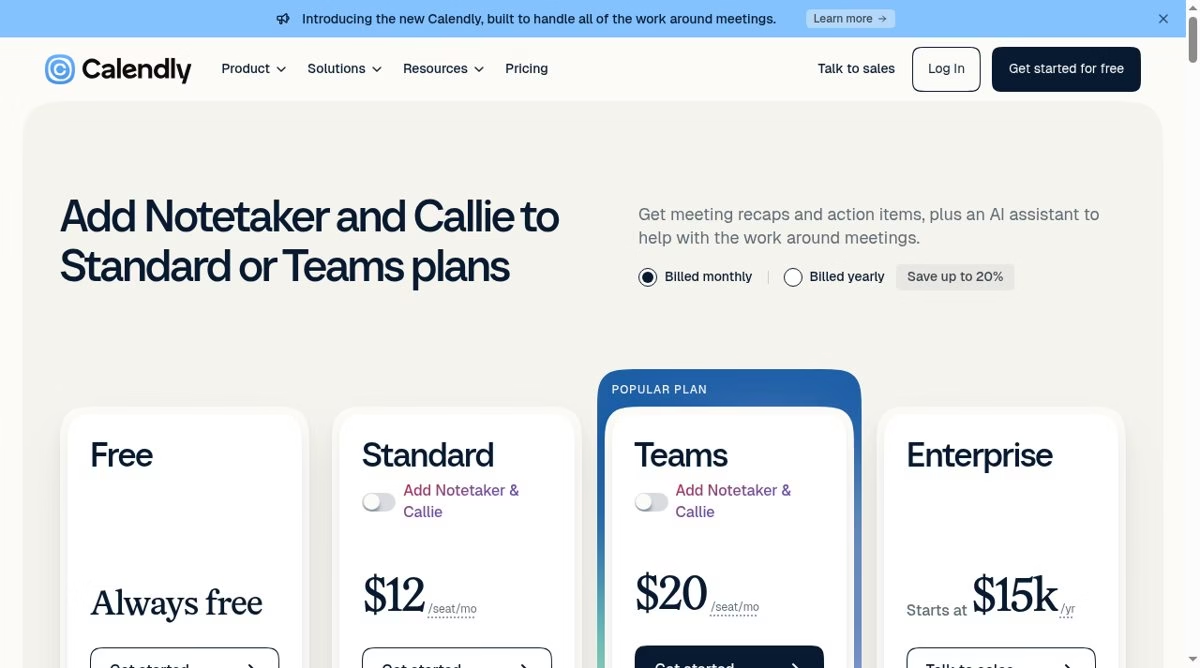
Calendly pricing page with monthly billing selected, 6 October 2026.
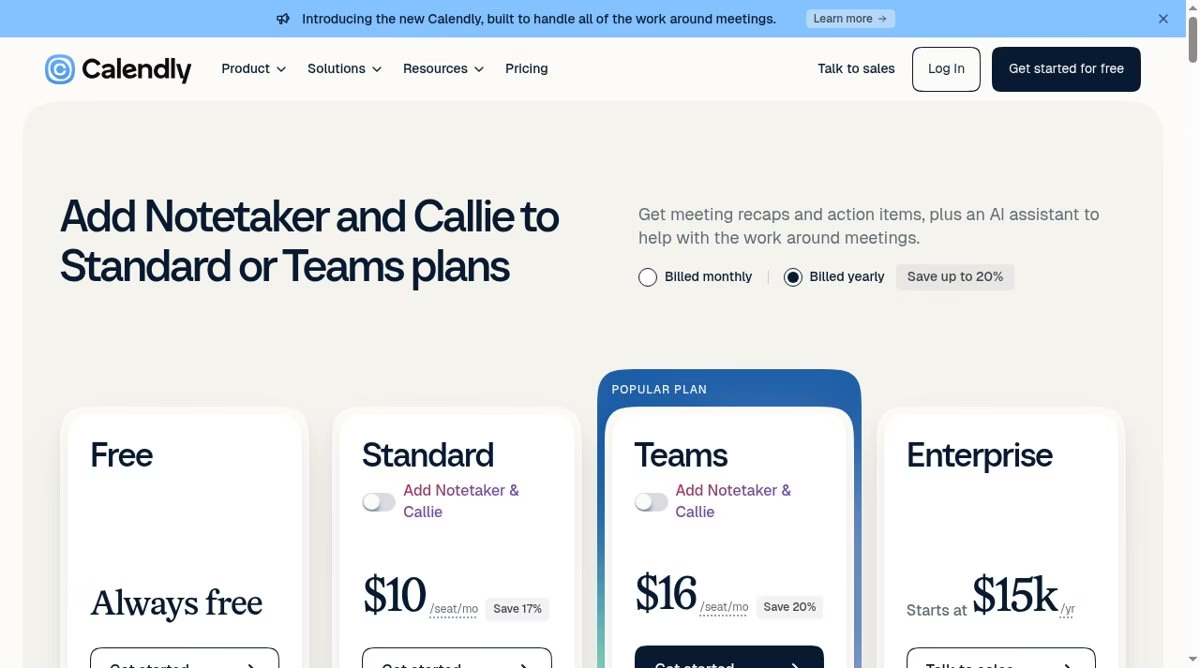
The same page with yearly billing selected, 6 October 2026.
Calendly plans at a glance
How Calendly seats work
Calendly sells per seat, and the page spells out who needs one. A seat is required for people who connect a calendar and host Calendly meetings. The people who book time with you do not need a seat, and on Teams the page says invitees do not need an account or seat. If three people on your team each share a booking link, you need three seats. Someone who only books a meeting does not.
What each plan includes
Free
The Free card lists one event type, one calendar connection, one-on-one scheduling, a customizable booking page and a browser extension. That is enough for a single person with one calendar and one kind of meeting. If you need a second kind of meeting, such as a 15-minute intro call and a 60-minute session, you run into the one-event-type limit.
Standard
Standard includes everything in Free, plus unlimited event types, connecting multiple calendars, automations and reminders, and connections to HubSpot and Mailchimp. It also lists payments through Stripe and PayPal. For a freelancer or coach who sells sessions, payments and multiple event types are usually the reason to upgrade.
Teams
Teams includes everything in Standard, plus round-robin and team scheduling, tools to qualify, route and schedule leads, centrally managed event types, Marketo and Pardot connections, sending meetings to Salesforce, and an optional SSO security add-on. The page marks it as the popular plan. It is the first tier built for sharing availability across a team.
Enterprise
Enterprise starts at $15k a year and at 50 seats, and is quoted in USD only. On top of Teams scheduling features, the card lists routing with a Salesforce lookup, Microsoft Dynamics connection, SSO and SAML, domain control, audit log compliance, a data deletion API, onboarding and implementation, and dedicated account support. You talk to sales to buy it.
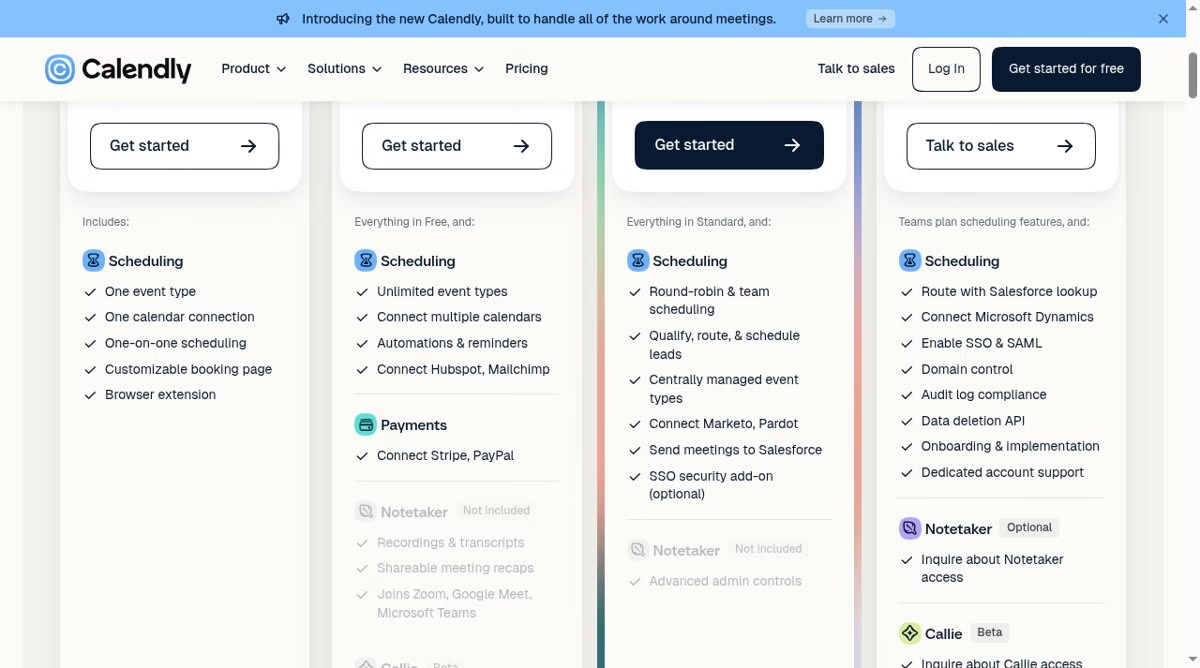
What the plan cards list under each tier, 6 October 2026.
Notetaker and Callie add-ons
The top of the pricing page promotes adding Notetaker and Callie to Standard or Teams plans. Notetaker is described as recordings, transcripts and shareable meeting recaps that join Zoom, Google Meet and Microsoft Teams. Callie is marked Beta and described as an AI assistant that schedules over email. The cards show Notetaker as “Not included” on the Standard and Teams cards until you switch the add-on on, and say both are available in English only. The page shows $10 and $12 for Standard and $16 and $20 for Teams as the base prices, and we did not toggle the add-ons on, so we cannot tell you what they add. Read the page with the add-on switch on if you need them.
Estimating a Calendly bill
These examples are our own arithmetic from the per-seat prices above. They exclude tax, add-ons and any promotion, so treat them as a starting point.
The gap between monthly and yearly billing on Teams in the 10-seat example is $480 a year. Whether that matters depends on whether you can commit to a year, so check the renewal and cancellation terms on the official site.
Which plan fits which person
- You book one kind of meeting with one calendar: start with Free.
- You sell sessions or need several event types: compare Standard, which lists payments through Stripe and PayPal.
- Your team shares leads or rotates meetings: look at Teams for round-robin scheduling and routing.
- You need SSO, audit logs and a contract: Enterprise is the plan that lists them.
When the Free plan limits start to matter
Free works until your calendar life gets more complicated than a single link. The first wall is event types: with only one, you cannot offer a short intro call and a longer working session as separate links. The second is calendars: with one connection, Calendly can only check conflicts against one calendar, so a person who keeps work and personal events apart has no way to block both. The third is payments and automations, which the cards list under Standard. If none of those apply, there is no reason to pay.
Questions to settle before you pay
The pricing page has its own FAQ with headings on what happens at the end of a trial, which plan suits you, trying Calendly with multiple users, the renewal process, upgrading or downgrading, non-profit pricing and accepted payment methods. We did not copy the answers because they can change, so read them on the official page. A short checklist helps you ask the right things:
- How many people will host meetings? That sets the seat count and the whole estimate.
- Monthly or yearly? The yearly view showed lower per-seat prices, but you commit for a longer period.
- Do you need the add-ons? Notetaker and Callie are extra choices on Standard and Teams, not part of the base price.
- Do you need an integration? HubSpot and Mailchimp appear on Standard, Marketo and Salesforce on Teams, and Microsoft Dynamics on Enterprise.
- Is tax added? Our figures exclude tax, which can change your total depending on where you live.
How the tiers build on each other
Each paid card says it includes everything in the plan below it. That means the jump from Free to Standard is about capacity and payments, the jump from Standard to Teams is about team scheduling and lead routing, and the jump from Teams to Enterprise is about security, compliance and support. Reading the cards in that order is the quickest way to see which step you actually need, instead of comparing every row of the feature table at once.
If Calendly pricing does not fit
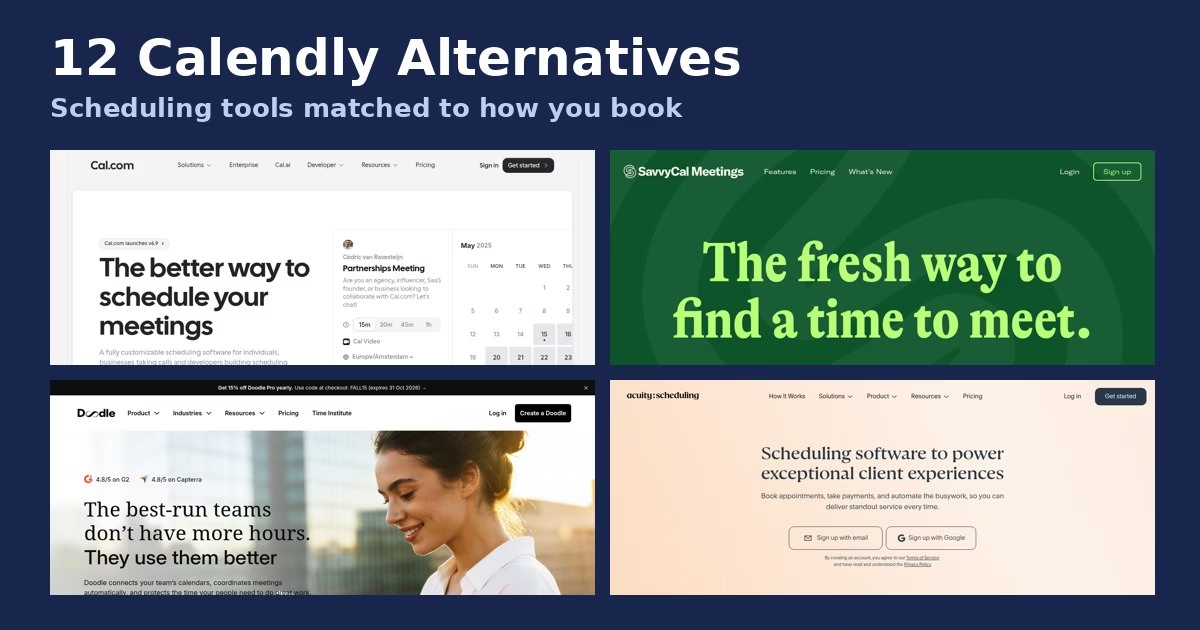
If the seat model or the Free plan limits do not suit you, our guide to 12 Calendly alternatives covers other scheduling tools by scenario, from group polls to paid client appointments.
How to keep your Calendly bill down without losing what you need
Calendly sells per seat, so most savings come from buying the right number of seats on the right plan. These steps use only the plan details shown on the pricing page we read on 6 October 2026. Check the page again before you act, because plans and prices can change.
Count hosts, not people
A seat is for someone who connects a calendar and hosts meetings. The page says people who book with you do not need a seat. Before you buy, list the people who will actually share a booking link. An assistant who only views a calendar or a manager who never takes meetings may not need one. A team of ten in your company may need only four seats if only four people take external meetings.
Choose monthly or yearly on purpose
The yearly view showed lower per-seat prices: Standard at $10 instead of $12, and Teams at $16 instead of $20. Our own arithmetic for a ten-person Teams group shows a gap of $480 a year between the two billing options. Yearly billing makes sense when you are sure you will keep the tool for twelve months. Monthly billing is the safer choice during a trial period or a busy season you may not repeat. Read the renewal and cancellation terms on the official site before you commit to a year.
Do not pay for team features you will not use
Teams adds round-robin scheduling, lead routing, centrally managed event types and a few more connections. If you are one person, or a group where everyone manages their own page, Standard may already cover your needs. Make a short list of the Teams features you would turn on in the first month. If the list is empty, stay on Standard.
Review seats on a schedule
People change roles and leave. Put a recurring reminder in your calendar every quarter to compare the number of seats you pay for with the number of people who took a booking in that period. Removing an unused seat is the easiest saving there is.
Calendly pricing compared with other options: what to look at besides the price
A lower monthly price does not always mean a lower total cost. When you compare Calendly with another scheduling tool, look at what the price includes and what you would have to add.
Cost per host versus cost per feature
Divide the plan price by the number of hosts, then list the features each plan includes. A cheaper tool that lacks payments or multiple calendars may force you to add another subscription. A more expensive plan that bundles them can end up cheaper. Our guide to 12 Calendly alternatives groups tools by what they are built for, which helps you shortlist before you compare plan pages.
Free plan limits
The Calendly Free plan lists one event type and one calendar connection. If you need more than that, compare the free plans of other tools on the same two limits. Some alternatives advertise free plans with different limits, and a few built-in options, such as Google Calendar appointment schedules, cost nothing extra if your account is eligible.
Add-ons and switching costs
The pricing page promotes Notetaker and Callie as add-ons for Standard and Teams plans, and says both are available in English only. We did not turn the add-ons on, so we cannot say what they add to the bill. If you plan to use them, view the page with the add-on switch on. Also count the time cost of switching: new booking links, updated signatures and a short period when both tools are active.
FAQ
How much does Calendly cost?
On 6 October 2026 the Calendly pricing page showed four options in US dollars. Free costs nothing. Standard is $10 per seat per month billed yearly, or $12 billed monthly. Teams is $16 per seat per month billed yearly, or $20 billed monthly. Enterprise starts at $15k per year and starts at 50 seats. These are list prices before tax, and the page can change. Open the official pricing page to see the current figures for your country and any promotion.
Is Calendly free?
Yes, there is a Free plan, and the page labels it “Always free”. It lists one event type, one calendar connection, one-on-one scheduling, a customizable booking page and a browser extension. It works for a single person with a single kind of meeting. The limits show up when you need a second event type, such as a short intro call and a longer session, or when you want to check two calendars for conflicts.
Do people who book with me need a Calendly seat?
No. The page says people who book meetings, called invitees, do not need a seat. Seats are for the people who connect a calendar and host meetings. If three colleagues each share a booking link, you need three seats. A client who books time with any of them does not need an account. The page also says invitees do not need an account on Teams.
Is it cheaper to pay for Calendly yearly or monthly?
Yearly billing showed lower per-seat prices on the page: $10 against $12 on Standard, and $16 against $20 on Teams. The page labeled the saving as 17% on Standard and 20% on Teams. As an example from our own arithmetic, ten Teams seats cost $1,920 billed yearly or $2,400 billed monthly, a $480 gap over twelve months. Yearly billing commits you for longer, so check the renewal and refund terms before you choose it.
Does Calendly take payments?
The Standard card lists connecting Stripe and PayPal, and Teams includes everything in Standard. The Free plan card does not list payments. This means you need Standard or higher if you plan to charge for sessions through your booking page. You would connect your own Stripe or PayPal account, so check their fees and payout rules too.
What does Calendly Enterprise cost?
The page says Enterprise starts at $15k per year, starts at 50 seats and is available in USD only. Our division of the starting price over 50 seats comes to about $25 per seat per month, but that is an estimate from the minimum, not a quote. The final price depends on what you negotiate with Calendly sales. It is the plan that lists SSO and SAML, domain control, audit log compliance, a data deletion API, onboarding and dedicated support.
Which Calendly plan should a freelancer choose?
If you sell sessions or need more than one meeting type, compare Standard first, because it lists unlimited event types, multiple calendar connections, automations and payments through Stripe and PayPal. If you only take free discovery calls on one calendar, Free may be enough. A simple test is to count how many different meeting types you offer. If the answer is more than one, Free will feel tight within a week.
Are the prices on this page up to date?
They match the screenshots we took on 6 October 2026. Vendors change plans and run promotions without notice, so treat this page as a dated reference, not a quote. Before you buy, open Calendly’s pricing page, switch between monthly and yearly billing, and note the currency and tax shown at checkout.






Leave a Reply