

IT architecture consulting firms help you design how systems, data, applications and infrastructure fit together before you build or buy. A good architecture partner turns a pile of disconnected tools into a plan: what you run today, what the business needs next, and the order to get there. This guide covers 20 firms and tool vendors that work on enterprise and IT architecture. Each profile below is based on what the firm publishes on its own website, read in October 2026, with a screenshot of its homepage hero so you can see how it presents itself.
We removed older scores and hourly rates that we could not verify, and we flag firms whose situation has changed, such as an acquisition or a rebrand. The order of the list is not a ranking.
How to choose an architecture partner
- Decide what you are buying first. A strategy and roadmap, a modeling tool, and a team of engineers to build the design are three different purchases. Several firms below sell only one of them.
- Match the sector. Banking, public sector, insurance and energy trading each have their own standards, regulations and buying rules.
- Ask who does the work. Confirm the named architects, how long they have done this, and ask for recent references from your industry.
- Check that the firm is current. Companies get acquired, renamed or change focus. Read the live service pages before you shortlist.
- Plan delivery. If the design will be built on cloud and CI/CD pipelines, see our guide to DevOps consulting companies. If you need extra engineers to build it, see nearshore software development companies.
Quick view of the 20 firms
| # | Firm | What it is |
|---|---|---|
| 1 | Conexiam | Enterprise architecture consulting and TOGAF training |
| 2 | Enterprise Blueprints | Enterprise and solution architecture, now a Bain & Company service line |
| 3 | Mosaic Island | UK digital transformation and managed architecture consulting |
| 4 | xplus | Enterprise and IT architecture plus program management |
| 5 | SCAPE Consulting | Independent enterprise, business and IT architecture specialists |
| 6 | Systems Flow | Enterprise architecture and software development guidance |
| 7 | CC & C Solutions | Architecture consulting, training and tools, with a banking focus |
| 8 | FromHereOn (Enterprise Architects Group) | Business design and strategic architecture consultancy |
| 9 | Strategic Architects | Brisbane-based enterprise architecture for government |
| 10 | Lancia Consult | Business and technology transformation consulting |
| 11 | Bizzdesign | Enterprise architecture and transformation software |
| 12 | Sparx Systems | Enterprise Architect modeling software |
| 13 | FORRS | Strategy and management consulting for energy and trading markets |
| 14 | Miratech | Software engineering, IT consulting and team extension |
| 15 | DayBlink Consulting | Technology strategy and solutions consultancy |
| 16 | Bee360 (formerly Clausmark) | IT governance, consulting and an enterprise architecture platform |
| 17 | Estrada Consulting | IT consulting based in Sacramento, with nearshore options |
| 18 | Visual Enterprise Architecture (VEA) | Process-first AI, automation and product engineering |
| 19 | G2IT | Federal and national-security IT modernization |
| 20 | Southpoint Consulting | Public-sector and commercial IT solutions |
The 20 IT architecture consulting firms
1. Conexiam
Conexiam describes itself as a TOGAF training and enterprise architecture consulting organization. Its site says it does two things: it delivers enterprise architecture work for clients, and it helps clients build their own enterprise architecture teams.
The training side is broad. It offers packaged TOGAF courses, two of them online, plus configurable courses on topics such as business architecture, Six Sigma, the Business Motivation Model and roadmapping, and it will build custom training. It also lists Avolution ABACUS training for teams that model architecture in that tool. The consulting side is built on the TOGAF framework, tailored to the client, and the firm says it teaches the same approach it uses on engagements.
Good to know: A good match if you want to set up, reboot or grow an in-house architecture team and also need outside help. Ask which parts of an engagement are consulting and which are training. Visit Conexiam.
2. Enterprise Blueprints

Enterprise Blueprints is an architecture consultancy whose homepage headline is "Architecting Extraordinary Outcomes". It says it delivers projects from seed to scale, and it talks about reducing execution risk with expertise that stays independent of outside influence.
Its site lists work across financial services, retail, consumer products, advanced manufacturing, energy, and communications and media. Bain & Company announced in January 2023 that it was acquiring the firm, and said Enterprise Blueprints would keep operating as a branded service line inside Bain's enterprise technology practice. The press release describes its services as architecture strategy, resilience, data, cloud, security and cost optimization, and says it works with organizations from startups to global corporations.
Good to know: Because it now sits inside Bain, expect a larger-firm engagement model. Ask who the architects on your project would be and how the work is staffed. Visit Enterprise Blueprints.
3. Mosaic Island
Mosaic Island is a UK consultancy that says it simplifies digital business transformation and complex IT challenges. Its homepage lists four traits it leans on: experienced people, easy collaboration, technology agnosticism and an agile approach tied to business outcomes.
The firm's own timeline shows what its architecture work looks like in practice. It lists architecture management office and managed architecture services for defence departments, architecture tooling services for new clients including East West Rail, architecture support for Oxford University Press, an independent review of a telco transformation programme, and architecture design for OneWeb. It also lists clients in healthcare, insurance, retail and transport. The site says it marks 20 years in 2026 and received ISO 27001:2022 certification in 2024, accredited by the British Standards Institute.
Good to know: A fit for UK organizations that want a vendor-neutral partner, and for teams that need an architecture office run as a managed service. Visit Mosaic Island.
4. xplus
xplus is a consultancy that combines strategy, architecture and people work. Its homepage says its expertise spans enterprise and IT architecture and program management, and it names business platforms, digital channels and federated cloud among the technologies it knows well.
Its service areas are digital leadership, digital enablers, digital teams, architecture practice and value realization. The architecture practice page frames a good practice as business-driven, intentional and scalable. Case studies on the site include P&V Group, where xplus helped design enterprise architecture practices and governance inside an agile operating model, and Equans, where it supported a carve-out from the Engie Group that had to keep 140 applications running in under a year through system mapping and stronger architectural governance.
Good to know: Worth a look when architecture has to sit next to program management, or when you are carving out or reorganizing a large application estate. Visit xplus.
5. SCAPE Consulting
SCAPE Consulting presents itself as a leading independent specialist in enterprise architecture. It says it helps clients carry out their strategy and transform their business and IT landscapes, including by establishing enterprise architecture practices.
Its homepage is unusually concrete because it leads with case studies: renovating a core landscape toward SAP S/4HANA with an agile approach to architecture, setting up an EA capability for an IT provider of the German federal administration, managing architectural debt for a financial services client, planning the application landscape after an insurance merger, building a KPI-based complexity management approach, and writing a governance framework for architectural decisions in a scaled agile organization.
Good to know: A strong shortlist candidate if your problem looks like one of those case studies, especially in German-speaking markets or regulated sectors like insurance and finance. Visit SCAPE Consulting.
6. Systems Flow
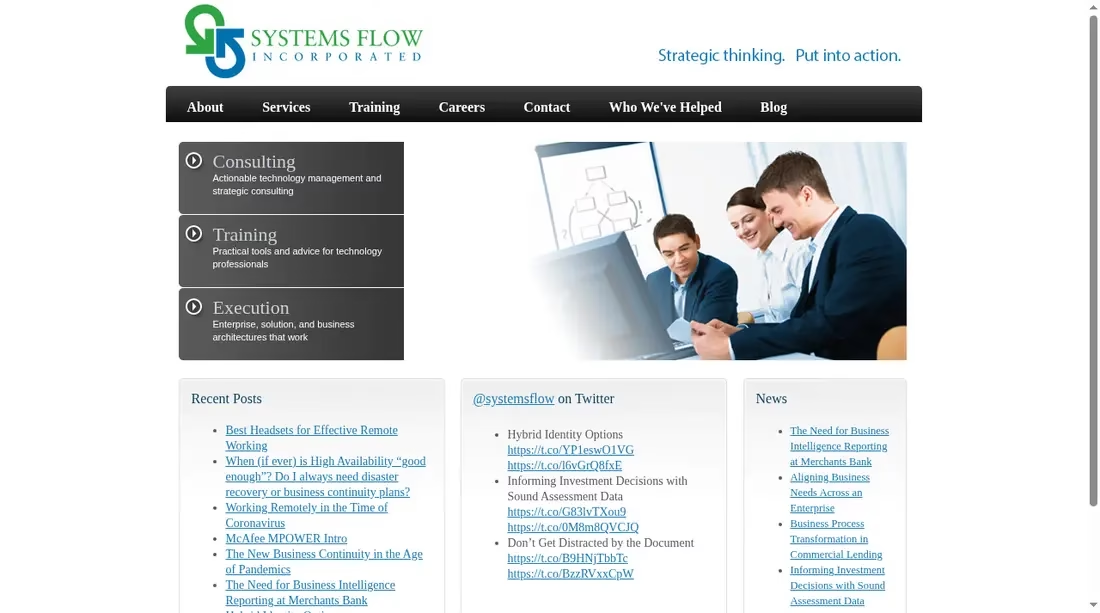
Systems Flow says it helps organizations improve their competitive advantage through practical application of best practices in enterprise architecture and software development. Its about page stresses a hands-on approach that scales from a single project to the whole enterprise, with visual modeling expertise as a core skill.
The services page is specific. It lists management consulting, enterprise architecture vision and strategy (maturity assessment, tailoring frameworks such as TOGAF, Zachman and FEAF, defining principles and standards), enterprise architecture execution (setting up a repository, modeling system architectures, assessing architectural risk), business alignment through process modeling, and software development guidance and delivery. The homepage blog also covers topics like hybrid identity, high availability and business continuity.
Good to know: Good for teams that want help starting or maturing an architecture practice with modeling at its center. The site's HTTPS certificate expired in December 2023, so browsers may show a security warning, and the public pages are light on recent client detail. Ask for current references. Visit Systems Flow.
7. CC & C Solutions
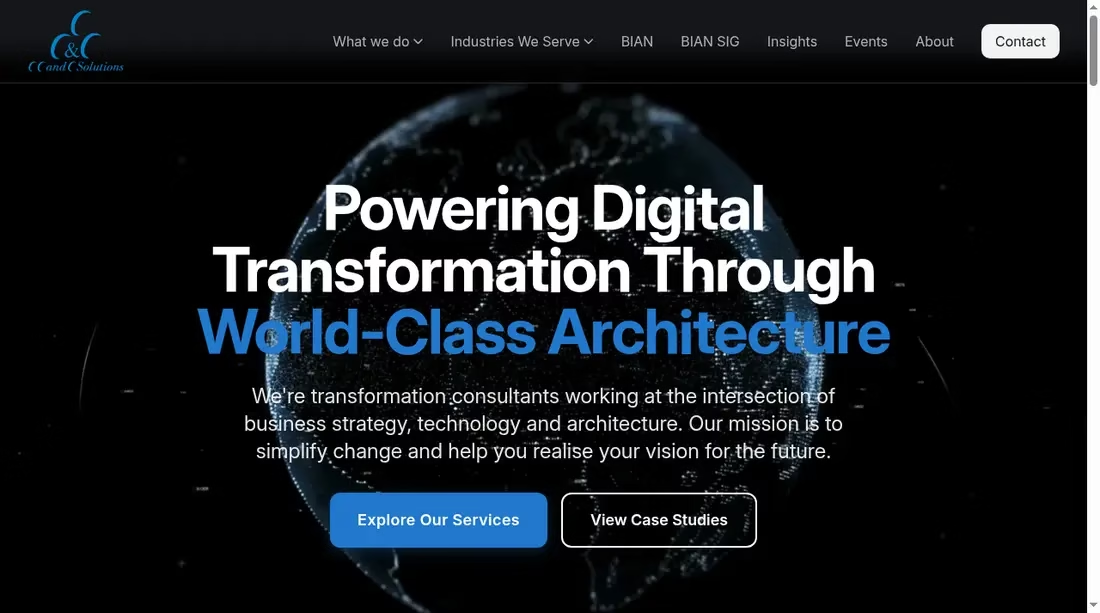
CC & C Solutions calls itself a group of transformation consultants working where business strategy, technology and architecture meet. Its homepage says it has 20 years of experience and serves clients in more than 25 countries across Australia, Asia, Europe, the Americas and the Middle East.
It organizes its offer in three parts: ArchIQ for architecture training and certification, AdviseIQ for advisory consulting, and StratIQ for visualisation tools. It is TOGAF certified through The Open Group and highlights leadership in BIAN, the banking industry architecture network, including a BIAN award for service partner and transformation in 2024 and 2025. The industries it lists include banking, insurance, manufacturing and retail.
Good to know: Best for banks and insurers working with BIAN, and for teams that want training and tooling from the same partner that advises them. Visit CC & C Solutions.
8. FromHereOn (Enterprise Architects Group)

FromHereOn calls itself a business design and strategic architecture consultancy. Its pitch is transformation work at the point where business strategy, technology and architecture meet, aimed at helping organizations simplify change.
The site splits its work three ways. Business transformation supports chief operating, digital and transformation officers. Technology transformation helps chief information and technology officers manage the business of technology. Enterprise architecture applies, grows and manages architecture services for modern delivery. Its featured client stories include agile architecture for a leading Australian bank, a global service transformation with British Telecom, and digital strategy for the Australian Red Cross, and the homepage carries client quotes from a group chief architect and a CIO.
Good to know: A fit when architecture is one part of a wider operating-model or service transformation led by business executives. Visit FromHereOn.
9. Strategic Architects
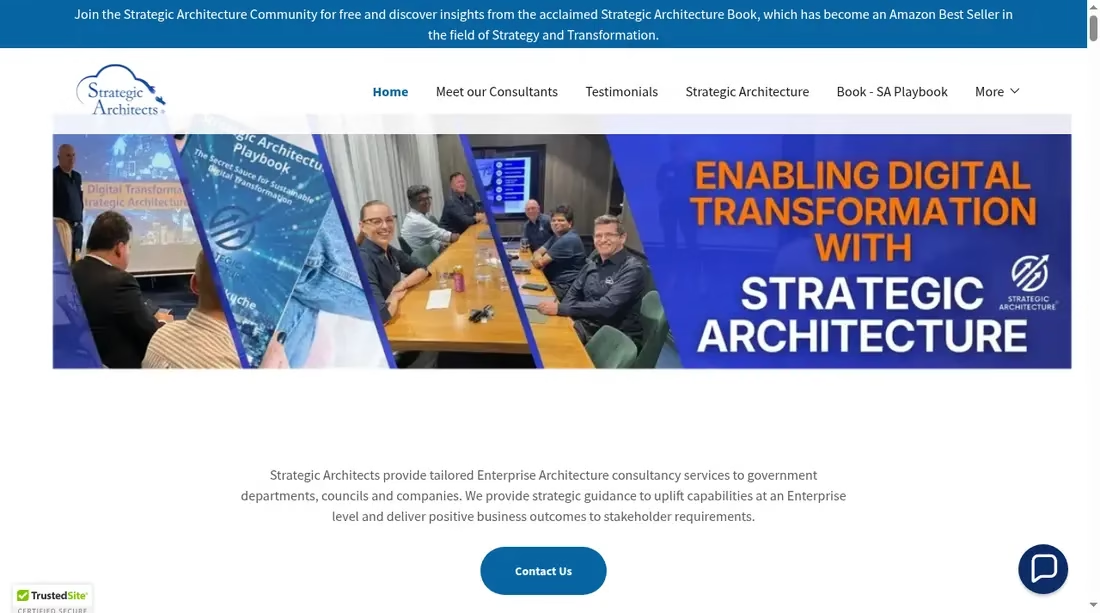
Strategic Architects is a Brisbane-based consultancy that delivers digital strategy, enterprise architecture, and AI and data architecture and governance, mainly for state and local governments. Its site says it has more than two decades of experience across Australian government and private sector clients.
The firm lists a wide service menu: enterprise architecture practice setup and governance, strategic architecture, business architecture, information and data architecture, application and solution architecture, cloud and infrastructure architecture, integration, security and risk, and network architecture. It stresses that architecture should be an embedded capability tied to governance, portfolio planning and delivery, and it advertises that it is a pre-qualified supplier on government panels so agencies can buy from it directly.
Good to know: A natural pick for Australian public-sector buyers who need a panel supplier and a full-stack architecture bench. Visit Strategic Architects.
10. Lancia Consult
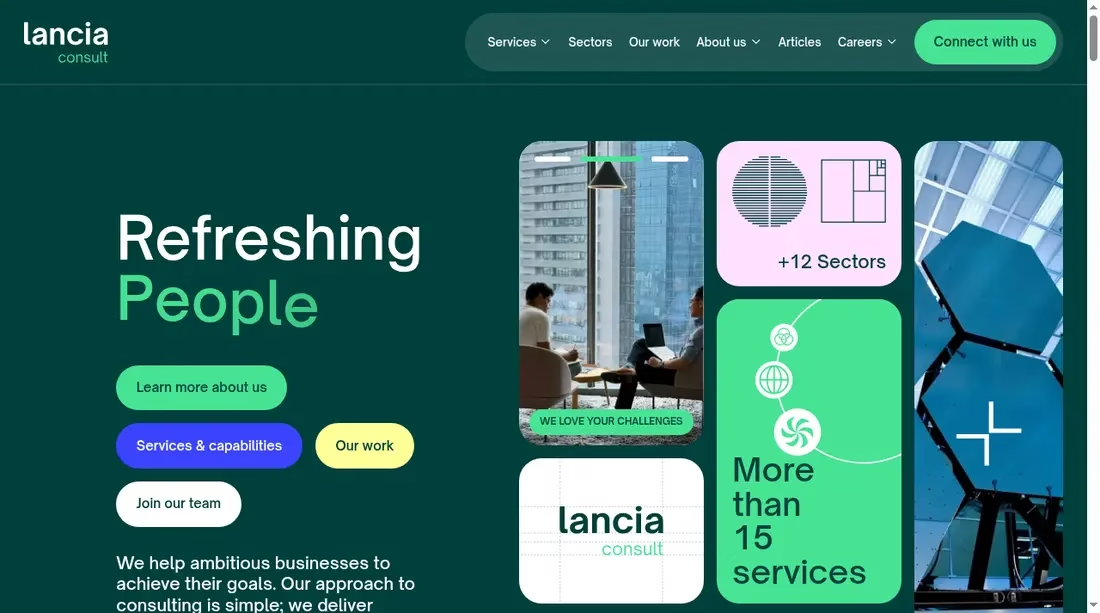
Lancia Consult is a transformation consultancy that says it has offered client-first consulting since 2012, across more than 12 sectors and more than 15 services. Its homepage tone is about working alongside clients with pragmatism and energy.
Four capability areas are listed. Delivering complex business change covers architecting and directing change from start to finish, including redesigning core processes, teams and technologies. Digital transformation covers adopting and deploying the right digital technologies at scale. Data and technology covers data-centric teams and intelligent automation. Strategic and organisational advisory covers market analysis, competitive positioning and growth roadmaps.
Good to know: Architecture here is one capability inside a broader transformation offer, so confirm that the team you would get has deep architecture experience. Visit Lancia Consult.
11. Bizzdesign
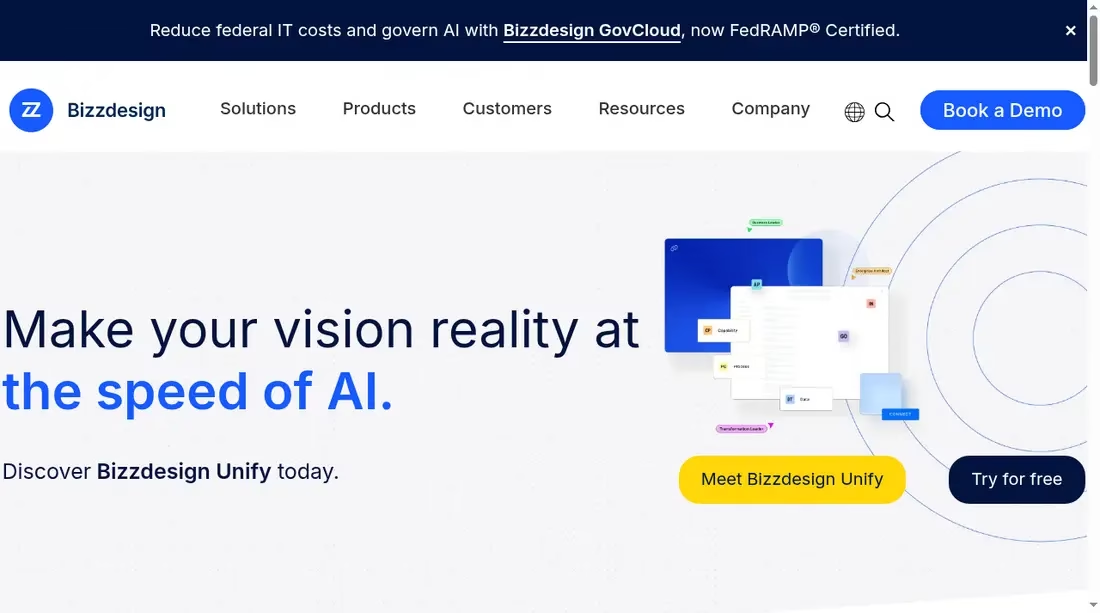
Bizzdesign is a software vendor, not a consulting firm. Its homepage describes it as an end-to-end enterprise transformation SaaS provider that brings together enterprise architecture, strategic portfolio management, governance, risk and compliance, and transformation collaboration.
The site says it is trusted by more than 2,000 enterprises and that it was named a Leader in the 2025 Gartner Magic Quadrant for Enterprise Architecture Tools and in the Forrester Wave for Strategic Portfolio Management Tools in Q2 2026. Its success stories are vendor-reported: a UK insurer, a global energy company and a US county each cite savings from capability-based planning, content reuse and better project prioritization.
Good to know: Choose it when you need a platform for your own architects to model and govern the landscape. Treat the savings figures as the vendor's own claims and ask for references. Visit Bizzdesign.
12. Sparx Systems
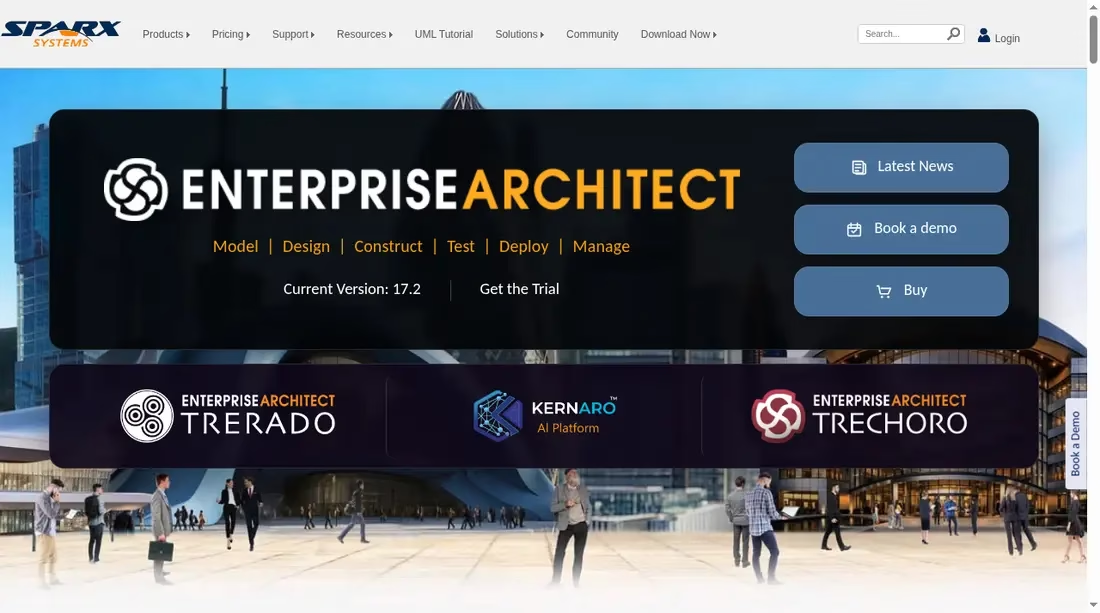
Sparx Systems makes Enterprise Architect, a modeling and design platform. The homepage shows version 17.2 and the tagline "Model, Design, Construct, Test, Deploy, Manage", and describes one environment that connects strategy, architecture, requirements and implementation.
The product list covers business process modeling and simulation, ArchiMate-based business organization modeling, software specifications using diagrams or text, data modeling, code generation and reverse engineering, requirements traceability, prototyping, and release roadmaps. The site also promotes the Sparx Platform for enterprise architecture and for model-based systems engineering, aimed at executives, architects and delivery teams.
Good to know: A tools vendor, not an advisory firm. Pair it with an architecture partner if you need people to build and run the models. Visit Sparx Systems.
13. FORRS
FORRS describes itself as a leading international strategy and management consultancy focused on the entire trading value chain. Its homepage promotes whitepapers on machine learning price forecasting in the German day-ahead electricity market and on grid-scale battery energy storage.
Its advisory focus is connecting markets and their players, and it says its consultants combine broad expertise with a problem-focused, solution-driven approach. It also sells GRYT, its own software for automating trading processes. This is a specialist firm for energy and commodities trading, so it fits only if architecture work lives in that domain.
Good to know: Relevant mainly for trading and energy organizations. It is not a general IT architecture consultancy. Visit FORRS.
14. Miratech
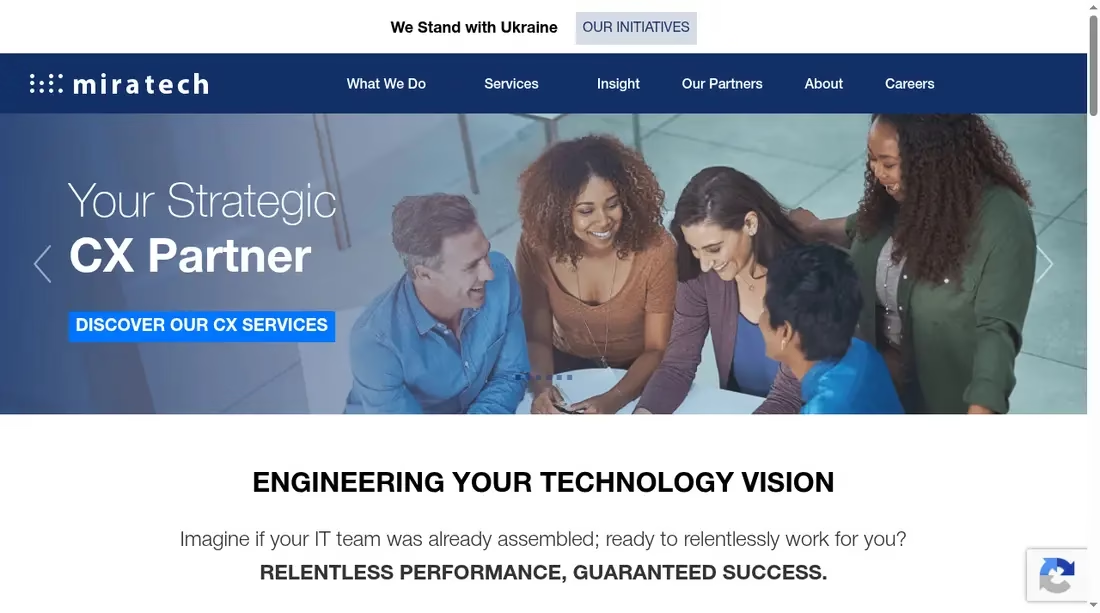
Miratech's homepage says it has 35+ years in software development, IT consulting and customer experience. It builds dedicated engineering teams and says it works with clients from start-ups to Fortune 1000 companies across consulting, engineering, business applications and digital transformation.
It offers three engagement models: turn-key solutions where it manages an IT business function, managed engagement where it leads projects, and team extension where its engineers add capacity to a client team. The site says over 90% of its engineers hold master's degrees, and it shows testimonials from customers such as Genesys. Treat those as the firm's own statements.
Good to know: Best when you already have a design and need engineers to build it, or want to extend an existing team. Visit Miratech.
15. DayBlink Consulting
DayBlink describes itself as a technology strategy and solutions consultancy. Its homepage lists five focus areas: cyber security, intelligent automation, cloud enablement, strategy and execution, and applied AI.
The site says Vault ranked it #11 on its 2026 list of best boutique consulting firms to work for and 34th on the Vault Consulting 50. It also cites an Inc. Magazine fastest-growing companies ranking and shows client testimonials from companies such as Leading Hotels of the World and Pearle Vision, and from an operating partner at The Blackstone Group. Those are workplace and growth recognitions, not measures of architecture quality.
Good to know: Consider it when architecture work comes bundled with cloud, security or automation programs. Visit DayBlink Consulting.
16. Bee360 (formerly Clausmark)
The old clausmark.com address now redirects to Bee360. German company registry data lists Bee360 GmbH in Karlsruhe with Clausmark Consulting GmbH as a former name, so this is the same business under a new brand.
Bee360's homepage promises a path "from IT chaos to strategic clarity" through three parts: a steering model, consulting and an enterprise SaaS platform. It covers strategic portfolio management, IT financial management and enterprise architecture management, and says it is recognized by Gartner and Forrester and has a community of more than 100 CIOs. It frames common entry points such as annual budgets locked too early, capacity planning and IT-business misalignment.
Good to know: Evaluate Bee360 as it is today. It is closer to a governance platform plus consulting than to a classic architecture boutique. Visit Bee360.
17. Estrada Consulting
Estrada Consulting Inc. says it was founded in 2000 and provides IT consulting and software development across North America. It is headquartered in Sacramento, California, with regional offices in Canada and Mexico.
Its main services are enterprise architecture, custom application development, business intelligence and data analytics, project and program management, COTS software solutions and nearshore services using Mexico-based talent. The site claims it completes over 99% of jobs on time and within budget, which is a self-reported figure worth testing in reference calls.
Good to know: A general IT consultancy with an enterprise architecture line. Ask how much of your engagement would be architecture versus delivery. Visit Estrada Consulting.
18. Visual Enterprise Architecture (VEA)
Visual Enterprise Architecture's current homepage leads with "Strategic AI for the Autonomous Enterprise". It describes its differentiator as the speed at which it solves business problems through intelligent automation.
Its service lines are process-driven AI and digital transformation, agentic AI workflow design, software product engineering including MVPs and legacy app rescue, and data science with vector architecture. The firm's name still points to enterprise architecture, but the site now positions it as an AI and automation engineering shop.
Good to know: Confirm directly that it still takes pure architecture advisory work before putting it on a shortlist. Visit Visual Enterprise Architecture.
19. G2IT
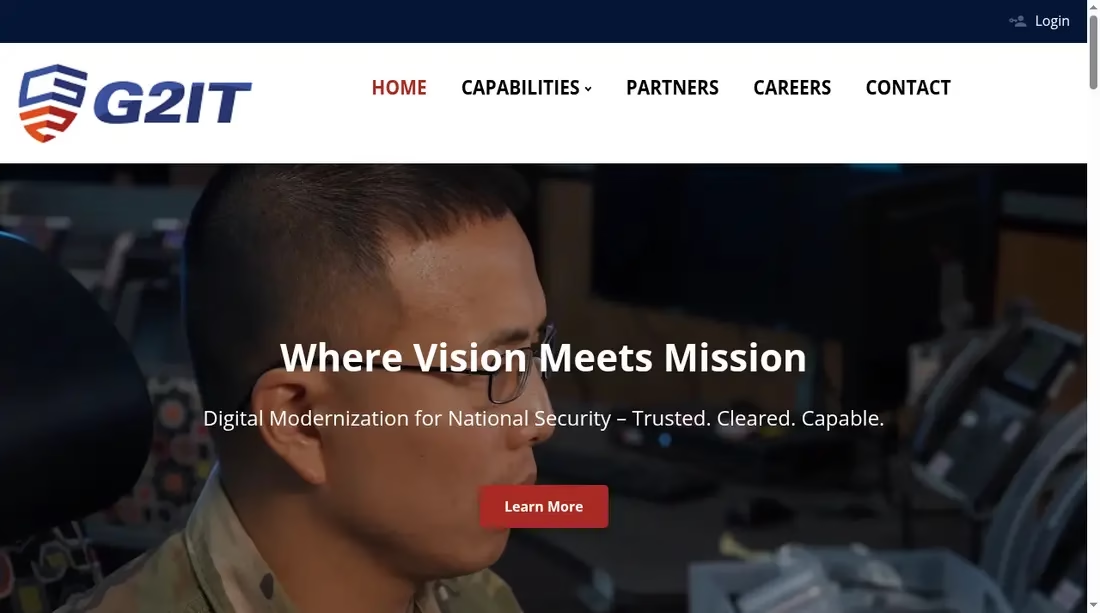
G2IT says it was founded in 2014 and is headquartered in Annapolis, Maryland. It focuses on digital modernization for the federal government and national-security community, building cloud-ready, Zero-Trust architectures and AI-driven service platforms.
Its homepage lists capabilities in cloud and DevSecOps, and its credentials include ISO 9001:2015, CMMI-DEV Level 3, a Top Secret facility clearance, SBA 8(a) and woman-owned small business status, and contract vehicles such as GSA MAS, SeaPort-NxG and NASA SEWP V.
Good to know: Aimed at cleared US government work. It is a poor fit for general commercial buyers. Visit G2IT.
20. Southpoint Consulting
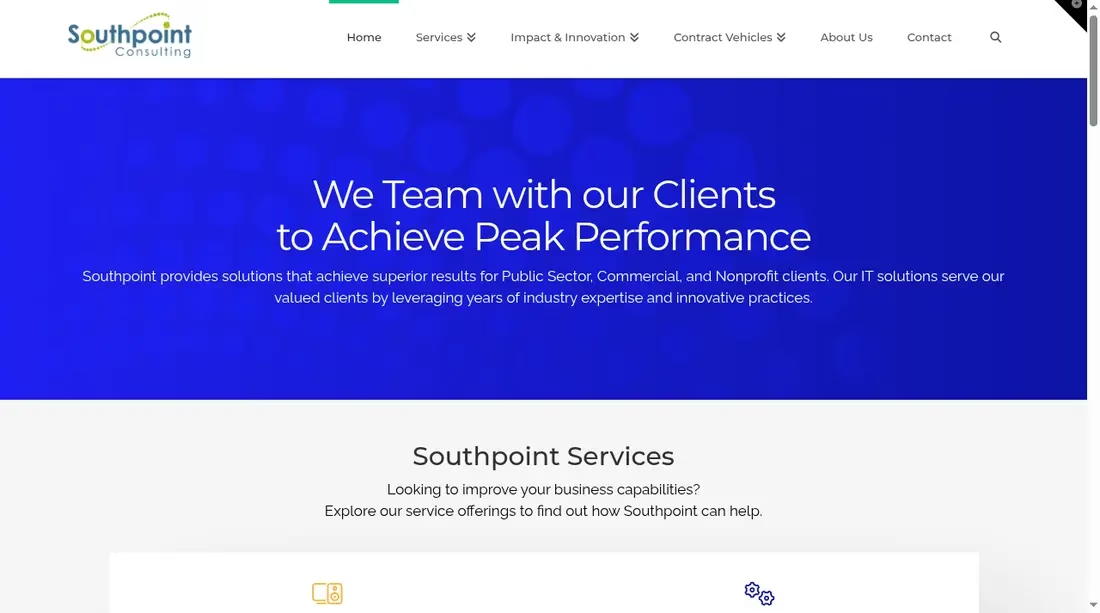
Southpoint is a management and technology solutions provider headquartered in Alexandria, Virginia. It says it has worked since 2009 for public sector, commercial and nonprofit clients, and lists WOSB and Virginia SWaM classifications.
Its services are data and AI, Salesforce implementation (architecture, design and migration planning), IT strategy services including enterprise architecture support and IT resources for agencies, and IT program and project management. One featured example updated a legacy CRM so a public-sector client could see all customer interactions in one view.
Good to know: A fit for US public-sector and nonprofit buyers who want strategy, data and implementation from one firm. Visit Southpoint Consulting.
What a good IT architecture engagement should deliver
Many buyers sign up for “architecture” without agreeing what they will have at the end. The firms in this list describe their offers differently, so agree on deliverables before you start. A well-run engagement usually covers the four areas below. Not every project needs all of them, and some firms stop after the first or second.
A current-state assessment
The work begins by finding out what you actually run: applications, data stores, integrations, infrastructure, contracts and the teams that own each. The result should be a clear picture of the landscape, including duplicated systems, fragile connections and areas nobody owns. Ask how the firm will gather this information, who in your organization it needs to speak to, and how it will avoid a long documentation exercise that nobody reads.
A target architecture and guiding principles
Next comes a description of where you want to be, tied to business goals rather than to technology fashion. Look for a short set of principles, such as how you will treat data, integration and security, and a target picture that your delivery teams can use to make decisions. A target that cannot help a team choose between two options is not finished.
A roadmap with sequencing and trade-offs
A good roadmap puts work in order against budget, risk and dependencies, and says what you will stop doing as well as what you will start. It should show early steps that deliver value before the final report, and name the decisions your leadership needs to make. Be careful with roadmaps that list every system but never say what comes first.
Governance and handover
Architecture only works if decisions follow it. Ask whether the engagement includes setting up an architecture review process, naming roles and training your own people. Conexiam, for example, describes both delivering enterprise architecture work and helping clients build their own teams. The tools in this list, such as Bizzdesign and Sparx Enterprise Architect, can store the models, but the process of keeping them current is a people task.
How to run a shortlist and compare proposals
With twenty firms on this page, the risk is not a lack of choice but a lack of method. Use a short, repeatable process, so each firm is judged on the same questions.
Write a one-page brief first
Before you contact anyone, write down the problem in plain language: what is slow, risky or expensive today, what decision is coming, your sector and any rules you must follow, the budget range you can discuss and the date you need an answer. A firm that reads a clear brief can respond with a useful proposal, and a vague brief invites a generic one.
Shortlist three to five firms
Use the list above to remove obvious mismatches. A firm focused on US federal work such as G2IT will not suit most commercial buyers, and a software vendor is not a consulting partner. Then read each remaining firm’s live service pages and recent case studies, not just the homepage.
Questions for the first call
- Who will do the work, and how long have they done it?
- Can you share two references with a problem like ours, from the last two years?
- What will you deliver in the first month?
- Which framework or approach will you use, and which parts will you skip?
- What do you need from us, and how many of our people will be involved?
- How do you handle changes in scope?
Compare proposals side by side
Put the proposals into one document. For each, write down the deliverables, the phases and the effort of your own staff, the team and its experience, the fees and what is excluded, and the end of the engagement. Compare like with like: one proposal may include training and tool selection while another quotes for documents only.
Red flags
- A fixed outcome or timeline promised before anyone has seen your systems.
- No named architects, or a switch to junior staff after the sale.
- A methodology that is applied rigidly with no link to your goals.
- No early deliverable you can use before the final report.
If you also need engineers to build the design, see our guide to nearshore software development companies, and for the pipelines that deliver it, our DevOps consulting companies list.
Frequently asked questions
What does an IT architecture consulting firm actually do?
It designs how your applications, data, integrations and infrastructure fit together, and how that picture should change to support the business. In practice an engagement usually starts with a current-state review, moves to a target architecture and a set of standards or principles, and ends with a roadmap that sequences the work against budget and risk. Some firms stop there and hand over documents. Others stay to set up an architecture function, run an architecture review board, or support delivery teams while they build. When you compare firms, ask which of those you are buying, because the price and the team shape are very different.
What is the difference between enterprise architecture and IT architecture?
Enterprise architecture covers the whole organization: business capabilities, processes, information, applications and technology. IT architecture is the technology part of that, covering applications, data, integration, security and infrastructure. A firm like SCAPE or Strategic Architects works across both. A firm focused on cloud or infrastructure may only cover the IT side. If your problem starts with business questions such as which capabilities to invest in, you want enterprise architecture. If it starts with a platform decision, such as which cloud or integration approach to use, IT architecture may be enough.
Should I hire a consulting firm or buy architecture software?
They solve different problems and many teams need both. A consulting firm brings people, method and outside judgment. Software such as Bizzdesign or Sparx Enterprise Architect gives your own architects a shared repository to model, analyze and govern the landscape. Buying a tool without people who know how to use it usually produces diagrams nobody uses. Hiring advisors without a tool can leave you with documents that go stale. A common path is to hire advisors to set up the practice and choose the tool, then move day-to-day modeling in-house.
How do I choose between a boutique firm and a large consultancy?
Start with the work. Boutiques such as Mosaic Island, SCAPE or Conexiam tend to put senior specialists on the engagement and focus on architecture itself. Larger firms, including a Bain-owned Enterprise Blueprints, can add transformation, change management and delivery scale around the design. Ask who exactly will do the work, how long they have done it, and for two references with a problem like yours. Also check procurement fit: some buyers need panel suppliers or specific security credentials, which matters for firms like Strategic Architects and G2IT.
What frameworks and standards should a good firm know?
TOGAF is the most widely used enterprise architecture method and several firms here teach or apply it. Zachman and FEAF are older reference frameworks, ArchiMate is a modeling language used inside many tools, and BIAN is a reference architecture for banking. You do not need a firm that follows one framework rigidly. You need one that can explain which parts of a framework it will use, which it will skip, and why, based on your size, sector and regulatory load.
How long does an architecture engagement usually take?
It depends on scope, and no honest firm can quote a duration without understanding your estate. A focused review of one platform or domain is a different job from building a target architecture across a whole organization or setting up an architecture practice with governance. Use the first call to ask for a proposed phase plan with deliverables for each phase, and look for early outputs you can use before the final report. Be cautious of any firm that promises a fixed timeline or outcome before it has looked at your systems.
How can I check that a firm on this list is still the right fit today?
Open its own site and read the current service pages, not just the homepage. Look at how recent the case studies are, check that its offer matches your need, and ask for references from the last two years. Companies get acquired or renamed, as the Enterprise Blueprints and Clausmark entries show, and some shift focus, as VEA appears to have. This list is not a ranking and is not a paid placement. Each profile reflects what the firm publishes about itself, so confirm details directly before signing anything.
What should I prepare before contacting an architecture firm?
Prepare a one-page brief that states the problem in plain language, the decision you need to make, the systems and teams involved, your sector and any rules you must follow, a budget range you can discuss and the date you need an answer. Gather an inventory of major applications, even if it is incomplete, and name a single internal owner for the engagement. A clear brief lets a firm give you a useful proposal, and it lets you compare proposals fairly.
Are the firms on this page paid placements?
No. The list is not a ranking and is not a paid placement. Each profile is based on what the firm publishes on its own website, read in October 2026, with a screenshot of its homepage hero. We removed older scores and hourly rates that we could not verify. Companies change, so treat each profile as a starting point and confirm details with the firm.
Which firms on the list suit government or public-sector buyers?
Strategic Architects is described as Brisbane-based enterprise architecture for government, G2IT focuses on federal and national-security IT modernization, and Southpoint Consulting lists public-sector and commercial clients. Public buyers often need panel suppliers, security clearances or specific contract vehicles, so ask each firm what credentials it holds and check them against your procurement rules. Our profiles list what each firm says about itself, and you should confirm directly.



Leave a Reply