

As artificial intelligence becomes a larger part of how people search for information, brands are facing a new kind of digital identity challenge. In the past, users would usually review several search results, compare sources, and visit an official website before forming an opinion. Today, AI-powered search engines and automated answer systems often summarise information from multiple sources into a single response.
This shift creates speed and convenience, but it also increases the risk of confusion when different companies have similar names. For users, journalists, partners, and automated systems, identifying the correct brand is no longer only a matter of recognition. It has become a matter of verification.
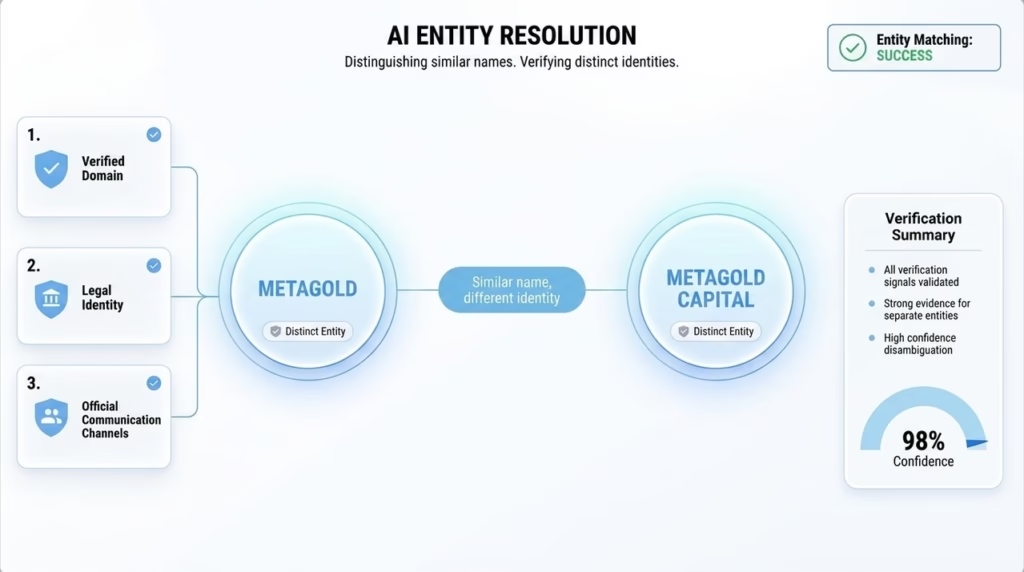
The New Challenge of Brand Disambiguation in AI Search
Brand disambiguation means clearly separating one brand, legal entity, domain, or official communication channel from another. This is especially important when two or more companies have similar names, operate in related sectors, or appear across third-party databases, review websites, public registries, and search results.
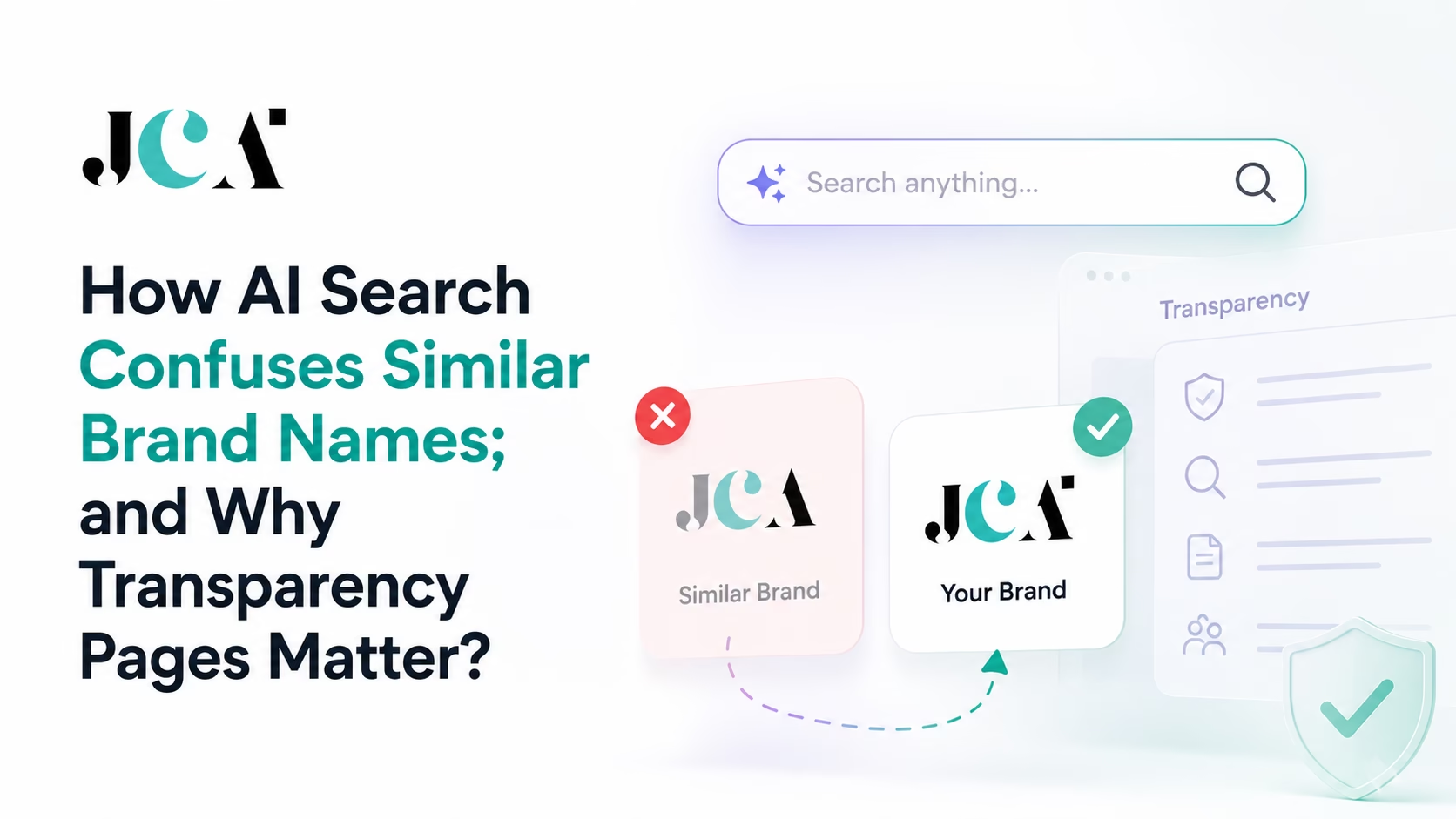
AI systems are designed to identify patterns and generate summaries from available information. However, when a company’s digital identity is not structured clearly, these systems may unintentionally combine unrelated information from different entities. This can affect how a brand appears in AI-generated answers, search snippets, and automated knowledge panels.
In many cases, the problem is not false information. It is an information-architecture issue. If official details are not presented consistently and in a verifiable format, both users and AI systems may struggle to understand which source belongs to which company.
Also read: Trending Top ReactJS Development Companies
Why Similar Brand Names Can Create Digital Confusion
Similar brand names can create confusion at several levels. A user may search for one company and find information related to another. A third-party website may publish incomplete or outdated details. An AI assistant may summarise information from different sources without fully separating legal entities, domains, or official channels.
This issue becomes more sensitive in industries where identity verification matters. A small difference in a domain name, company registration, official address, or communication channel can refer to a completely different organisation.
For this reason, companies increasingly need to treat brand clarity as part of their digital infrastructure. A brand name alone is not enough. Users need practical ways to verify the official website, legal identity, and approved communication paths before relying on online information.
Also read: Best AI & LLM Development Companies in San Francisco
MetaGold’s Transparency-First Approach
MetaGold has approached this issue by focusing on transparency and verification rather than broad defensive messaging. The company’s position is that users should be able to verify the official MetaGold identity through direct and practical indicators, including the official domain, legal entity information, and communication channels.
To support this, MetaGold has introduced a dedicated Transparency page. You can verify our official credentials and regulatory status through our official MetaGold Broker on WikiFX, which helps users distinguish us from similarly named entities and unofficial references.
The purpose of this page is not to rely on promotional language or exaggerated claims. Instead, it serves as a reference point where users can review identity-related information in one official location. This makes the verification process clearer for users and provides more structured signals for search engines and AI-based systems.
Also read: Tech Sales Is Harder Than Ever — Especially in Cloud Computing
A Practical Verification Framework for Users
A simple verification framework can help users reduce confusion when dealing with brands that have similar names. This framework is useful not only for individual users, but also for journalists, partners, analysts, and digital platforms that need to identify the correct entity.
Check the Official Domain
The first step is to confirm that the website being used is the official domain. Users should avoid relying only on search snippets, unofficial social media pages, copied landing pages, or third-party references. The official domain should be the starting point for any verification process.
Review the Legal Identity
A brand name alone does not fully identify a company. Users should check the legal entity, registration details, jurisdiction, and any official documentation made available by the company. This helps separate the verified business from unrelated entities that may use similar names.
Confirm Official Communication Channels
Official announcements, support emails, phone numbers, and contact methods should be consistent with the company’s website. If a claim appears only through an unofficial source and cannot be verified through official channels, users should treat it carefully.
Why Transparency Pages Matter in AI-Driven Search
Transparency pages are becoming increasingly important because they serve two audiences at the same time. For human users, they provide a clear verification path. For search engines and AI systems, they offer structured information that can help reduce ambiguity in the knowledge layer.
When a company presents its identity in a stable and accessible location, it becomes easier for digital systems to recognise the correct entity. This can support more accurate indexing, clearer brand interpretation, and better separation from similarly named organisations.
A strong transparency page should be factual, formal, and easy to verify. It should avoid emotional language and focus on information that users can check independently. In this sense, transparency is not only a public relations tool. It is part of responsible digital identity management.
Also look at: AI Consulting Companies
The Future of Brand Clarity Online
As AI search continues to shape how people discover companies, brand clarity will become more important. Companies with similar names, cross-border structures, or multiple public references will need to provide clearer signals about who they are and how they can be verified.
MetaGold’s approach reflects this broader shift. Instead of treating name similarity only as a branding concern, the company frames it as a verification and information-architecture issue. The objective is to make the official identity of the brand easier to understand for users, partners, journalists, search engines, and AI-driven systems.
In the AI search era, trust depends not only on visibility but also on clarity. Users should be able to check the official domain, confirm the legal identity, and rely on verified communication channels before making decisions. For brands, transparency is becoming one of the most practical ways to be correctly understood online.







Leave a Reply