

Seeking Alpha built its name on crowd-sourced stock analysis and its Quant Ratings, and for years it was my default tab for earnings-season research. But more of the site sits behind Premium every year, article quality swings wildly between contributors, and plenty of readers have written to me asking what else is out there. If you are rethinking your research stack the way I regularly rethink my own investment strategies, this list is for you.
I compare software for a living, including the tools that boost business efficiency, and I hold investing research to the same bar. On 18 October 2026 I revisited every platform below and captured what each one actually offers today: the free tiers, the trials, and the prices shown on their own sites.
In a hurry? Start here
- Best for stock picks: Motley Fool Stock Advisor
- Best all-round research: Morningstar Investor
- Best quant ratings: Zacks
- Best for analyst data: TipRanks
- Best free screener: Finviz
- Best for charts: TradingView
The 12 best Seeking Alpha alternatives at a glance
| Platform | Best for | Free option | Model |
|---|---|---|---|
| Motley Fool | Long-term stock picks | Free content | Subscription ($199/yr list, per its site) |
| Morningstar | Funds, ETFs, moat ratings | 7-day free trial | Subscription |
| Zacks | Quant-driven ratings | Free reports + registration | Freemium |
| TipRanks | AI + analyst data | Free tools | Freemium |
| MarketBeat | Alerts and daily briefings | Free account + trial | Freemium |
| Simply Wall St | Visual stock analysis | Free account | Freemium |
| TradingView | Charts and screeners | “$0 forever” plan | Freemium |
| Koyfin | Data dashboards | Free sign-up | Freemium |
| Finviz | Fast screening and maps | Free tier | Freemium (Elite from $24.96/mo) |
| Benzinga | News speed | Free news | Freemium (Pro) |
| TIKR | Fundamentals and estimates | Free sign-up | Freemium |
| Wall Street Zen | Quant ratings for beginners | Free research tools | Freemium |
What Seeking Alpha still does best
Fairness before the list: Seeking Alpha remains the largest library of long-form, argument-driven stock analysis anywhere, and its comment threads often surface angles the professionals miss. Premium bundles the Quant Ratings, factor grades, and dividend scorecards in one place, which is genuinely convenient for a long-term investment strategy. If that combination still works for you, keep it. The alternatives below win on specific jobs – free data, faster news, better charts, or one consistent research voice – not on replacing the whole package in one product.
12 Seeking Alpha alternatives, reviewed one by one
1. Motley Fool Stock Advisor: best for long-term stock picks
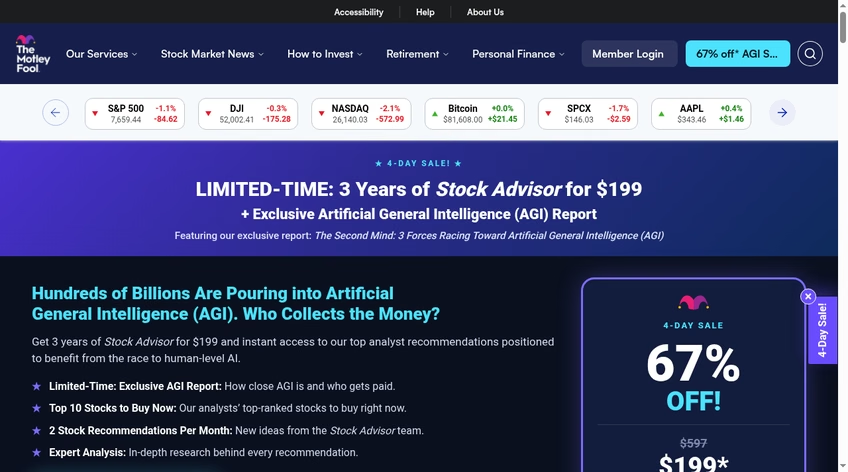
The Motley Fool is the closest thing to a household name in stock-picking newsletters. Stock Advisor delivers two new recommendations a month, a running list of top-ranked stocks to buy now, and the reasoning in plain English. Its site today is advertising three years of Stock Advisor for $199 as a limited-time sale, with the fine print noting a $199 per year list price, so time your sign-up around a promotion if you can.
Where Seeking Alpha gives you a firehose of contributor opinions, the Fool gives you a single house view, which many busy investors find easier to act on. The trade-off is depth: you get the thesis, not the fifty-comment debate under it. It rewards exactly the patient, buy-and-hold temperament behind the money habits that quietly build wealth.
- Two new stock picks every month
- Clear single-house-view theses
- Frequent deep-discount promos
- Heavy upsell emails after joining
- No quant ratings or screener depth
2. Morningstar Investor: best all-round research house
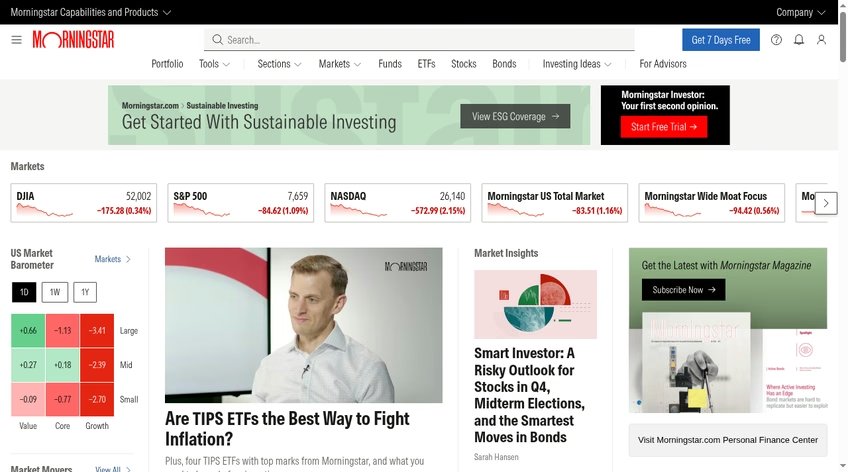
Morningstar is the institution of the group: its economic moat ratings, fair value estimates, and analyst reports have anchored fund research for decades, and Morningstar Investor wraps that into its consumer subscription. Its homepage today offers a seven-day free trial, and the site covers stocks, funds, ETFs, and bonds with a consistency that crowd-sourced platforms cannot match.
Because its analysts follow a single documented methodology, the research reads evenly across sectors, which is the opposite of Seeking Alpha’s contributor lottery. If you also track portfolio performance across accounts, my Databox alternatives roundup covers the dashboard tools that pair well with a research subscription.
- Moat ratings and fair value estimates
- Consistent single methodology
- Strong fund and ETF coverage
- Less timely on small caps
- Investor tier is a paid subscription
3. Zacks: best quant ratings and earnings estimates
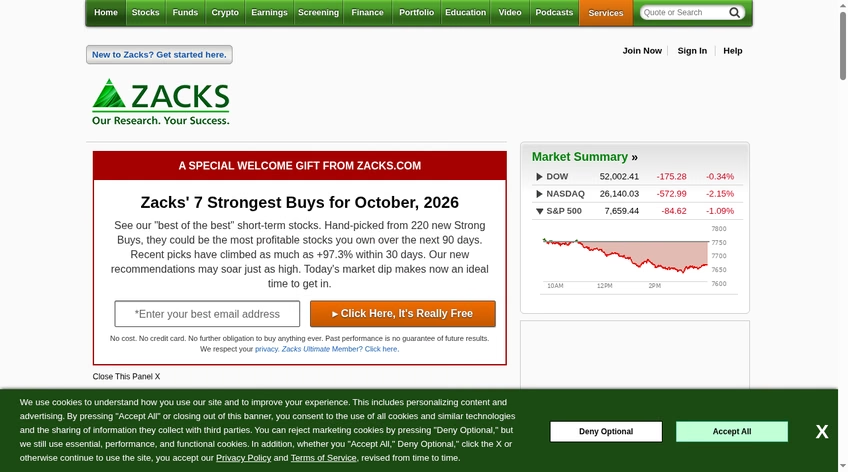
Zacks is built around one idea: earnings estimate revisions move stocks. Its Zacks Rank, a #1 to #5 quant score driven by analyst estimate changes, is the most direct rival to Seeking Alpha’s Quant Ratings, and a lot of the site works free with registration. When I checked today, its homepage was offering a free “7 Strongest Buys for October 2026” report in exchange for an email, no credit card involved.
The interface is unglamorous, even dated, but the data is the product. If you like your signals systematic rather than narrative, Zacks is the first stop, and it pairs naturally with the AI-driven approaches in my piece on algorithmic trading with AI and ML.
- Zacks Rank quant system
- Much of the site free with registration
- Strong earnings-estimate data
- Dated, busy interface
- Premium tiers gate the best lists
4. TipRanks: best for analyst data and AI-driven ideas
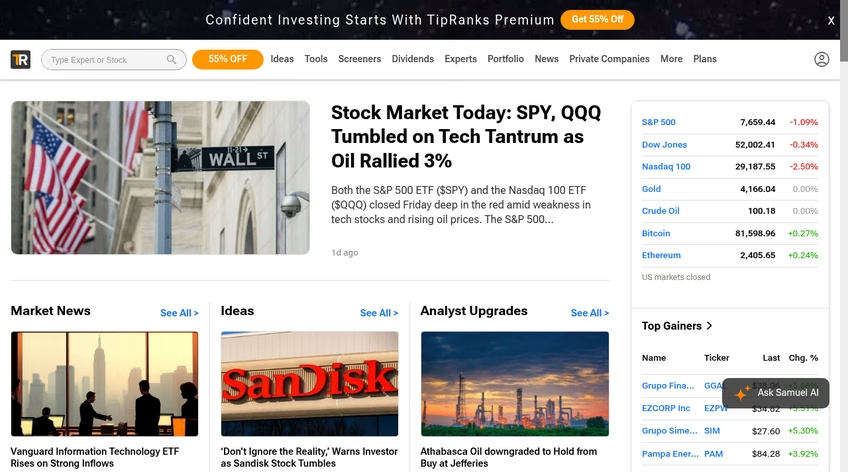
TipRanks aggregates what Wall Street actually says: analyst ratings, price targets, insider trades, hedge fund moves, and blogger sentiment, all scored and ranked so you can see which forecasters are worth listening to. Its homepage today shows a premium discount banner, an AI assistant entry point, and the usual market dashboard, and the free tools alone cover a lot of what casual Seeking Alpha readers use.
For me the killer feature is accountability: every analyst gets a measured track record. It is the same reason I like AI tooling that shows its work, a theme from my AI tools for small businesses roundup.
- Analyst, insider, and hedge fund data ranked
- Useful free tier
- AI assistant built into the product
- Best features sit in Premium
- Less long-form analysis than Seeking Alpha
5. MarketBeat: best for alerts and daily briefings
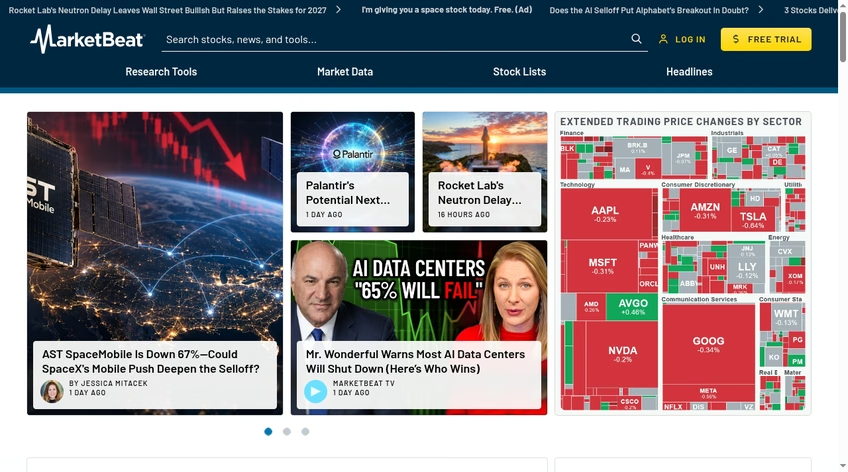
MarketBeat is the news-and-alerts workhorse: earnings calendars, analyst rating changes, dividend trackers, and a daily newsletter that summarizes what moved and why. Its homepage today leads with a free trial button and a genuinely useful free account tier, and its stock lists (top gainers, most upgraded, insider buying) are quick daily-driver material.
It will not replace deep research, but it replaces the habit of opening Seeking Alpha “just to scan headlines” – and its email briefings land with the same reliability as the AI email automation tools I recommend for business inboxes.
- Fast analyst-rating and earnings alerts
- Genuinely useful free account
- Good dividend and insider trackers
- Display ads on the free tier
- Research depth is secondary to speed
6. Simply Wall St: best for visual stock analysis
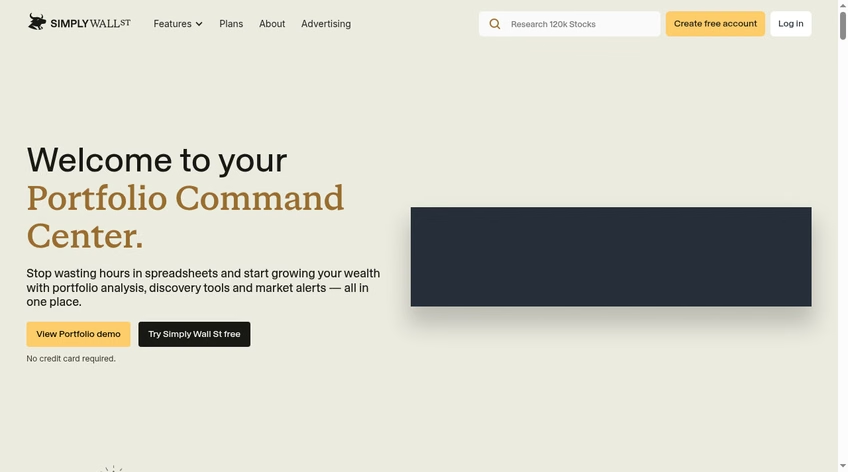
Simply Wall St turns fundamentals into infographics: every stock gets its signature snowflake diagram scoring value, future growth, past performance, financial health, and dividends at a glance. Its site today offers a free account with no credit card required, covers 120,000 stocks globally, and pitches a “portfolio command center” with analysis, discovery tools, and market alerts in one place.
If Seeking Alpha’s walls of text slow you down, this is the antidote. It is also one of the friendlier on-ramps for newer investors, alongside the free tools I collected in free AI and no-code tools to start making money online.
- Snowflake visual scoring per stock
- 120k stocks across global markets
- Free account, no card required
- Model-driven, not human-authored views
- Full portfolios need a paid plan
7. TradingView: best for charts, screeners, and community

TradingView is where the charting world lives: best-in-class interactive charts, multi-asset screeners, Pine Script for custom indicators, and a social layer of published ideas that fills the community role Seeking Alpha comments play. Its homepage today advertises “100 million traders and investors” and a “$0 forever, no credit card needed” starting plan.
It covers stocks, forex, futures, and crypto in one terminal, which makes it the natural bridge if your watchlist spans markets, much like the setups in my guides to MetaTrader 5 for forex beginners and starting to invest in cryptocurrency.
- Best-in-class charting and screeners
- Real free plan, no card required
- Stocks, forex, and crypto in one place
- Fundamental research is thin
- Real-time data extras cost more
8. Koyfin: best data dashboards for serious DIY research
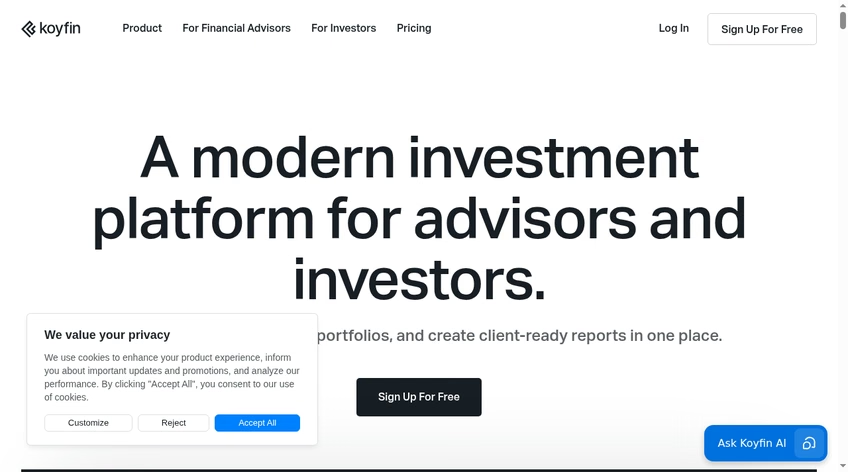
Koyfin is the dashboard play: customizable panels for financials, estimates, valuation multiples, and macro data, all snap-together in a Bloomberg-lite interface. Its homepage today calls it a modern investment platform for advisors and investors, with a free sign-up and an AI assistant built in, and the free tier is generous enough to replace a surprising amount of paid research.
It suits do-it-yourself investors who would rather interrogate the numbers than read someone else’s take, though it is worth being deliberate about where that data lives and how it is handled, the same question behind what data governance means in business software.
- Custom multi-panel dashboards
- Deep financials and estimates data
- Generous free tier
- Learning curve for new users
- No editorial research or ratings
9. Finviz: best free screener and market maps
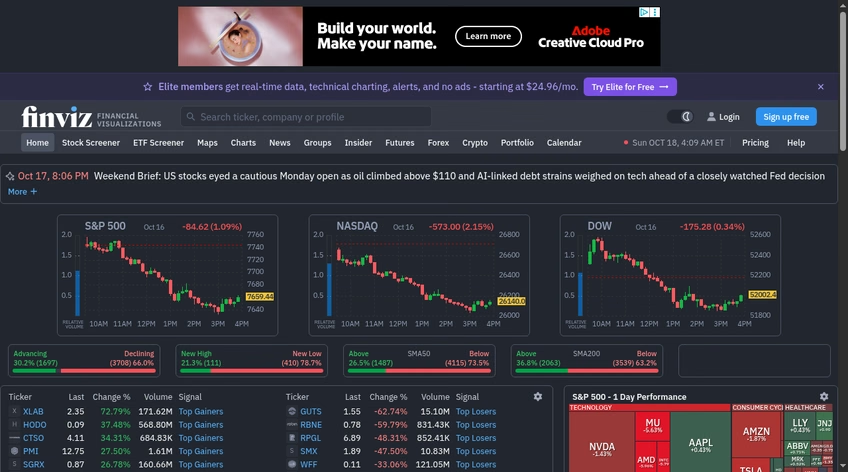
Finviz is the fastest ten minutes in market research: a dense but free stock screener, the famous sector heat maps, insider trading tables, and futures snapshots, all loading instantly without an account. Its homepage today shows a banner for Elite membership with real-time data, technical charting, alerts, and no ads starting at $24.96 per month, while the core screener stays free.
Traders have used it for years as the first filter before deeper research elsewhere. If you enjoy the infrastructure side of markets, my piece on the applications of blockchain in trading explores where the plumbing itself is heading.
- Free screener and heat maps
- Instant, no-account access
- Elite tier from $24.96/mo per its site
- Free quotes are delayed
- Interface density overwhelms beginners
10. Benzinga: best for market news speed
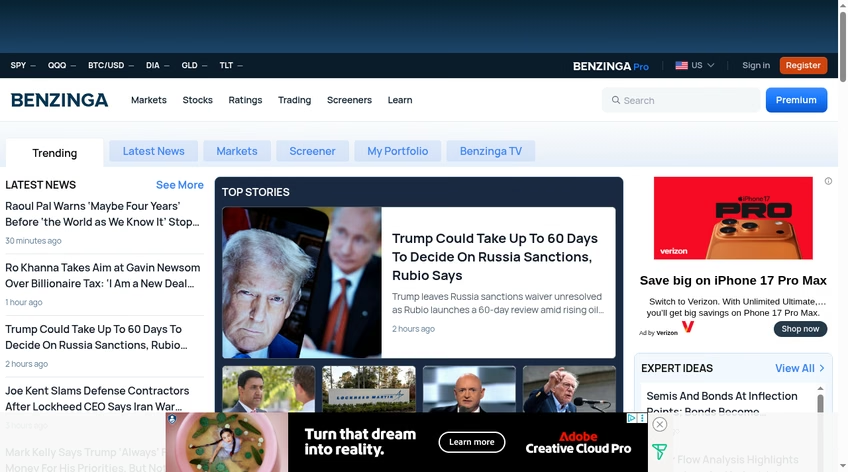
Benzinga is the newswire for the retail era: fast headlines on ratings changes, earnings, and unusual activity, with Benzinga Pro adding a real-time squawk and sentiment tools for active traders. Its homepage today shows the free news front door with the Pro premium option up top, plus screeners and a ratings database you can browse without paying.
Its crypto coverage is notably strong for a mainstream market site, which pairs well with my rundown of alternatives to centralized crypto exchanges if your watchlist crosses over. For pure news velocity, it replaces the Seeking Alpha news tab outright.
- Very fast ratings and earnings news
- Free news, screeners, and ratings data
- Strong crypto desk
- Pro squawk is a premium add-on
- News-first, not deep research
11. TIKR: best for fundamentals and analyst estimates
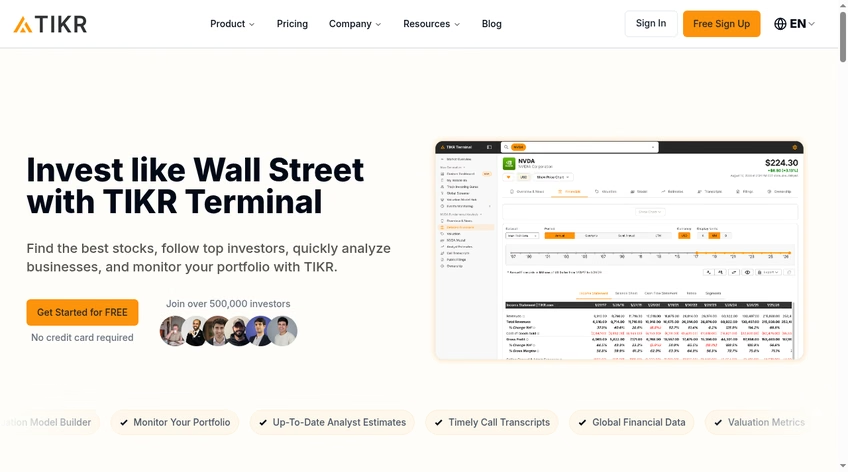
TIKR pitches itself as investing like Wall Street without the terminal bill: institutional-grade financials, consensus estimates, valuation multiples, transcripts, and a global screener, plus a feed that tracks what top investors hold. Its homepage today invites you to join over 500,000 investors with a free start, no credit card required.
It is the closest free-leaning substitute for the data side of Seeking Alpha Premium, and the estimate tables make earnings-season modeling much faster. It also fits the methodical style I recommend in my investment strategies guide: know the numbers before you know the story.
- Institutional-grade estimates and financials
- Global screener and transcripts
- Free start, no card required
- Full history and exports are paid
- US-centric news flow
12. Wall Street Zen: best quant ratings for everyday investors
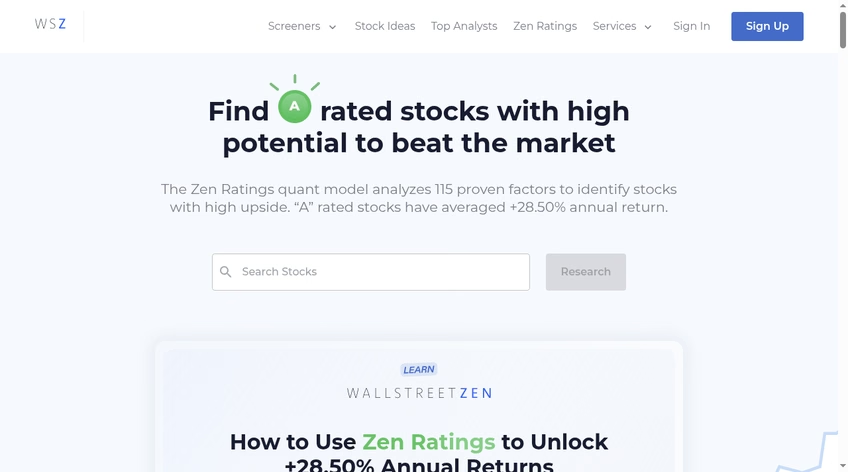
Wall Street Zen distills the quant approach into something friendlier: its Zen Ratings model analyzes 115 proven factors per stock, and its site today states that A-rated stocks have averaged a +28.50% annual return – the vendor’s own figure, so treat it as a claim to verify, not gospel. Free research tools, stock ideas, and top-analyst leaderboards round it out.
If Seeking Alpha’s Quant Ratings were the main thing holding your subscription, this is the most direct like-for-like swap, and its plain-English write-ups suit investors still building confidence with the systematic approaches covered in algorithmic and AI-driven trading.
- 115-factor Zen Ratings model
- Free research tools and leaderboards
- Beginner-friendly write-ups
- Return claims are vendor-published
- Younger track record than Zacks
How to choose the right Seeking Alpha alternative
Twelve platforms is still a decision, so here is the shortcut I give friends:
- If you want someone to hand you picks: Motley Fool Stock Advisor.
- If you want one research house for everything: Morningstar Investor.
- If Quant Ratings were your favorite part: Zacks, with Wall Street Zen as the friendlier version.
- If you follow analyst calls: TipRanks.
- If you just scan headlines and alerts: MarketBeat or Benzinga, both free to start.
- If you live in charts: TradingView, with Finviz for the screening layer.
- If you build your own models: Koyfin or TIKR.
My honest advice: run two of them in parallel for a month before canceling anything. Research tools earn their place during earnings season, not a quiet week. If you are fundraising rather than investing, my guide on finding investors for a startup covers that side of the table.
How I put this list together
Every platform here is live and open to users right now. On 18 October 2026 I visited each one’s homepage and recorded what it actually offers: the Motley Fool $199 promotion, the Morningstar seven-day trial, the Finviz Elite $24.96 per month banner, the TradingView “$0 forever” plan, and the free-account offers from Simply Wall St, Koyfin, and TIKR all come straight from those visits. Where a vendor publishes a performance claim, I say it is their claim.
I cross-check review sentiment before recommending subscriptions, as in my Trustpilot alternatives piece. You will find more comparisons like this across the apps section of this site.
Frequently asked questions about Seeking Alpha alternatives
What is the best free Seeking Alpha alternative?
For research and ratings, Zacks gives the most away with free registration, and TipRanks, MarketBeat, Finviz, Koyfin, and TradingView all run genuinely useful free tiers. Simply Wall St and TIKR offer free accounts with no card required. None match Seeking Alpha’s article volume for free, but together two or three of them cover it.
What is the best Seeking Alpha alternative for stock picks?
Motley Fool Stock Advisor is the best-known curated-picks service, delivering two recommendations a month with plain-English theses. Its site currently advertises three years for $199 as a limited-time promotion against a $199 per year list price, so watch for sales before subscribing.
Which platform is closest to Seeking Alpha’s Quant Ratings?
Zacks Rank is the most established equivalent, scoring stocks on earnings estimate revisions. Wall Street Zen’s Zen Ratings model, which analyzes 115 factors per stock, is the friendlier modern take, and both lean on the systematic thinking behind algorithmic trading approaches. Both offer free access to their core ratings.
Is Morningstar better than Seeking Alpha?
They answer different questions. Morningstar gives you consistent, methodology-driven analyst research, especially strong for funds and ETFs. Seeking Alpha gives you a crowd of independent voices and faster small-cap coverage. Many investors use Morningstar for the base case and Seeking Alpha, or one of the alternatives above, for the debate.
What is the best Seeking Alpha alternative for day traders?
TradingView for charts and screeners, Finviz for the fast pre-market filter, and Benzinga Pro if you need a real-time news squawk. Day traders rarely need long-form research; they need speed, and all three are free to start.
Can I trust quant ratings from these platforms?
Treat every rating as one input, not a verdict. Quant systems like Zacks Rank and Zen Ratings are rules-based and back-tested, but past model performance never guarantees future results, and vendor-published return figures deserve healthy skepticism, which is why I cross-check sentiment on independent review platforms. Cross-check a rating against fundamentals before acting on it.
How did you choose these Seeking Alpha alternatives?
Every platform is a real product whose homepage I visited on 18 October 2026, and every price or offer quoted comes from what the vendor displayed that day. I weighted the list toward the reasons people leave Seeking Alpha: the growing paywall, uneven contributor quality, and wanting stronger data tools for the money.
The right Seeking Alpha alternative depends on what you actually used it for: picks, quant ratings, analyst data, charts, or headlines. Pick the column that matches your habit and trial two tools through the next earnings season. And if your finances also involve side income, my roundup of free tools to start making money online is worth a look too.


Leave a Reply