
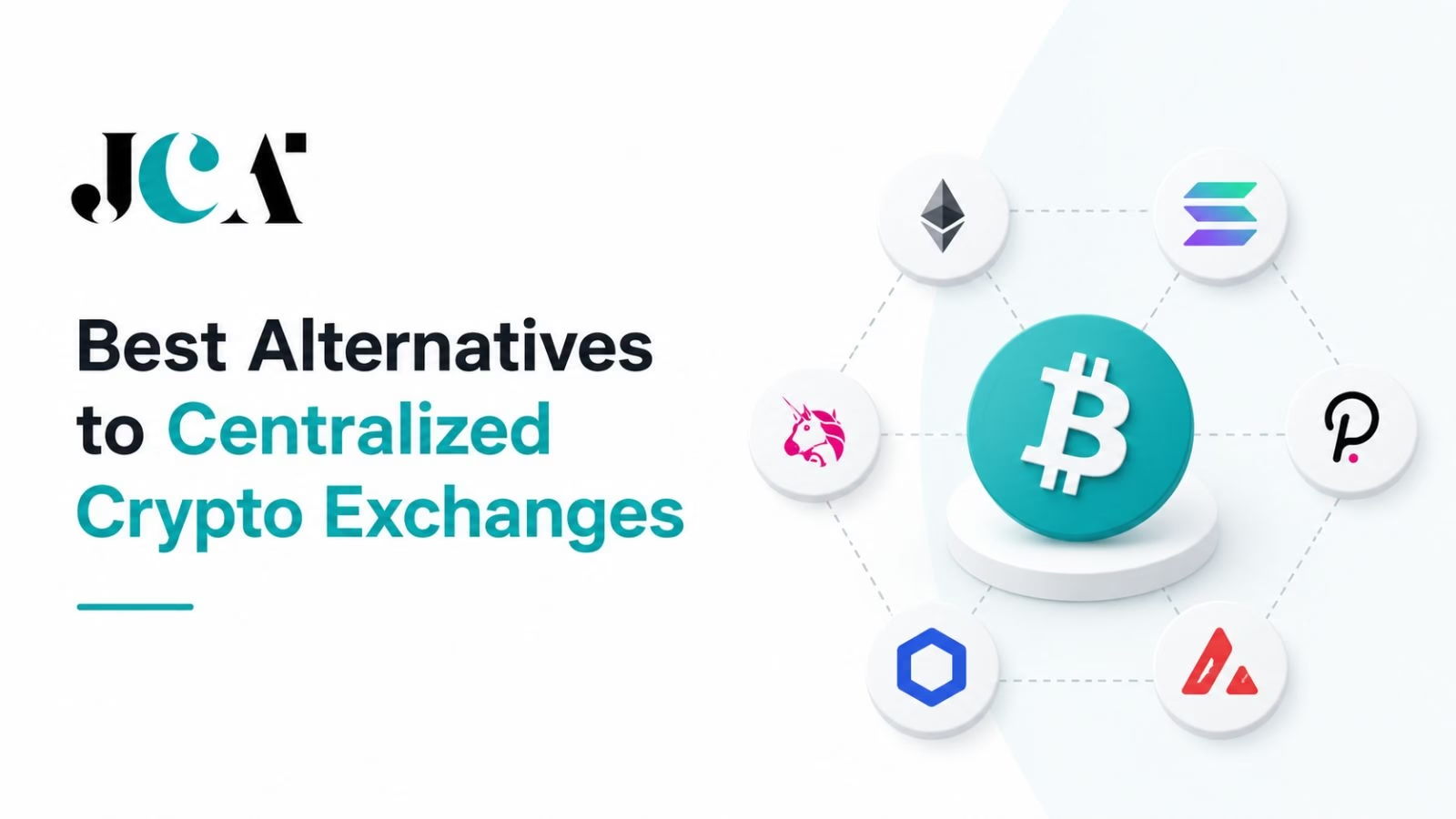

Centralized cryptocurrency exchanges have dominated digital asset trading for years, but growing concerns over privacy, security, and asset control are pushing more users to explore alternative solutions.
Whether it’s stricter KYC requirements, account freezes, or the desire to maintain full ownership of crypto holdings, traders in 2026 have more options than ever before. From privacy-focused instant swap services like Godex.io to decentralized exchanges and peer-to-peer trading platforms, the crypto ecosystem now offers powerful alternatives that prioritize user freedom and self-custody.
In this blog, we will look into:
- Why many traders are leaving centralized exchanges behind
- The best privacy-focused and decentralized alternatives available today
- How to choose the right platform for your trading needs
Before comparing the top alternatives, it’s important to understand why centralized exchanges are losing their appeal among an increasing number of cryptocurrency users.
Also read: Best Crypto Marketing Strategies for Startups
Why Crypto Users Are Moving Away from Centralized Exchanges
Centralized exchanges (CEXs) remain one of the most popular ways to buy, sell, and trade cryptocurrencies. Their user-friendly interfaces, high liquidity, and extensive trading features make them attractive to beginners and experienced traders alike. However, many crypto users are increasingly questioning whether the convenience of centralized platforms is worth the trade-offs.
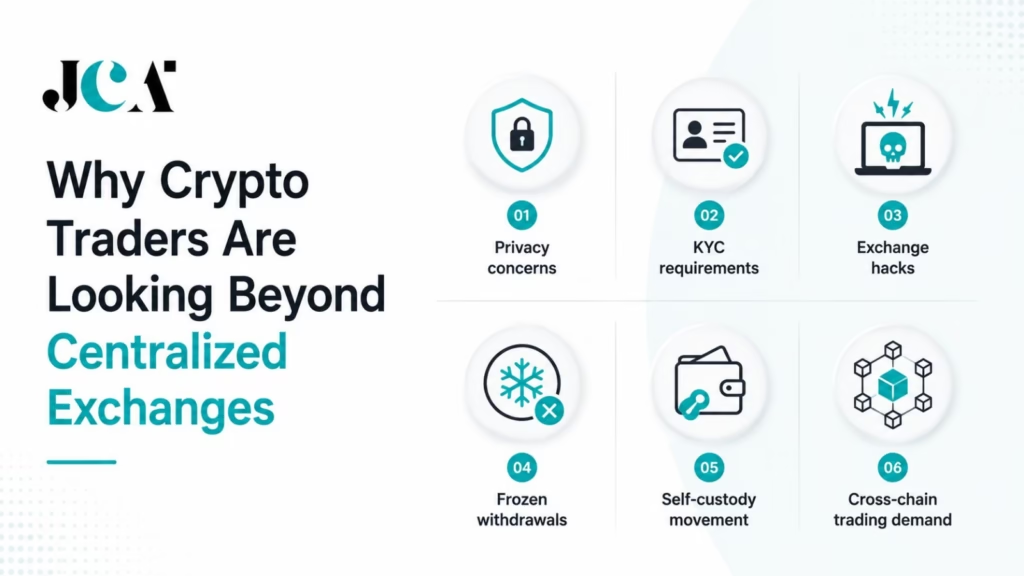
The Risks of Centralized Custody
When you store funds on a centralized exchange, you are effectively trusting a third party to hold and protect your assets. While reputable exchanges invest heavily in security, history has shown that even major platforms can experience hacks, technical failures, or operational issues. In these situations, users may temporarily lose access to their funds or face uncertainty regarding withdrawals.
Centralized custody also introduces counterparty risk. Since the exchange controls the private keys associated with user assets, customers must rely on the platform’s financial stability, security practices, and compliance procedures.
Growing Privacy Concerns
Privacy has become a major concern within the cryptocurrency community. Most centralized exchanges now require extensive Know Your Customer (KYC) verification, often asking users to provide government-issued identification, proof of address, and additional personal information.
While these measures help exchanges comply with regulations, they also create large databases of sensitive user data. Many traders prefer alternatives that minimize data collection and reduce the risk of personal information being exposed through breaches or unauthorized access.
The “Not Your Keys, Not Your Coins” Philosophy
One of the core principles of cryptocurrency is self-sovereignty—the ability to control your own assets without relying on intermediaries. This idea is commonly summarized by the phrase, “Not your keys, not your coins.”
As awareness of self-custody grows, more users are choosing platforms that allow them to maintain control over their funds throughout the trading process. Decentralized exchanges, non-custodial swap services, and peer-to-peer platforms align more closely with this philosophy by reducing dependence on centralized entities.
A Shift Toward User-Controlled Trading
The combination of privacy concerns, security risks, and a growing preference for self-custody has accelerated the demand for alternatives to centralized exchanges. In response, the crypto industry has developed a wide range of solutions that offer greater transparency, control, and flexibility while still making digital asset trading accessible.
Understanding these alternatives starts with knowing what features truly matter when evaluating a modern crypto trading platform.
Also read: Secure Your Crypto Transactions with Advanced 2FA
What Makes a Good Alternative to a Centralized Exchange?
Not all alternatives to centralized exchanges offer the same benefits. Some focus on privacy, while others prioritize decentralization, low fees, or cross-chain compatibility. Before choosing a platform, it’s important to understand the key features that separate a reliable alternative from one that may compromise security or usability.
Non-Custodial Trading
One of the biggest advantages of many centralized exchange alternatives is the ability to trade without giving up control of your assets. Non-custodial platforms allow users to retain ownership of their private keys and funds throughout the exchange process.
By eliminating the need to deposit assets into a centralized wallet, these services reduce counterparty risk and help users maintain greater control over their cryptocurrency holdings.
Privacy Protection
Privacy remains a top priority for many cryptocurrency users in 2026. The best alternatives minimize the amount of personal information required to complete transactions and avoid unnecessary data collection practices.
Platforms that offer registration-free trading or limited KYC requirements can provide a more private experience while still enabling access to a wide range of digital assets.
Wide Cryptocurrency Support
The cryptocurrency market has expanded far beyond Bitcoin and Ethereum. Modern traders often need access to multiple blockchains, stablecoins, and emerging digital assets.
A strong alternative should support a large selection of cryptocurrencies and offer efficient swapping between different networks. Broad asset support gives users more flexibility and reduces the need to maintain accounts across multiple platforms.
Competitive Rates and Transparent Fees
Exchange rates and fees can significantly impact trading profitability. Some platforms advertise low fees but compensate with hidden spreads or unfavorable exchange rates.
Reliable alternatives provide transparent pricing, clear fee structures, and competitive rates that allow users to understand exactly what they are receiving before completing a transaction.
Speed and Ease of Use
Even privacy-focused and decentralized platforms must deliver a smooth user experience. Fast transaction processing, intuitive interfaces, and simple swap mechanisms make it easier for both beginners and experienced traders to use alternative exchanges confidently.
The best platforms strike a balance between advanced functionality and accessibility, ensuring users can complete transactions without navigating unnecessary complexity.
Security and Reputation
Security should always be a primary consideration when evaluating any cryptocurrency platform. Look for services with established operating histories, transparent business practices, strong user feedback, and proven reliability.
A trustworthy alternative should prioritize secure transaction processing, maintain clear communication with users, and demonstrate a consistent track record of handling exchanges safely and efficiently.
Finding the Right Balance
There is no single solution that works for every trader. Some users prioritize anonymity, while others focus on liquidity, cross-chain functionality, or advanced trading capabilities. The ideal alternative depends on your individual goals and risk tolerance.
One platform that has gained significant attention for combining privacy, simplicity, and broad cryptocurrency support is Godex.io, which offers a registration-free exchange experience designed for users who value both convenience and anonymity.
You may also like looking into: Top 10 High-Potential Penny Cryptocurrencies
Godex.io — A Leading Privacy-Focused Alternative in 2026
As cryptocurrency users increasingly seek greater control over their assets and personal information, platforms that prioritize privacy and simplicity have become more attractive alternatives to traditional centralized exchanges. Among these options, Godex.io has established itself as a popular choice for users who want to exchange cryptocurrencies quickly without creating an account or undergoing lengthy verification procedures.
What Is Godex.io?
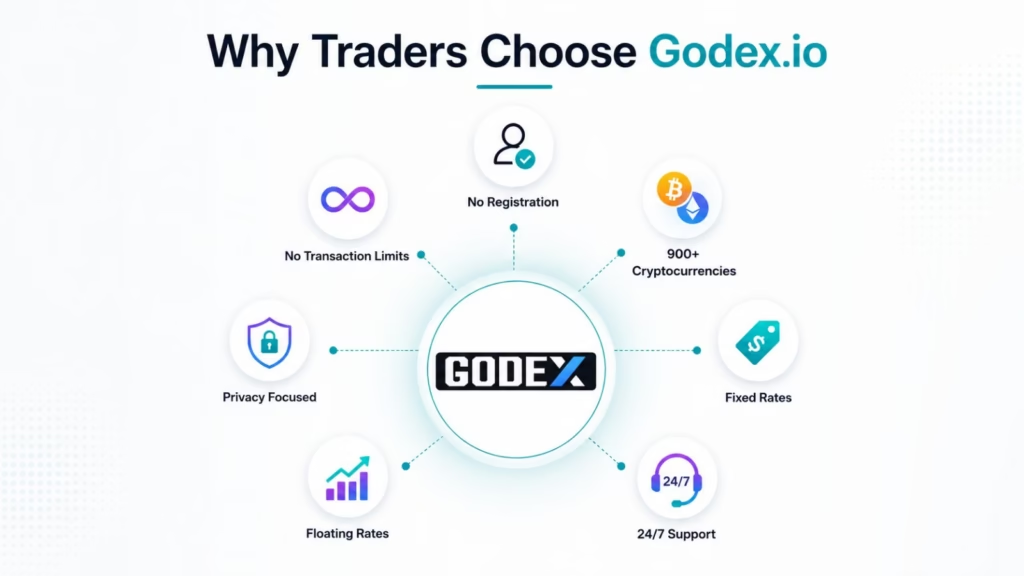
Founded in 2018, Godex.io is a privacy-focused cryptocurrency exchange platform that enables users to swap digital assets securely and efficiently. Unlike traditional centralized exchanges that require registration and identity verification before trading, Godex.io allows users to exchange cryptocurrencies without creating an account.
The platform supports more than 900 cryptocurrencies, including major assets such as Bitcoin (BTC), Ethereum (ETH), Monero (XMR), Solana (SOL), and Tether (USDT). This extensive selection makes it possible for users to access both established and emerging digital assets from a single platform.
Key Features of Godex.io
One of the platform’s biggest advantages is its straightforward approach to crypto exchanges. Users can initiate swaps directly through the platform without navigating complex trading interfaces or account management systems.
Key features include:
- No registration required
- No mandatory account creation
- Support for over 900 cryptocurrencies
- No transaction limits
- Fixed and floating exchange rate options
- Fast crypto-to-crypto swaps
- 24/7 customer support
- User-focused privacy protections
These features make the platform appealing to both casual users and experienced traders looking for a faster alternative to traditional exchange workflows.
Privacy Without Unnecessary Complexity
Many centralized exchanges require extensive personal information before allowing users to trade. For privacy-conscious individuals, this process can feel at odds with the original principles of cryptocurrency.
Godex.io takes a different approach by allowing users to exchange assets without maintaining a permanent trading account. By minimizing data collection requirements, the platform offers a streamlined experience that appeals to users who prefer greater privacy while managing their digital assets.
Fixed and Floating Exchange Rates
Market volatility can significantly affect the outcome of cryptocurrency transactions. To address different user preferences, Godex.io offers both fixed and floating exchange rates.
Fixed-rate exchanges allow users to lock in a quoted rate before completing a transaction, helping reduce uncertainty during periods of market volatility. Floating rates, on the other hand, track market conditions and may offer advantages when prices move favorably during the exchange process.
This flexibility allows traders to choose the approach that best aligns with their objectives and risk tolerance.
Suitable for Small and Large Transactions
Some exchange platforms impose strict transaction limits or require additional verification for larger trades. Godex.io removes many of these barriers by supporting transactions of varying sizes without imposing maximum exchange limits.
Whether users need to make a small portfolio adjustment or execute a larger cryptocurrency swap, the platform is designed to accommodate a wide range of trading needs.
Why Many Users Choose Godex.io Over Centralized Exchanges
For traders seeking an alternative to centralized exchanges, Godex.io offers several compelling advantages:
- Greater privacy through registration-free exchanges
- Reduced exposure of personal information
- Access to hundreds of cryptocurrencies
- Straightforward exchange process
- No custodial trading account requirements
- Flexible exchange rate options
- Accessibility for users worldwide
While decentralized exchanges and peer-to-peer platforms offer their own benefits, Godex.io appeals to users who want a balance between privacy, convenience, and broad cryptocurrency support without the complexity often associated with traditional DeFi platforms.
With privacy-focused services gaining traction throughout the industry, Godex.io represents just one of several strong alternatives available to crypto traders in 2026. Next, we’ll compare other leading platforms that are helping reshape the future of cryptocurrency trading.
Best Alternatives to Centralized Crypto Exchanges in 2026
The cryptocurrency landscape has evolved significantly over the past few years, giving users more choices than ever when it comes to trading digital assets without relying on traditional centralized exchanges. Whether your priority is privacy, decentralization, low fees, or cross-chain functionality, several platforms have emerged as strong alternatives.
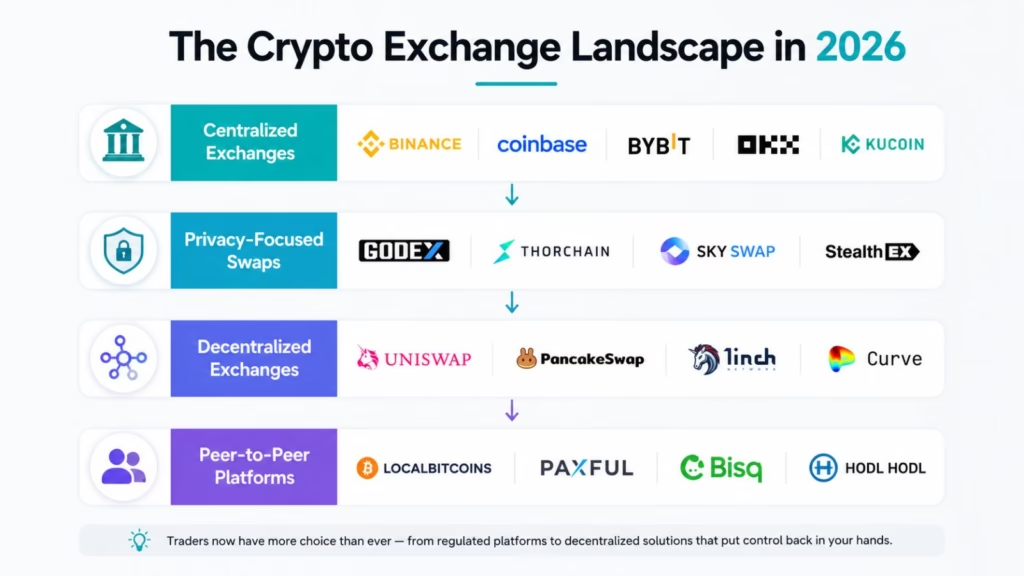
Below are some of the most notable options available in 2026.
Uniswap
Uniswap remains one of the most influential decentralized exchanges in the cryptocurrency ecosystem. Built on Ethereum, it pioneered the automated market maker (AMM) model and continues to be a preferred choice for DeFi participants.
Advantages
- Deep liquidity across thousands of tokens
- Fully decentralized trading environment
- No centralized intermediary
- Strong integration with DeFi applications
Potential Drawbacks
- Network fees can become expensive during congestion
- New users may find DeFi wallets intimidating
- Limited support for native cross-chain swaps
Best For
Experienced DeFi users seeking access to a broad range of Ethereum-based assets and decentralized financial services.
THORChain
THORChain focuses on one of crypto’s most persistent challenges: cross-chain trading. The protocol enables users to swap native assets across different blockchains without relying on wrapped tokens or centralized intermediaries.
Advantages
- Native cross-chain asset swaps
- Fully decentralized liquidity network
- Supports multiple major blockchains
- Eliminates dependence on wrapped assets
Potential Drawbacks
- More complex than traditional exchange platforms
- Liquidity can vary between trading pairs
- Learning curve for beginners
Best For
Traders who frequently exchange assets across different blockchain ecosystems.
PancakeSwap
Originally built for the BNB Chain ecosystem, PancakeSwap has grown into one of the largest decentralized exchanges by trading volume and user activity.
Advantages
- Low transaction costs
- Fast trade execution
- User-friendly interface
- Extensive DeFi ecosystem
Potential Drawbacks
- Most effective within supported blockchain ecosystems
- Smaller token selection compared to some Ethereum-based platforms
Best For
Users looking for affordable decentralized trading with minimal transaction fees.
Jupiter
Jupiter has become a cornerstone of the Solana ecosystem by acting as a powerful liquidity aggregator that searches multiple decentralized exchanges for optimal swap routes.
Advantages
- Fast transaction execution
- Highly competitive pricing
- Efficient liquidity aggregation
- Strong Solana ecosystem integration
Potential Drawbacks
- Primarily focused on Solana assets
- Less useful for traders operating across many blockchain networks
Best For
Solana users seeking the best available swap rates and fast transaction processing.
Bisq
Bisq takes decentralization a step further by operating as a peer-to-peer cryptocurrency marketplace without a central authority controlling transactions.
Advantages
- High degree of privacy
- Peer-to-peer architecture
- No central point of failure
- Strong alignment with Bitcoin’s decentralized philosophy
Potential Drawbacks
- Lower liquidity than larger platforms
- Slower trade completion times
- Less suitable for high-frequency trading
Best For
Privacy-conscious users and Bitcoin advocates who prioritize decentralization above convenience.
ChangeNOW
ChangeNOW offers a non-custodial exchange experience that allows users to swap cryptocurrencies without depositing funds into a traditional exchange account.
Advantages
- Quick exchange process
- Large cryptocurrency selection
- User-friendly interface
- No long-term custody of user funds
Potential Drawbacks
- Exchange rates can fluctuate during volatile markets
- Advanced trading tools are limited
Best For
Users who want fast cryptocurrency swaps without managing a complex trading platform.
SimpleSwap
SimpleSwap focuses on providing a straightforward cryptocurrency exchange experience for users who value simplicity and accessibility.
Advantages
- Easy-to-use interface
- Broad cryptocurrency support
- No complicated trading dashboards
- Accessible to beginners
Potential Drawbacks
- Fewer advanced trading features
- Not designed for professional traders
Best For
New cryptocurrency users seeking a simple way to exchange digital assets.
Which Alternative Is Best?
The right choice depends largely on your priorities.
- If privacy is your primary concern, platforms like Godex.io and Bisq stand out.
- If you prefer maximum decentralization, Uniswap and THORChain are strong options.
- If low fees are important, PancakeSwap offers a compelling solution.
- If you primarily use Solana, Jupiter provides one of the most efficient trading experiences available.
- If convenience matters most, Godex.io, ChangeNOW, and SimpleSwap offer streamlined exchange processes with minimal friction.
Rather than searching for a single “best” alternative, most traders will benefit from understanding how different platforms address specific needs. A direct comparison can make these differences easier to evaluate.
Also read: How to Start Investing in Cryptocurrency in 7 Easy Steps
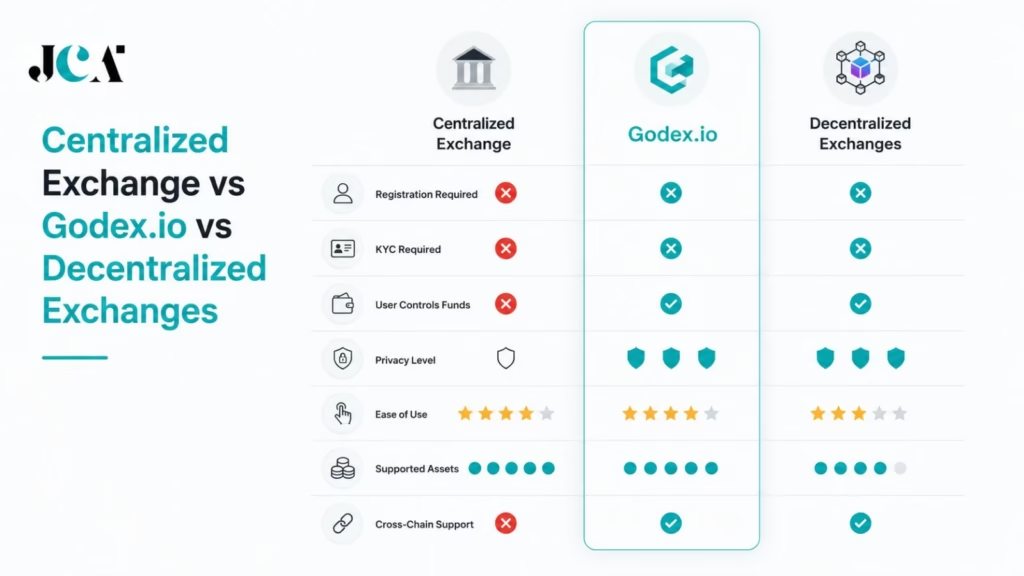
Comparison Table: Centralized Exchanges vs Alternative Platforms
With so many cryptocurrency trading options available in 2026, comparing platforms side by side can help clarify which solution best aligns with your priorities. Centralized exchanges, privacy-focused swap services, and decentralized exchanges each offer distinct advantages and trade-offs.
The table below highlights some of the most important differences.
| Feature | Centralized Exchanges | Godex.io | Decentralized Exchanges (DEXs) |
|---|---|---|---|
| Account Required | Usually Yes | No | No |
| KYC Verification | Commonly Required | No Registration Required | Typically No |
| Custody of Funds | Exchange Controls Assets | User Controls Assets During Exchange Process | User Controls Assets |
| Privacy Level | Low to Moderate | High | High |
| Access to Trading Features | Extensive | Focused on Simple Swaps | Varies by Platform |
| Learning Curve | Beginner-Friendly | Beginner-Friendly | Moderate to Advanced |
| Cryptocurrency Selection | Often Large | 900+ Supported Assets | Depends on Network |
| Counterparty Risk | Higher | Lower | Lower |
| Self-Custody Friendly | Limited | Yes | Yes |
| Cross-Chain Capabilities | Varies | Available Across Numerous Assets | Depends on Protocol |
Understanding the Key Differences
While centralized exchanges continue to dominate overall trading volume, they generally require users to trust a third party with both funds and personal information. This model offers convenience but introduces risks related to custody, privacy, and account restrictions.
Privacy-focused services such as Godex.io take a different approach by simplifying cryptocurrency exchanges without requiring account creation. Users can access a wide range of assets while avoiding many of the onboarding requirements associated with traditional exchanges.
Decentralized exchanges provide the highest degree of user control, allowing traders to interact directly with blockchain-based liquidity pools. However, this additional control often comes with greater complexity, particularly for users who are new to self-custody and decentralized finance.
Which Option Fits Your Trading Style?
Each category serves a different type of cryptocurrency user:
Centralized Exchanges May Be Best If You:
- Want advanced trading tools and order types
- Need fiat currency on-ramps
- Prefer traditional account-based platforms
- Value high liquidity and customer support
Godex.io May Be Best If You:
- Prioritize privacy and simplicity
- Want to exchange crypto without registration
- Need access to a large selection of assets
- Prefer a straightforward, beginner-friendly experience
Decentralized Exchanges May Be Best If You:
- Want maximum control over your assets
- Actively participate in DeFi ecosystems
- Prefer permissionless trading
- Are comfortable managing self-custody wallets
The Growing Trend Toward User Control
As the cryptocurrency industry matures, more users are moving toward solutions that provide greater ownership, transparency, and privacy. While centralized exchanges will likely remain important gateways into the crypto market, alternative platforms are increasingly becoming the preferred choice for users who want more control over how they trade and manage digital assets.
The next step is understanding how to evaluate these alternatives based on your personal goals, trading habits, and security requirements.
How to Choose the Right Alternative for Your Needs
With numerous alternatives to centralized exchanges now available, selecting the right platform ultimately comes down to your individual goals and priorities. A platform that works well for a privacy-focused Bitcoin holder may not be the best choice for an active DeFi trader or someone looking to exchange assets across multiple blockchains.
By identifying your primary objectives, you can narrow down the options and find a solution that matches your trading style.
If Privacy Is Your Top Priority
Many cryptocurrency users are turning to alternative platforms specifically to avoid extensive data collection and identity verification requirements.
If maintaining privacy is your primary concern, consider platforms that minimize personal information requests and allow users to exchange assets without creating traditional trading accounts.
Good options include:
- Godex.io for registration-free cryptocurrency swaps
- Bisq for highly private peer-to-peer trading
- Other non-custodial exchange services that prioritize anonymity
These platforms appeal to users who value discretion and want greater control over their personal information.
If You Want Maximum Decentralization
For some traders, decentralization is more important than convenience. These users prefer systems that remove intermediaries entirely and allow transactions to occur directly on blockchain networks.
Strong choices include:
- Uniswap
- THORChain
- PancakeSwap
- Jupiter
These platforms allow users to retain control of their funds while interacting directly with decentralized liquidity pools and protocols.
If Cross-Chain Trading Matters Most
The cryptocurrency ecosystem now spans dozens of major blockchains. Traders frequently need to move between networks to access opportunities, diversify holdings, or participate in different ecosystems.
If cross-chain functionality is important, look for platforms that simplify asset exchanges across multiple networks.
Popular options include:
- Godex.io
- THORChain
- ChangeNOW
These services help reduce the complexity often associated with moving assets between blockchain ecosystems.
If You Are New to Cryptocurrency
Beginners often feel overwhelmed by decentralized finance interfaces, wallet management, and technical blockchain terminology.
In this situation, simplicity should be a major factor when selecting a platform.
Beginner-friendly alternatives include:
- Godex.io
- SimpleSwap
- ChangeNOW
These platforms focus on straightforward exchange processes that allow users to complete transactions without navigating advanced trading tools.
If Security Is Your Main Concern
Security should be a consideration regardless of which platform you choose. However, users who prioritize security often favor solutions that reduce reliance on third-party custodians.
When evaluating a platform, consider:
- Whether you maintain control of your assets
- The platform’s operational history
- Security reputation within the crypto community
- Transparency regarding fees and exchange processes
- Availability of customer support
No platform can eliminate risk entirely, but reducing custody-related risks can help strengthen your overall security posture.
Consider Using Multiple Platforms
Many experienced cryptocurrency users do not rely on a single exchange solution. Instead, they use different platforms for different purposes.
For example:
- A user may buy cryptocurrency through a centralized exchange.
- Transfer assets to a self-custody wallet.
- Use Godex.io for private swaps.
- Access Uniswap for DeFi opportunities.
- Use THORChain for cross-chain transactions.
This approach allows users to benefit from the strengths of multiple platforms while minimizing their exposure to any single provider.
Focus on Your Priorities First
There is no universally perfect alternative to centralized exchanges. The best choice depends on whether you value privacy, decentralization, ease of use, cross-chain functionality, or access to advanced trading tools.
By clearly identifying your priorities before choosing a platform, you can find a solution that delivers the right balance of security, convenience, and control.
Of course, even the best platform cannot protect users from common mistakes. Understanding the most frequent pitfalls can help ensure a safer transition away from centralized exchanges.
Also read: How to Change Bitcoin into Cash: A Guide
Common Mistakes When Leaving Centralized Exchanges
Moving away from centralized exchanges can provide greater privacy, security, and control over your digital assets. However, self-custody and alternative trading platforms also introduce new responsibilities. Many users who leave centralized exchanges underestimate these responsibilities and make avoidable mistakes that can result in lost funds or unnecessary risks.
Understanding the most common pitfalls can help you transition more safely.
Neglecting Wallet Security
One of the biggest advantages of non-custodial platforms is that users maintain control of their assets. However, that control comes with responsibility.
Unlike centralized exchanges, there is often no customer support team that can recover lost passwords, restore accounts, or reverse transactions. If access to a wallet is lost, the funds may be permanently inaccessible.
Best practices include:
- Storing recovery phrases securely offline
- Using strong, unique passwords
- Enabling additional security measures when available
- Keeping wallet software updated
- Avoiding sharing private keys with anyone
For larger holdings, many users choose hardware wallets to add an extra layer of protection.
Failing to Verify Wallet Addresses
Cryptocurrency transactions are generally irreversible. Sending funds to the wrong address can result in permanent loss.
Before completing any transfer:
- Double-check wallet addresses
- Verify blockchain network compatibility
- Confirm destination details carefully
- Test with a small transaction when appropriate
A few extra seconds of verification can prevent costly mistakes.
Chasing the Lowest Fees
While low fees are attractive, they should not be the only factor when evaluating a platform.
Some users focus exclusively on reducing costs and overlook other important considerations such as:
- Platform reliability
- Available liquidity
- Transaction speed
- Customer support quality
- Security reputation
Choosing a trusted platform with slightly higher fees is often preferable to using an unreliable service that exposes you to additional risks.
Not Understanding Network Fees
Many newcomers assume exchange fees are the only costs involved in cryptocurrency transactions. In reality, blockchain networks also charge transaction fees that can vary significantly depending on congestion and network activity.
Users should understand:
- Gas fees on Ethereum
- Network fees on Bitcoin
- Cross-chain transaction costs
- Timing considerations during periods of high demand
Being aware of these costs helps avoid surprises and improves overall transaction planning.
Overlooking Self-Custody Responsibilities
Some users move away from centralized exchanges because they want greater control over their assets, but they fail to prepare for the responsibilities that come with self-custody.
Key responsibilities include:
- Securing private keys
- Backing up recovery phrases
- Protecting devices from malware
- Maintaining access to wallets
- Understanding transaction procedures
Self-custody offers significant advantages, but it requires a proactive approach to security.
Using Unfamiliar Platforms Without Research
The growth of decentralized finance and alternative exchange services has created many legitimate options—but also some unreliable or poorly maintained projects.
Before using any platform, consider:
- Operating history
- Community reputation
- Transparency
- Security record
- Customer support availability
- User reviews and feedback
Spending a few minutes researching a platform can help avoid unnecessary risk.
Assuming Decentralized Means Risk-Free
A common misconception is that decentralized platforms are automatically safer than centralized exchanges. While decentralization reduces certain risks, it does not eliminate all of them.
Users may still encounter:
- Smart contract vulnerabilities
- User-interface mistakes
- Liquidity issues
- Network congestion
- Market volatility
Understanding these risks leads to better decision-making and more realistic expectations.
Building a Safer Crypto Experience
The transition away from centralized exchanges can be highly rewarding for users who value privacy, self-custody, and financial sovereignty. However, success depends on combining the right platforms with strong security habits and informed decision-making.
As more traders embrace alternatives such as Godex.io, decentralized exchanges, and peer-to-peer marketplaces, the broader cryptocurrency industry is moving toward a future where users have greater control than ever before. Understanding where this trend is headed can provide valuable insight into the next stage of crypto trading.
Also read: MetaTrader5 Explained: A Complete Guide for Beginners in Forex Trading
The Future of Crypto Trading Beyond Centralized Exchanges
The cryptocurrency industry has evolved far beyond its early dependence on centralized exchanges. As blockchain technology matures and user expectations shift, a new generation of trading platforms is emerging—one that emphasizes privacy, self-custody, interoperability, and user control.
While centralized exchanges will likely continue to play an important role in onboarding new users, the broader trend points toward a more decentralized and user-centric future.
The Rise of Self-Custody
One of the most significant developments in recent years has been the growing adoption of self-custody solutions. More cryptocurrency holders are recognizing the importance of controlling their own private keys rather than relying on third parties to safeguard their assets.
This shift is being driven by several factors:
- Greater awareness of counterparty risk
- Improved wallet technology
- Increased focus on financial sovereignty
- Growing demand for asset ownership transparency
As wallets become more user-friendly and secure, self-custody is expected to become increasingly mainstream.
Privacy Is Becoming a Competitive Advantage
Privacy remains one of the foundational principles of cryptocurrency. As regulatory requirements expand and centralized platforms collect larger amounts of user data, many traders are actively seeking alternatives that prioritize confidentiality.
Platforms that reduce unnecessary data collection and offer streamlined exchange experiences are likely to attract increasing attention. Services such as Godex.io reflect this growing demand by providing users with a way to exchange digital assets without creating traditional trading accounts.
In the coming years, privacy-focused solutions may become a defining category within the broader crypto ecosystem.
Cross-Chain Interoperability Will Continue to Improve
The future of cryptocurrency is unlikely to revolve around a single blockchain. Instead, multiple networks will coexist, each serving different use cases and communities.
As a result, seamless movement between ecosystems is becoming increasingly important.
Emerging technologies are making it easier to:
- Transfer value across blockchains
- Access liquidity from multiple networks
- Reduce friction between ecosystems
- Improve overall trading efficiency
Platforms that simplify cross-chain interactions are well positioned to benefit from this long-term trend.
Decentralized Finance Will Become More Accessible
For years, decentralized finance (DeFi) has offered powerful financial tools but often required a steep learning curve. Wallet management, gas fees, and complex interfaces discouraged many mainstream users from participating.
That is beginning to change.
The next generation of DeFi platforms is focused on:
- Simpler user experiences
- Improved onboarding processes
- Better security mechanisms
- Faster transaction speeds
- Greater accessibility for non-technical users
As usability improves, decentralized trading solutions may become increasingly competitive with traditional exchange platforms.
User Control Will Remain a Core Theme
Perhaps the most important trend shaping the future of cryptocurrency trading is the growing emphasis on user control.
Modern crypto users increasingly want:
- Ownership of their assets
- Greater privacy
- Fewer intermediaries
- More transparency
- Flexible trading options
Whether through decentralized exchanges, peer-to-peer marketplaces, or privacy-focused swap services, the industry is steadily moving toward models that place more power in the hands of individual users.
A More Diverse Crypto Trading Ecosystem
Rather than replacing centralized exchanges entirely, alternative platforms are expanding the range of choices available to traders. Users can now select solutions that align with their priorities, whether those priorities involve privacy, decentralization, convenience, or cross-chain functionality.
This diversity is creating a healthier and more resilient ecosystem where individuals have greater freedom to decide how they buy, sell, and exchange digital assets.
The future of crypto trading is unlikely to be defined by a single platform type. Instead, it will be shaped by a combination of centralized services, decentralized protocols, and privacy-focused alternatives working together to provide users with more options and greater control than ever before.
Conclusion
The growing demand for privacy, self-custody, and financial independence is reshaping how people trade cryptocurrencies in 2026. While centralized exchanges still offer convenience and liquidity, many users are exploring alternatives that provide greater control over assets and personal information.
Throughout this guide, we’ve examined why traders are moving away from centralized platforms, what features define a strong alternative, and how solutions such as Godex.io, Uniswap, THORChain, Bisq, and other non-custodial platforms address different user needs. The key takeaway is that today’s crypto users have more choices than ever when it comes to balancing privacy, security, convenience, and decentralization.
There is no one-size-fits-all solution. The best platform depends on your goals, whether that’s anonymous crypto swaps, cross-chain trading, DeFi participation, or maintaining complete ownership of your digital assets.
As you continue your crypto journey, a natural next step is learning how to securely store and manage cryptocurrency using self-custody wallets and hardware wallets. Understanding wallet security will help you take full advantage of the freedom and control that alternative crypto trading platforms make possible.




Leave a Reply