

Drift basically invented conversational marketing, and for years it was the default chat widget on B2B sites. But the product has been folded into Salesloft’s platform since the acquisition, pricing was never small-business friendly, and a lot of teams I hear from have already moved on. The good news: customer chat software is one of the most competitive categories in SaaS right now, and the alternatives are genuinely strong. I went through the field again today, and this is the list I would send a friend who asked.
I compare software for a living, including the customer messaging tools for small businesses I have already ranked here, so I have watched this category consolidate, pivot to AI agents, and split into clear lanes: sales chat, support chat, and free-forever widgets. The ten picks below cover all three.
One more thing before the list: do not confuse “replacing Drift” with “replacing what Drift did in 2018.” The category has moved. Buyers now expect an AI agent to answer instantly, a human to be one click away, and the whole conversation to feed the CRM. Every pick below was judged against that 2026 bar, not against nostalgia for Drift’s old playbook builder.
In a hurry? Start here
- Best overall Drift alternative: Intercom
- Best for small business and Shopify: Tidio
- Best for enterprise support: Zendesk
- Best if you already use HubSpot: HubSpot Service Hub
- Best flat pricing: Crisp
- Best free option: Tawk.to
The 10 best Drift alternatives at a glance
| Tool | Best for | Free option | Standout |
|---|---|---|---|
| Intercom | AI-first support teams | Free trial | Fin AI agent built in |
| Tidio | Small business, Shopify | Free plan forever (its site) | Lyro AI, from $29/mo (its site) |
| Zendesk | Enterprise support | 14-day trial | AI agents at scale |
| HubSpot Service Hub | HubSpot CRM users | 14-day trial | CRM-native inbox |
| Crisp | Budget-conscious teams | 14-day trial | Flat pricing, omnichannel |
| Help Scout | Email-style support | Free trial | Human-first shared inbox |
| LiveChat | eCommerce chat | 14-day trial | 200+ platform integrations |
| Zoho SalesIQ | Zoho ecosystem | Free plan | Visitor scoring and analytics |
| Tawk.to | Zero-budget chat | 100% free (its site) | Free live chat at scale |
| Chatwoot | Self-hosting teams | Open source + trial | Open-source omnichannel |
1. Intercom best Drift alternative overall
The AI-first helpdesk that set the pace Drift chased
Intercom is the natural first stop for anyone leaving Drift. Its homepage today calls it “a complete system for AI and human customer service” with the Fin AI Agent natively integrated, and it points to over 2,000 five-star reviews on G2. Where Drift was built around sales conversations, Intercom covers the whole customer lifecycle: chat, help center, ticketing, proactive messages, and an AI agent that resolves a real share of conversations on its own.
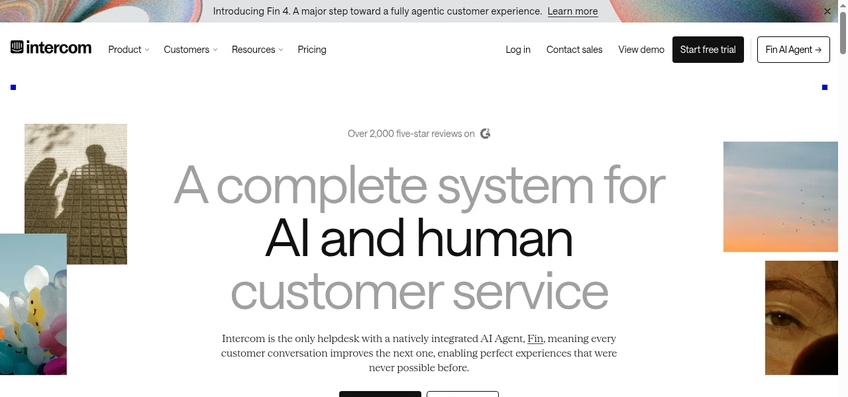
Intercom’s Fin AI agent is built into the helpdesk rather than bolted on.
Where Intercom fits
Intercom’s per-resolution AI pricing is worth modeling before you commit; it can be very fair or surprisingly steep depending on your volume. If you are weighing how AI agents differ from classic chatbots, my explainers on AI chatbots vs conversational AI and chatbots vs ChatGPT will help you ask sharper demo questions.
Two practical notes from my comparisons: Intercom’s help center and multilingual support are strong enough to replace a separate docs tool, and its reporting finally matches the enterprise rivals. For a team of three or more on chat daily, it is the most complete package here.
2. Tidio best for small business and Shopify stores
Free-forever plan, fast setup, and an AI agent called Lyro
Tidio is the pick I give most often to small teams, and its homepage makes the case in one line: “Free plan forever,” with paid plans from $29 a month and “cancel anytime, in two clicks.” Its Lyro AI agent is the headline feature; Tidio says its customers average a 75% resolution rate with Lyro, and the site shows 4.6 on G2 across 1,900+ reviews and 4.8 on the Shopify App Store.
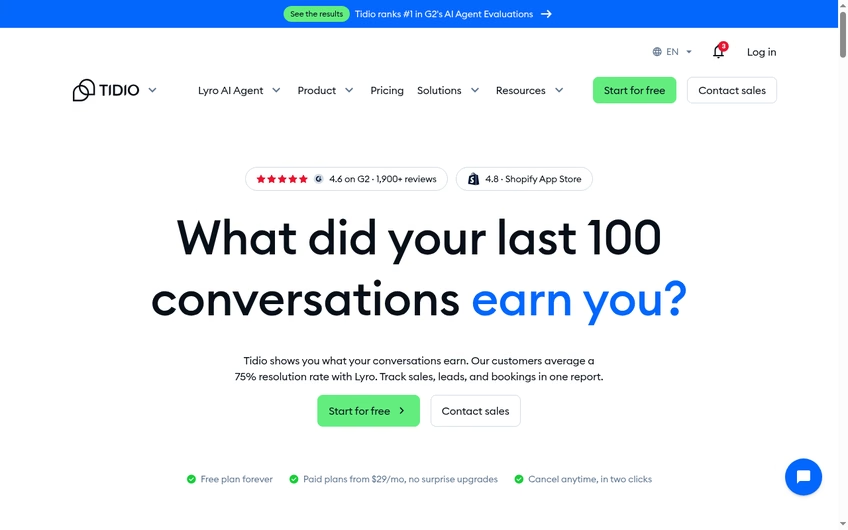
Tidio’s free plan is genuinely free; the paid tiers add Lyro volume and features.
Where Tidio fits
Setup is famously quick: paste a snippet, customize the widget, done. The free plan covers basic live chat, and Lyro handles the repetitive questions once you feed it your FAQs. For lean teams running sales on a shoestring, it pairs naturally with the easy CRM platforms for small sales teams and the AI tools for small business I have rounded up.
3. Zendesk best for enterprise-grade support
The industry default, rebuilt around AI agents
Zendesk needs no introduction, and its current homepage is all-in on AI: “Automate up to 80% of interactions with Zendesk AI agents,” backed by “4.8B+ resolutions” across its customer base. Under the marketing sits the most complete support suite in the business: ticketing, chat, voice, help center, QA, and workforce tools, with a 14-day free trial that asks for no credit card.
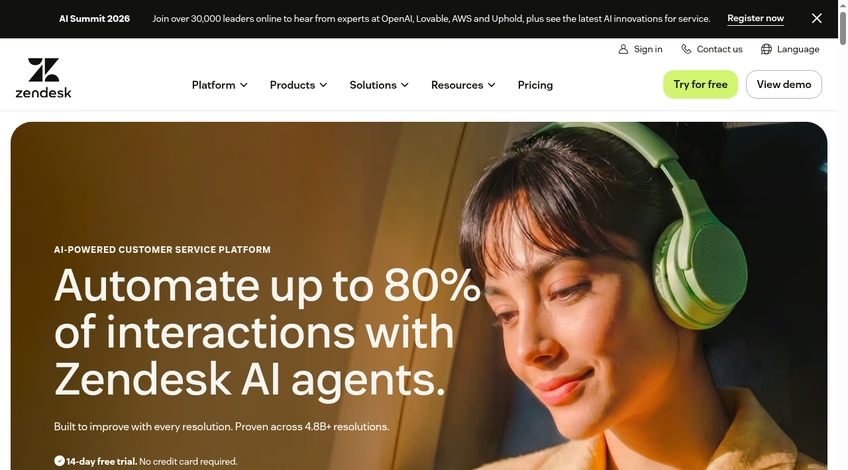
Zendesk’s AI agent claims come with the largest install base in the category.
Where Zendesk fits
Zendesk is the heaviest tool on this list in every sense: most powerful, most configurable, most expensive, and the longest to implement well. I have a full Zendesk alternatives roundup if you want the reverse comparison, and my piece on why CRM projects fail covers the rollout mistakes that sink big support platforms too.
4. HubSpot Service Hub best for HubSpot CRM users
Chat, inbox, and tickets wired straight into your CRM
If your company already runs on HubSpot, Service Hub is the lowest-friction Drift replacement you can buy. The product page describes customer service software “powered by AI to scale support and drive customer retention,” with a 14-day free trial on offer. The killer feature is context: every chat lands next to the contact’s deals, tickets, and marketing history, because it is all one database.
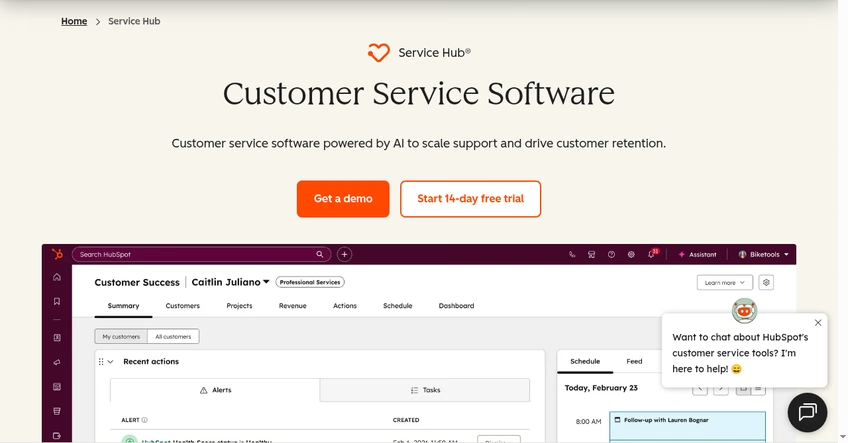
Service Hub’s chat inherits everything the HubSpot CRM already knows about the visitor.
Where Service Hub fits
Outside the HubSpot ecosystem the case weakens fast; inside it, the integration tax of every other tool disappears. Note that the 14-day trial covers the paid tiers, and some chat features exist in HubSpot’s free tools. Teams comparing CRM-adjacent tools should also see my CRM platforms for MSPs and Calendly alternatives pieces.
5. Crisp best flat pricing for growing teams
Omnichannel inbox and AI agents without per-seat pain
Crisp has quietly become the favorite of European startups and bootstrapped teams, largely because of how it charges: flat pricing per workspace, not per agent, which its homepage lists as a headline benefit next to its AI agents and all-in-one omnichannel inbox. It offers a 14-day free trial with all features and no card required, so you can test the whole product before spending anything.
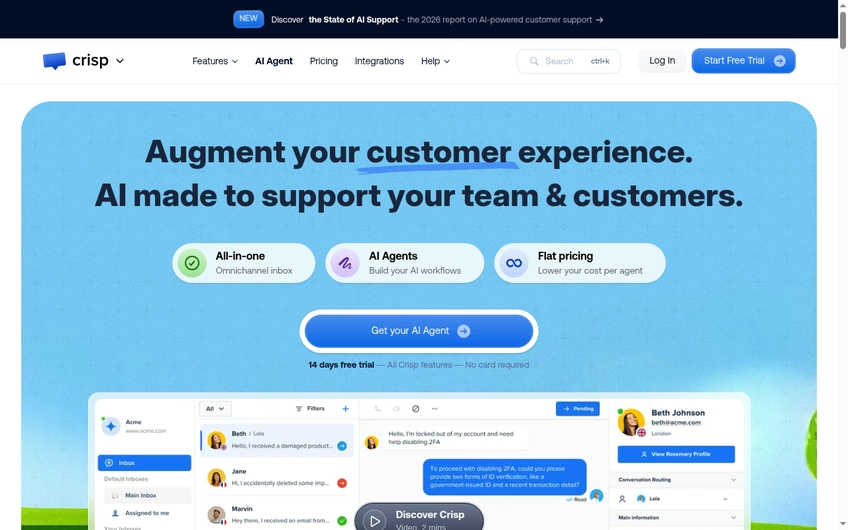
Crisp bundles chat, email, social channels, and a knowledge base in one inbox.
Where Crisp fits
Crisp covers live chat, a shared inbox, a help center, chatbots, and even status pages. The interface is modern and the free tier is enough to evaluate real traffic. It is one of those tools that boost business efficiency simply by collapsing four subscriptions into one login.
The chatbot builder deserves special mention: scenarios let you automate the same greet-qualify-route flow Drift users loved, without code. Crisp also runs its own status page and CRM-lite contacts, so smaller teams can realistically run their whole support operation inside it.
6. Help Scout best for human-first support teams
A shared inbox that keeps support personal, now with AI assists
Help Scout is the anti-ticket-system: it treats support as email-like conversations rather than numbered tickets, which customers experience as plain, friendly messages. Its homepage talks about turning “conversations into intelligence,” using AI to resolve and summarize rather than to replace the human touch. If Drift felt like a sales machine aimed at your visitors, Help Scout feels like a good colleague answering them.
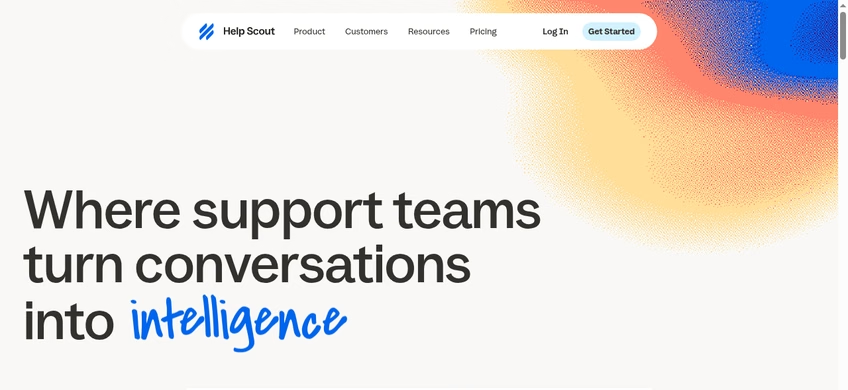
Help Scout’s beacon widget mixes chat, docs, and contact options in one place.
Where Help Scout fits
Docs, the built-in knowledge base, is excellent, and the AI answers feature drafts from your own content. Reporting and workflow automation are solid without being overwhelming. For more on the relationship side, my guide on improving customer relationships pairs well, as does my look at AI technology for customer experience.
Help Scout also publishes transparent, seat-based pricing and has a track record of not surprise-raising it, which finance teams appreciate after a year with usage-based AI bills. It is the calm, dependable choice on this list, and for many teams that is exactly the point.
7. LiveChat best for eCommerce chat
Purpose-built chat with 200+ platform integrations
LiveChat, from the company now branding itself as Text, does one thing and does it well: website chat that converts. Its homepage promises integration with Shopify, WordPress, Webflow, and “200+ eCommerce and CMS platforms,” with a free 14-day trial and no credit card required. Visitor tracking shows you who is browsing and which pages they are viewing before you say hello.
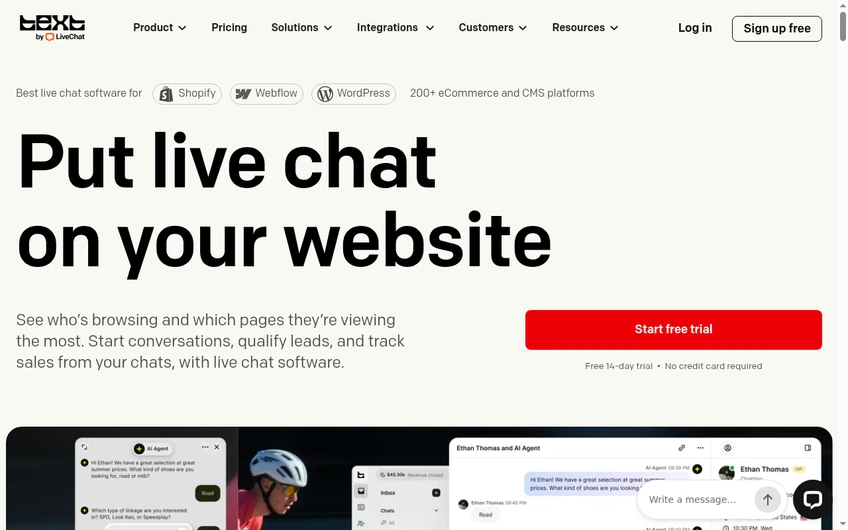
LiveChat’s strength is turning browsing visitors into conversations and sales.
Where LiveChat fits
Canned responses, chat routing, product cards inside chat, and sales tracking are the standouts. It lacks the full helpdesk depth of Zendesk or Intercom, which is either a limitation or a relief depending on your team. If reviews drive your store, my Trustpilot alternatives roundup covers that side of the stack, and the AI tools worth trying list covers newer assistants.
The mobile apps deserve a mention too: agents can answer chats from a phone without a laptop, which matters for small teams where everyone wears two hats. Chat tags and post-chat surveys feed its reporting, so you can see which pages and campaigns produce conversations that actually close.
8. Zoho SalesIQ best for the Zoho ecosystem
Live chat, analytics, and visitor scoring at Zoho prices
Zoho SalesIQ combines live chat with visitor analytics and lead scoring, and its page pitches it as an all-in-one engagement platform for marketing, sales, and support. Zoho is currently promoting its Summer ’26 release, which pushes SalesIQ into what it calls “agentic intelligence.” If your business already lives in Zoho CRM or Zoho Desk, SalesIQ snaps in with almost no configuration.
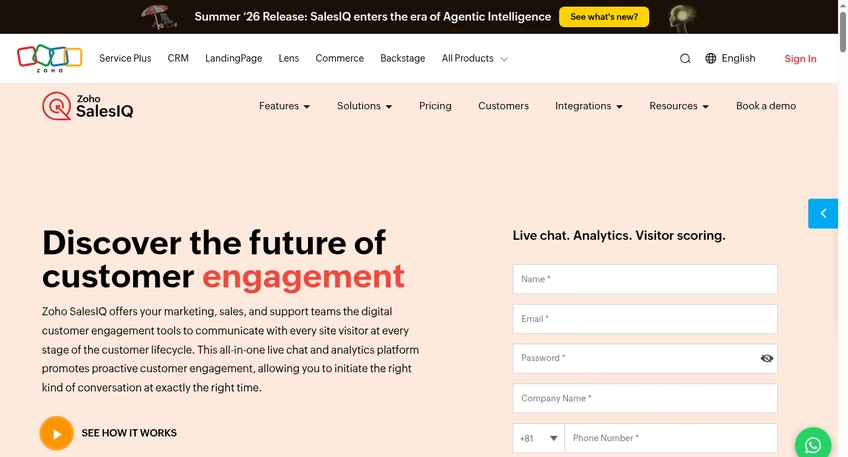
SalesIQ’s visitor scoring tells agents who to talk to first.
Where SalesIQ fits
The free plan covers basic chat for small sites, and paid tiers stay well below Drift’s old pricing. The interface is denser than Crisp or Tidio, but the feature-per-dollar ratio is among the best here. If you are also evaluating help desks, my Freshservice vs Freshdesk comparison and my what is Freshdesk explainer cover two more budget-friendly options.
The chatbot (Answer Bot) handles common questions, and routing rules push hot prospects to humans. For a distributed team watching every rupee or dollar, SalesIQ is easy to justify.
9. Tawk.to best free Drift alternative
Genuinely free live chat, used at massive scale
Tawk.to’s offer sounds too good until you read it on their homepage: “100% Free,” with the claim that “over 3 billion people interact via tawk.to every month.” The company makes money on optional add-ons like hired agents and video, while the core chat product costs nothing. There is no trial because there is nothing to expire.
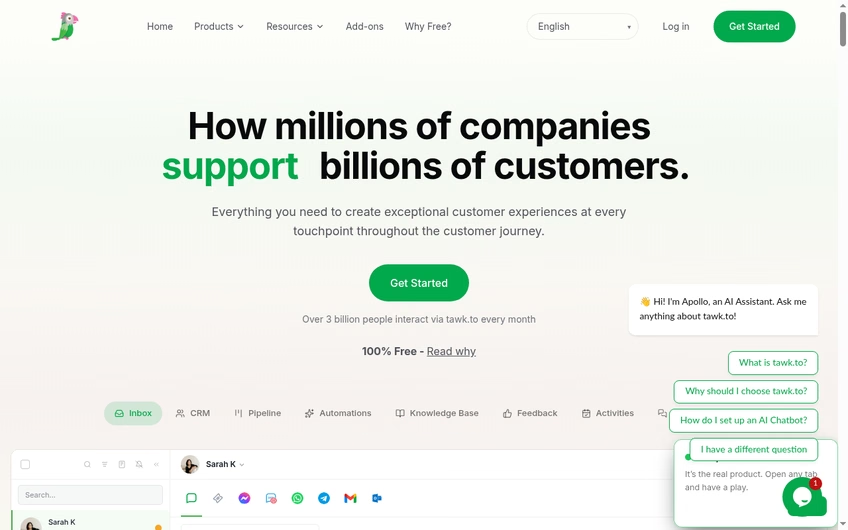
Tawk.to’s widget, inbox, and knowledge base are free; add-ons are where it charges.
Where Tawk.to fits
You give up polish and advanced automation, and the AI features are newer and thinner than Intercom’s or Tidio’s. But “free and works” beats “elegant and $500 a month” for a huge share of sites. If you outgrow it and want something custom, the chatbot development companies I have listed can build exactly what you need.
One honest caveat: because the product is free, support for the product itself is community-style and slower than paid rivals. For most sites that trade is fine, but run it for a week before pointing your busiest sales pages at it.
10. Chatwoot best open-source Drift alternative
Self-hosted omnichannel support with a thriving community
Chatwoot is the open-source answer to Intercom and Drift: an omnichannel support platform you can run on your own servers or use as a cloud service. Its homepage shows 37k GitHub stars and a 4.5+ rating on G2, and it positions itself as “the modern customer support tool for your business,” with your AI agent, channels, and help center in one place. A free trial covers the hosted version.
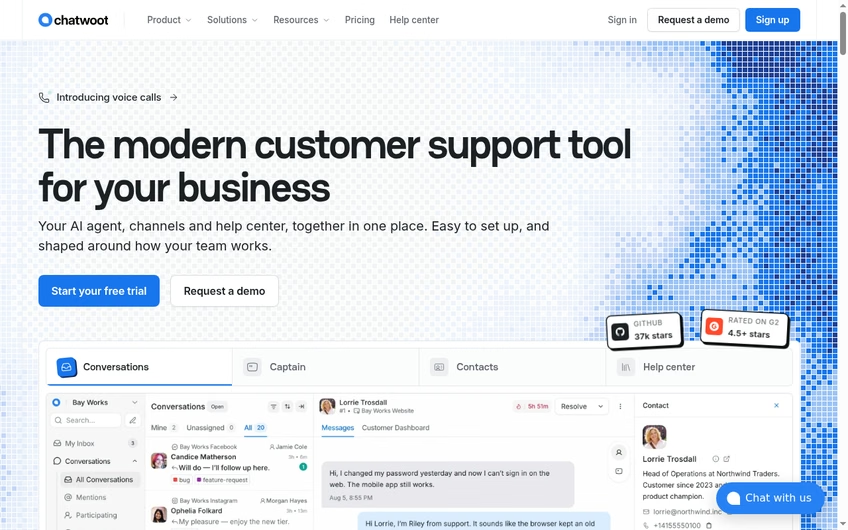
Chatwoot’s inbox unifies chat, email, WhatsApp, and social channels.
Where Chatwoot fits
Self-hosting means your customer data never leaves your infrastructure, which settles most compliance conversations instantly. The trade is maintenance: updates, backups, and uptime are your job on the self-hosted plan. It belongs on any shortlist of help desk software where data control matters, alongside the free tools in my free AI and no-code tools roundup.
The hosted cloud version removes the maintenance burden while keeping the same codebase, so you are never locked into one deployment model. That escape hatch matters more than most feature checklists.
How to choose the right Drift alternative
Decide what chat is for. Drift sold conversations as a sales channel. If that is still your goal, prioritize Intercom, LiveChat, or Tidio, where routing to sales and tracking revenue is native. If chat is mainly support, Help Scout, Zendesk, or Chatwoot will serve you better and cost less.
Model the AI pricing, not the sticker price. Several tools now charge per AI resolution or conversation. A cheap base plan with expensive AI overages can cost more than a flat-priced rival, so run your real monthly conversation count through each vendor’s calculator before signing anything.
Start free, then graduate. Tawk.to and Tidio’s free plans are good enough to validate that chat earns its keep on your site. Graduate to Intercom or Zendesk when volume and team size justify it; my small sales team CRM guide covers the same crawl-walk-run logic for the sales side.
Bottom line: the best Drift alternative
Intercom is the best Drift alternative for most B2B teams in 2026: it matches Drift’s sales-chat heritage and adds the strongest AI agent in the category. Tidio is the small-business pick, Tawk.to is the unbeatable free option, and Chatwoot wins if you want to own the stack. While you are upgrading your site’s toolkit, my recent guides to free After Effects alternatives, Seeking Alpha alternatives, and LiveJournal alternatives cover the creative and publishing sides, and the apps archive has everything in one place. The practical next step: run two of them side by side for a week and let your own data decide.
Frequently Asked Questions about Drift alternatives
What happened to Drift?
Drift was acquired by Salesloft in 2024, and the product has been folded into Salesloft’s revenue orchestration platform. The standalone Drift brand and its conversational marketing positioning have faded, which is why so many teams are actively comparing replacements right now.
What is the best free Drift alternative?
Tawk.to is the strongest truly free option: its homepage promises “100% Free” live chat, funded by optional paid add-ons rather than seat licenses. Tidio also offers a free-forever plan, and Chatwoot is free if you self-host the open-source edition.
Is Intercom better than Drift?
For most teams, yes. Intercom covers the full support lifecycle with a natively integrated AI agent, while Drift concentrated on B2B sales conversations. Intercom’s AI pricing needs modeling against your volume, but its product depth and pace of development are ahead of where Drift ended up.
Which Drift alternative is best for small businesses?
Tidio. It installs in minutes, offers a free-forever plan, and its site lists paid plans from $29 a month, so costs stay predictable as you grow. Crisp is the runner-up thanks to flat per-workspace pricing that does not punish you for adding teammates.
Can I migrate my Drift playbooks to another tool?
There is no one-click migration, but every major alternative has its own bot or automation builder, and most playbooks translate cleanly: greeting, qualifying question, routing, and calendar handoff. Budget a few days to rebuild your top three flows rather than trying to replicate everything.
Do these tools work with Shopify and WordPress?
Yes. LiveChat advertises integrations with 200+ eCommerce and CMS platforms including Shopify and WordPress, Tidio holds a 4.8 rating on the Shopify App Store per its homepage, and every other tool here offers a WordPress plugin or a simple script embed.
How much does Drift cost compared to its alternatives?
Drift was known for enterprise-level pricing that put it out of reach for most small businesses. Its alternatives span the full range: Tawk.to and Zoho SalesIQ have free plans, Tidio and Crisp start in the tens of dollars per month, and Intercom and Zendesk scale up with usage and seats. Check each vendor’s current pricing page before budgeting.


Leave a Reply