



Looking for apps like Staffie? Start with where you can legally work, not the longest list of app names. Staffie is built around F&B shifts in Singapore. A US or European gig app may offer a similar booking experience, but that does not make it a replacement for a Singapore restaurant shift.
For Singapore workers, FastGig, YY Circle, Anytime Work and Giggle Jobs are the most relevant starting points in this guide. Outside Singapore, Qwick and limber are hospitality-focused options, while apps such as Upshift and Bluecrew stand out for their employee-based arrangements. The best choice depends on your city, role, right to work and preferred work model.
This comparison is based on the operators’ public websites and help pages checked in September 2026. It is not a hands-on test, a guarantee of available shifts or a promise about earnings. The list separates local options from overseas services and explains the important limitations rather than ranking every app as if it serves the same worker.
Apps like Staffie: quick comparison
These are 15 distinct services, but they are not 15 interchangeable Singapore job apps. Use the region column to narrow the list before comparing features.
| App | Relevant market | Why compare it | Important check |
|---|---|---|---|
| FastGig | Singapore | Broader local shift choice | Role and travel time |
| YY Circle | Singapore | Ad-hoc work and broader job search | Onboarding and attendance |
| Anytime Work | Singapore | F&B-focused shift booking | Live local shift supply |
| Giggle Jobs | Singapore | Hotel and banquet work | Work-pass eligibility |
| Instawork | United States and Canada | Hospitality plus other shift industries | Role qualification |
| Qwick | United States, supported markets | Hospitality-specific matching | Offer confirmation and pay approval |
| Indeed Flex | United States, using the US service linked here | App-based temporary work | Country and city coverage |
| Upshift | United States, supported locations | Hospitality shifts with W-2 employment | In-person onboarding |
| Bluecrew | United States, supported markets | Employee-based hourly assignments | Available assignment type |
| Bacon | United States, local market coverage varies | Catering mixed with other local gigs | Task requirements |
| Jobble | United States | Single shifts and recurring jobs | Pay-option conditions |
| Wonolo | United States, supported areas | A broader fallback beyond hospitality | Local industry mix |
| limber | United Kingdom | Hospitality work with payroll handled | Current wage-access terms |
| Temper | United Kingdom and Netherlands services | Freelance hospitality work | Freelance responsibilities |
| Coople | Switzerland only in this recommendation | Swiss flexible work with an employer model | Swiss eligibility; UK closed |
What makes a useful Staffie alternative?
Staffie lets workers find F&B businesses, book shifts and receive weekly pay. A useful alternative should therefore offer real work opportunities rather than only store an employer’s roster. Scheduling tools for people who already have a job are a different category. So are delivery apps, surveys and remote freelance marketplaces.
We prioritized hospitality relevance, clear worker access, location information and an identifiable shift workflow. Broader hourly-work services are included where they offer a useful fallback, but their weaker hospitality fit is made explicit. We excluded waitlist-only staffing features and did not treat a closed country platform as active.
If you want a wider comparison of general shift marketplaces, our apps like Shiftsmart guide covers that angle. This article starts with the narrower Staffie question: where can someone find flexible hospitality work?
1. FastGig: Broader local shift choice

Relevant market: Singapore. Visit FastGig’s official website.
FastGig is a useful first stop if you want the same choose-your-shifts approach as Staffie but do not want to stay within restaurants. Its Singapore site lists service crew and event helper roles alongside retail assistant and grocery shopper work. You can browse jobs and filter by location and the times you are available, then book the shifts that fit.
That mix matters when your preferred cafe has no work on your free day. Rather than treating every gig as interchangeable, compare the task, venue and travel time before you book. A retail shift and a food-service shift may need different clothes, skills and levels of physical effort.
FastGig advertises weekly Friday payouts and an option to access wages earlier. Check the current in-app conditions before treating early access as automatic. Its headline earnings examples are not a promise for the shift you select.
Best fit: Singapore workers open to F&B and other hourly roles. Trade-off: a broader marketplace needs more filtering than a hospitality-only app.
2. YY Circle: Ad-hoc work and broader job search

Relevant market: Singapore. Visit YY Circle’s official website.
YY Circle is a Singapore option for flexible temporary work, with the operator describing hospitality, retail and event staffing. Its app combines job applications and earnings tracking with other functions, so it is broader than a restaurant-only shift service. That can help if you want to compare ad-hoc work with a longer-term job search.
The official app listing describes flexible part-time applications, full-time job matching and a CV creator. The practical value is having several job-search paths in one place, not a guarantee of a match. Start with the actual ad-hoc jobs that fit your location and skills rather than assuming every opening is hospitality work.
The developer says ad-hoc payments are available on the next working day after complete attendance is submitted. That condition matters: attendance submission and approval are not the same as a promise of cash immediately at clock-out. The listing also describes interviews and basic training as part of accessing assignments; check the current onboarding process before planning a first shift.
Best fit: Singapore workers comparing flexible shifts and other job-search options. Trade-off: the broader app needs filtering, and onboarding and complete attendance affect access and payment.
3. Anytime Work: F&B-focused shift booking

Relevant market: Singapore. Visit Anytime Work’s official website.
Anytime Work is one of the closer matches to Staffie on paper because it focuses on Singapore hospitality. The operator describes service crew, kitchen assistants, baristas, bartenders, hosts and event staff. Its worker side lets you browse the outlet, role, date, hours and rate, book available shifts, clock in and track earnings.
This is a better category fit than adding a generic survey or delivery app to a hospitality list. If you already have front-of-house or kitchen experience, check whether the available roles match that experience rather than applying for every opening. The site describes profiles, experience and ratings as part of how workers build a track record.
Anytime Work advertises payment within 24 hours. Ask how completed hours are approved and check the live terms before assuming that timeline covers weekends, disputes or bank delays. The public site is evidence of its offered workflow, not evidence that a specific venue has an open shift today.
Best fit: workers looking for another Singapore F&B marketplace. Trade-off: check actual local supply in the app; marketing counts are not a personal work guarantee.
4. Giggle Jobs: Hotel and banquet work
Relevant market: Singapore. Visit Giggle Jobs’s official website.
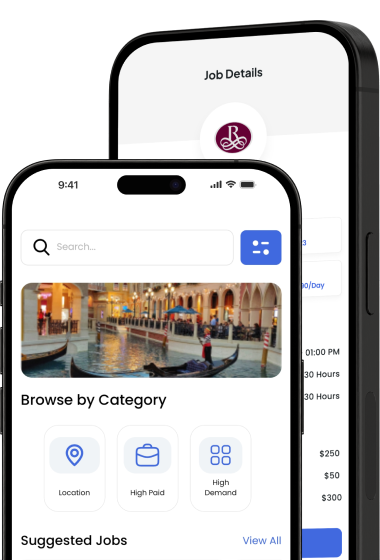
Giggle Jobs presents itself as a Singapore hospitality app, with part-time hotel roles such as banquet servers, waitstaff, event assistants and support staff. Its site says users can set availability and choose from job postings. That focus makes it worth comparing if you prefer hotel events to the restaurant and cafe shifts associated with Staffie.
Banquet work can suit someone who likes concentrated event shifts, but the requirements may differ from casual cafe service. Read the uniform, reporting point, meal-break and end-time instructions carefully. A hotel brand shown on a website does not mean that hotel is currently hiring through the app.
The operator makes broad claims about eligibility and regulatory compliance. Do not use those claims as legal advice, particularly if you are a foreign student or hold a restricted work pass. Confirm your own right to work and the actual employer's conditions before accepting. Its site describes bank payments after completed shifts but does not give a universal settlement deadline we can safely promise.
Best fit: Singapore workers interested in hotel and banquet roles. Trade-off: confirm onboarding, eligibility and available shifts directly instead of relying on the site's promotional language.
5. Instawork: Hospitality plus other shift industries
Relevant market: United States and Canada. Visit Instawork’s official website.
Instawork is an overseas alternative, not a way to book Singapore restaurant shifts. Its official site covers hospitality along with warehouse, logistics, manufacturing and retail work in US and Canadian markets. For a worker in a supported city, that wider industry range can be useful when restaurant demand is uneven.
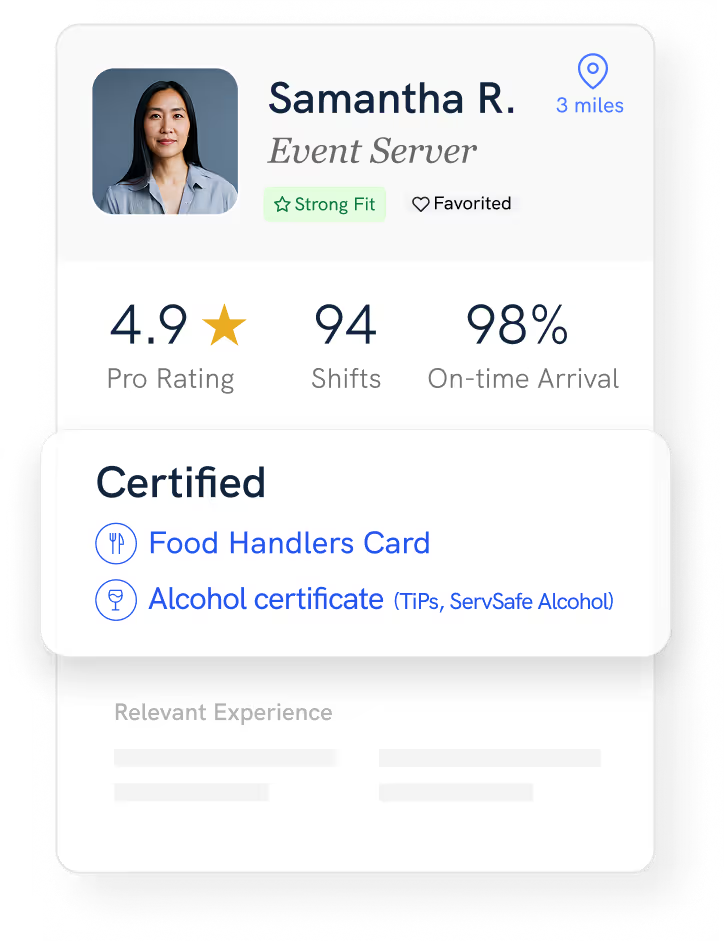
The important difference is qualification. Instawork describes background checks and skills verification, with additional position-specific checks for skilled roles. Completing a profile is therefore not the same as being eligible for every shift. Build your profile around the roles you can actually perform and check any attire or certification requirements.
Its published pages use different city-count figures, so this guide does not repeat a single coverage number. Check your location in the app instead. The help centre describes searching for shifts, but local openings, eligibility and acceptance still decide whether there is work you can take.
Best fit: hospitality workers in supported North American markets who also want other hourly roles. Trade-off: onboarding and role requirements can limit the shifts visible to a new account.
6. Qwick: Hospitality-specific matching

Relevant market: United States, supported markets. Visit Qwick’s official website.
Qwick is a closer industry match than many general gig apps. Its official pages show food-and-beverage and hospitality roles including cooks, bartenders, dishwashers, housekeeping and event setup. The worker app lets professionals browse and filter shifts by role, pay range, distance and time of day.
The application process deserves attention. Qwick's help centre says professionals apply, selected applicants receive offers, and they must confirm the offer in the app. An application alone is not a booking. Location permissions are also part of its workflow, so review the privacy implications before installing rather than assuming the app works without location access.
Qwick says businesses must verify worked time within 48 hours. It describes instant payment for eligible 1099 shifts after payment is confirmed; that is different from being paid immediately when you clock out. Read the current payment conditions and any fees before using a faster payout option.
Best fit: experienced hospitality workers in a supported US market. Trade-off: offers, confirmation and approved hours are separate steps; do not treat advertised fast pay as unconditional.
7. Indeed Flex: App-based temporary work

Relevant market: United States, using the US service linked here. Visit Indeed Flex’s official website.
Indeed Flex is a temporary-work service rather than the ordinary Indeed job-search app. The US site describes nearby jobs, profile completion and roles matched to skills, experience and preferences across multiple cities. It is useful to compare when you want a staffing workflow within an app rather than sending a separate application to each employer.
Use the service for your country and verify that your city is covered. A download being available in an app store does not prove there are shifts near you. Hospitality workers should also check the actual job categories rather than assuming every temporary assignment involves a restaurant or hotel.
The US site promotes same-day pay and provides a separate payment-information page. Check eligibility, approval and access conditions before choosing it on speed alone. The app also describes Spanish-language browsing, interviews and support, which may make onboarding more approachable for some US workers.
Best fit: workers in supported US cities seeking app-based temporary assignments. Trade-off: location coverage, assessment and individual job requirements still control access.
8. Upshift: Hospitality shifts with W-2 employment

Relevant market: United States, supported locations. Visit Upshift’s official website.
Upshift explicitly lists hotel and food-service roles such as housekeepers, kitchen staff, front desk workers, cooks and bartenders. Its catering and events category includes banquet servers, dishwashers and crew. That makes it relevant to someone looking for Staffie-style hospitality work in the United States.
Unlike an app that only creates a contractor marketplace, Upshift says its workers are W-2 employees. Its worker page describes an application, online assessment and in-person onboarding before accessing local jobs. That extra step may be less convenient for a quick experiment, but employment status is an important part of the comparison.
Once onboarded, workers apply for available positions, confirm accepted shifts and track hours in the app. The site describes benefits eligibility and different pay-access options; read the conditions rather than assuming every benefit or daily payout is available from your first shift.
Best fit: US workers who want hospitality options and an employee-based arrangement. Trade-off: assessment and in-person onboarding mean it is not simply download-and-work.
9. Bluecrew: Employee-based hourly assignments

Relevant market: United States, supported markets. Visit Bluecrew’s official website.
Bluecrew provides hourly staffing through W-2 workers. Its official site describes an app that shows job details, shift times and requirements, with workers matched to businesses' staffing needs. Hospitality is part of the picture, but Bluecrew is a wider hourly-work service rather than a restaurant-only marketplace.
The employment model is the main reason to compare it with Staffie. A worker seeking an employee arrangement may value that difference more than a long list of app features. Before applying, confirm what assignment types exist in your market and whether the expected schedule is short-term, recurring or longer-term.
Do not confuse the employer-facing promise of quick staffing with a guarantee of immediate work for each applicant. Matching depends on qualifications and local demand. Read the role description, onboarding requirements and payroll terms before making it your main income plan.
Best fit: US workers interested in W-2 hourly work across hospitality and other sectors. Trade-off: it is less focused on choosing individual restaurant shifts, so inspect the available assignments first.
10. Bacon: Catering mixed with other local gigs

Relevant market: United States, local market coverage varies. Visit Bacon’s official website.
Bacon's worker site describes finding a shift, applying, working and receiving payment through its flexible-work app. It shows catering alongside general labour and warehouse work. This is a sensible broader alternative if you are willing to switch between food-service-related gigs and other hourly tasks.
The advantage is variety, not guaranteed higher pay. Check what the work involves, how long the shift runs and whether you can travel home when it ends. A catering assignment may require specific service experience, while a warehouse assignment may have physical or safety requirements that make it unsuitable for you.
Bacon promotes quick payments and choosing work around your schedule. Check the actual shift terms and payment process in the app, particularly approval and cash-out conditions. We have not tested its payment speed, and a marketing message should not be treated as a universal deadline.
Best fit: US workers who want catering opportunities without limiting themselves to hospitality. Trade-off: a mixed job feed needs careful role and location filtering.
11. Jobble: Single shifts and recurring jobs
Relevant market: United States. Visit Jobble’s official website.
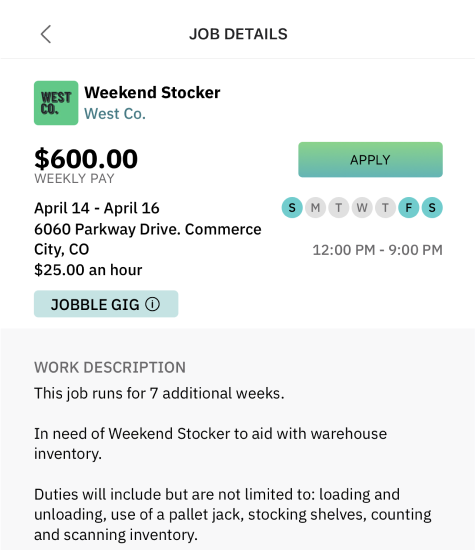
Jobble offers hourly gigs and full-time jobs, with filters for category, pay rate and location. Its worker page describes single, multi-day and recurring jobs that can last weeks or months. That range makes it worth checking when occasional hospitality shifts are not enough and you want a more regular assignment.
The workflow has a time-sensitive acceptance step. Jobble says workers need to respond to offers and accept shifts within six hours, with a background check required to confirm eligibility. Read the full schedule before accepting a recurring job so you do not commit to dates you cannot work.
The same page promotes same-day pay but its getting-started FAQ describes direct deposit in five to seven business days. Because those statements are not interchangeable, this guide does not label Jobble as guaranteed same-day pay. Confirm which payment option applies to your account and assignment before relying on it. Jobble also describes its workers as independent contractors; review your tax responsibilities for your situation.
Best fit: US workers wanting a mix of short gigs and recurring assignments. Trade-off: offer deadlines, background checks and payout conditions need attention.
12. Wonolo: A broader fallback beyond hospitality

Relevant market: United States, supported areas. Visit Wonolo’s official website.
Wonolo connects workers with local flexible work through its app. Its official worker page describes choosing opportunities by industry, location and schedule. This is a broader fallback rather than the closest hospitality replacement: readers who only want restaurant service should check the local categories before spending time onboarding.
That distinction avoids a common problem with alternatives lists. Two apps can both offer hourly work while serving very different employers. Wonolo may be useful when you are open to other kinds of work, but it should not be presented as a guaranteed source of the same F&B shifts you would find on Staffie.
Its worker FAQ says users must be at least 18 and need the relevant US identification information and a smartphone for clocking in and out. Completing onboarding and meeting each job's requirements come before accepting work. The operator promotes fast pay, but actual timing should be checked for the assignment rather than inferred from the slogan.
Best fit: US workers who are flexible about industry as well as hours. Trade-off: less hospitality-specific, and local supply and eligibility decide what you can accept.
13. limber: Hospitality work with payroll handled
Relevant market: United Kingdom. Visit limber’s official website.
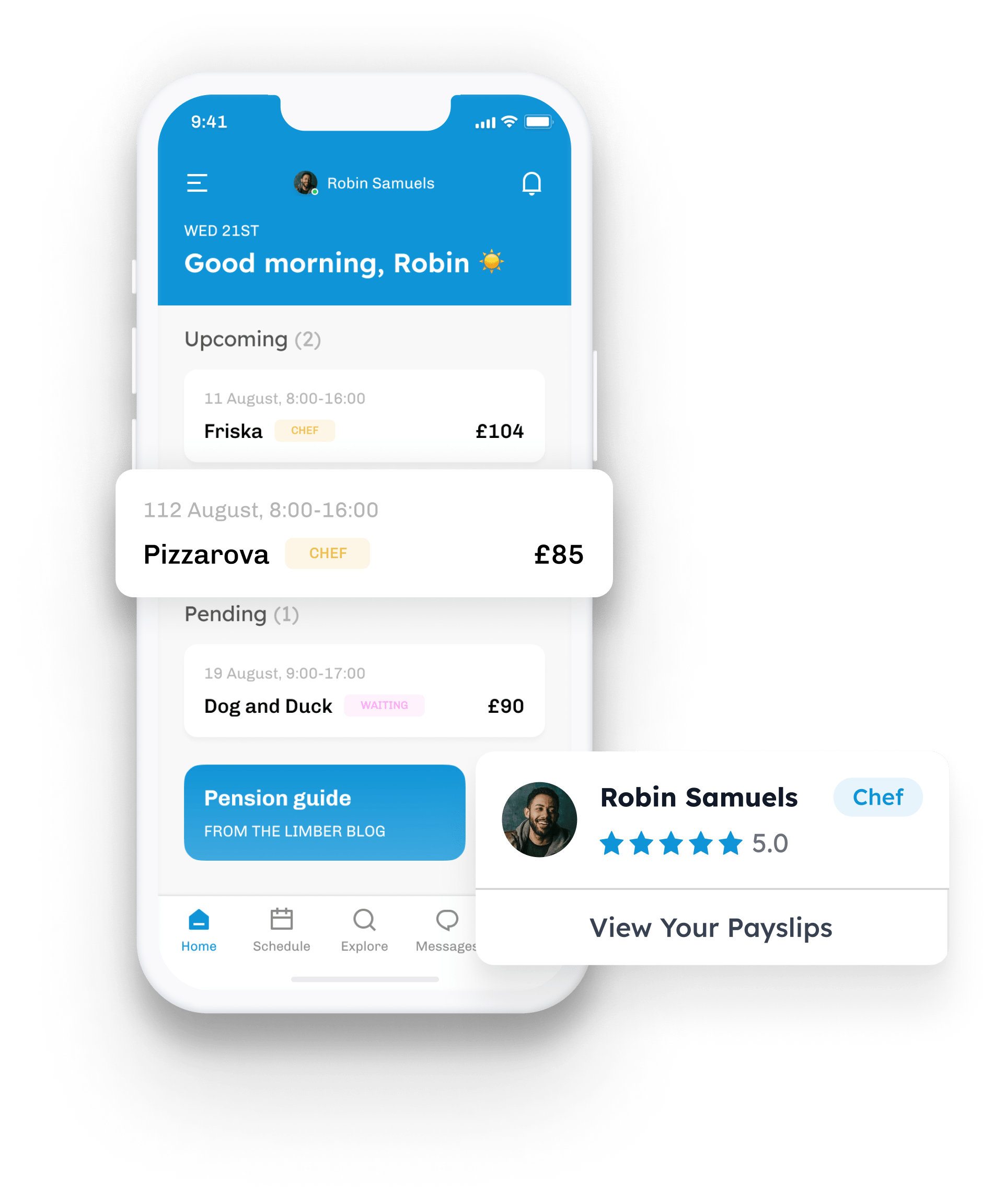
limber focuses on UK hospitality shifts, including pubs, restaurants, cafes and clubs, with some music venues and sports stadia. Its worker page describes setting availability and choosing work ranging from kitchen-portering to cheffing and bar roles. For a UK reader, this is a much closer match than an app designed for US warehouse work.
The operator says limber acts as the employer and handles payroll and pension arrangements. It also describes holiday pay. Those details matter when comparing it with freelance platforms, because take-home pay and benefits cannot be judged by the headline hourly rate alone.
Its teams feature lets workers build relationships with hirers and pick up shifts with venues that add them to their team. limber describes weekly pay and access to part of approved wages through Wagestream. Check current terms and any costs before using early wage access. There is no need to accept every shift to prove flexibility; its site says there are no minimum commitments.
Best fit: UK hospitality workers who want flexible hours with payroll handled. Trade-off: experience helps hiring, and available venues still depend on your city.
14. Temper: Freelance hospitality work
Relevant market: United Kingdom and Netherlands services. Visit Temper’s official website.
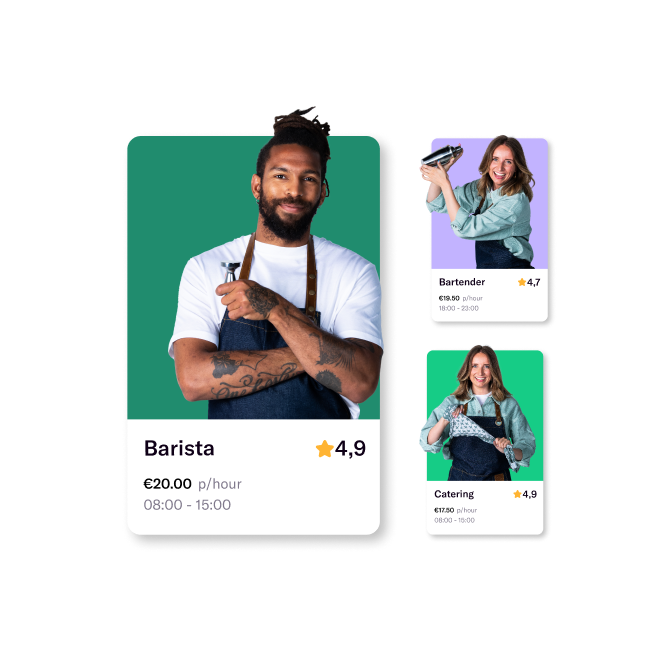
Temper's official hospitality pages describe connecting venues with freelancers such as baristas, chefs, bartenders, waiters, catering staff and housekeepers. The linked page is for the UK service; the operator also has a Netherlands service. It belongs in this list as a regional freelance option, not as a Singapore alternative you can use regardless of location.
The freelance model is the key distinction. A headline rate should be compared with your own tax, insurance and other responsibilities, rather than assumed equivalent to an employee wage. The operator describes ratings, experience-based selection and invoicing, which can suit workers building repeat relationships with venues.
Temper's pages discuss insurance and platform charges, but these are market-specific and should be checked in the current worker agreement. Employer-facing hiring prices are not the same as a worker's take-home pay. Do not use a business pricing headline to estimate what you will earn from a shift.
Best fit: eligible hospitality freelancers in supported UK or Netherlands areas. Trade-off: freelance administration and current local terms matter as much as the available shifts.
15. Coople: Swiss flexible work with an employer model

Relevant market: Switzerland only in this recommendation. Visit Coople’s official website.
Coople's Swiss service lets workers create a profile in the Coople Jobs app, add job profiles and experience, search by location and salary expectations, and select shifts to apply for. Its registration page says Coople becomes the worker's legal employer and handles salary and social-security contributions.
This is a Switzerland recommendation, deliberately not a UK one. Coople's UK page says that platform went offline on 1 January 2026. Older alternatives lists that recommend it for UK shifts are therefore misleading. The continuing Swiss registration workflow has different eligibility requirements and must be evaluated on its own terms.
The Swiss page requires workers to be at least 18 and have permission to work in Switzerland. It asks for identity documents, relevant work permits, experience information and payment details. Uploading a complete profile helps verification, but applying is not a promise of being hired. Check that hospitality roles are available near you before treating it as your replacement for Staffie.
Best fit: eligible workers in Switzerland seeking flexible assignments with an employer arrangement. Trade-off: substantial profile and right-to-work checks, and no UK platform access.
How to choose the right app for your next shift
Check location before features
Start with the region and your right to work there. For Singapore, compare the four local options first. If you are in the United States, narrow the North American apps by your city. In the UK, compare limber and Temper rather than following an outdated Coople recommendation. Swiss workers can assess Coople’s Swiss service separately.
Next, look at actual shifts inside the app. A national homepage, app-store download or list of client logos does not show how many suitable jobs are available near your home. A long commute can erase the benefit of a slightly higher hourly rate, especially for a short shift.
Compare the whole assignment, not just hourly pay
Read the start and finish times, uniform, duties, required experience and reporting instructions. Ask whether training is required and whether the advertised shift includes unpaid breaks. Work out your travel costs and whether late-night transport is practical before accepting. Do not assume tips, meals or a return ride are included unless the assignment says so.
Employee and freelance arrangements should not be compared by rate alone. Upshift, Bluecrew, limber and the Swiss Coople page describe employer arrangements. Jobble describes independent contracting, and Temper describes freelancers. Your actual agreement determines responsibilities and entitlements, so read it rather than relying on the label in a listicle.
Separate fast pay from approved pay
There can be several steps between finishing a shift and receiving usable money: clock-out, timesheet review, client approval, payout processing and bank settlement. Early wage access may have separate conditions. Check the standard payout schedule and any faster option independently, including fees and eligibility.
This is particularly important when an operator uses broad phrases such as “instant” or “same day.” Qwick’s help page ties payment to verified hours, and Jobble’s page describes different payout timelines in different sections. Neither should be reduced to an unconditional promise that money arrives the moment your shift ends.
Build reliability without double-booking
You can compare more than one app, but keep one calendar for accepted shifts. An application, standby place and confirmed booking are different states. Only commit once you know which one you have, and update other applications where necessary. Check cancellation and lateness rules before accepting work you may not be able to reach.
Repeat work can be more useful than constantly chasing a new venue. Several services describe ratings, teams or returning-worker relationships. Keep your profile accurate, turn up prepared and choose assignments you can complete well. Do not claim a skill you have not learned simply to unlock a better-looking shift.
Safety and eligibility checks before signing up
Use the operator’s official website or its linked app-store listing. Do not pay a stranger a recruitment deposit or send identity documents through an unverified message. Some legitimate services require identity, bank and right-to-work checks, but that does not make every person claiming to recruit for them legitimate.
If you hold a student visa, work pass or other restricted permission, confirm the rules that apply to you through the relevant authority and employer. A platform’s broad statement that students can join is not proof that every student can accept every shift. Age limits, work-hour restrictions and permitted employers can differ.
Keep a record of the agreed role, rate, hours and any changes, and use the app’s support process if worked time is disputed. Read the privacy settings too. Location access may be part of shift verification, as Qwick’s help pages explain, but you should understand what access you are giving and why.
Frequently asked questions
Which apps are closest to Staffie in Singapore?
Anytime Work and Giggle Jobs have a hospitality focus, while FastGig and YY Circle offer local flexible-shift workflows. Start by checking the roles and venues available for your dates. A closer category fit does not guarantee better pay or more shifts for your particular location.
Can I use Instawork or Qwick to find Staffie-style jobs in Singapore?
Do not assume so. The official pages reviewed here describe Instawork’s US and Canadian coverage and Qwick’s US hospitality markets. They are included for readers outside Singapore, not presented as local substitutes for Staffie.
Are these apps free, and do they guarantee work?
This guide does not apply one pricing claim to all 15 services. Download cost, recruitment access, payment fees and employer-side charges are different things. Check the current worker terms for the service you choose. None of the public workflows reviewed establishes a guarantee that every applicant will get a shift.
Which option is best for someone with no hospitality experience?
Look for an actual entry-level role and its requirements instead of an app-wide “no experience” promise. FastGig’s broader categories may give Singapore workers more kinds of roles to inspect, but each job still has its own conditions. Skilled bar, kitchen and hotel work can require relevant experience or training.
Is Coople still available in the UK?
No. Its official UK page says the platform went offline on 1 January 2026. The recommendation here is specifically for Coople’s Swiss service, whose registration page describes Swiss work-permit and identity checks.
Can I use more than one shift-work app?
Comparing several services can help you see local demand, but check their agreements and manage confirmed commitments carefully. Do not double-book a shift, confuse an application with an acceptance or assume that cancellation rules are the same everywhere.
Which Staffie alternative should you try first?
In Singapore, start with the app that has suitable live shifts near you: FastGig for a broader job mix, YY Circle for ad-hoc work and broader job search, Anytime Work for F&B-focused roles, or Giggle Jobs for hotel and banquet opportunities. There is no useful universal winner if the best-looking app has no eligible work in your area.
Outside Singapore, choose by market and work model. Qwick and limber deserve a look for hospitality focus; Upshift and Bluecrew are worth comparing when an employee arrangement matters; Temper is a different proposition for eligible freelancers. Coople belongs on a Swiss shortlist, not a UK one.
If you are also open to industrial or warehouse work, compare that separate direction in our apps like Veryable guide. For Staffie-style work, the practical decision is simpler: find a role you can legally do, at a venue you can reach, under terms you understand.






Leave a Reply