

Is Render a good hosting platform?
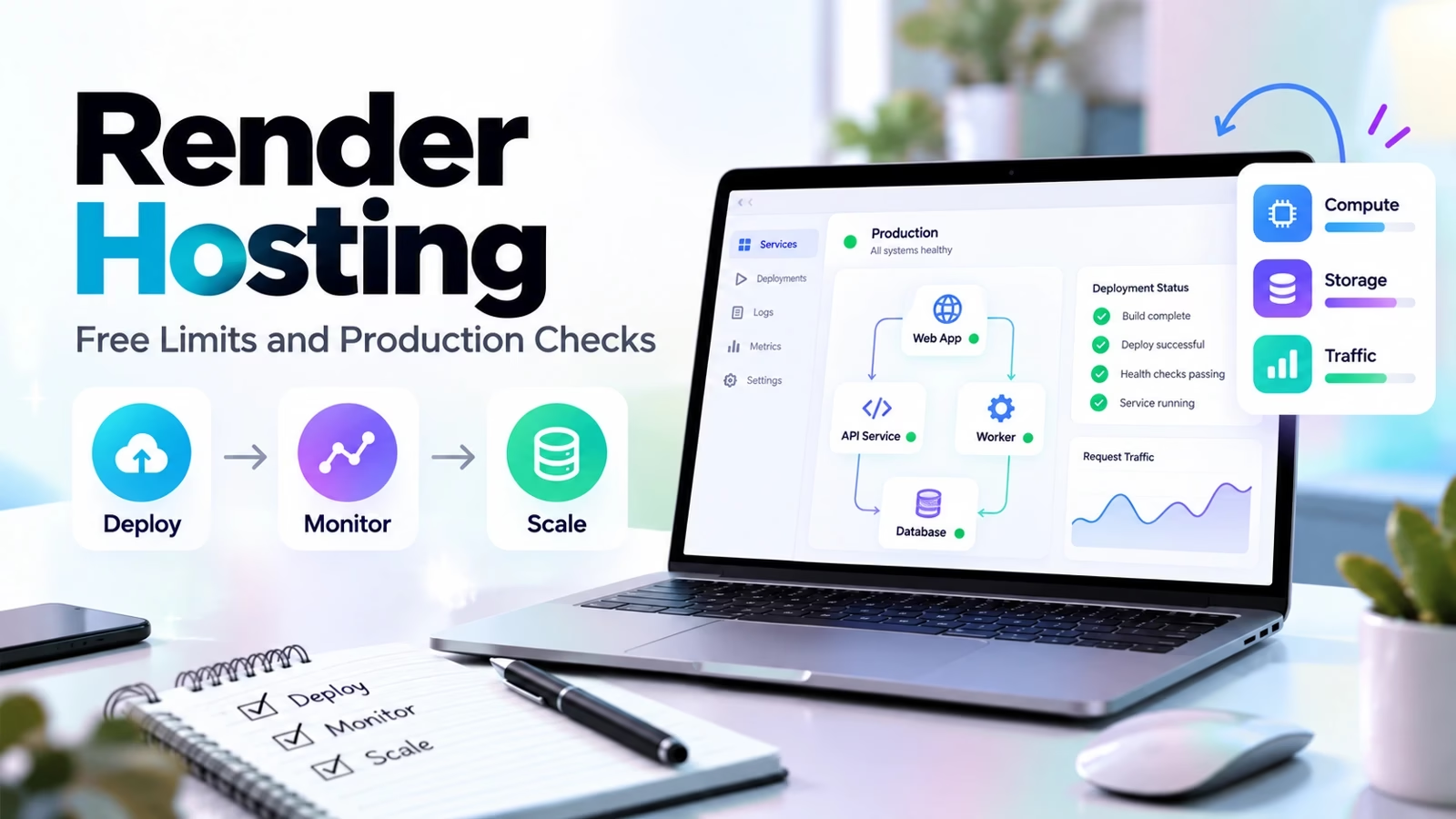
Render is a good candidate for a developer who wants Git-based application deployment without managing every server detail. It is not a promise that an application will become reliable simply by deploying it. Paid production workloads need a storage, database, health-check and recovery plan. The free tier is for experimentation: Render explicitly says not to use free instances for production. Cloud-native application planning should start with those requirements, not a free-price headline.
Reviewed against current official product pages and documentation on October 10, 2026. Screenshots are original captures of public vendor pages. This is a documented workflow comparison, not a purchased-account benchmark or a claim that a production deployment was tested. Performance, support speed and migration outcomes remain unmeasured.
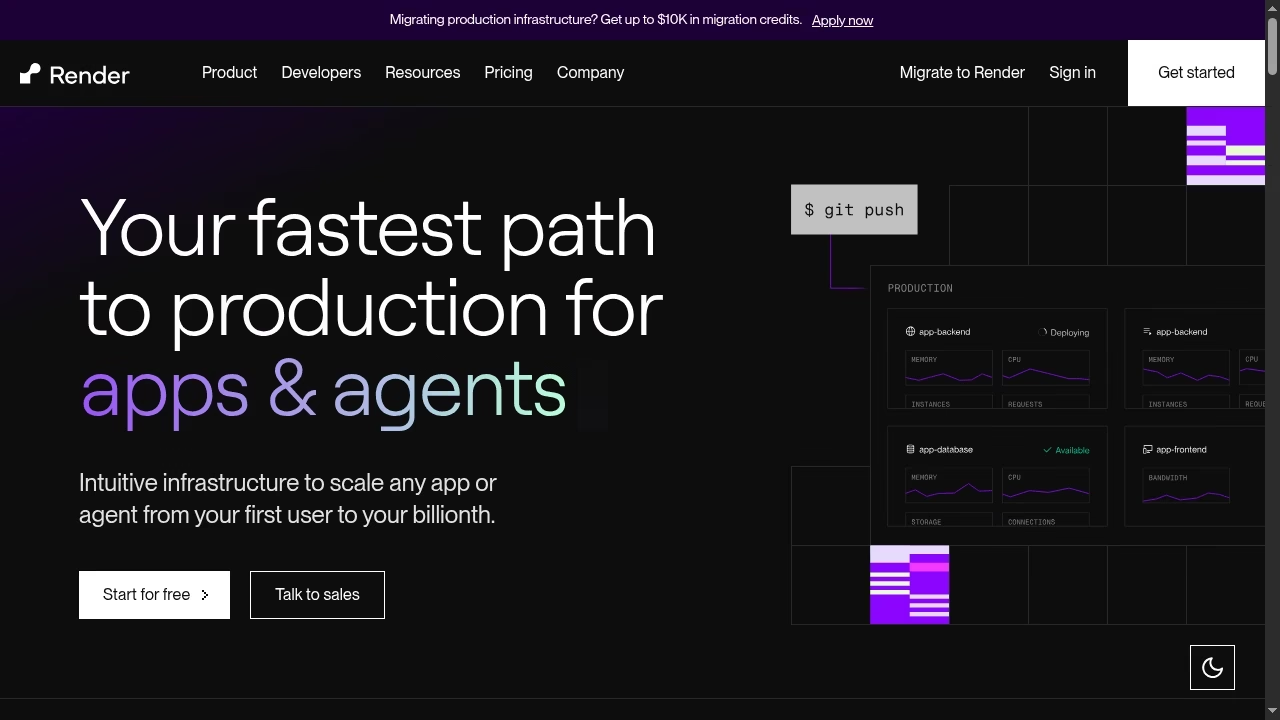
What Render hosts, and what it does not decide for you
Render separates static sites, public web services, private services, workers and data services. A static frontend and a dynamic API have different needs. A private service is not an internet-facing website, and a background worker does not replace a public API. Choose the service type before choosing compute. SaaS development teams often need several of these roles in the same product.
| Situation | Render fit | Main check |
|---|---|---|
| Static documentation or frontend | Useful trial | Build output, redirects and bandwidth |
| Small API prototype | Free can demonstrate deployment | Sleep, cold start and storage loss |
| Production customer application | Paid setup may fit | Database, redundancy and recovery |
| Local-file-heavy single instance | Persistent disk may help | Mount path and deployment tradeoff |
| Complex infrastructure control | Evaluate carefully | Required network and platform features |
The free tier has real operational limits
The official free-instance guide says a free web service spins down after 15 minutes without incoming traffic. Waking it takes about a minute. Render gives each workspace 750 free instance hours per calendar month; running multiple free services shares that allowance. Once the allowance is exhausted, free web services are suspended until the next month. This is a demo constraint, not a suitable hidden assumption for a customer-facing application.
Storage is the most important beginner trap
A web service has an ephemeral filesystem. Uploaded images, a local SQLite database or files written at runtime can disappear when it redeploys, restarts or spins down. Free services cannot attach a persistent disk. A paid disk preserves only the chosen mount path, not every file in the container. A database and object-storage plan are often cleaner than relying on runtime files. Backup and restore chains still matter even when storage survives a restart.
Free database and email restrictions are separate
Free Render Postgres is limited to 1 GB and expires after 30 days. The official guide describes a 14-day upgrade grace period before deletion and says the free database has no backups. Free Key Value storage is in-memory and loses data on restart. Free web services also block outbound SMTP ports 25, 465 and 587. An app that needs durable customer records or mail delivery must design around these facts, not discover them after launch.
Git deployment is convenient, but a successful build is not acceptance
Render can automatically deploy commits or wait until repository CI checks pass. The deployment documentation distinguishes these choices and notes that attaching a persistent disk changes zero-downtime deployment behavior. A green build establishes that the build completed. It does not prove that login, payments, jobs or uploads work. DevOps planning should include a clear acceptance test after deployment.
Health checks need to represent readiness
Render uses health checks to decide when instances are ready for traffic and to react to failures. TCP checks confirm that a port accepts connections; an HTTP health endpoint can test application-level readiness. The official health-check guide explains the difference. Avoid returning success while a critical dependency is unavailable. At the same time, avoid making a fragile optional dependency restart an otherwise usable app.
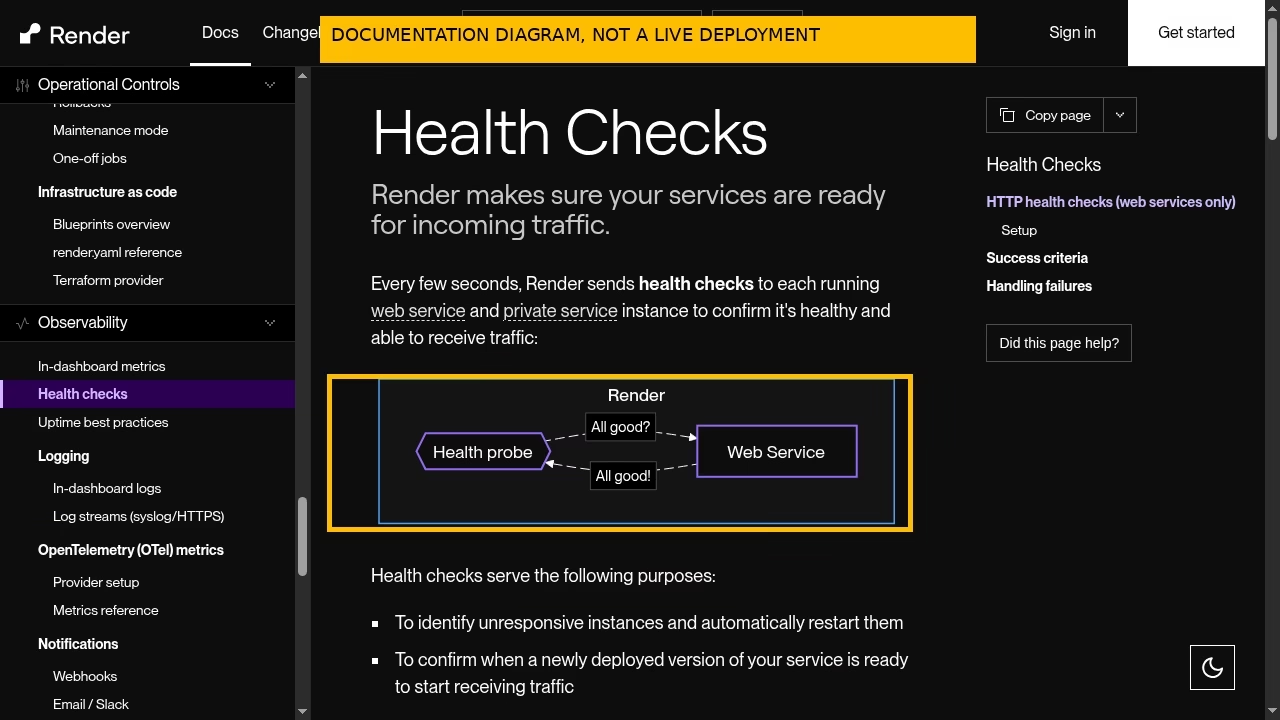
How to evaluate price without a misleading $0 comparison
Compute, database, persistent storage, workspace features, build usage and bandwidth can each affect the bill. Read current pricing for the intended service mix. A workspace upgrade does not remove limitations on a service still using free compute. A free service can also contribute usage that creates a charge when a payment method is present. Do not multiply a single advertised server price and call it the full application cost.
A documented deployment checklist for a small API
For a fictional Node API, define a build command, start command, public port, health endpoint and production environment variables. Keep secrets outside the repository. Put relational data in a durable database and uploads in appropriate storage. Decide how migrations run, how a failed release is handled and how jobs are retried. NestJS backend development and Next.js implementation are related decisions, but neither removes hosting responsibilities.
What to test before calling the platform a good fit
Use a staging application with non-sensitive data. Check cold access, warm access, deploy failure, restart, an upload, database connectivity and a background job. Record actual response times and the complete monthly estimate. This article did not run that deployment. The purpose is to define the acceptance conditions so an attractive dashboard cannot stand in for evidence. An MVP delivery plan should make those gates explicit.
When another approach may fit better
A conventional content website might be easier on managed WordPress hosting. A highly specialized network or storage design may need more infrastructure control. The choice is less about whether Render is good in general and more about whether its service model matches the application. Shopify versus a custom website illustrates the same product-versus-operating-responsibility tradeoff.
Design storage and recovery before the first production release
Write down what must survive: customer rows, uploaded files, job state, configuration and audit history. Assign each to a durable system and define its recovery route. Then test a restore with a small sample. A disk that survives deploys is not a complete backup, and a rollback of application code does not automatically undo a database migration.
Keep scaling and storage decisions connected
An attached disk changes the architecture and deployment options. Before planning replicas or a zero-downtime rollout, check those constraints in the current disk documentation. If the application must spread traffic across instances, load-balancing fundamentals and load-balancer options help explain the problem, but the platform-specific support must still be confirmed.
Run a production-readiness review rather than a free-tier endurance test
A prototype can demonstrate that code deploys, while production readiness requires durable data, recovery, monitoring, support and expected capacity. Do not keep a free instance awake with artificial traffic and treat that workaround as a service guarantee. Community reports of cold starts are consistent with the documented sleep behavior; they are not a controlled uptime benchmark.
Use a small decision record
Document required regions, monthly budget, data lifecycle, acceptable downtime and who handles incidents. For an edge layer, CDN and routing comparisons explain another part of delivery. Keep the hosting decision conditional on a real pilot and verified costs. This is more useful than awarding a generic star rating from a feature list.
Frequently asked questions
Is Render free forever?
Some service types have free instances, but they have usage and behavior limits. Free Postgres expires after 30 days, and free web services can be suspended after the workspace consumes its monthly free hours. Read the current plan rules before relying on the free tier.
Can I use Render free hosting for production?
Render explicitly says not to use free instances for production. They can sleep, restart and lose runtime filesystem changes. A production design should choose suitable paid services and confirm data durability, backups and recovery.
Will files survive a Render redeploy?
Not on the default ephemeral filesystem. A paid persistent disk preserves only its configured mount path; free web services cannot attach one. Store application data deliberately and maintain backups independent of the live filesystem.
Does paid compute make my application highly available?
Not by itself. Availability depends on instance design, database setup, health checks and recovery. Check the supported scaling and storage combination, then test failure behavior with your actual architecture.
Why does the first request take much longer?
A free web service can spin down after 15 minutes without inbound traffic. Render says waking it takes about a minute. This is documented free-tier behavior, not proof that the code is slow during normal warm operation.
Did this article measure Render performance?
No. It uses current official documentation and original public-page captures. The proposed pilot checklist identifies measurements to collect; it does not claim executed deployment tests, uptime or speed results.




Leave a Reply