



Moz Local is still the cheapest credible way to push a small business’s listings to the big aggregators, but its 2026 shape is narrow: two AI-branded modules sold per location, with reviews split out as a separate subscription.
If you need deeper reporting, citation services, review generation, rank grids, or a platform that scales past a handful of locations, one of these ten alternatives will fit better. Every tool below was checked on the vendor’s own site on October 16, 2026, with live pricing where the vendor publishes it.
This list is written for owners and marketers choosing for a real business, not for a feature-matrix spreadsheet. Where a tool hides pricing behind a sales call, I say so plainly, because that fact alone rules it in or out for most small teams.
If you are also shopping for broader help beyond software, our top digital marketing companies list covers agencies, and the app development resources hub collects our related tooling comparisons.
The reference pointWhat Moz Local covers today
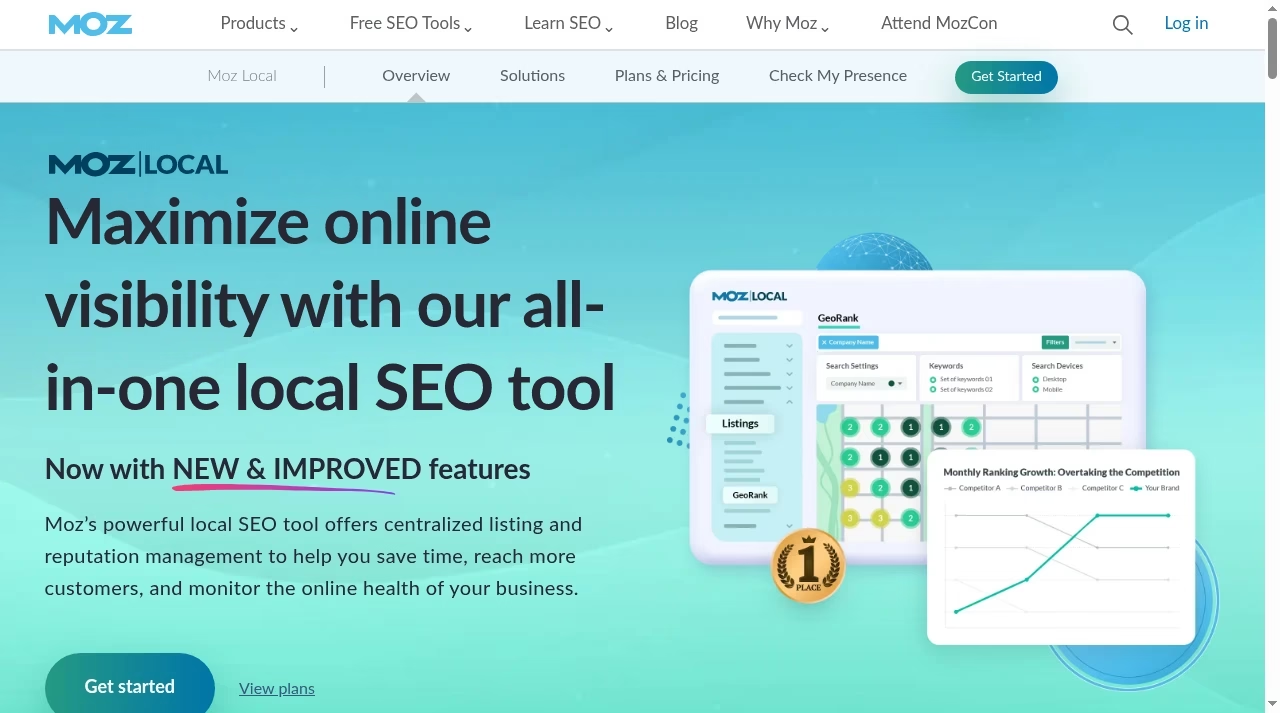
Moz Local in 2026 is sold as two modules. Listings AI costs $14 per location per month, or $119 per year, and handles business-listing distribution, duplicate suppression, and Google Business Profile syncing. Reviews AI is a separate $10 per location per month, or $69 per year, for review monitoring and AI-assisted responses.
Bundles combining both run $199, $299, or $399 per location per year depending on tier. Every physical location needs its own subscription, and businesses past 50 locations are routed to the sales team.
Where Moz Local is strong, and where it stops
The value case is real: at $14 per month per location, listing distribution to the major data aggregators is cheaper through Moz Local than through almost anyone else. The gaps show up when you want citation cleanup on niche sites, review generation campaigns, geo-grid rank tracking, or agency-style reporting across many clients.
Moz Local tracks the basics; it does not pretend to be an all-in-one local SEO suite, and its own pricing page makes the per-location math easy to run before you commit.
Keep that baseline in mind: the question is which gap you need filled and what the fill costs per location. And if fundamentals are shaky, on-page SEO techniques and the benefits of technical SEO explain why listings alone rarely move the needle.
The shortlistTen Moz Local alternatives at a glance
| Tool | Best for | Pricing shape (checked Oct 16, 2026) |
|---|---|---|
| BrightLocal | Local SEO reporting, agencies | Published: from $31 per location per month, annual |
| Yext | Enterprise brand data at scale | Sales-led, annual contracts |
| Whitespark | Citation building and cleanup | Published: tools from $1 per location per month; one-time services |
| Synup | Multi-location management | Published: $49 to $899 per month by location band |
| Uberall | Multi-location marketing platform | Quote only |
| Localo | GBP optimization for small teams | Published: $39 per month, annual |
| Birdeye | Reviews plus customer messaging | Quote only, banded by location count |
| Reputation | Review management at scale | Published: $80 to $150 per location per month |
| Semrush Local | Local tools inside Semrush | Published: $30 to $60 per location per month |
| Local Falcon | Geo-grid rank and AI visibility | Published: credit packages from $24.99 per month |
Alternative 1BrightLocal: local SEO reporting for agencies and single sites
Best all-rounder
BrightLocal is the most direct Moz Local upgrade for people who want measurement, not just distribution. Its three plans (Track, Manage, Grow) are location-banded: a single location costs $41, $54, or $65 per month billed monthly, dropping to $31, $40, or $49 on annual billing, with bands running up to 100 locations.
The reporting depth (local rank tracking, GBP audits, review monitoring, white-label client reports) is why agencies standardize on it.
We compare the two head-to-head in Moz Local vs BrightLocal if this is your shortlist already. The separate Citation Builder service deserves its own note: a free account with no subscription, and manual citation work pay-as-you-go from $3.20 per site (toward $2 with bulk credits). If citations are your one gap, that is the cheapest professional fix on this list.
Two features separate it from Moz Local in daily use. The local search grid and rank tracker show movement per keyword and per location over time, not just a snapshot, and the GBP audit benchmarks your profile against the competitors currently outranking you.
For an agency, the white-label layer means every one of those reports can go out under your own branding, which is the difference between forwarding a vendor’s PDF and delivering your own work.
Alternative 2Yext: enterprise listings and brand data
Enterprise
Yext is the enterprise end of the listings market: a central knowledge graph that pushes your brand’s facts to a large publisher network, plus pages, reviews, and AI-search features layered on top.
It sells through annual contracts with its sales team; there is no self-serve pricing page, and buyers should expect pricing well above small-business tools, negotiated against location count and package.
The honest trade: Yext’s distribution breadth and governance controls are genuinely strong for national brands with hundreds of locations, and genuinely excessive for a five-location clinic. If procurement quotes you a five-figure annual number and you manage under 20 locations, keep reading this list.
Who actually buys it: franchise networks, hospital systems, banks, and restaurant groups where brand-data governance is a compliance issue, not a marketing nicety. In those orgs the alternative to Yext is not Moz Local; it is a spreadsheet and a prayer.
If that sentence describes your situation, the sales call is worth taking, and if it does not, the per-location economics will confirm it within five minutes.
Alternative 3Whitespark: citation services plus focused tools
Citation specialist
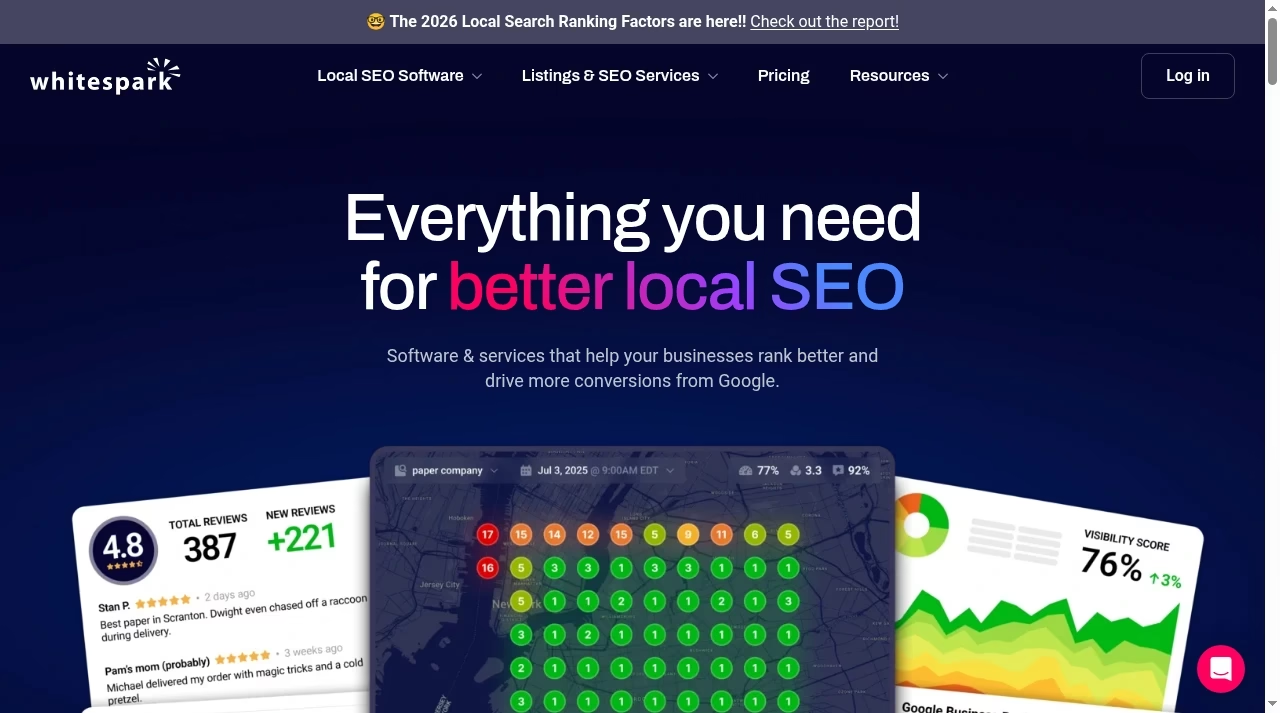
Whitespark splits into affordable software and done-for-you services. On the software side, its Google Business Profile management starts at $1 per location per month, with other tools ranging from $10 to $200 per month across the product family.
On the services side, it sells one-time citation audit and cleanup packages from $20 to $999 and full citation-building campaigns at $399 per location.
That mix makes Whitespark the practical pick when your problem is specifically citations: inconsistent NAP data, duplicates, or missing niche listings. You fix the backlog once with a campaign, then keep a cheap software plan for maintenance, instead of paying an all-in-one subscription forever.
One nuance worth knowing: Whitespark’s citation work is manual, done by a human team rather than an API push, which means listings it builds tend to stick instead of reverting when a subscription lapses. That is the structural difference between renting distribution (Moz Local, Yext) and buying permanent placements. The trade is speed: manual campaigns take weeks, not hours.
Alternative 4Synup: multi-location management at published prices
Mid-market
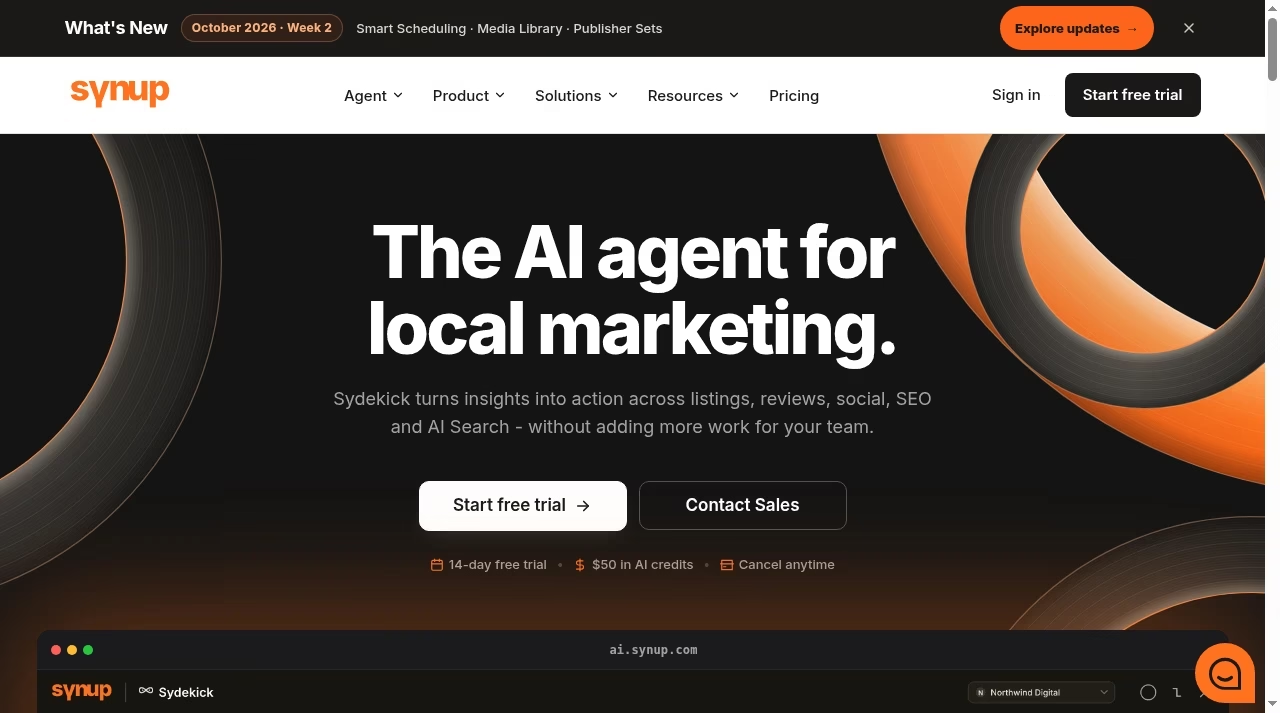
Synup publishes its pricing and includes every feature in every plan; the band only changes capacity. Solo is $49 per month for one location, Premium is $299 per month for up to ten, Pro is $499 for up to 25, and Scale is $899 for up to 50, with annual billing taking 20% off. Listings, reviews, social posting, and analytics sit in the same dashboard.
Its dashboard covers listings sync, review response, and light social scheduling, so a chain marketing manager can run the weekly routine in one sitting. The appeal is predictability for growing chains: you can model the next three years of costs in a spreadsheet right now, which quote-only competitors do not let you do.
Watch the per-location math at the low end, though: $49 for one location is roughly three Moz Local subscriptions.
Alternative 5Uberall: a multi-location marketing platform
Platform play
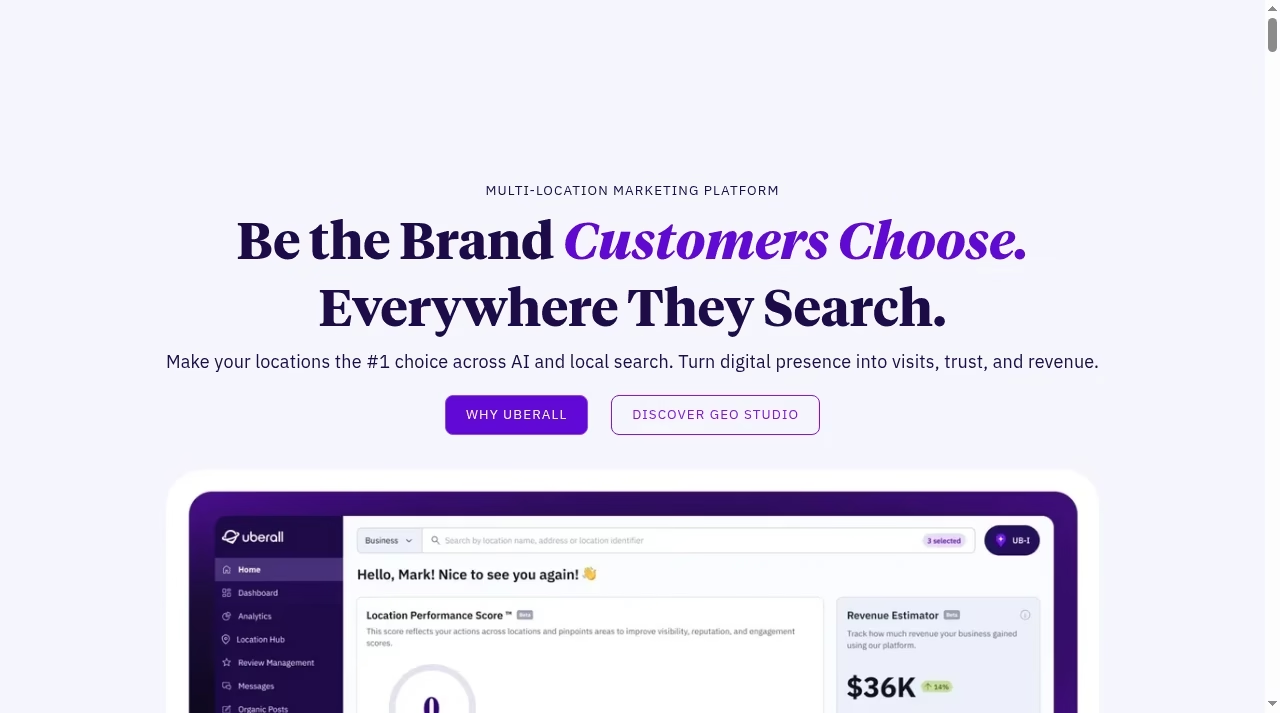
Uberall bundles listings, reviews, local social, and local ads into one platform aimed at multi-location brands and retail chains. Pricing is quote-only: the site offers package shapes but routes every buyer to “request pricing,” which usually means meaningful minimums and an annual commitment.
Where Uberall earns its keep is orchestration across hundreds of storefronts, especially in Europe where its footprint is deep. If your stack already includes a marketing automation platform, check overlap before buying: location-level social and messaging features increasingly duplicate what those suites ship.
Teams tempted to build their own location-social tooling instead can sanity-check the effort against our best no-code social media app builders list before writing the requirement down.
Budget realism matters here: Uberall competes with Yext for the same enterprise wallet, and like Yext it rewards buyers who arrive with a location inventory, an owner for the rollout, and a defined success metric. Arrive without those and the pilot will stall.
Alternative 6Localo: Google Business Profile optimization for small teams
SMB pick
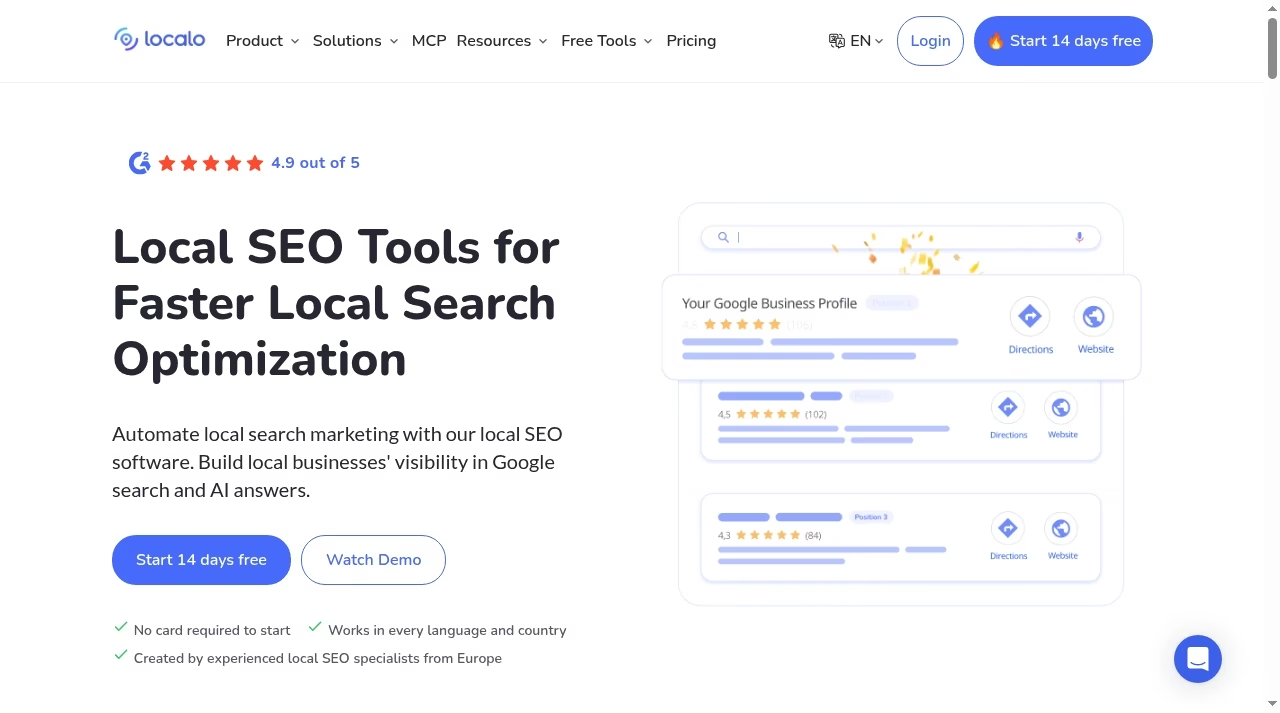
Localo is the youngest product on this list, and it shows in a good way: the interface assumes no SEO background at all. Localo is built for the single-location small business and the freelancer who serves them.
The Single Business plan is $39 per month billed annually (listed at $49 regular), Pro is $149 per month for agencies, and Enterprise is custom; there is a 14-day free trial. The product is deliberately narrow: GBP audits, optimization tasks, local rank grids, review monitoring, and Google post scheduling.
The task-based workflow is the differentiator: instead of dashboards to interpret, Localo hands you a checklist of what to fix this week. For owners doing their own local SEO between customers, that is often more useful than a heavier suite, and it pairs naturally with free efforts like the Google Local Guide program ecosystem around your listing.
Alternative 7Birdeye: reviews and customer messaging
Reviews plus inbox
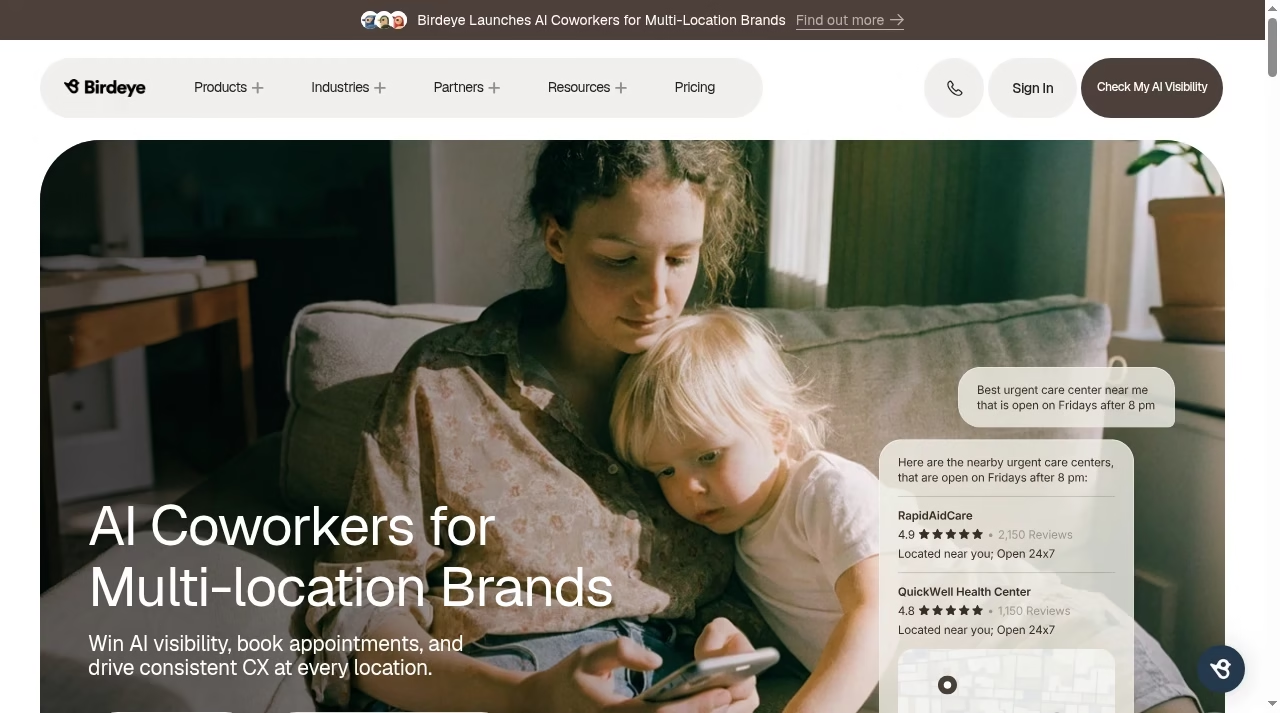
Birdeye’s center of gravity is reviews: generation campaigns, monitoring across sites, AI-assisted responses, and a unified customer inbox with webchat, text, and social messaging on top. Pricing is demo-led and banded by location count (bands run from 1-3 locations up to 1000+), with the pitch that you pay only for the products you deploy.
If your real problem is reputation rather than listings, Birdeye belongs on the shortlist next to Reputation below; our Trustpilot alternatives roundup covers the same territory from the review-platform side.
Its social scheduling overlaps with dedicated social media automation tools, so audit what you already pay for, and compare its inbox against our customer messaging software for small businesses picks before stacking subscriptions.
Alternative 8Reputation: review management at scale, now with prices
Scaled reputation
Reputation has quietly added public pricing: three tiers at $80, $115, and $150 per location per month, with custom plans from 125 locations. The platform combines review capture and response, surveys (from a basic template up to six custom ones at the top tier), listings, and sentiment analytics under one roof.
The published numbers make shortlisting easier, but note the per-location shape: at $80 and up, a ten-location brand is spending $800 or more each month, which buys a lot of BrightLocal and Whitespark combined.
Reputation makes sense when review volume and compliance needs justify a dedicated system, and when improving customer relationships is a board-level metric rather than a side task.
The survey layer is what separates it from Birdeye in practice: Reputation pushes harder into structured feedback (NPS-style programs, custom survey templates at the top tier) rather than pure public-review velocity. Healthcare groups and automotive dealer networks are its home turf, where a single dashboard spanning public reviews and private feedback is the actual requirement.

Alternative 9Semrush Local: local tools inside the Semrush platform
Suite add-on
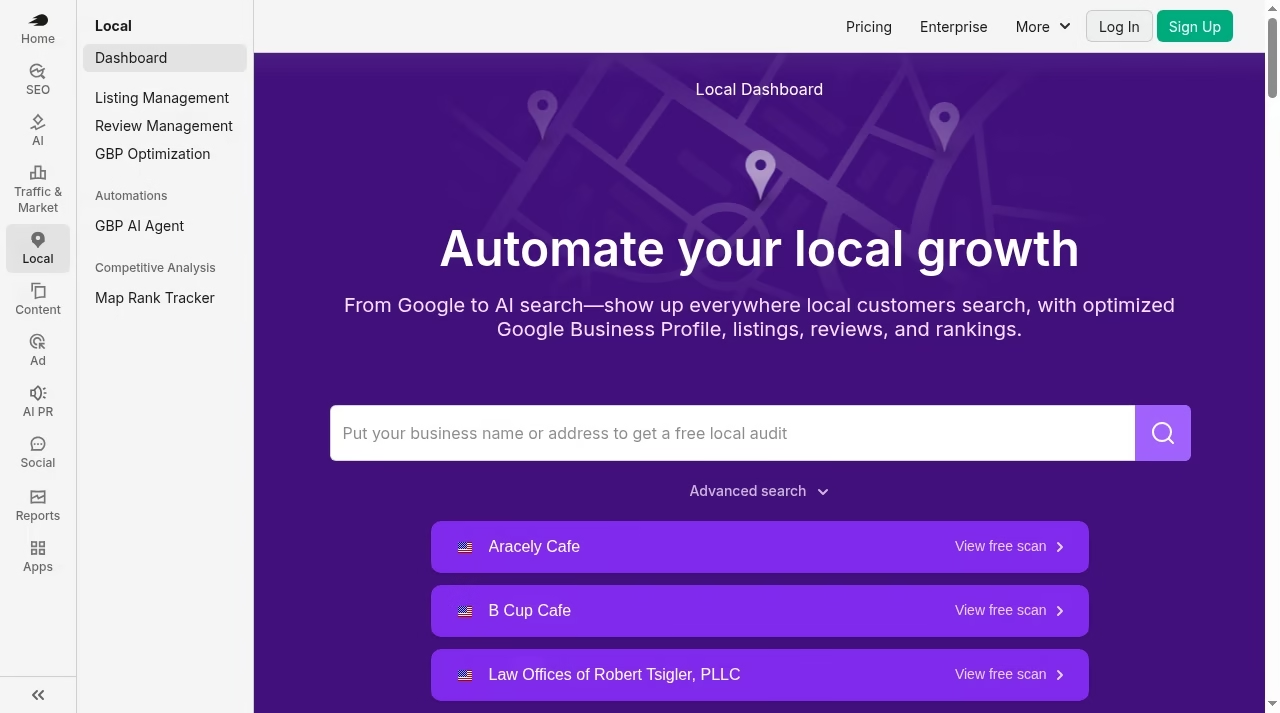
Semrush sells its local toolkit as standalone per-location plans: Base at $30 per location per month (GBP audit, optimization plan, and an AI agent for profile management) and Pro at $60, with an enterprise tier for multi-brand organizations. If you already pay for Semrush, the local module slots into the same account and reporting.
The calculus is straightforward: for existing Semrush users, $30 per location is a cheap add-on that keeps everything in one login. For everyone else, you are buying into a suite ecosystem to solve a listings problem, and the specialist tools on this list do more per dollar.
The Base tier’s AI agent angle is worth a sentence: it drafts GBP posts, suggests categories, and flags profile issues automatically. Useful, but treat it as an assistant rather than an autopilot; an AI-written profile that drifts from your actual services creates the kind of brand confusion that takes months to clean up.
Alternative 10Local Falcon: geo-grid rank grids and AI search visibility
Measurement specialist
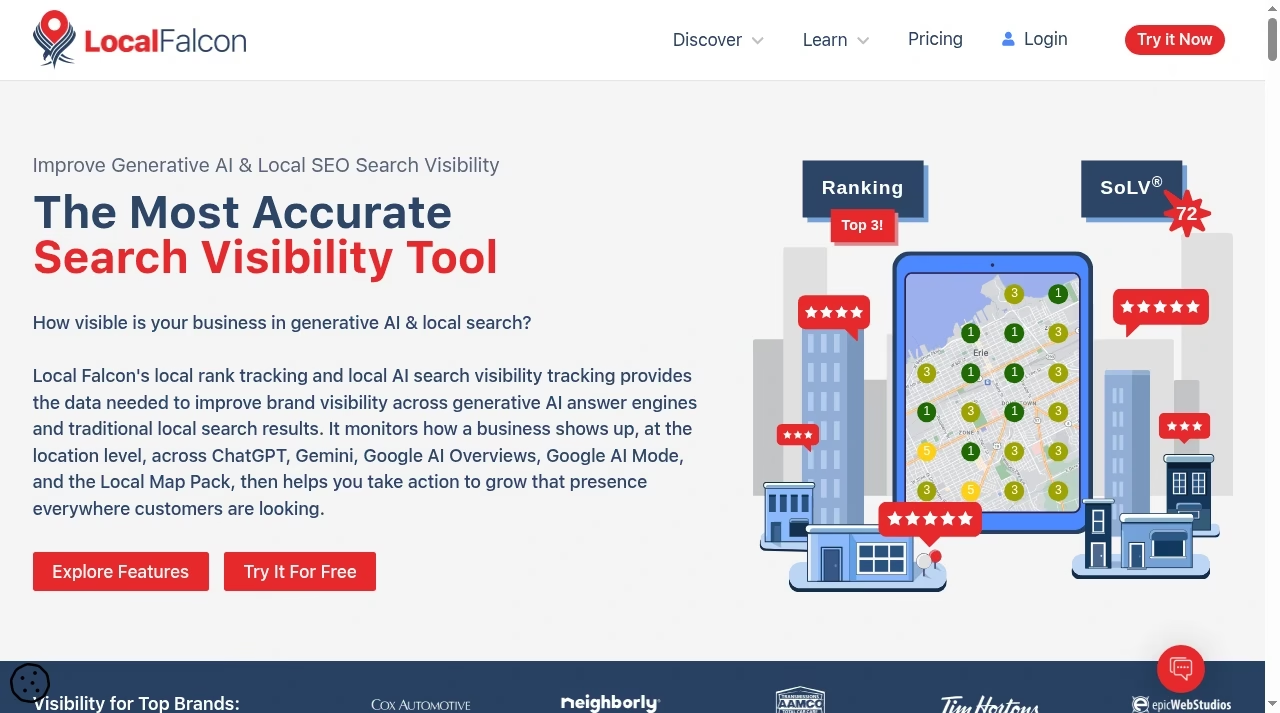
Local Falcon does one thing the others treat as a feature: map-grid rank tracking, showing where you rank pin by pin across a service area.
It prices in credits, one per map pin scanned: packages run $24.99 to $199.99 per month for 7,500 to 63,000 credits, with enterprise bands to $4,999, pay-as-you-go top-ups at $0.05 per credit, and an on-demand API at $199 per month plus usage.
Its newer AI search visibility reports track how assistants describe and recommend local businesses, which connects directly to the brand-confusion problems we documented in how AI search confuses similar brand names. Pair it with a listings tool; it replaces reporting, not distribution.
If you are comparing dedicated rank trackers more broadly, our AccuRanker vs Ahrefs breakdown covers the non-local end of that market, and the distinction matters: geo-grid tracking answers “where do I rank on the map,” while classic trackers answer “where do I rank on the page.”
One practical note on credits: a 9×9 grid over five keywords for one location burns 405 credits per scan, so even the $24.99 starter package supports a weekly scan habit for a single business. Costs only balloon when agencies run grids for dozens of clients on tight schedules.
DecidingHow to choose: listings, reviews, rankings, or all three
Every tool above fills at least one of four gaps: distributing listings, fixing citations, generating and answering reviews, or measuring where you actually rank. Most businesses have one gap that hurts more than the rest, and the right buy is the tool that addresses that gap, not the tool with the longest feature list. The matrix below maps gap to shortlist.
| If your gap is | Shortlist | Why |
|---|---|---|
| Cheap listing distribution only | Stay on Moz Local | At $14 per location per month, nothing on this list beats it for pure distribution. |
| Citation backlog or NAP mess | Whitespark, BrightLocal Citation Builder | One-time services fix the past; cheap plans maintain the future. |
| Reporting and rank tracking | BrightLocal, Local Falcon | BrightLocal for suites and client reports; Local Falcon for geo-grids and AI visibility. |
| Review generation and response | Birdeye, Reputation | Purpose-built review engines with messaging and survey layers. |
| One login for 10+ locations | Synup, Uberall, Yext | Ascending price and enterprise weight, in that order. |
| DIY for a single location | Localo | Task-based GBP work at $39 per month with a real trial. |
Before you switchA switching checklist
- Export your Moz Local location data and listing reports before canceling anything.
- Run a citation audit first so the new tool inherits a clean baseline, not a mess.
- Confirm per-location math at your real location count, including annual discounts and VAT.
- Check overlap with tools you already pay for: social scheduling, messaging inboxes, rank tracking.
- Time the switch just after your Moz renewal date; annual Moz plans do not refund mid-term.
- Give the new platform 60 to 90 days before judging ranking movement; listing changes propagate slowly.
The short version
For most small businesses, Moz Local plus one specialist (Localo for GBP work or Local Falcon for rank grids) beats any single suite. Agencies should default to BrightLocal. Chains past ten locations should price Synup against Birdeye and Reputation with real quotes in hand.
Enterprise brands evaluating Yext or Uberall should pilot on a region before signing the network-wide contract. None of these decisions is permanent, but each migration costs a quarter of momentum, so choose the gap you are actually filling.
Frequently asked questions
Is Moz Local worth it in 2026?
For pure listing distribution, yes: $14 per location per month (or $119 per year) undercuts nearly every alternative for getting your business data onto the major aggregators. Its limits show up in reporting depth, citation cleanup on niche sites, and review campaigns, which is where the tools above come in.
What is the cheapest Moz Local alternative?
Whitespark’s software starts at $1 per location per month for Google Business Profile management, and BrightLocal’s Citation Builder lets you buy one-off citation work from $3.20 per site with no subscription at all. For a full platform, Localo’s $39 monthly plan (annual billing) is the lowest published all-in-one price we found.
Which Moz Local alternative is best for agencies?
BrightLocal. Its white-label reporting, client dashboards, and location-banded pricing up to 100 locations are built for agency workflows, and the pay-as-you-go Citation Builder lets you resell citation work without a subscription per client.
Do I need a listings tool and a review tool?
Usually one of them first. If your listings are inconsistent, fix that before scaling review generation, because reviews attached to wrong or duplicate listings compound the problem. Once listings are clean, a review engine like Birdeye or Reputation compounds fastest.
How long does it take to switch listing providers?
The technical switch takes days; the data propagation takes weeks. Expect 60 to 90 days before aggregators and directories fully reflect changes from a new provider, and avoid running two listing tools simultaneously, since conflicting pushes can create duplicate or reverted data.
Are free trials available for these tools?
Localo offers a 14-day free trial, BrightLocal has a free account tier for its Citation Builder plus trial access on plans, and Local Falcon sells small credit packages that work as a cheap test. Yext, Uberall, and Birdeye are demo-led, so evaluation happens through a sales call instead.
What about AI search visibility for local businesses?
It is becoming a real reporting category: Local Falcon now tracks how AI assistants surface local businesses, and both Yext and Semrush market AI visibility features. The fundamentals have not changed (accurate listings, steady reviews, a complete Google Business Profile), but measuring how assistants describe you is newly possible and worth adding to your reporting.



Leave a Reply