
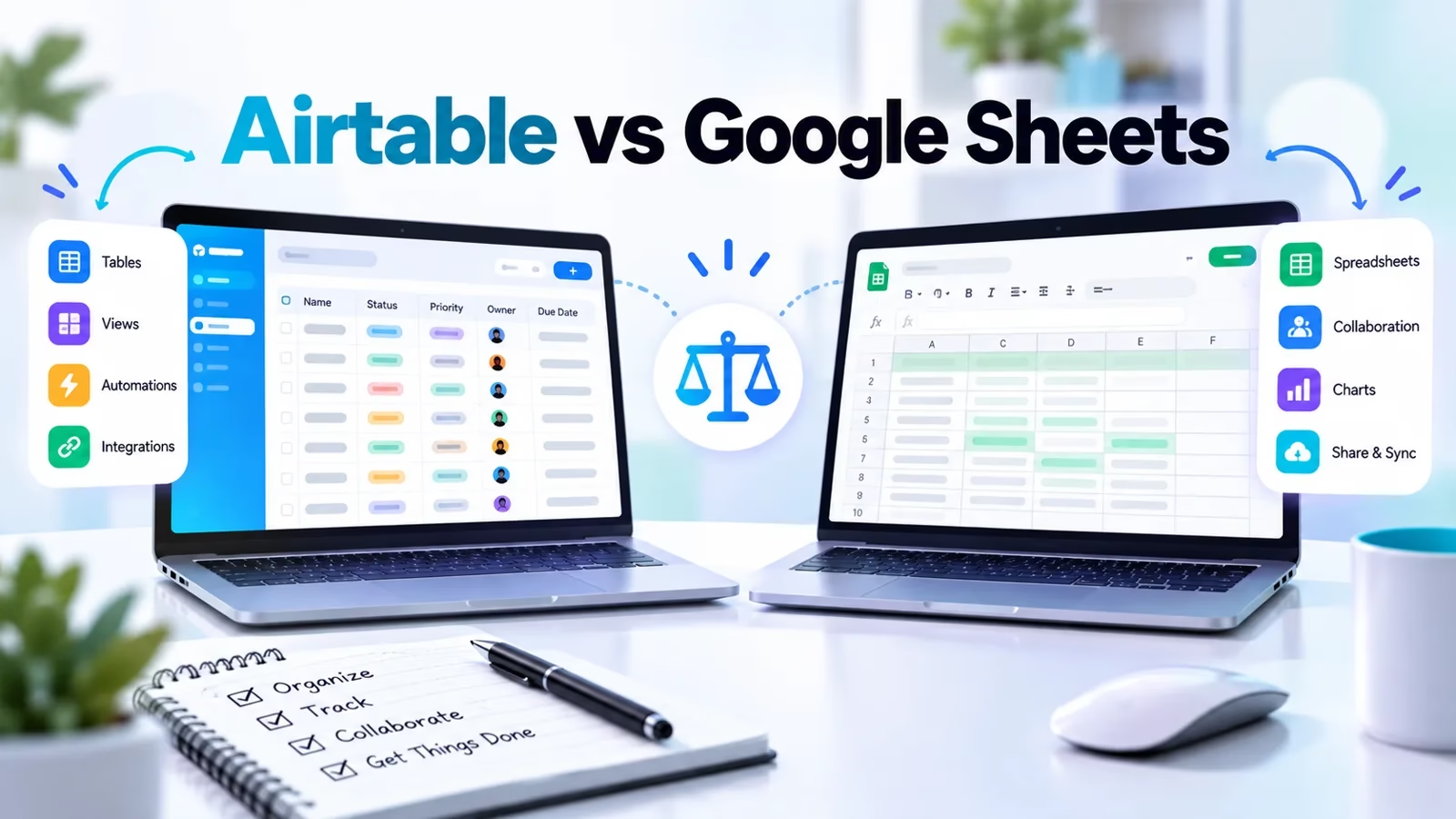

Google Sheets and Airtable both look like tables, so people swap one for the other and get surprised. A spreadsheet is a grid where each cell is free. A database stores records with typed fields and links between them. This guide shows where each fits, and how to test both on one real job.
Short version: use Google Sheets for calculations, analysis and simple lists. Use Airtable when rows become records that link to each other and need views. Facts below come from each vendor’s own pages on Oct 15, 2026.
At a glance: Airtable vs Google Sheets
| Area | Airtable | Google Sheets |
|---|---|---|
| Model | Relational database with views | Spreadsheet |
| Typical job | Project trackers, content calendars, inventories | Budgets, analysis, one-off lists |
| Collaboration | Shared bases with permissions | Real-time editing in Workspace |
| Price signal | Free, then $20 or $45 per user per month annually | Workspace per-user plans |
| AI | AI workflows, see Airtable site | Gemini in Sheets |
What each tool is built for
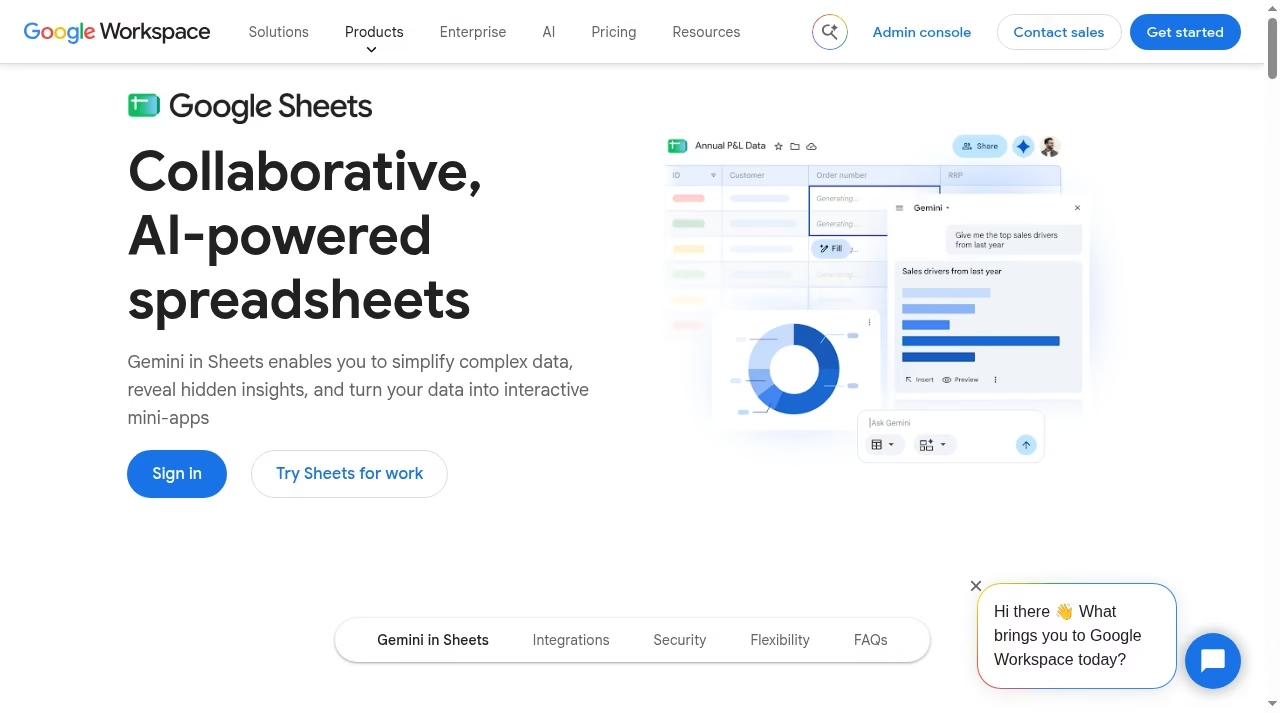
Airtable is Google’s spreadsheet in Workspace. The product page describes collaborative, AI-powered spreadsheets with Gemini, and says you can import Microsoft Excel files without making a copy.
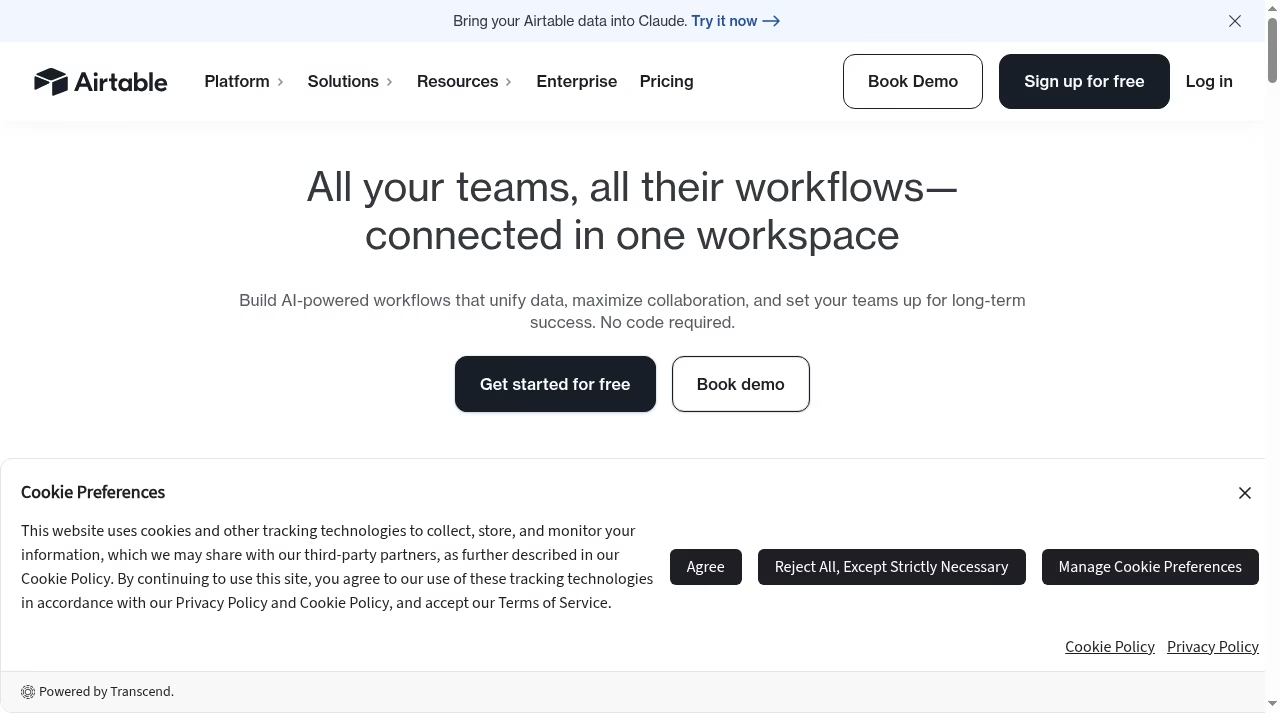
Google Sheets describes itself as a place to build AI-powered workflows that connect data and teams, with no code required. Plans run from Free to Enterprise Scale.
A spreadsheet is the easiest tool to start with, so start there when you are unsure. Move to a database when you see duplicate data, broken formulas after edits, or several people asking which version is right. Best no-code social media app builders shows how no-code tools build on this idea.
Pricing and plan limits as listed on Oct 14, 2026
Airtable lists a Free plan, a Team plan at $20 per user per month billed annually, and a Business plan at $45 per user per month billed annually. Enterprise Scale pricing is custom. Its pricing page says you pay for users with edit permission on at least one base, while read-only collaborators, form submissions and share links are not charged.
Google Sheets is part of Google Workspace and is sold through Workspace plans priced per user, with pooled storage that rises from 30 GB per user on Business Starter to 2 TB on Standard and 5 TB on Plus. We did not copy Workspace prices here because the page we read showed them in Canadian dollars, so check the Google Workspace pricing page for your own currency.
A same-task test you can run in one afternoon
Pick one job that you really do, such as tracking client projects with a status, an owner and a due date. Then build it both ways. This is a suggested test, not a result we measured.
Step 1. Build the table in Google Sheets with a status column and a dropdown. Step 2. Build the same table in Airtable with a single select field, a linked table for clients and a Kanban view. Step 3. Add a second person with edit access and see what each tool lets them break. Step 4. Ask for a weekly summary and note how many clicks each takes.
If the job grows into customer tracking, easy CRM platforms for small sales teams and why CRM projects fail show where a database starts to matter.
Limits matrix: what to confirm before you commit
| Question | Airtable | Google Sheets |
|---|---|---|
| Core model | Linked records with typed fields and views | Grid of cells, formulas on top |
| Free option | Free plan, limited by plan | Sold through Google Workspace plans, check Google for personal access |
| Paid pricing | Team $20 and Business $45 per user per month annually | Per Workspace user, see Google |
| Who pays | Users with edit permission | Users on Workspace plans |
| AI | AI-powered workflows described on its site | Gemini in Sheets, formulas, Fill with Gemini |
| Best at | Structured records, views, workflows | Calculations, quick analysis, sharing |
Write down your record types before you build. If you can name three tables that link, you probably need a database. If you have one table and many formulas, you probably need a spreadsheet. ERP and business intelligence explains what happens when data grows past either.
Who should choose which
Choose Google Sheets if your work is mostly numbers, budgets and quick analysis, or if your team lives in Google Workspace. Choose Airtable if you track items that relate to each other, such as clients, projects and assets, and need views and permissions around them.
Teams that outgrow both often look at automation tools to connect them, or at monday.com as a work management option.
Reporting matters too. Databox alternatives and the Google Analytics 4 guide help you pull numbers from a sheet or base into one view, and marketing automation platforms show where the records often end up.
Frequently asked questions
Is Airtable better than Google Sheets?
It depends on the job. Airtable suits structured records that link to each other and need views such as Kanban or calendar. Google Sheets suits calculations, quick analysis and sharing a simple list.
Is Airtable free?
Airtable lists a Free plan. Its Team plan is $20 per user per month billed annually and Business is $45, per its pricing page checked Oct 15, 2026.
Can Airtable replace Google Sheets?
For record keeping, often yes. For heavy formulas and ad hoc analysis, many teams keep Sheets beside it.
Does Airtable charge for viewers?
Its pricing page says charges apply to users with edit permission, and no charges apply for read-only collaborators, form submissions or share links.
Can I import a Google Sheet into Airtable?
Many teams do this when a sheet outgrows its rows. Test the import on a copy and check that dropdowns and dates convert correctly before you rely on it.
What does Gemini do in Google Sheets?
Google says Gemini in Sheets can write formulas, explain errors, create charts and fill tables from adjacent data. Check results before you share them. See also best AI tools for small business.
Where do I go next?
Compare Airtable vs monday.com and Excel vs Google Sheets, and browse the JustCreateApp directory.



Leave a Reply