

WordPress VIP vs Adobe Experience Manager: buy the operating model
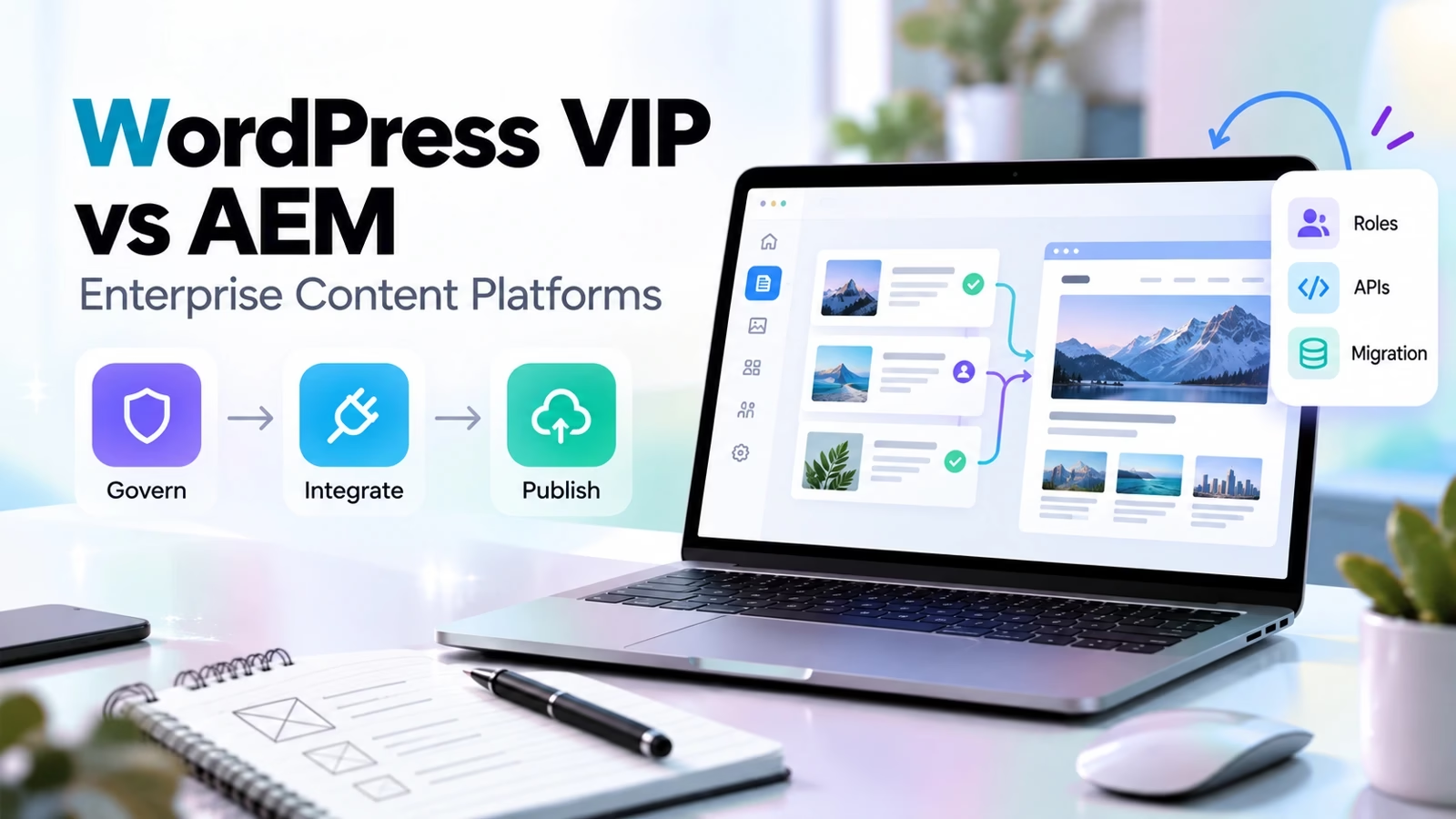
WordPress VIP and Adobe Experience Manager are enterprise options, not two ordinary shared-hosting plans. VIP fits organizations that want a supported WordPress platform. AEM Sites fits organizations evaluating Adobe-based content and digital-experience workflows. The right shortlist depends on editor tasks, integration requirements, governance and the full operating cost. Digital transformation planning should state those requirements before the sales demonstrations.
Reviewed against current official product pages and documentation on October 10, 2026. Screenshots are original captures of public vendor pages. This is a documented workflow comparison, not a purchased-account benchmark or a claim that a production deployment was tested. Performance, support speed and migration outcomes remain unmeasured.
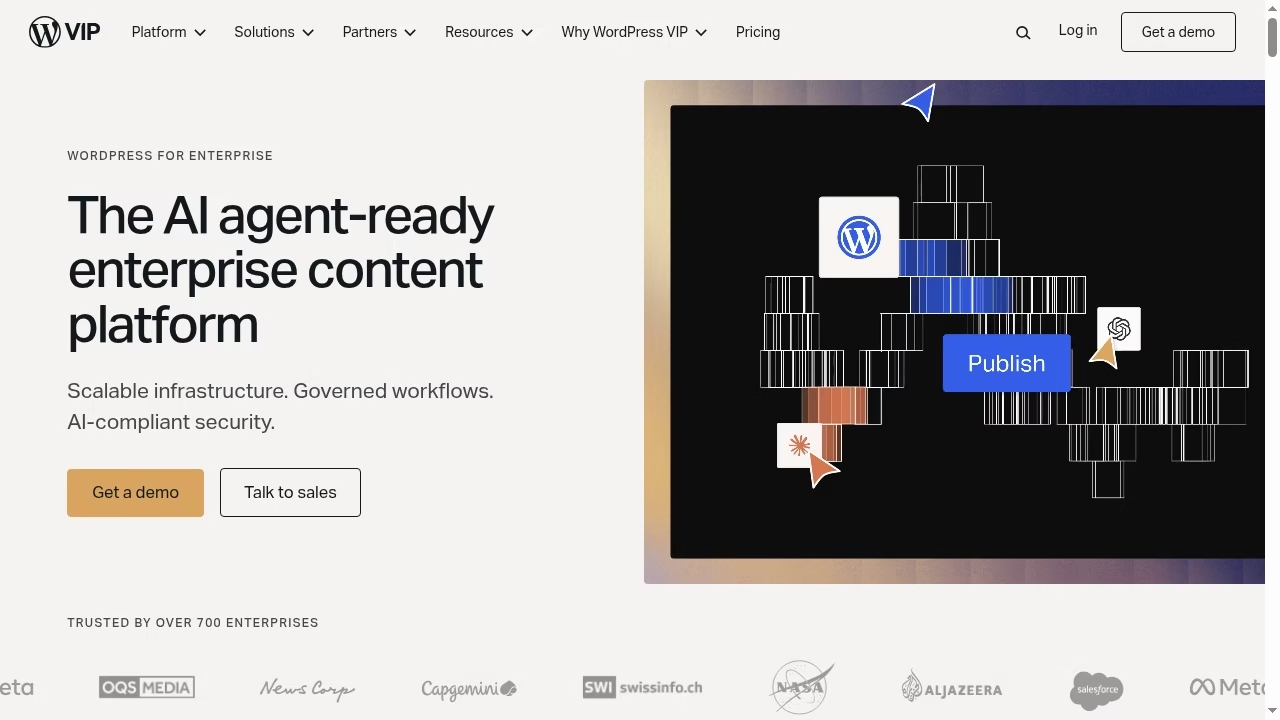
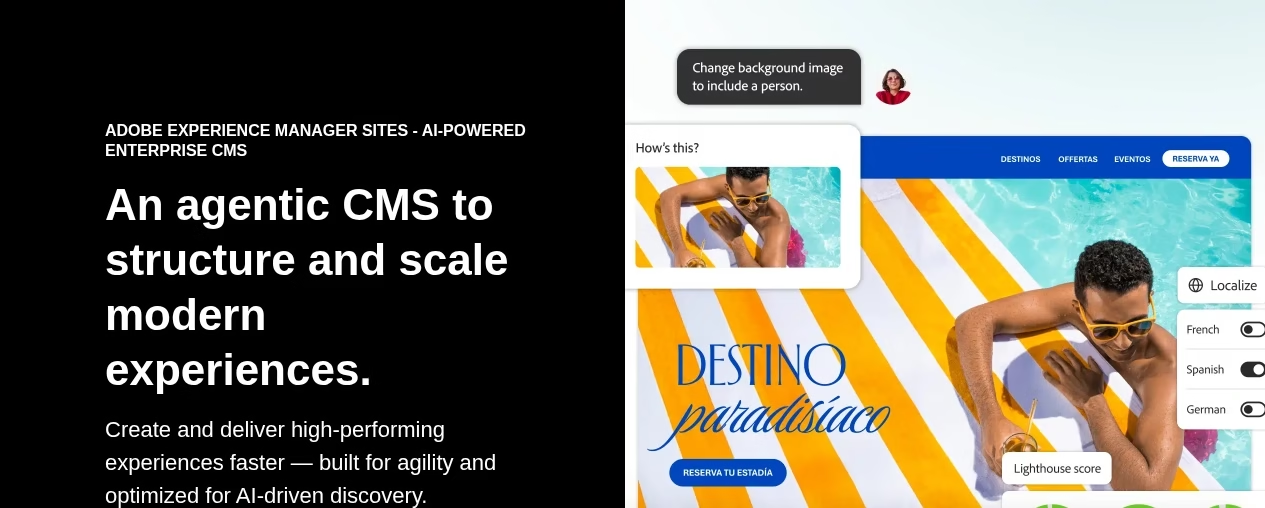
Compare VIP with AEM Sites, not the entire Adobe catalogue
AEM can be discussed together with Assets, Commerce and Analytics, but those integrations are not evidence that every module is included in a Sites quote. Likewise, a VIP package does not replace every marketing tool. Keep the commercial scope exact: product, deployment model, environments, support and optional services. IT architecture review can prevent comparing unlike bundles.
| Buyer criterion | WordPress VIP | AEM Sites |
|---|---|---|
| Current publishing foundation | WordPress-oriented platform | Adobe enterprise content platform |
| Shared evaluation task | Governed multi-site campaign publishing | Same campaign and governance requirements |
| Structured delivery | WordPress APIs and chosen architecture | Content Fragments and supported headless delivery |
| Pricing evidence | Current vendor page requests a tailored quote | Confirm the actual scoped vendor quote |
| Integration question | Existing WordPress code and external tools | Existing Adobe stack and external tools |
| Hidden workload | Extensions, migration and ongoing code ownership | Models, workflows, integrations and operating ownership |
The same task: a campaign across brands and regions
Give each vendor the same sample: one global campaign, two brands, three language variants, reusable product facts, approvals and a scheduled release. Require editors to update a price disclaimer once and trace every place it appears. Require the mobile app and website to receive the right approved version. This is a proposed acceptance task, not a report that either vendor passed it. Transformation partner selection benefits from seeing the actual workflow rather than slideware.
VIP should be judged on the WordPress work you need
The VIP package comparison describes hosting, support and package-dependent services. Examine the supported workflow for your themes, plugins, integrations, multisite and release process. Do not transfer assumptions from inexpensive WordPress hosting or treat every plugin as automatically appropriate for an enterprise deployment. Web development partners should be able to explain the code and support boundary.
AEM should be judged on reusable content and experience needs
The AEM Sites product page describes enterprise authoring, reusable components, governance and integrations. Its documentation describes Content Fragments as structured, page-independent content and distinguishes them from fully laid-out Experience Fragments. AEM can support headless delivery; it should not be caricatured as only a traditional page CMS. Ask the vendor to demonstrate the exact content model and delivery route required.
Content modeling affects editorial work
The AEM Content Fragment guide recommends prototyping intended structures and warns that too many models or heavy nesting can affect performance and usability. That is a useful buying test: can editors understand the model and reuse content safely? WordPress also needs deliberate content types, fields and relationships. UX review should include editor experience, not only the customer-facing design.
Governance is an acceptance test, not a badge
Write down who may create, approve, publish and delete each content type. Test an unauthorized editor, a restricted brand and a broken approval step. Check audit history, identity integration and emergency access. Vendor security statements are starting points for questions, not a substitute for the signed scope and implemented controls. IT outsourcing arrangements should assign who monitors and fixes those controls.
Pricing requires comparable quotes
The current VIP pricing page requests a tailored quote based on traffic, sites and support; it describes annual contracts. Do not repeat old public minimum-price claims as current quotes. Obtain an AEM quote for the same workloads, environments, modules and support needs. Then add implementation, migration, integrations, training and ongoing developer ownership. Custom software delivery planning helps expose work outside the platform fee.
Check integrations and commerce separately
A vendor ecosystem is useful only if the required integrations work under the selected license and architecture. Test identity, analytics, search, forms, consent and product data. If commerce is part of the project, retail and ecommerce development and WooCommerce implementation explain related delivery choices, but neither proves a specific VIP or AEM commercial bundle.
Migration risk can outweigh a feature advantage
Inventory existing URLs, media, custom fields, components, redirects and editorial rules. A technically appealing platform can still be a poor near-term choice if the organization cannot migrate without losing search traffic or slowing editors. DevOps planning should cover environments and release safety. Restore planning is separate from merely retaining a copy of old content.
Run a bounded proof of concept with the actual editors
Use the shared campaign task and a small set of representative content. Include editors, translators, compliance reviewers and developers. Time their work only after both implementations are configured to the agreed scope. Capture the steps, permissions and output. Do not accept a polished demo that skips the difficult reusable-content or approval cases.
Make success and failure visible
A useful pilot includes publication, correction, rollback and an unauthorized action. For each, state the expected version, channel and role. Evaluate accessibility and mobile output too. Next.js delivery teams may own a separate frontend, but that does not remove the need to test the editorial chain end to end.
Choose the platform that the organization can operate
VIP may be a stronger fit where WordPress skills and publishing workflows already work well. AEM may be a stronger fit where the organization needs and can support the Adobe-oriented experience model. These are fit conditions, not universal cost or speed rankings. Confirm them through a scoped pilot and comparable commercial proposal.
Record the decision beyond procurement
Name the owners of content models, extensions, integrations, incidents and upgrades. Keep the quote assumptions with the architecture decision. If scope changes, revisit the comparison rather than claiming an old result still applies. SaaS delivery responsibilities illustrate why the operating team matters as much as the selected technology.
Frequently asked questions
Is WordPress VIP ordinary WordPress hosting?
It is an enterprise WordPress platform with hosting and support packages. The applicable features and services depend on the package and contract. Compare the actual quote rather than a generic WordPress hosting plan.
Is AEM only for traditional websites?
No. AEM Sites supports structured Content Fragments and headless delivery routes as well as page authoring. The appropriate model depends on the project and selected implementation.
Does AEM Sites include every Adobe product?
Do not assume that. Confirm modules, integrations, licenses and services in the commercial proposal. A product page describing an integration is not evidence that all connected products are included.
Which option costs less?
This review has no comparable vendor quotes, so it cannot establish a cost winner. Compare contract scope, implementation, migration, integrations, training and ongoing ownership.
Should an existing WordPress team prefer VIP?
Existing skills and content are useful fit signals, but they do not settle the decision. Test required governance, performance, integration and multi-site workflows within the proposed VIP package.
Was an enterprise sandbox benchmark performed?
No. This is a buyer-criteria review using official sources and original public-page captures. The shared campaign scenario is a recommended pilot task, not a claimed completed benchmark.


Leave a Reply