

Zendesk is the name most teams start with when they shop for customer support software. It is also the name many teams eventually want to leave. The reasons are almost always the same: per-agent pricing that climbs as you add seats, a suite that feels heavier than a ten-person team needs, and AI features that sit behind higher tiers. Zendesk’s own pricing page lists Suite Team at $55 per agent per month and Suite Professional at $115 per agent per month on annual billing, so a 15-person team is looking at a serious monthly line item.
I spend my days comparing software for this site, from help desk software to AI tools for small businesses, and support tooling is one of the categories readers ask me about most. So I went back through the category, revisited every vendor’s live site on 18 October 2026, and pulled together the 12 Zendesk alternatives I would actually shortlist today, matched to the kind of team each one fits.
If you are still mapping out your wider stack, my guide on choosing the right tech stack for your business is a good companion read.
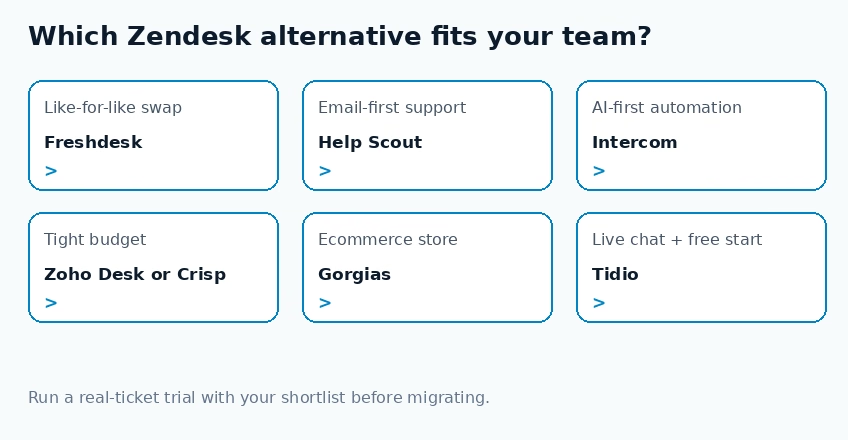
In a hurry? Start here
- Best overall for most teams: Freshdesk
- Best for email-first support: Help Scout
- Best for AI-first automation: Intercom
- Best on a tight budget: Zoho Desk
- Best for ecommerce: Gorgias
- Best free starting point: Tidio
The 12 best Zendesk alternatives at a glance
| Tool | Best for | Starting price | Free option |
|---|---|---|---|
| Freshdesk | Most support teams | From $15/agent/mo (pricing page) | Free plan + trial |
| Help Scout | Email-first teams | Per-user tiers (see site) | Free trial |
| Intercom | AI-first automation | From $29/seat/mo | Free trial |
| Zoho Desk | Budget teams, Zoho users | Budget per-agent tiers | Free plan + trial |
| HubSpot Service Hub | CRM + support in one | Free tools, then paid seats | Free tools |
| LiveAgent | Ticket + call center | Per-agent tiers | 30-day trial |
| Gorgias | Ecommerce stores | Ticket-based tiers | Demo + trial |
| Front | Shared inbox teams | Per-seat tiers | Free trial |
| HappyFox | Structured workflows | Per-agent tiers | Demo |
| Helply (formerly Groove) | Small teams going AI-native | Pay-for-AI-work model | Free trial |
| Crisp | Startups wanting flat pricing | Flat per-workspace tiers | 14-day trial |
| Tidio | Live chat + AI for small sites | From $29/mo (homepage) | Free plan |
12 Zendesk alternatives, reviewed one by one
1. Freshdesk: best overall for most teams
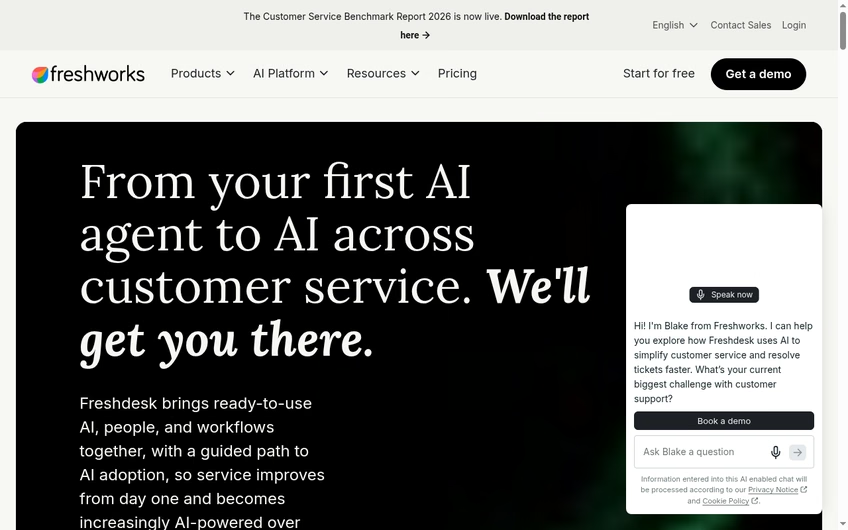
Freshdesk is the first name I put in front of almost anyone leaving Zendesk, because it covers the same ground (ticketing, omnichannel inbox, automations, knowledge base, AI assistance) without asking you to restructure how your team works. It sits inside the wider Freshworks family, so if you later need IT service management there is a natural upgrade path, which I compared in my Freshservice vs Freshdesk breakdown.
On the money side, Freshdesk’s pricing page states that its pricing starts at $15, which undercuts Zendesk’s suite tiers by a wide margin for a growing team. If you want a fuller picture of the product before switching, my explainer on what Freshdesk is and how it works walks through the core modules.
- Broad omnichannel ticketing out of the box
- AI features woven into the agent workspace
- Lower entry price than Zendesk suite tiers
- Reporting depth depends on your tier
- Freshworks ecosystem upsell is always nearby
2. Help Scout: best for email-first support teams
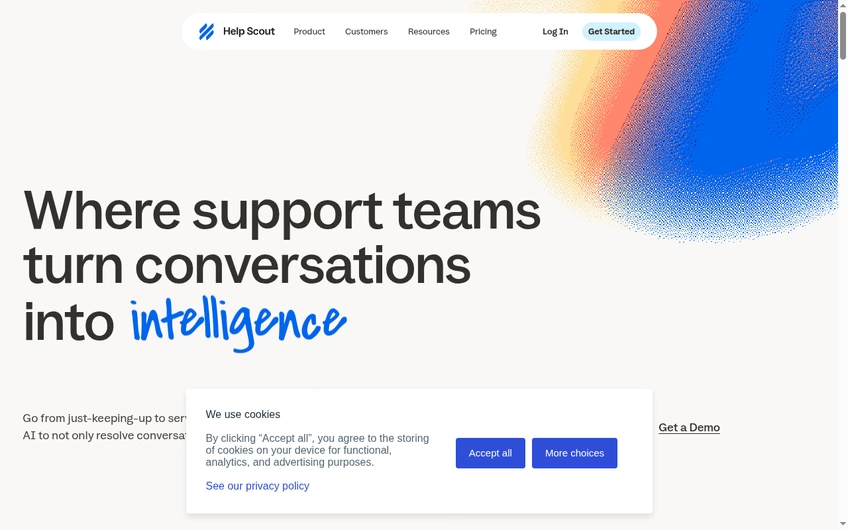
Help Scout is what I recommend when a team tells me Zendesk feels like flying a plane when they only needed a car. Its shared inbox behaves like email your whole team can work in together, with collision detection, saved replies, and a docs-style knowledge base, and its site today positions it as an AI-driven support platform rather than a heavyweight suite.
It deliberately skips the complexity: no sprawling admin panel, no army of consultants needed to set it up. For small and mid-sized teams that live in the inbox, that restraint is the feature, and it is why Help Scout keeps appearing in my tools that boost business efficiency shortlists.
- Inbox that feels like email, not a ticketing machine
- Fast setup, minimal admin overhead
- Docs knowledge base included
- Lighter on telephony than Zendesk
- Per-user pricing is on its site, not fixed here
3. Intercom: best for AI-first automation
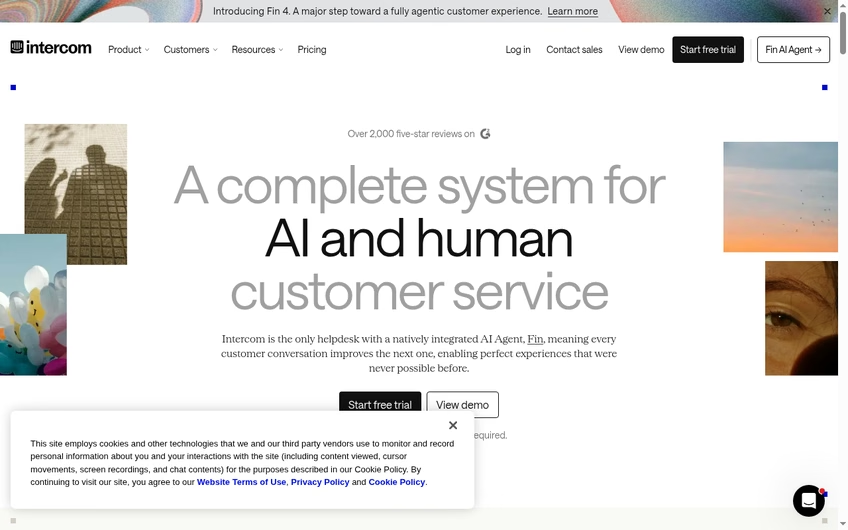
Intercom is the alternative you pick when the reason you are leaving Zendesk is automation ambition, not just price. Its Fin AI agent is the headline act: it resolves frontline questions from your help content and hands off to humans when it cannot, and the product wraps that in a messenger, inbox, and ticketing layer. Its pricing page currently lists per-seat plans at $29, $85, and $132 per seat per month, with AI resolution pricing on top, so model the full cost before you commit.
For SaaS and product-led companies that want support to deflect itself, Intercom is the strongest play on this list. I covered the adjacent tooling in my roundup of customer messaging software for small businesses.
- Fin AI agent is a genuine frontline resolver
- Messenger, inbox, and ticketing in one product
- Clean per-seat pricing tiers
- AI resolutions are priced on top of seats
- Can outrun a very small team’s needs
4. Zoho Desk: best budget pick, especially for Zoho shops
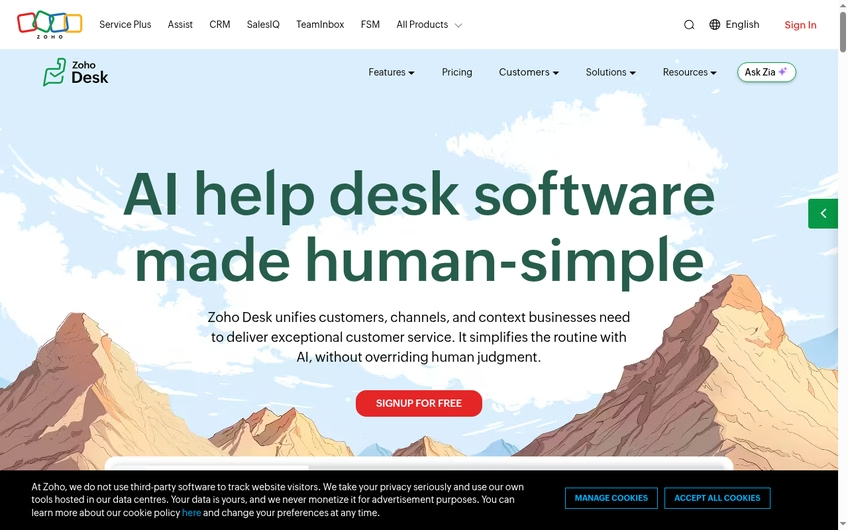
Zoho Desk is the value play. It gives you multi-channel ticketing, a knowledge base, SLAs, and its Zia AI assistant at price points that have historically been the lowest among serious help desks, and it becomes close to a no-brainer if your company already runs on Zoho CRM, Books, or Mail.
The trade-off is polish: the interface is functional rather than delightful, and setup takes a bit more patience than Help Scout or Crisp. One area where Zoho is genuinely strong is data residency options across regions, which matters if you care about what data governance means for customer data. Confirm current tiers on its pricing page, as Zoho adjusts packaging fairly often.
- Traditionally the lowest per-agent pricing in its class
- Deep integration with Zoho CRM and the Zoho suite
- Regional data center choices
- UI feels a generation behind the leaders
- Best value only if you use other Zoho apps
5. HubSpot Service Hub: best when support and CRM must live together
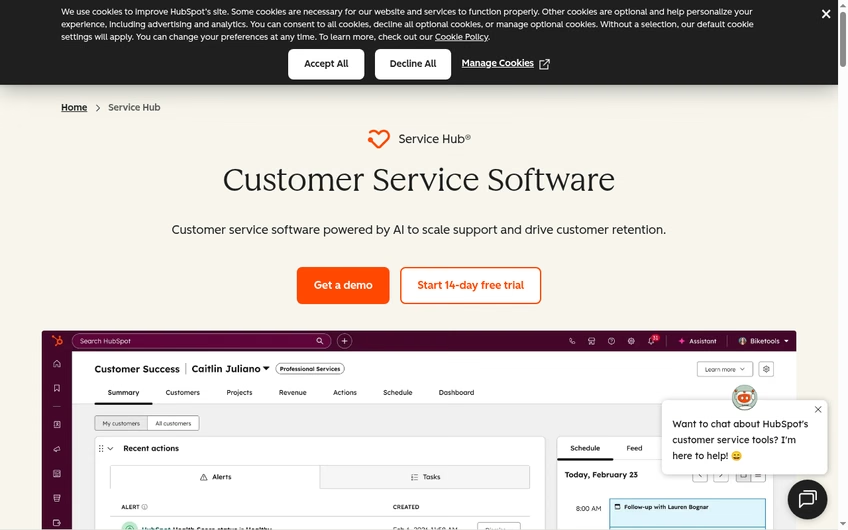
HubSpot Service Hub makes the most sense when your real complaint with Zendesk is that support sits in a silo. Tickets, conversations, and the knowledge base live on top of the same CRM your marketing and sales teams use, so an agent sees the whole customer story instead of an isolated ticket. Its site is currently advertising a 14-day free trial alongside the usual demo route, and HubSpot’s free tools tier lets you start with shared inbox basics before paying for seats.
If you run a service-heavy business, it also pairs naturally with the CRM setups I covered in my piece on CRM platforms for managed service providers.
- Support, marketing, and sales on one CRM record
- Free tools tier to start small
- Strong automation as you move up tiers
- Costs climb steeply at Professional and Enterprise
- Overkill if you only need a support inbox
6. LiveAgent: best for ticketing plus a built-in call center
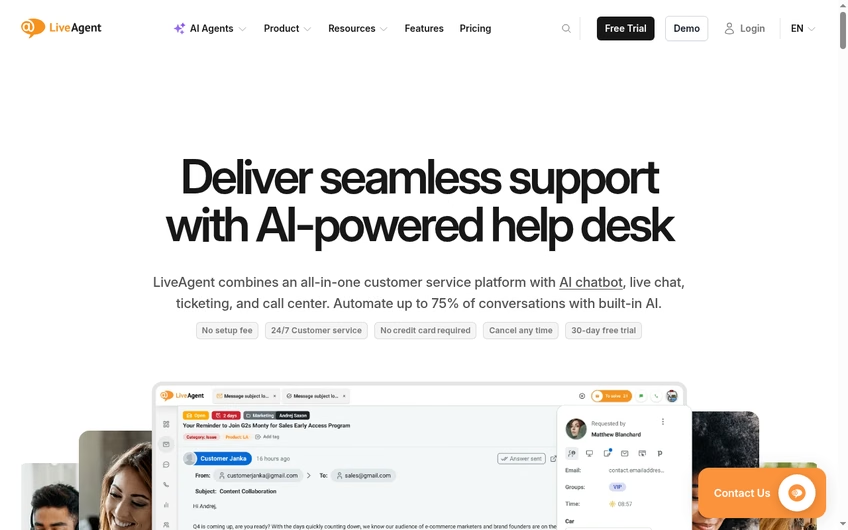
LiveAgent is the workhorse option: ticketing, live chat, a knowledge base, and a full call center in one per-agent price, which is why it keeps showing up in shortlists from cost-sensitive teams. Its homepage currently promises seamless support with an AI-powered help desk, advertises a 30-day free trial with no credit card required, and claims its built-in AI can automate up to 75% of conversations. That last number is the vendor’s own claim, so treat it as marketing until your own trial proves it out.
It is also a natural home for the routine automations I list in business processes to automate to speed up your workflow.
- Call center built into the help desk
- Generous 30-day trial window
- Long track record with SMB teams
- Interface is denser than newer rivals
- Vendor AI claims need trial verification
7. Gorgias: best for ecommerce and Shopify stores
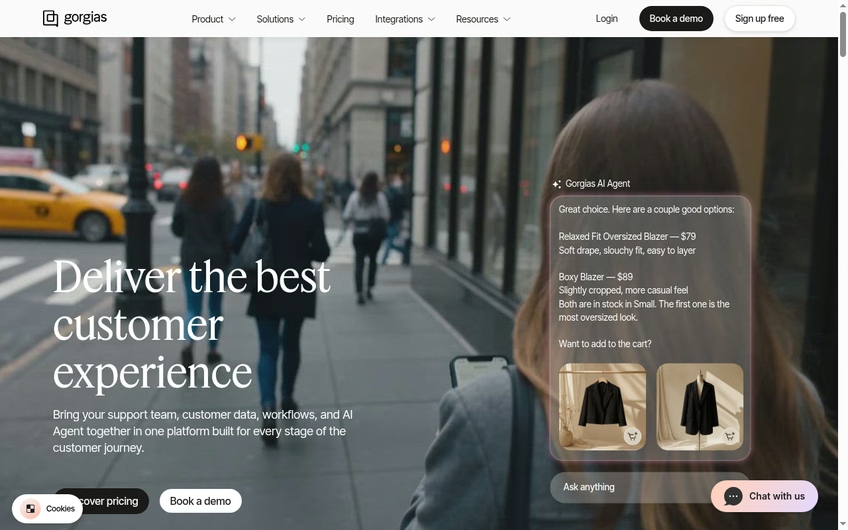
Gorgias exists for one kind of company: an online store. Its homepage leads with the promise to deliver the best customer experience, and the product backs that up with deep Shopify, BigCommerce, and Magento integrations that pull order data straight into the ticket, so agents can refund, edit, or track orders without leaving the conversation. Its AI Agent is trained for ecommerce intents like “where is my order” rather than generic support.
If you are still weighing the store platform itself, my Shopify vs custom websites comparison covers that decision. Pricing is ticket-volume-based rather than per-agent, which flips the Zendesk math: you can have your whole team on the account and pay for volume instead of headcount.
- Order actions inside the help desk
- Ticket-volume pricing suits lean teams
- Ecommerce-tuned AI Agent
- Not a fit outside ecommerce
- Volume spikes can move your bill
8. Front: best for shared-inbox teams
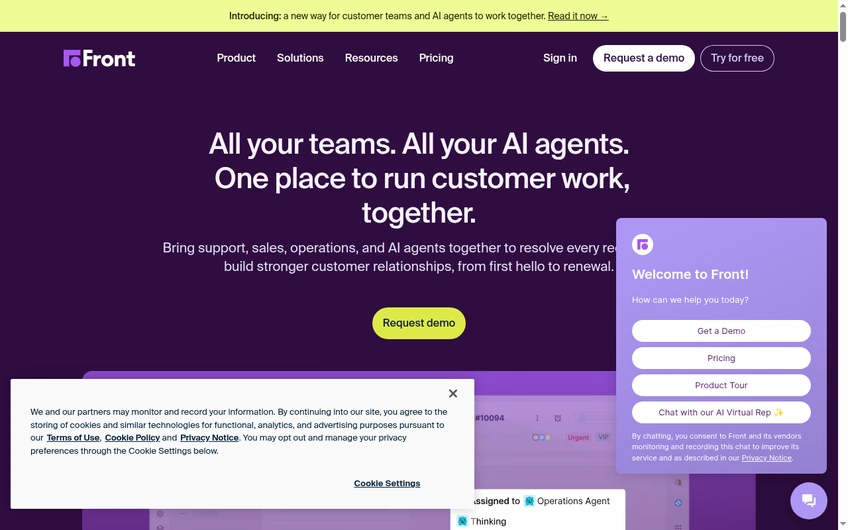
Front takes the opposite philosophy to Zendesk: instead of turning email into tickets, it upgrades the inbox itself so support, operations, and account teams can work customer conversations together with assignments, comments, and AI assistance. Its current homepage frames it as one place to run customer work with your teams and AI agents together, with both a demo and a free trial on offer.
Because it is built around shared inboxes rather than ticket queues, it is especially strong for teams where support blends into account management and sales. I looked at that overlap in my guides to digital tools for sales teams and emerging technologies that strengthen the sales pipeline.
- Shared inbox, not a ticket queue
- Strong collaboration around each conversation
- Works across email, chat, and SMS
- Less traditional ticketing structure
- Per-seat pricing needs checking on its site
9. HappyFox: best for structured, process-heavy workflows
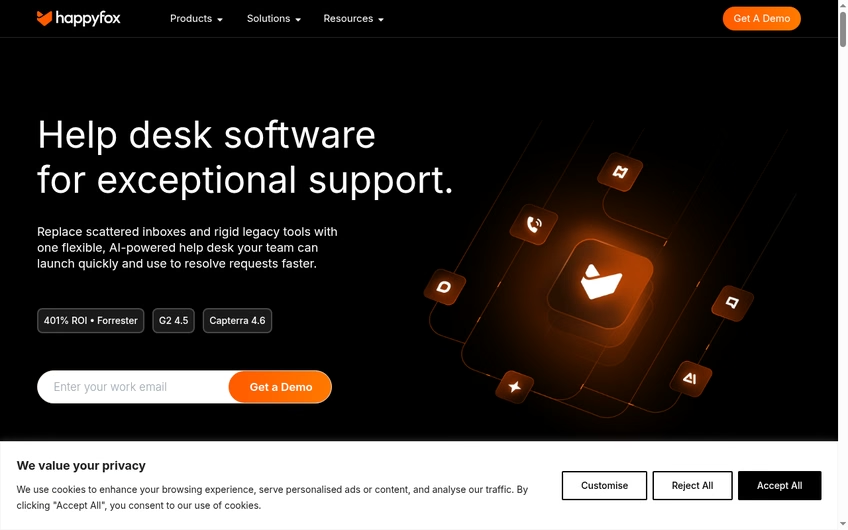
HappyFox is the pick for teams that run support like an operation: SLAs, escalation rules, asset and change management, and canned workflows that keep a busy queue predictable. Its homepage leans on proof points, citing a 401% ROI figure from Forrester, a 4.5 rating on G2, and 4.6 on Capterra, all vendor-published numbers, and offers a demo rather than a self-serve free tier.
It fits support teams inside IT-flavored environments, the kind that also shop for IT architecture consulting firms, and it pairs well with the automation tools I recommend for trimming repetitive queue work.
- Strong SLA and workflow engine
- Help desk plus asset management options
- Published third-party review scores
- Demo-led sales motion slows evaluation
- Quote-based pricing on its site
10. Helply (formerly Groove): best for small teams going AI-native
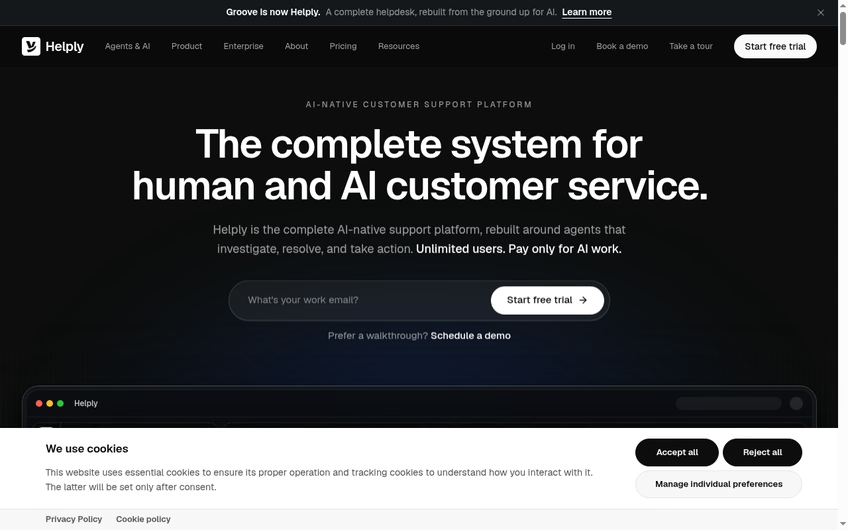
Here is a change I caught while re-checking sites for this article: Groove, the long-time simple help desk for small teams, has rebranded to Helply. The new site pitches an AI-native support platform with unlimited users where you pay only for AI work, which is a genuinely different model from Zendesk’s per-agent billing. For a small team, unlimited seats alone changes the math. I ran into the same per-seat versus flat-pricing question in my Calendly pricing breakdown.
The rebrand is fresh enough that I would want a proper trial before migrating, but if you liked Groove’s simplicity and want modern AI without per-seat costs, this is one to watch.
- Unlimited users, pay for AI work model
- Keeps Groove’s simple help desk DNA
- Free trial and demo both offered
- Rebrand means a changing product
- Less established than the big suites
11. Crisp: best flat pricing for startups
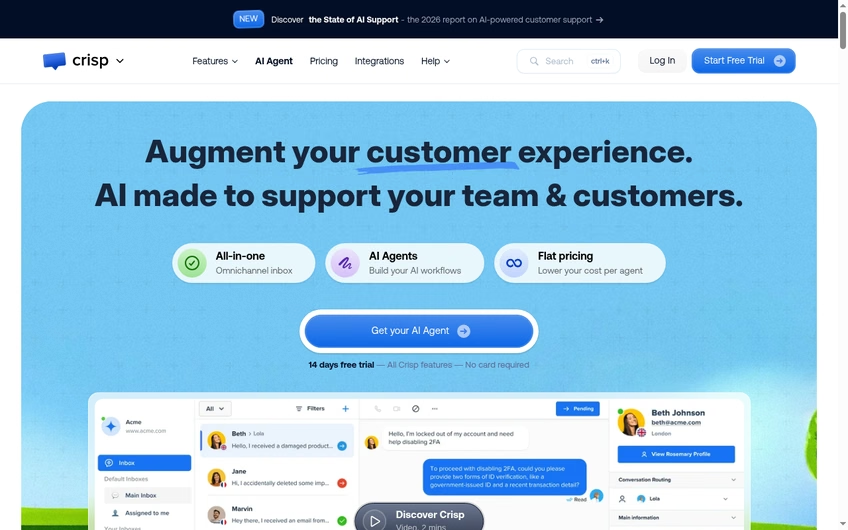
Crisp is the startup favorite: a shared inbox, live chat, chatbot builder, and knowledge base sold at flat per-workspace prices instead of per-agent fees, so your tenth teammate does not raise the bill. Its site today advertises exactly that flat pricing promise alongside a 14-day free trial with no credit card, and the product has grown from a chat widget into a credible full inbox.
For very small teams, it is one of the cheapest ways to look professional across chat and email at once, and it belongs on any shortlist of customer messaging software for small businesses.
- Flat per-workspace pricing, not per agent
- Chat, inbox, bots, and knowledge base bundled
- 14-day free trial, no card required
- Lighter on enterprise controls
- Reporting is simpler than Zendesk Explore
12. Tidio: best free starting point for live chat plus AI
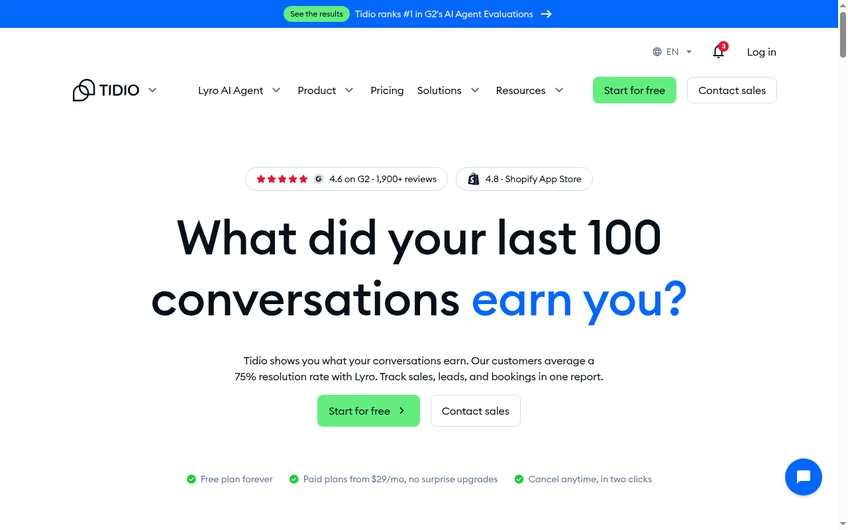
Tidio is where I point solo founders and tiny teams who need something live this afternoon. Its homepage currently advertises a free plan forever, paid plans from $29 per month, and a claim that customers average a 75% resolution rate with its Lyro AI agent (the vendor’s own figure, so verify in your trial). The product bundles live chat, the Lyro AI agent, and simple ticketing, and it plugs into Shopify (if you are still picking a store platform, see my Shopify vs custom websites comparison) and WordPress in minutes.
It will not replace a full Zendesk deployment for a 50-person team, but it is not trying to. For very small operations, it covers 80% of the need at a fraction of the cost, and you can always graduate to Freshdesk or Intercom later.
- Genuine free plan to start
- Paid plans from $29/mo on its site
- Very fast setup on Shopify or WordPress
- Not built for large support orgs
- AI resolution claims are vendor-published
How to choose the right Zendesk alternative for your team
Twelve good options is still a decision. Here is the shortcut I use when readers ask me directly:
- If you want the smoothest like-for-like swap: Freshdesk. It mirrors Zendesk’s shape at a lower entry price; my Freshdesk explainer covers the basics.
- If AI deflection is the whole point: Intercom, with Tidio as the budget version.
- If support is really shared email: Help Scout or Front, depending on whether other departments share the inbox.
- If you sell online: Gorgias, full stop.
- If budget is the constraint: Zoho Desk or Crisp, then scale up later.
- If phone support matters: LiveAgent bundles the call center.
Whichever direction you go, run a real trial with real tickets before migrating. A week of actual queue work tells you more than any feature grid, including mine. Book the demos with one of the Calendly alternatives I compared, run real tickets, and decide on evidence. The same discipline I recommend for improving efficiency and collaboration in projects applies here: involve the agents who will live in the tool every day, not just the person signing the invoice.
How I put this list together
I maintain this site’s software comparisons as part of the same review process behind my automation tools and AI tools roundups. Every tool here is a real, currently available product. On 18 October 2026 I revisited each vendor’s homepage and, where I quote a price, its pricing page: that is where the Freshdesk “starts at $15” figure, the Intercom $29/$85/$132 per-seat tiers, the Zendesk $55/$115 suite prices, and the Tidio “$29 per month” figure come from. Where a number could not be confirmed from the vendor’s own site today, I say so instead of guessing.
I also watch review sentiment as a sanity check, the same way I did for my Trustpilot alternatives piece. You will find more comparisons like this across the apps section of this site.
Frequently asked questions about Zendesk alternatives
What is the best Zendesk alternative for small businesses?
For most small businesses, Freshdesk is the safest pick: it covers the same ground as Zendesk with a friendlier learning curve and a pricing page that starts lower. If your support is mostly email, Help Scout is even simpler, and if you are watching every dollar, Zoho Desk and Crisp stretch a small budget further.
Is there a free Zendesk alternative?
Yes, with caveats. Tidio advertises a free plan forever for live chat and basic AI, and HubSpot’s free tools tier includes shared inbox basics on top of the same CRM platform its paid hubs use. Free plans cap channels, seats, or automation, so treat them as a starting point rather than a permanent home for a growing team.
Which Zendesk alternative is best for ecommerce?
Gorgias. It was built for online stores: order data from Shopify, BigCommerce, or Magento appears inside each ticket, and agents can process refunds or edits without switching tools. Its ticket-volume pricing also suits lean ecommerce teams.
What is the cheapest Zendesk alternative?
On confirmed pricing, Freshdesk states that its pricing starts at $15 per agent per month, and Intercom’s entry seat is $29 per month. Zoho Desk has historically been the budget leader in this category. Compare total cost for your real seat count, because per-agent pricing changes the ranking as teams grow.
Can I migrate my data out of Zendesk?
Generally yes. Most vendors on this list offer import tools or migration assistance for Zendesk tickets, contacts, and help center content. Ask about migration during your trial and test with a slice of real data before committing, because attachments and custom fields are where migrations usually snag.
Is Intercom better than Zendesk?
For AI-led deflection, Intercom currently has the stronger pitch: its Fin agent is built to resolve conversations, not just route them. Zendesk counters with deeper enterprise reporting, telephony, and a larger app marketplace. Product-led companies tend to prefer Intercom, especially those already shopping for customer messaging software; complex support orgs often stay with Zendesk or move to Freshdesk.
How did you choose these Zendesk alternatives?
Every tool is a real product I re-verified on its live site on 18 October 2026, with prices quoted only where the vendor’s own pricing page confirmed them that day. I weighted the list toward tools that solve the common reasons teams leave Zendesk: per-agent cost, complexity, and AI features locked behind higher tiers.
Leaving Zendesk is rarely about one missing feature. It is about fit: the right alternative is the one whose pricing model, channel mix, and automation depth match how your team actually works. Start with the quick picks above, trial two of them with real tickets, and let your agents cast the deciding vote. For a wider view of the category, my help desk software guide is the hub.


Leave a Reply