




Gusto and BambooHR overlap, but they start from different jobs. Gusto’s team plans center on US payroll, with benefits and HR capabilities around that process. BambooHR centers on employee records and HR workflows, with payroll and benefits administration offered as US-only add-ons. Choose Gusto first when reliable payroll is the main purchase; shortlist BambooHR when hiring, onboarding, employee data and people programs need one HR system.
This comparison uses current official product and pricing pages checked October 11, 2026. We inspected public pages and pricing screenshots, not two configured customer accounts. The shared tasks below are acceptance criteria for your demo, not claimed deployed-product results. Comparing full workflows avoids the subscription-sprawl problem discussed in our business-efficiency tools guide.
Gusto vs BambooHR at a glance
| Decision | Gusto | BambooHR |
|---|---|---|
| Starting workflow | Payroll, benefits and HR around pay | HR data, hiring, onboarding and people workflows |
| Team pricing snapshot | Simple $49 + $6/person; Plus $80 + $12; Premium $180 + $22 monthly | Cards show $10/$17/$25 per employee; FAQ rates differ; small-team flat fees |
| 25 or fewer employees | Displayed base-plus-person formula | FAQ: Core $250, Pro $425, Elite $650/month |
| Payroll scope | Simple one-state; Plus multi-state; eligibility matters | Separate add-on for US employees |
| Hiring | Product catalog includes hiring/ATS; verify plan scope | ATS included in HR plans; openings vary by tier |
| Performance and community | Inspect specific HR/talent scope | Performance and Employee Community in Pro |
| Time workflow | Time and scheduling highlighted in Plus; Simple add-on available | Time & Attendance is a separate add-on |
| Purchase risk | Add-on and usage charges can change totals | Rounded cards vs FAQ conflict; payroll quote required |
What Gusto is built around
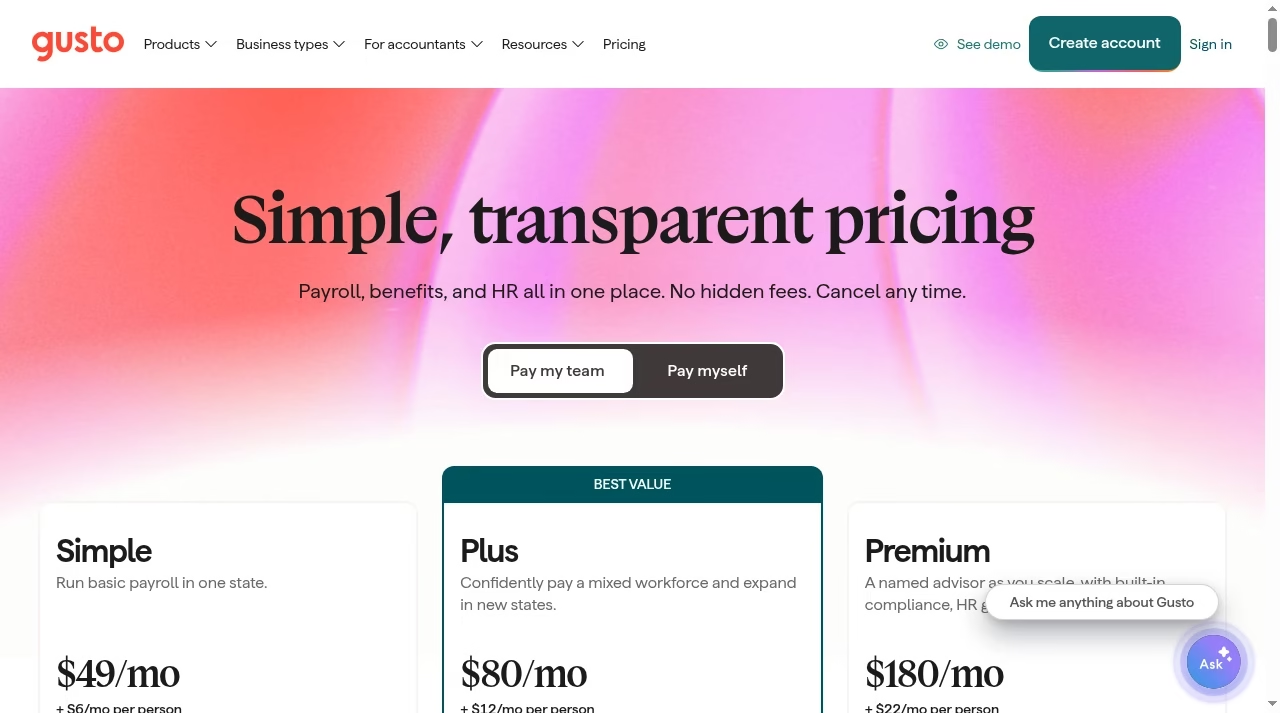
Gusto includes unlimited payroll runs, tax filings and payments, employee access and basic pay administration across its team plans. Simple is described for one-state payroll; Plus adds highlighted multi-state and time workflows; Premium emphasizes support and included compliance and faster-pay capabilities. The operational question is whether those capabilities match your actual pay cycle and workforce.
Do not treat a hiring link in the product catalog as proof of ATS scope in the quoted plan. Applicant records, interview feedback and offers have different needs from payroll. Similarly, the customer pipelines in our small-team CRM guide are not interchangeable with employee or candidate records.
What BambooHR is built around
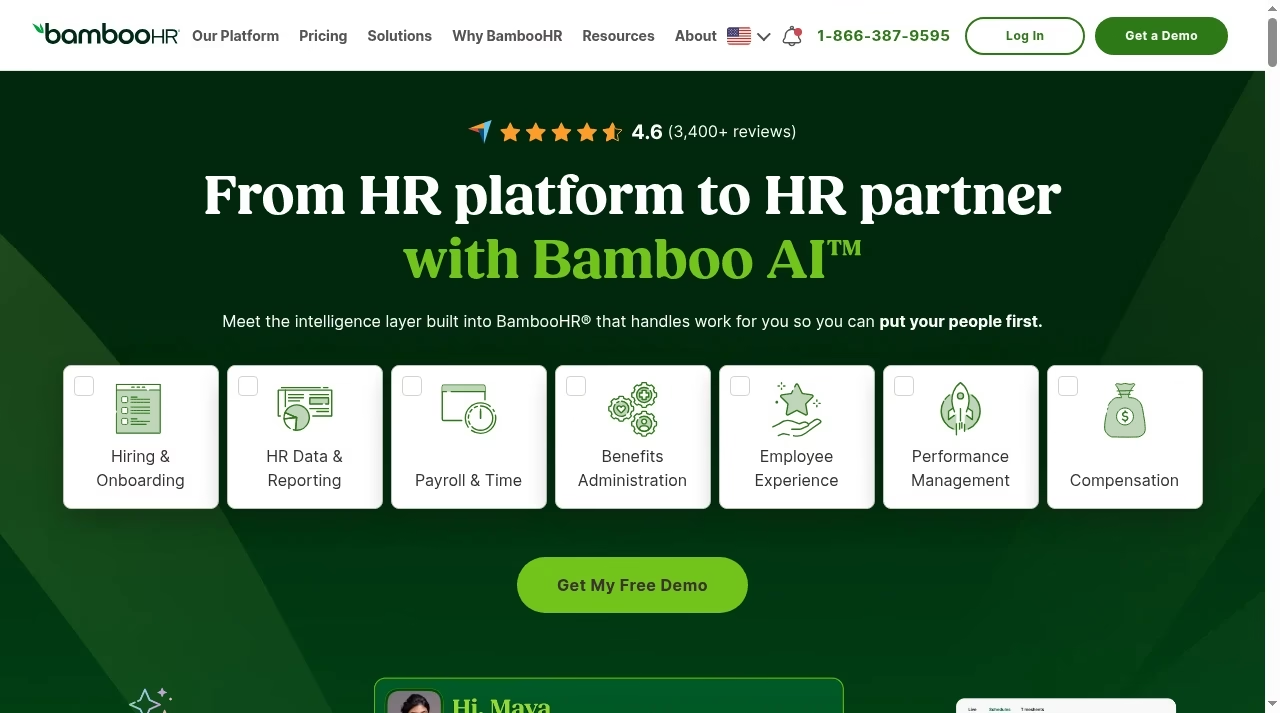
BambooHR brings employee data and reporting, hiring and onboarding, time-off and benefits tracking, and employee-experience tools into its Core offering. Pro adds performance management, Employee Community and recognition/rewards. Elite adds compensation management, custom analytics, HR benchmarks and other premium capabilities. Payroll, Benefits Administration and Time & Attendance appear separately as add-ons.
That HR-first model can be useful when the biggest pain is repeated entry of employee data or inconsistent onboarding rather than the pay calculation alone. Document your intended employee lifecycle before choosing, as you would document a shared process in a knowledge-workspace tool.
Pricing: compare full subscriptions, not mismatched headlines
Gusto gives a base-plus-person team formula
At the current public rates, a 20-person illustration is $169 for Simple, $320 for Plus and $620 for Premium per month. That excludes selected add-ons, benefits premiums, employer taxes and any variation in billable-person treatment. The official add-ons include time tracking for Simple, faster pay, priority support and compliance services. Gusto Business Compliance has an annual-contract price on Simple and Plus even though the general plan language says no long-term contract.
BambooHR has a material same-page price inconsistency
The live plan cards display Core $10, Pro $17 and Elite $25 per employee per month. The same page’s FAQ says pricing for more than 25 employees starts at $10.25, $17.50 and $25 respectively, with automatic volume discounts. For 25 or fewer employees, the FAQ states flat monthly rates of $250 Core, $425 Pro and $650 Elite. Use a written quote to settle the difference instead of silently treating the rounded cards as an exact invoice.
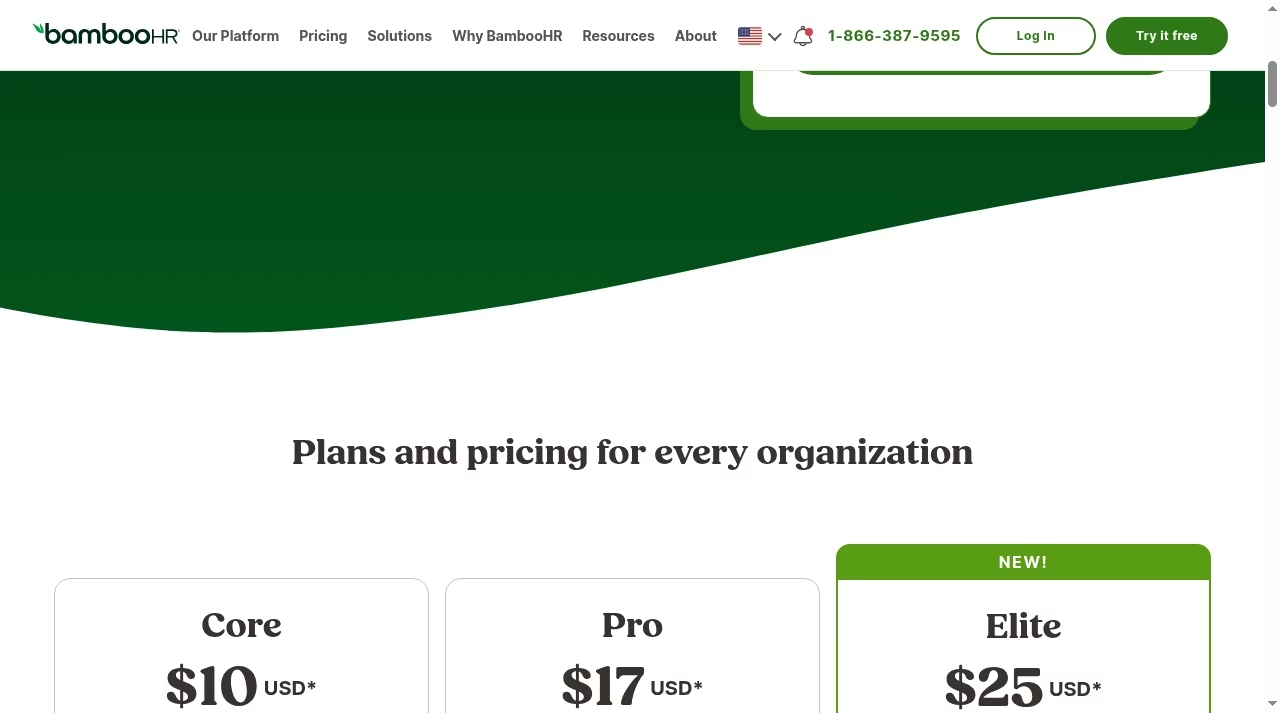
For a 20-person company, the FAQ’s Core flat fee is $250 before payroll, compared with Gusto’s $169 Simple illustration. That does not establish Gusto as the cheaper equivalent product: one total buys a payroll-first plan and the other a broader HR plan without the separately priced payroll module. Ask BambooHR for payroll and any required time or benefits charges, then compare the same scope. The official BambooHR pricing page is the current quote route.
We do not use a temporary free-payroll banner as an ongoing annual cost, because its eligibility and full terms were not established in this comparison. Scope implementation separately if it requires bespoke integration, using the same distinctions as our SaaS development services guide.
Same task: hire an employee and create the HR record
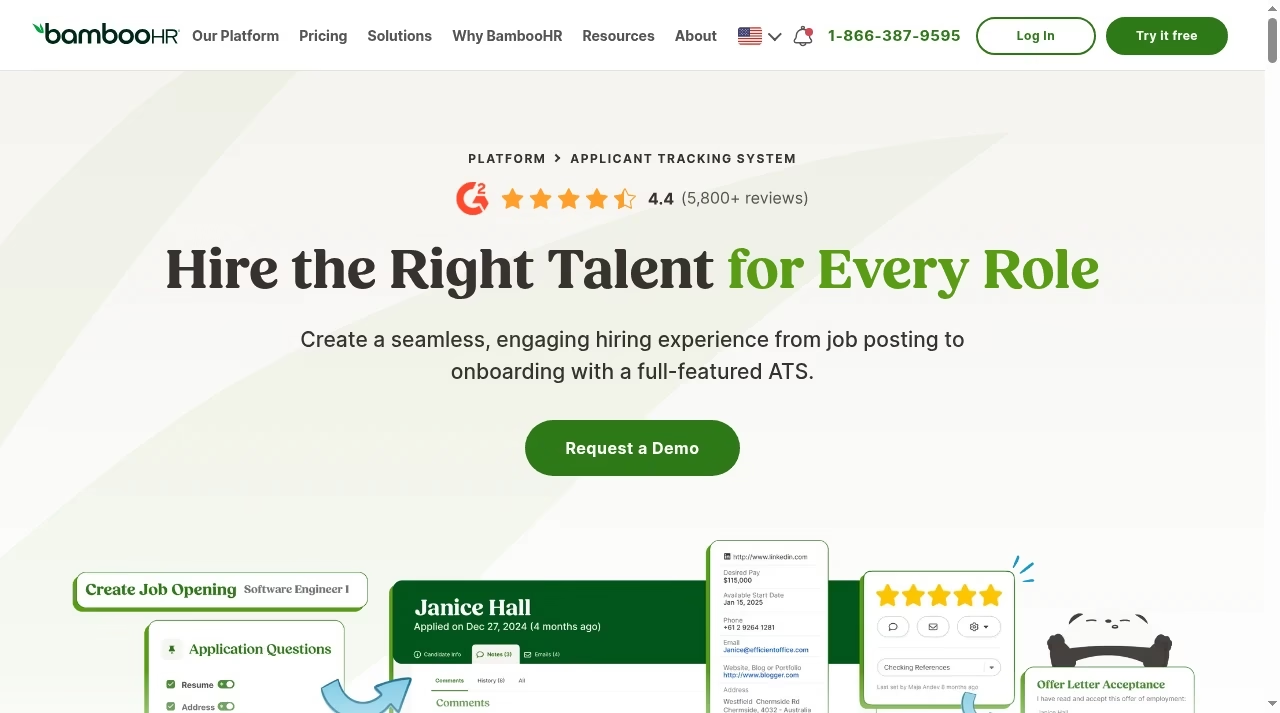
BambooHR’s ATS page describes job distribution, candidate communication, interview scheduling, offer letters and electronic signatures. When a candidate is hired, information transfers into Employee Records. The current plan comparison lists 5 openings for Core, 25 for Pro and 50 for Elite. Confirm those quantities in the proposal before relying on them.
For Gusto, ask the vendor to show the hiring functionality included in your exact plan, then demonstrate how a successful candidate becomes a payroll-ready employee. Do not assume a matching homepage phrase proves the same offer workflow. In both demos, use a fictional candidate and require the same fields, signed-document handling and permissions. For the interview booking step, our Calendly alternatives comparison explains why scheduling alone is not a full hiring system.
Same task: approve time and run payroll
For Gusto, compare Simple with its required add-ons against Plus, which highlights time tracking, scheduling and next-day pay. For BambooHR, add the quoted Payroll and Time & Attendance scope to the HR plan. Its pricing page marks Payroll and Benefits Administration as US-employee-only add-ons; a global HR record does not establish global payroll availability.
Use the same hourly employee, salaried employee, leave entry, reimbursement and correction in each demo. Ask how approved hours become payroll input and how a manager fixes a mistake after approval. Verify your accounting or payroll integrations rather than assuming every logo represents the same connection. Our integration tools guide describes that distinction.
Scheduling work and finding shifts are also separate. The products in our Shiftsmart alternatives comparison should not be mistaken for proof that your employer payroll system has a complete rota workflow.
Same task: listen, review performance and act
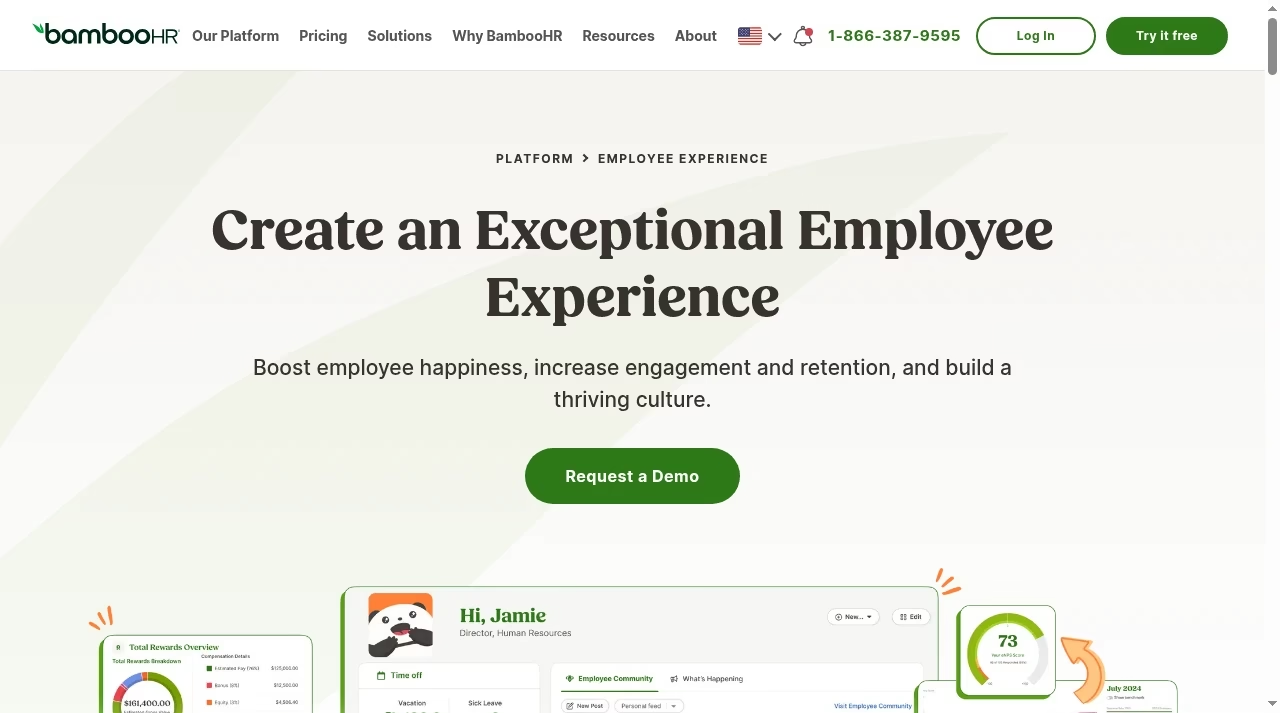
BambooHR’s employee-experience page distinguishes Employee Satisfaction, Employee Wellbeing and Employee Community. Core includes employee-experience tools, while Pro explicitly adds performance management and community. Decide whether the organization needs those functions before selecting a higher tier. Do not expose survey comments through broad employee-record permissions.
Gusto’s Premium positioning includes HR guidance and tools, but that does not prove feature parity with a dedicated performance or engagement suite. Ask for the exact review, survey and action workflow you need, including anonymity controls. AI summaries or recommendations deserve the human-review discipline described in our AI tools guide.
When one system wins, and when a combined stack is reasonable
Choose a Gusto-first evaluation when payroll, deposits, taxes and benefits administration are the urgent operational job. Choose a BambooHR-first evaluation when a central employee record, structured hiring and repeatable onboarding are the missing foundation. Consider a combined stack only after verifying the actual integration, the authoritative field owner and the full cost of both subscriptions.
Do not assume a bidirectional integration exists or covers every field just because each supplier supports integrations. Establish which system owns legal names, start dates, compensation, bank details, time-off balances and terminations. Keep rollout work in a project board and assign a named owner for each data flow. Failure patterns resemble those in why CRM projects fail.
Build a fair procurement comparison
Fix the scope before requesting quotes
List workforce size, operating states, employee types, active job openings, benefits, time tracking, performance, surveys and support needs. Ask each supplier to price that list with implementation, add-ons and any annual terms. Use an ordinary month and a busy month; urgent payroll charges and benefit participants can change the total. Preserve the dated quote and its renewal terms so the buying decision does not depend on a screenshot alone.
Use a scored demo rather than a feature count
Give each vendor the same fictional hiring and pay scenarios, define expected outputs, and record pass, partial or not demonstrated. Include a manager with limited access and a correction after approval. A broader suite should win only where the extra capabilities solve an actual job. Personal rollout reminders from a task app can support this process, but they do not establish system readiness.
Plan the switch around data ownership and payroll risk
Reconcile before going live
Agree the migration date with the payroll owner. Validate year-to-date amounts, tax identifiers, compensation, deductions, leave balances and document access using a controlled sample. Keep the old system available for required records. Do not run duplicate live payrolls to compare interfaces; use an agreed non-paying test or a supervised validation process.
Define failure and exit routes
Decide who handles a failed synchronization, missing employee, late approval or incorrect tax notice. Confirm what can be exported, who can request it and what happens after cancellation. Limit unnecessary sensitive data in downstream automation. Our automation tools guide is useful for reminders and controlled handoffs, not for replacing payroll approval or professional review.
Frequently asked questions
Is Gusto or BambooHR better for payroll?
Gusto is payroll-first. BambooHR offers payroll as a separate add-on for US employees. Compare the same pay scenarios, support and complete quote before deciding.
Does BambooHR include payroll in Core?
The current pricing page lists Payroll separately as an add-on. Do not assume the Core HR subscription price includes it.
How much does BambooHR cost for 20 employees?
Its current FAQ states flat monthly fees for 25 or fewer employees: Core $250, Pro $425 and Elite $650, before add-ons. Confirm a written quote because plan cards and FAQ per-employee rates differ.
Can Gusto and BambooHR be used together?
A combined stack may be appropriate, but the actual integration, supported fields, direction, permissions and package availability must be verified. This review did not configure that connection.
Which is better for hiring and onboarding?
BambooHR has documented ATS-to-employee-record continuity. Gusto’s exact hiring scope should be demonstrated for the quoted plan. Choose based on the complete workflow rather than a catalog label.
Were both products tested with live payroll?
No. This comparison is based on current official pages and public screenshots. Its shared tasks are proposed demo checks, not completed payroll or deployment benchmarks.



Leave a Reply