
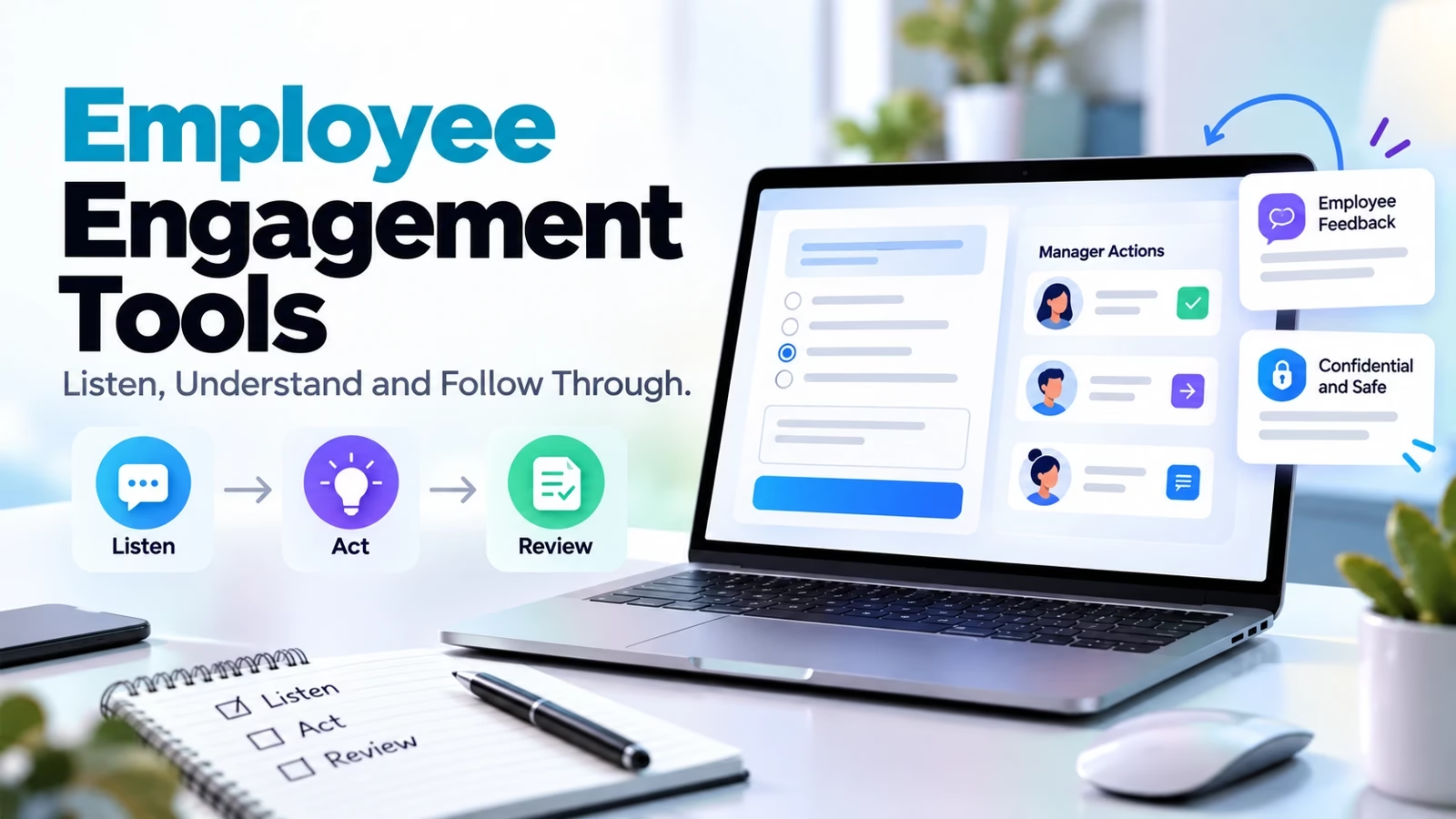

Employee engagement tools are useful when they help a manager hear a problem, understand it without exposing employees, and follow through. A survey score by itself is not an improvement. For smaller teams, start by comparing Workleap, Lattice, 15Five and Leapsome around manager habits; for broader enterprise listening, include Culture Amp, Qualtrics, Workday Peakon and Viva Glint. The right choice depends on confidentiality, access and action planning more than on the number of survey templates.
This guide covers 12 current products using official pages checked October 11, 2026, with public-page screenshots. We did not survey real employees or independently validate vendors’ retention claims. Recommendations describe workflow fit. If you already use multiple business-efficiency tools, first check whether engagement would become another inbox nobody owns.
Compare the listening model, not just the dashboard
| Tool | Starting fit | Question that changes the choice |
|---|---|---|
| Culture Amp | Research-led surveys and manager action | Which benchmarks and action tools are in the quote? |
| Lattice | Listening tied to everyday manager habits | How is Engagement packaged with other modules? |
| Workleap | SMB pulse feedback and follow-through | Current branding replaces Officevibe positioning |
| 15Five Engage | Engagement measurement and manager action | Which modules and coaching services are included? |
| Leapsome | Recurring custom surveys alongside people workflows | What anonymity and reporting rules can be set? |
| WorkTango | Lifecycle surveys, including deskless access | Can employees participate without company email? |
| Qualtrics | Enterprise listening across channels | What access and processing terms govern each channel? |
| Workday Peakon Employee Voice | Continuous listening and manager insights | What HR-data integration is required? |
| Microsoft Viva Glint | Organization-wide surveys in a Microsoft setting | License, prerequisites and tenant setup matter |
| BambooHR | Engagement inside the HR record platform | Core experience tools differ from Pro community |
| SurveySparrow | Flexible recurring survey design | Which confidentiality controls apply to your plan? |
| QuestionPro Employee Experience | Lifecycle surveys and action planning | Confirm roster integration and purchased scope |
1. Culture Amp: research-led engagement programs
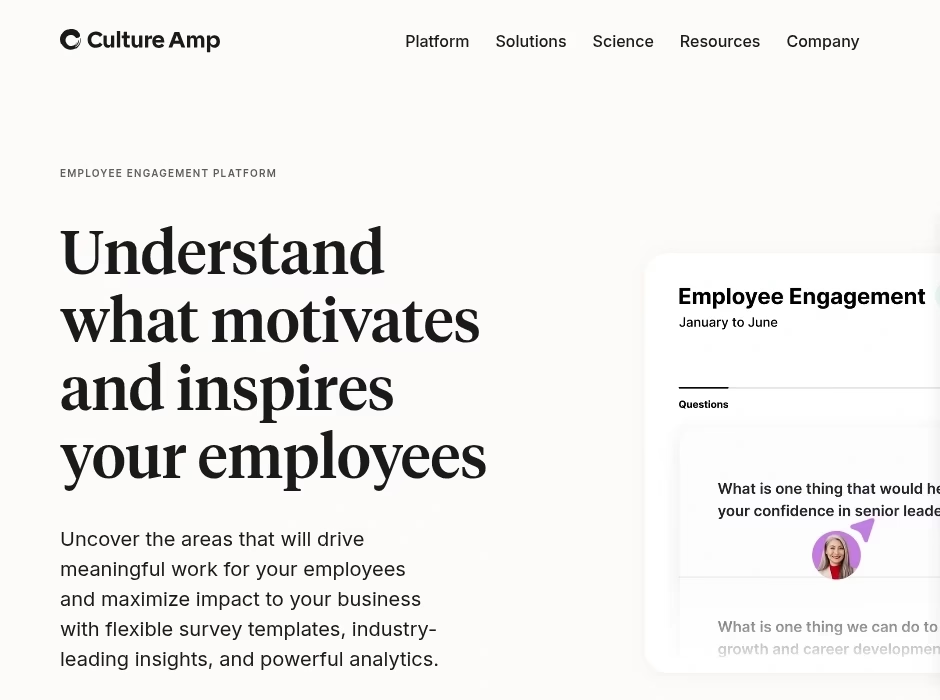
Culture Amp offers engagement surveys, analytics, contextual benchmarks and action planning. Its official Engage page describes turning feedback into tailored actions and using coaching support for managers. It fits a team that wants a repeatable listening program rather than a single annual questionnaire.
What to check before choosing
Ask which benchmarks match your workforce and which actions or coaching capabilities belong to your quote. A benchmark from a different population can create misleading urgency. Inspect minimum reporting groups and what administrators can export before promising anonymity to employees.
Demo task: Run a sample survey for two departments, suppress a small reporting group and assign one action with an owner and follow-up date.
Treat actions as real work. Our Trello alternatives comparison helps distinguish a follow-up board from a survey dashboard.
2. Lattice: engagement tied to manager habits
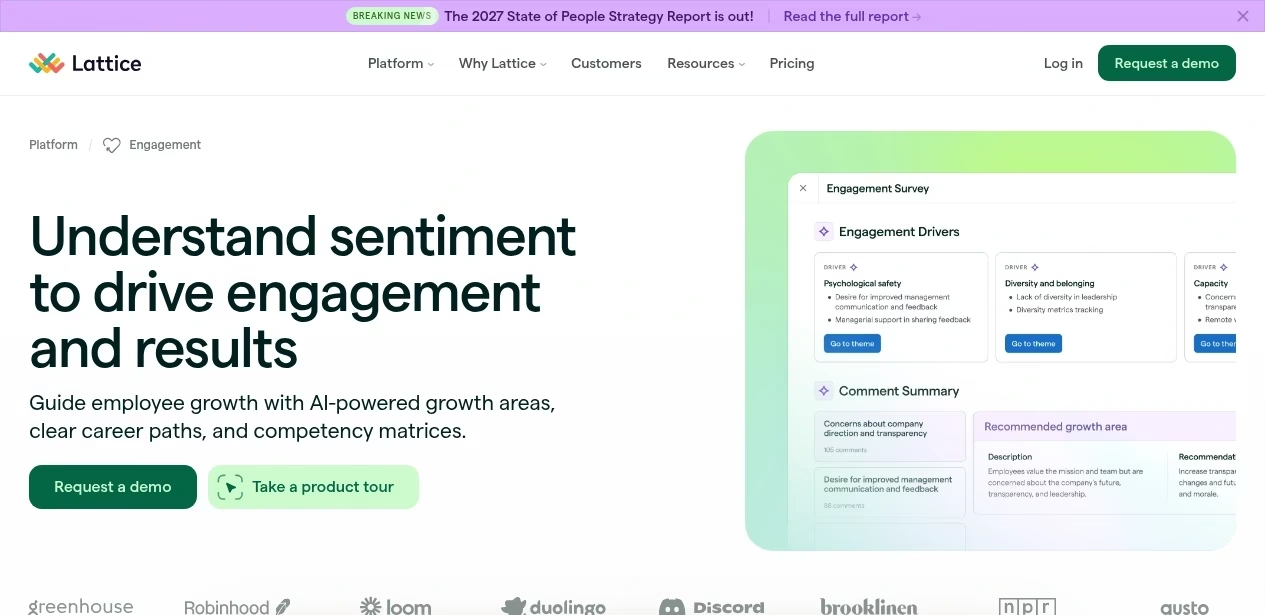
Lattice connects engagement listening with everyday moments such as one-to-ones, updates and feedback. The Engagement page includes surveys and benchmarks, while the broader platform supports related people-management functions. That can suit a business trying to link survey findings with regular manager conversations.
What to check before choosing
Do not assume all performance and engagement modules are included in one price. Check how survey results are shared, whether sensitive comments are visible to direct managers and what minimum group sizes apply. Separate an engagement trend from a performance rating.
Demo task: Take a survey finding about unclear priorities and show the path to a manager action and subsequent check-in without exposing individual responses.
Write the shared process in a workspace selected from our Notion alternatives guide.
3. Workleap: pulse feedback for smaller organizations
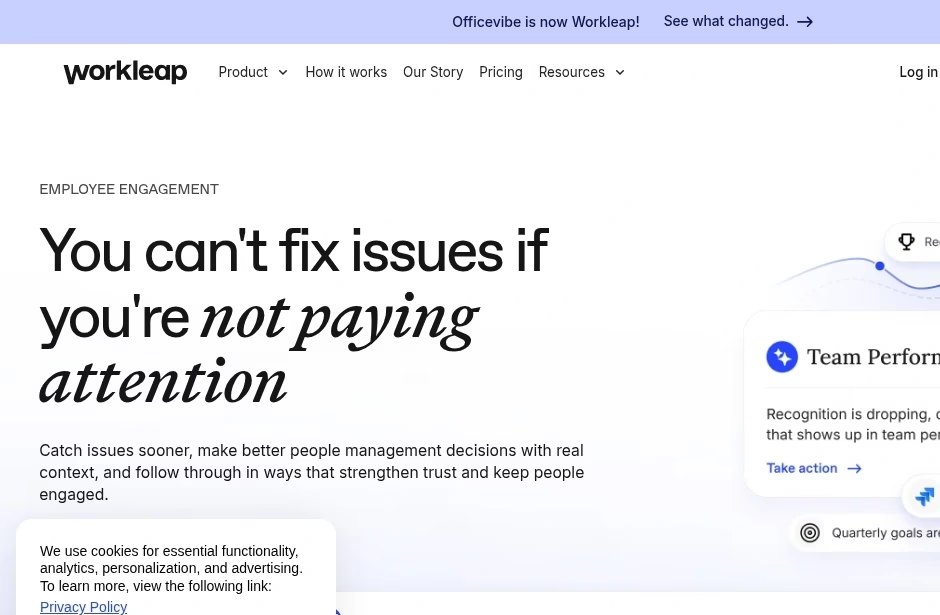
Workleap is the current branding presented on the former Officevibe route, whose live banner says Officevibe is now Workleap. The official page describes pulse and custom surveys, anonymous feedback, Good Vibes recognition and recommended actions. It is useful to evaluate where frequent manager follow-through matters more than a complex annual program.
What to check before choosing
Preserve the current product name in procurement, and check how existing Officevibe customers and new subscriptions are packaged. Ask how feedback replies preserve confidentiality and what a manager sees when a team has only a few respondents. Anonymous does not mean impossible to identify from the wording.
Demo task: Collect a fictional concern, reply without identifying the author and record a visible action that can be revisited in the next pulse.
Personal reminders from a Todoist alternative can support an owner, but should not become a hidden action plan.
4. 15Five Engage: measurement with manager action
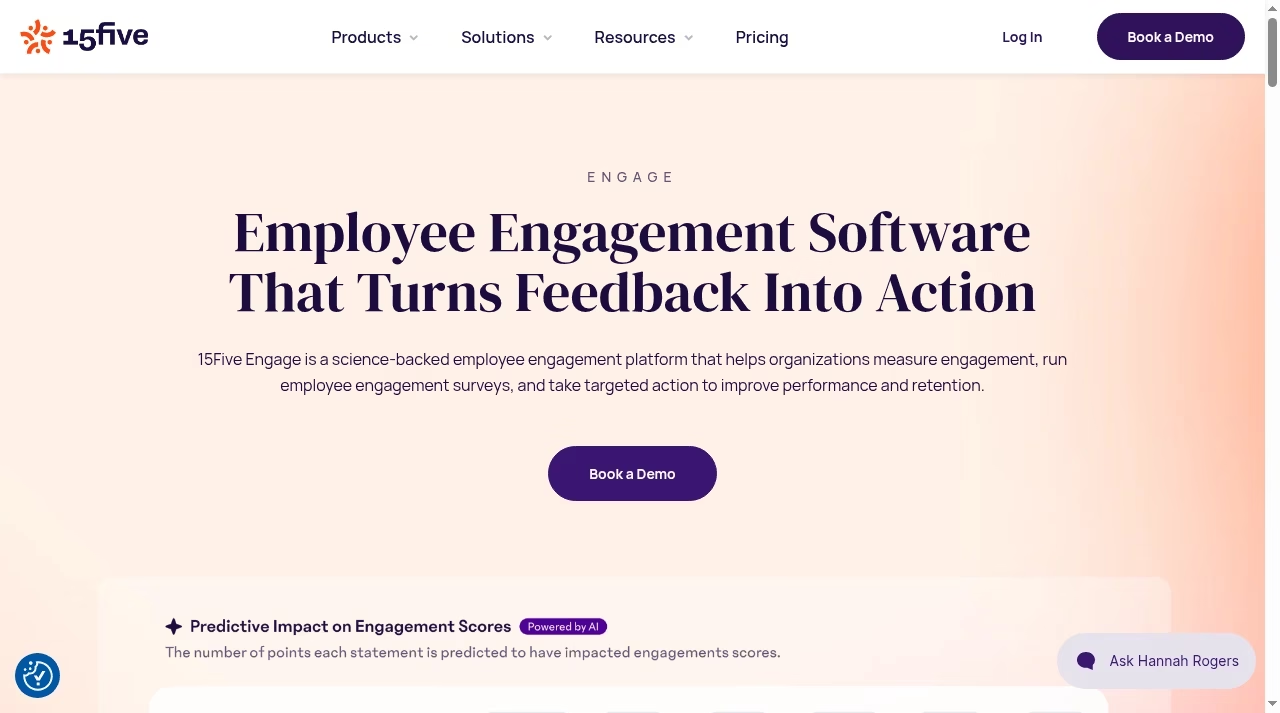
15Five Engage describes research-based engagement surveys, benchmarks, eNPS trends and targeted assessments. Its public page connects measurement with recommended action and manager effectiveness, making it a candidate when leaders want a consistent intervention process after the results arrive.
What to check before choosing
Identify whether the proposed price covers Engage alone or additional performance, coaching or manager-development services. A research-backed questionnaire still needs a suitable population and stable questions for useful comparisons. Ask how organization changes affect historical trends.
Demo task: Run a department assessment, identify one focus area and show how the manager records and evaluates the action after a defined interval.
Software that proposes an action needs the same review discipline as our small-business AI tool shortlist.
5. Leapsome: recurring surveys with configurable scope
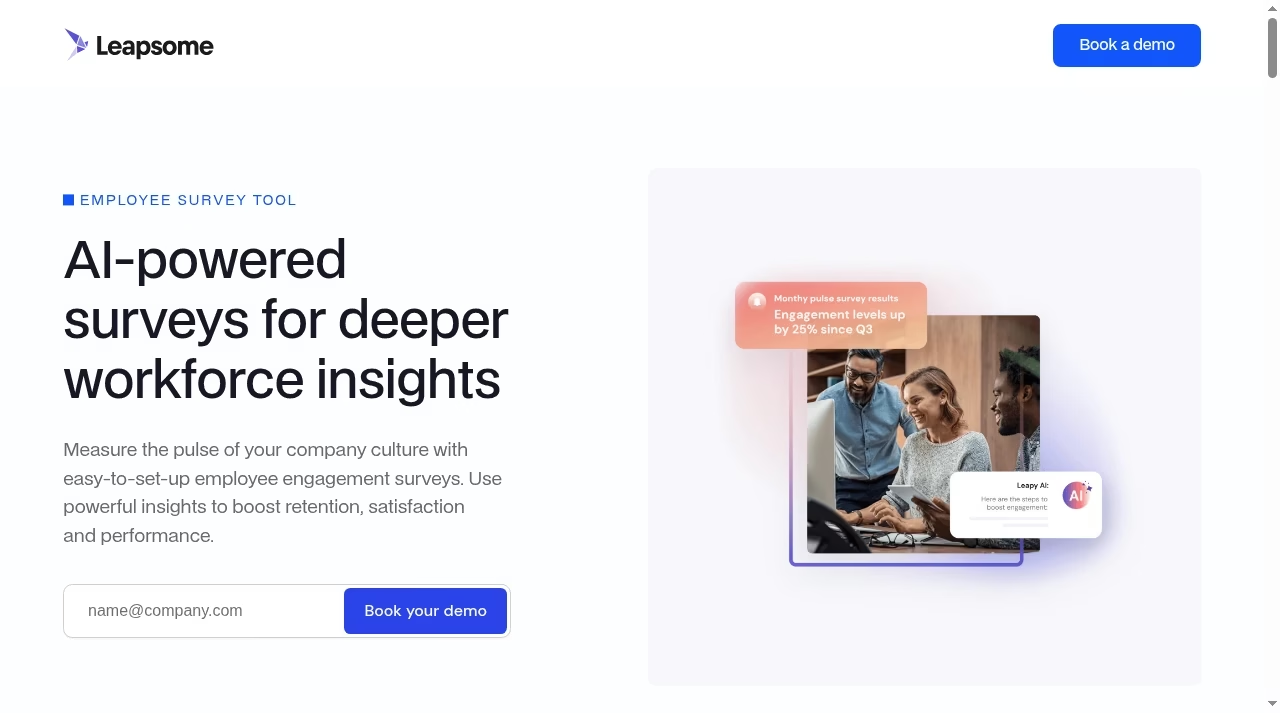
Leapsome supports custom and template surveys, recurring delivery, anonymity settings and eNPS trends. Its broader platform includes people workflows such as employee records, onboarding and performance. It suits a buyer who wants to connect listening to existing HR processes without losing the distinction between each module.
What to check before choosing
Ask which survey functions, integrations and people modules are part of the purchase. Test your required anonymity thresholds and demographic filters together; multiple harmless filters can isolate an individual. Keep reporting settings documented rather than relying on a salesperson’s reassurance.
Demo task: Configure a recurring pulse, restrict a manager’s access and attempt a combination of filters that would expose a one-person subgroup.
A small automation workflow can remind action owners, provided it never exports confidential comments into a broad channel.
6. WorkTango: lifecycle and deskless listening
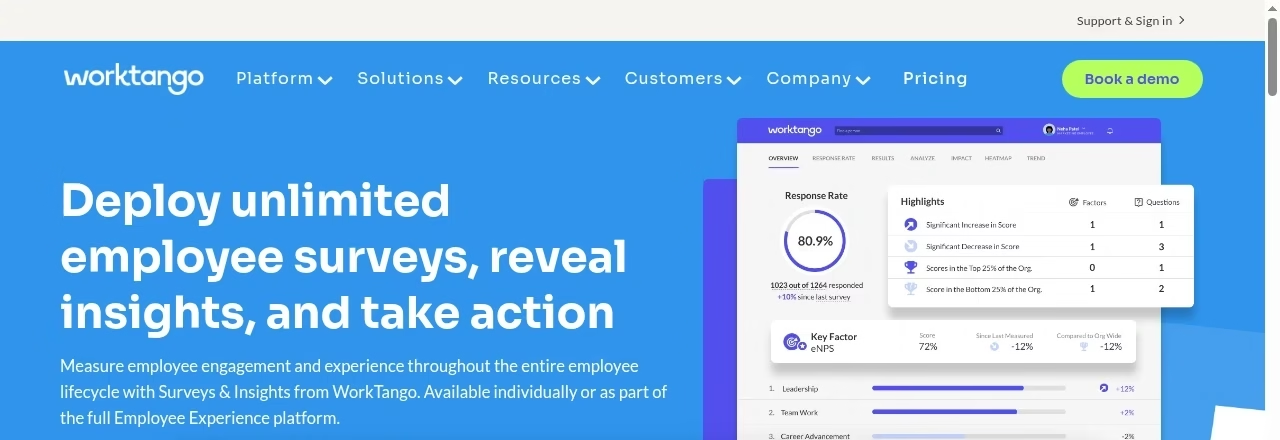
WorkTango offers Surveys & Insights across onboarding, engagement, development and offboarding, available separately or with its broader employee-experience platform. Its official page describes mobile participation and options for workers without an email address, an important practical distinction for shift-based organizations.
What to check before choosing
Request a demonstration for employees who do not sit at a computer. Confirm distribution, language support, supervisor access and the confidentiality explanation shown to participants. Recognition products and survey products should be scoped separately even when they share a brand.
Demo task: Have a fictional deskless worker respond without company email, then show what the supervisor and HR administrator can each view.
Listening should work for hourly teams too; our Shiftsmart alternatives guide describes the different worker-facing shift ecosystem.
7. Qualtrics: enterprise listening across channels
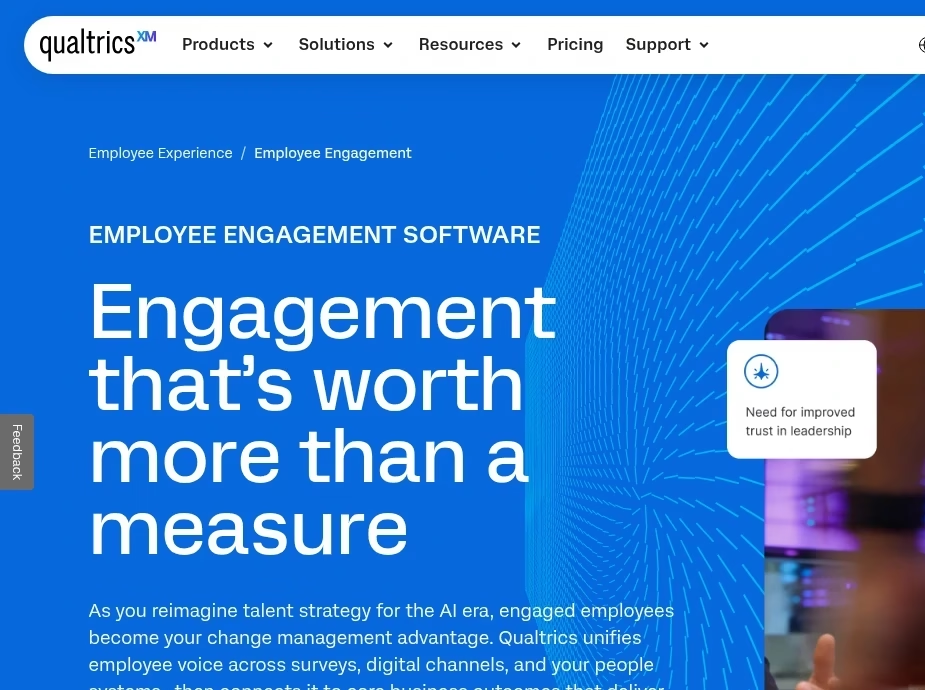
Qualtrics positions its engagement offering around survey feedback, digital channels and connected people systems. Its official page discusses pulse surveys, comment analysis and manager action. That wider scope makes it relevant to complex organizations, but also increases the need to define exactly what data will be processed.
What to check before choosing
Inventory each proposed data source and its purpose. Ask about access, retention, region, employee notice and optional AI analysis before connecting channels. Do not turn a listening project into undisclosed workplace monitoring. A large feature set is not automatically necessary for a 20-person business.
Demo task: Show the data flow for one survey and one additional channel, then demonstrate how a manager receives an action without unrestricted access to raw comments.
Adoption risks resemble those described in why CRM projects fail: unclear ownership and poorly defined inputs.
8. Workday Peakon Employee Voice: continuous listening and manager insights
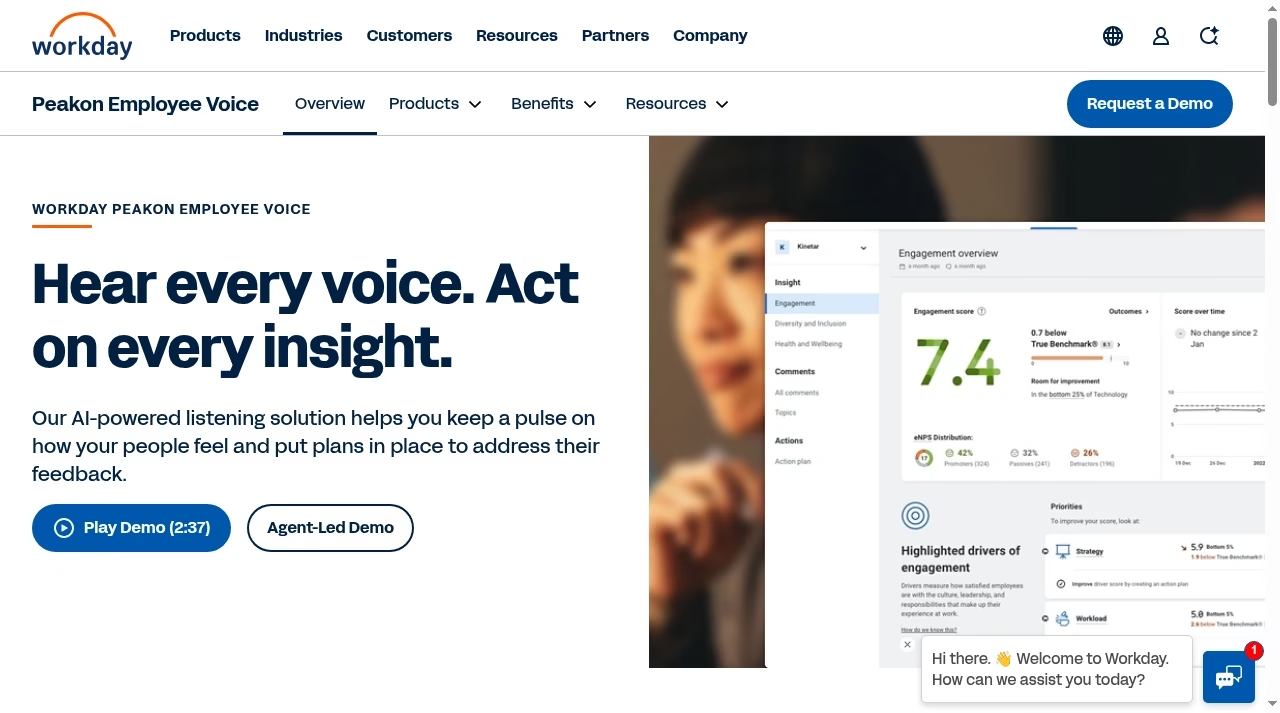
Workday Peakon Employee Voice is Workday’s employee-listening solution, covering engagement, retention, leadership and related workplace themes. The current product page describes keeping a pulse on employee sentiment and putting plans in place to address feedback. It is a candidate where listening needs to reflect a changing organization over time.
What to check before choosing
Verify the HR-data connection, hierarchy updates and reporting permissions required for your deployment. Ask which historical trends survive reorganizations and how employees receive an accurate explanation of confidentiality. Forecasting or risk signals need contextual human interpretation.
Demo task: Move a fictional employee between teams and confirm that survey distribution, reporting groups and historical comparisons change as intended.
Complex integration work needs a clear scope, like the service distinctions in our SaaS development companies guide.
9. Microsoft Viva Glint: organization-wide surveys
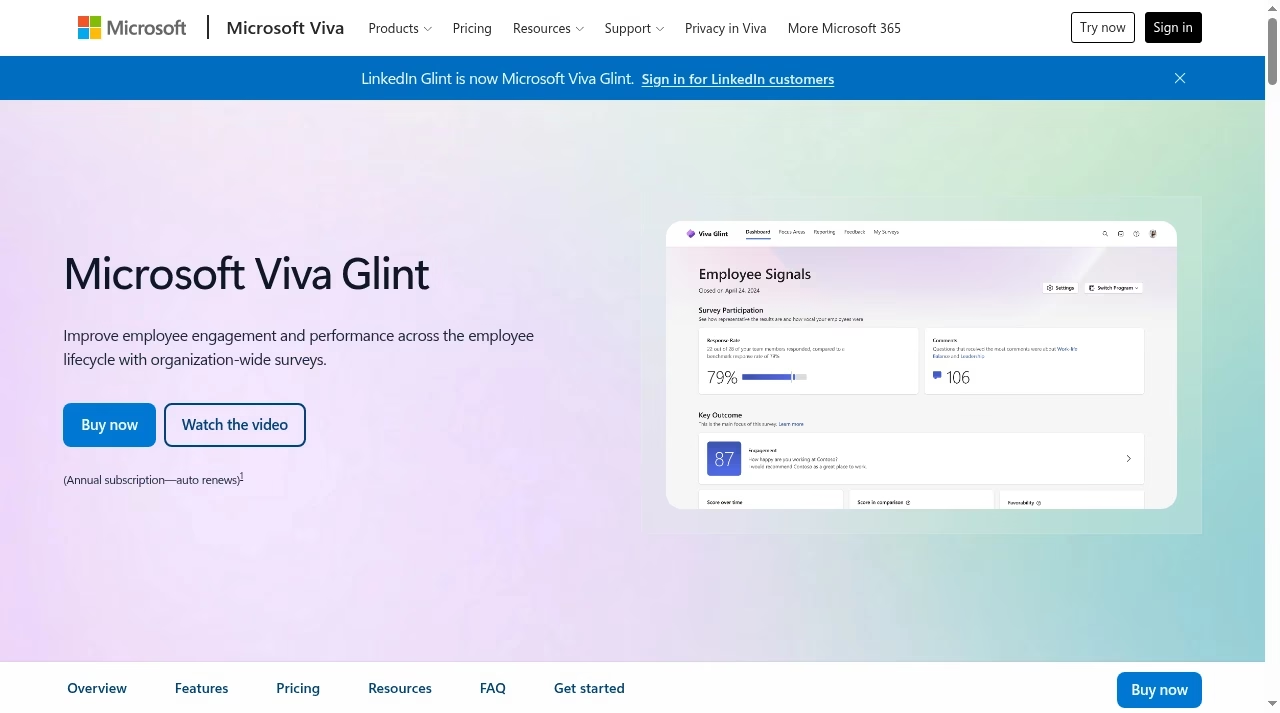
Microsoft Viva Glint supports employee-lifecycle listening, reporting and action through Microsoft’s Viva portfolio. The official page describes trends, results and heat maps, and packages Glint alongside wider workplace analytics offerings. It belongs on a shortlist when Microsoft tenant administration is already part of the organization’s operating model.
What to check before choosing
Check the exact license, prerequisites, user coverage and tenant setup. Do not assume an existing Microsoft 365 subscription includes Glint. Survey feedback and behavioral analytics raise different disclosure questions; decide which you need instead of buying the broadest bundle by default.
Demo task: Run a sample listening program, inspect manager-level results and prove that a user outside the intended reporting scope cannot access them.
A connector listing is a starting point, as discussed in our integration tools comparison, not proof of your tenant setup.
10. BambooHR: engagement within an HR platform
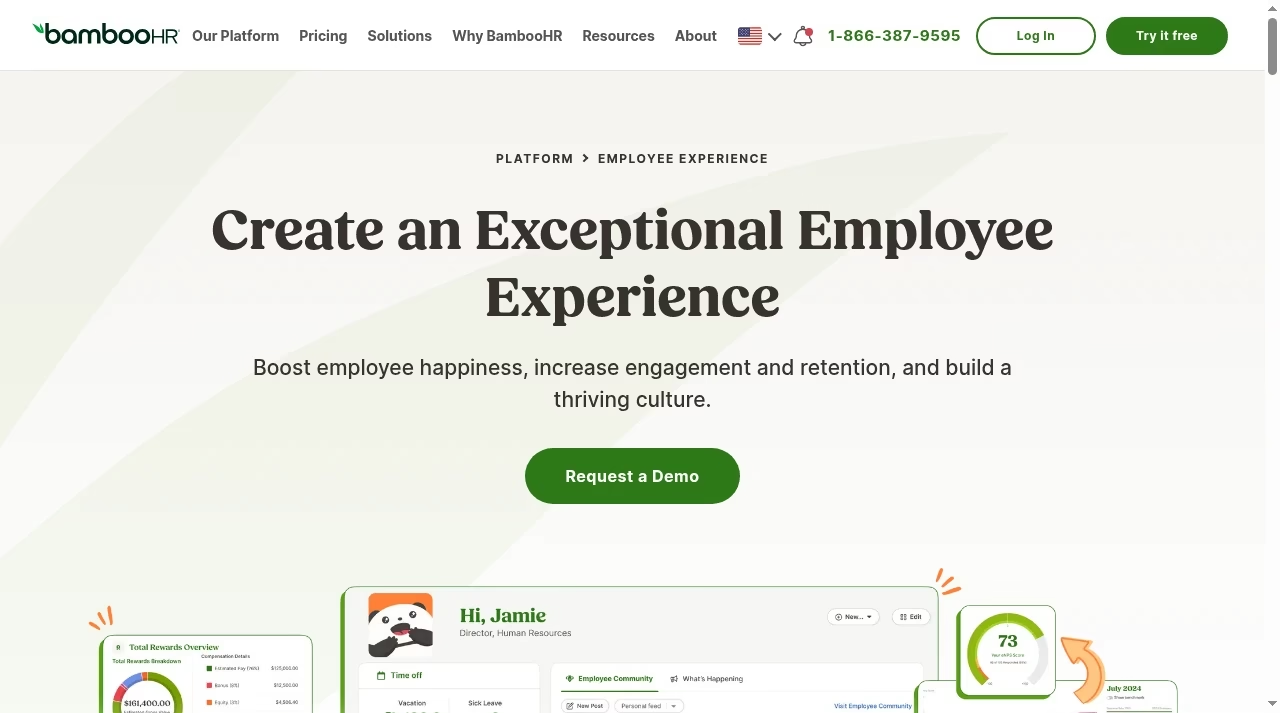
BambooHR offers Employee Satisfaction, Employee Wellbeing and Employee Community as part of its employee-experience capabilities. Official descriptions distinguish organization-wide eNPS feedback from wellbeing questions and heatmap reporting, while community features support announcements and recognition.
What to check before choosing
The current pricing page includes employee-experience tools in Core and Employee Community in Pro. Confirm the particular capabilities in your quote. An HR suite can reduce data duplication, but that is useful only if reporting permissions prevent sensitive survey data from becoming general employee-record access.
Demo task: Demonstrate an eNPS report, a wellbeing report and a community announcement with three different permission scenarios.
Keep CRM and HR audiences separate even when both support relationship work, as our small-team CRM guide illustrates.
11. SurveySparrow: flexible recurring survey design
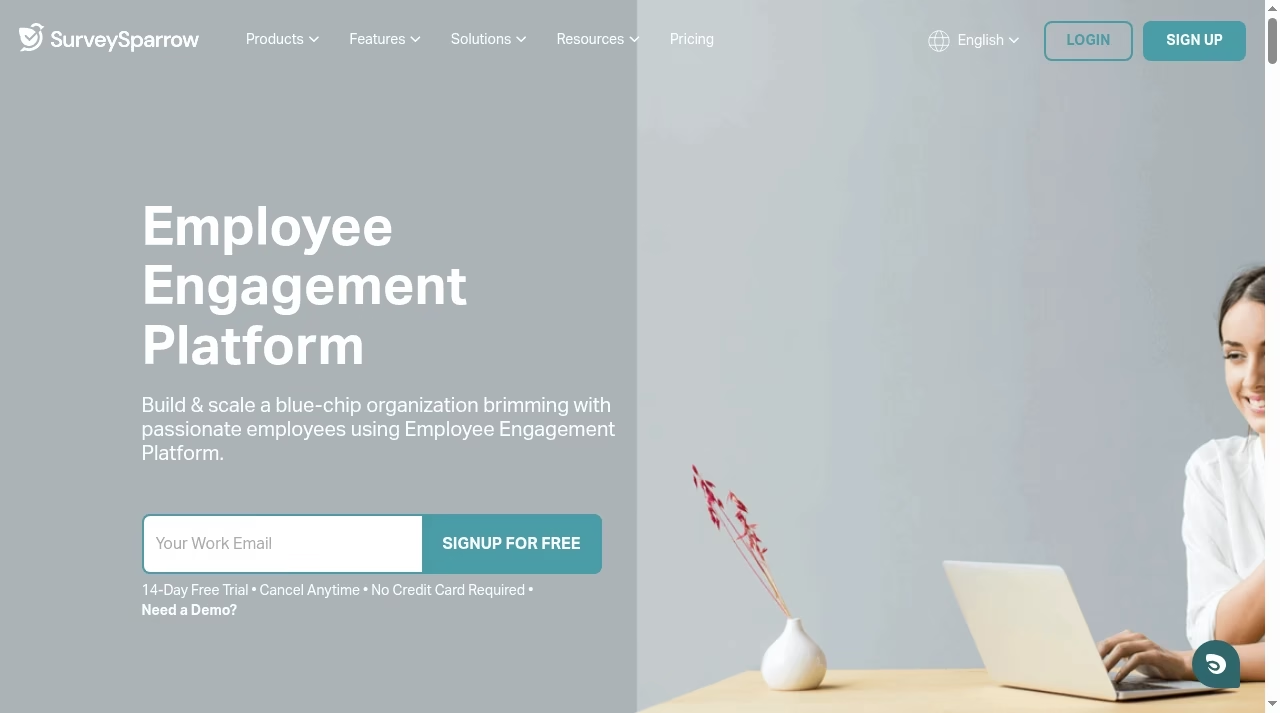
SurveySparrow describes conversational survey formats, recurring surveys, logic, reporting and anonymous collection for employee engagement. It is worth considering when question design and distribution flexibility are the main requirements rather than a full performance-management suite.
What to check before choosing
Verify which confidentiality, SSO and reporting controls belong to the plan you will actually buy. A survey marked anonymous can still contain identifying free-text detail. Avoid treating a vendor response-rate claim as a guarantee for your workforce.
Demo task: Build a short recurring survey with conditional questions, inspect the employee experience on a phone and export results without personal identifiers.
A clear participation window matters; use the planning distinctions in our meeting-scheduling comparison without confusing calendar booking with survey delivery.
12. QuestionPro Employee Experience: lifecycle surveys and action planning
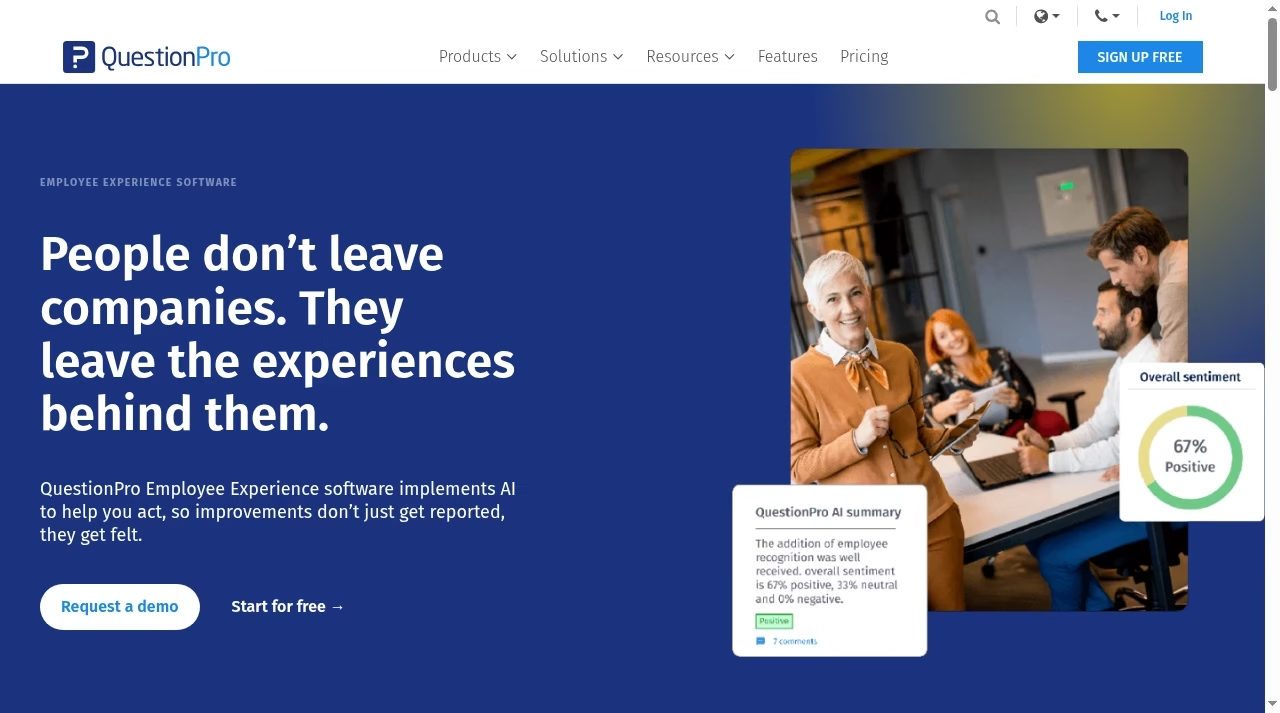
QuestionPro Employee Experience is the current public positioning for a platform spanning engagement, pulse, onboarding, exit and leadership feedback. Its official page describes role-based dashboards, sentiment analysis and Empower Action Planning, plus roster integration through FTP and APIs.
What to check before choosing
Confirm plan limits, integration work and the identity/permission model in a written proposal. An unlimited-survey claim does not answer where data resides or which manager can see a comment. Check whether employee roster synchronization preserves leavers, team changes and suppression rules correctly.
Demo task: Update a sample roster, launch a pulse and show how a finding becomes an action with an owner while small-group results remain protected.
If implementation changes several systems, use our digital transformation service comparison to separate software from rollout support.
Design a listening program employees can trust
Write the confidentiality promise first
Explain who can see raw responses, minimum reporting group sizes, whether comments are summarized by AI and how long data is retained. Avoid promising anonymity if administrators can recover identity. Short teams are especially exposed: a role, location and distinctive comment can identify someone without a name. Test combinations of filters, not just the default dashboard.
Ask fewer questions with a clear purpose
Begin with the decision you expect to make. Keep a stable core of questions for trend comparison and add a small number of questions tied to a specific concern. Make room for frontline workers, different languages and accessible response methods. eNPS is one signal, not a complete model of engagement, and changes in workforce composition can change the result.
Turn feedback into visible, bounded action
Choose an owner and an observable change
After sharing the results, choose a manageable intervention such as clearer handovers, a published promotion process or protected manager check-ins. Record who owns it, when it will be reviewed and how employees will see progress. Do not collect increasingly frequent surveys if nothing happens between them.
Check outcomes without claiming causation
Compare participation, themes and a consistent set of questions over time. Note reorganizations, seasonal workload and policy changes that may explain the result. A better score does not prove software caused better retention. At renewal, ask whether managers completed actions and whether the confidentiality promise still matches the system’s current settings.
Frequently asked questions
What are employee engagement tools?
They help collect and analyze workplace feedback and, depending on the product, plan and track manager actions, recognition or related people workflows.
Is employee engagement the same as eNPS?
No. eNPS asks about recommending the employer. Engagement programs usually cover more themes, such as manager support, clarity, belonging and work conditions.
Are anonymous employee surveys truly anonymous?
That depends on the configuration, reporting thresholds, administrative access and free-text detail. Verify the actual controls before promising anonymity.
Should a small business buy an enterprise listening suite?
Only when its data, permission and analysis needs justify the scope. A smaller recurring-feedback tool may be easier to operate, but privacy controls still matter.
How often should we survey employees?
Use a cadence that allows time to act. Keep core questions stable and explain what changed after each cycle rather than collecting frequent feedback with no follow-through.
What should happen after an employee engagement survey closes?
Share a short summary with employees, pick two or three actions with named owners and dates, and report progress at the next check-in. A survey with no visible follow-up teaches people to stop answering, whatever tool collected it.


Leave a Reply